


The Rush-Bagot Agreement
This plaque commemorates the agreement that officially ended the War of 1812. It is still technically in force today.
Location:
In front of the Stone Frigate building, on the grounds of the Royal Military College of Canada, County Road 2, Kingston
Themes:
Politics and law, War and conflict
Plaque text:
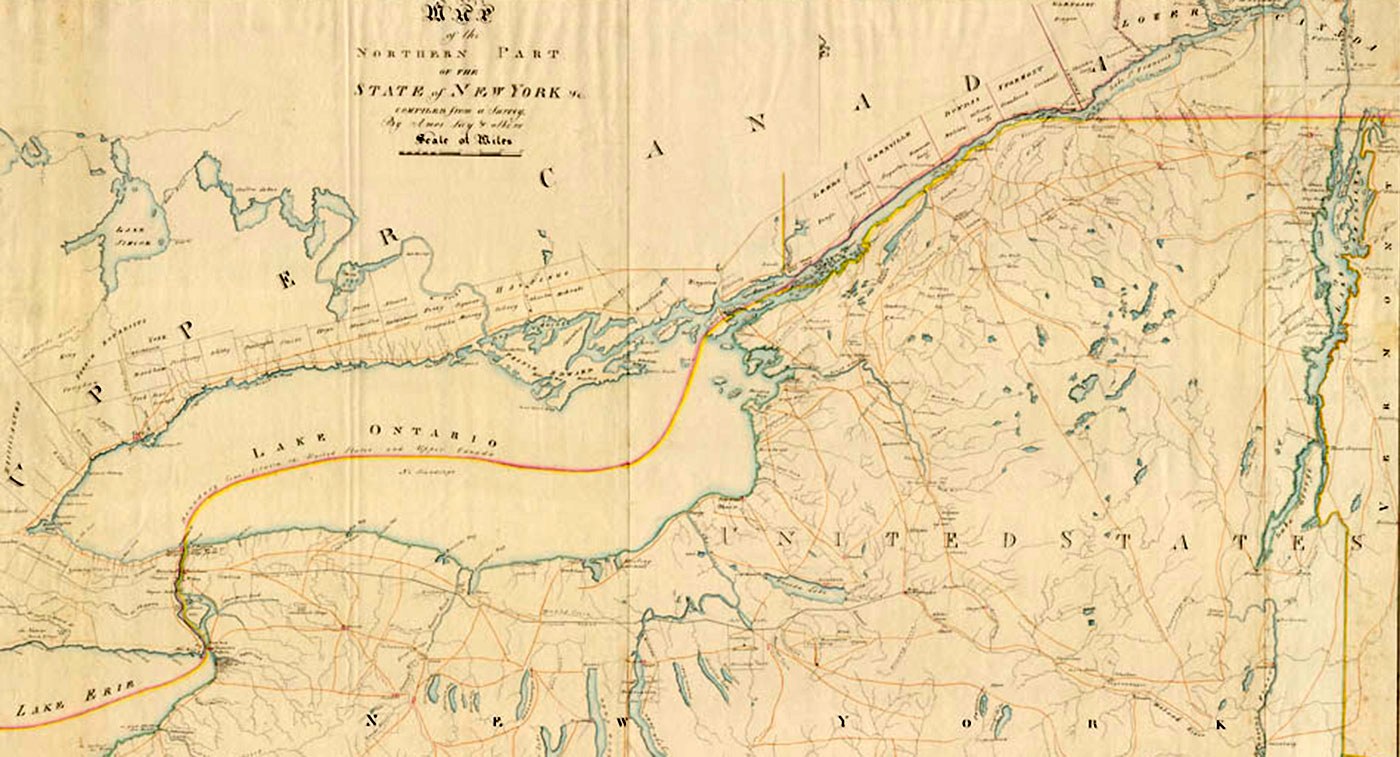
A naval arms limitation agreement negotiated to demilitarize the Great Lakes and Lake Champlain after the War of 1812, this convention was concluded between the United States and Great Britain, represented respectively by Richard Rush and Charles Bagot, in 1817. Under its terms each country agreed to dismantle all armed vessels on the lakes with the exception of four retained for policing purposes and to construct no new warships. During the 19th century there were occasional infractions of the terms and during the Second World War they were somewhat modified, but the spirit of the convention has, in general, never been violated. Still technically in force, the Rush-Bagot Agreement has become a symbol of the long-standing, peaceful relations between Canada and the United States.