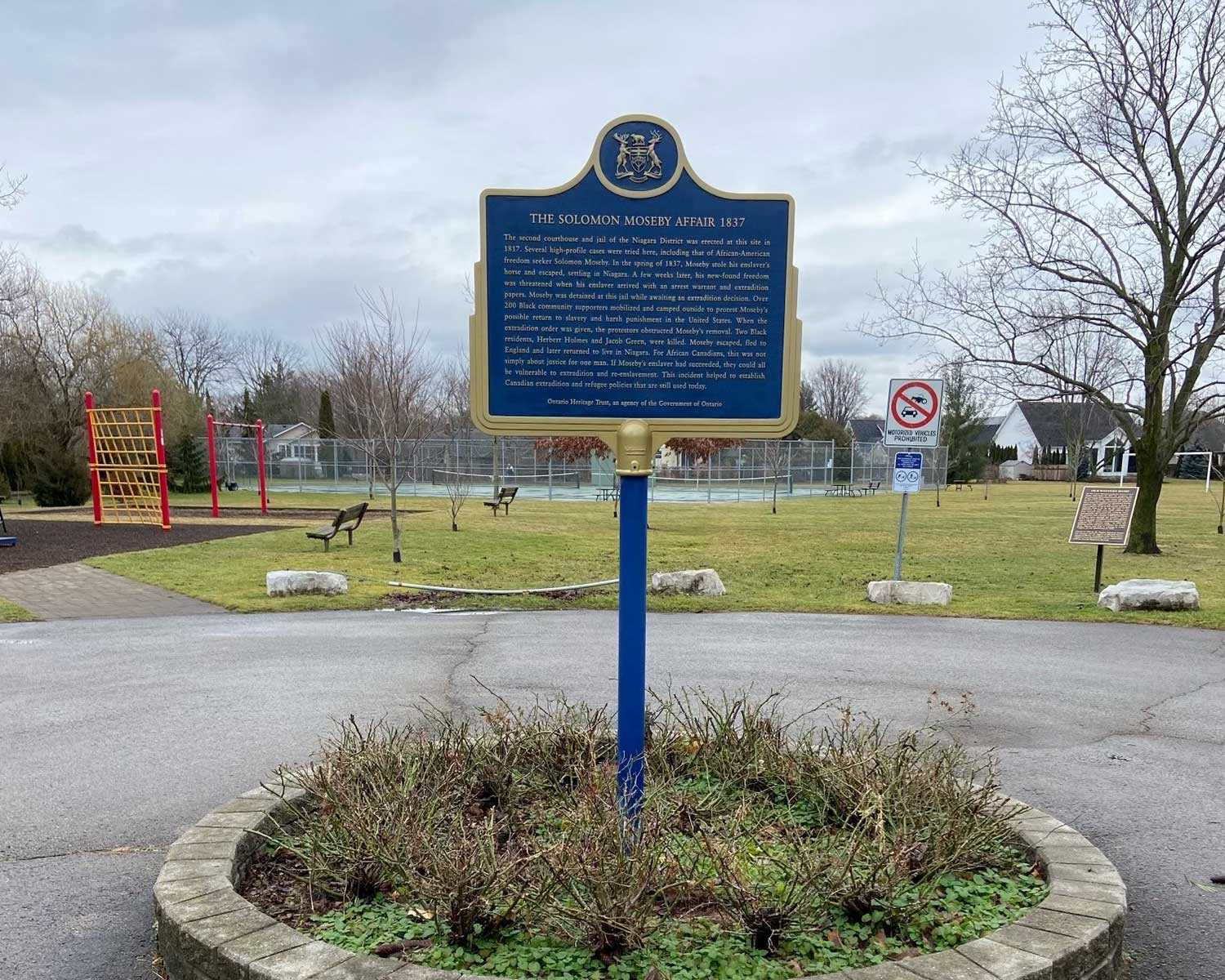


The Solomon Moseby Affair 1837
Location:
At the site of the former complex, near the intersection of Rye and Cottage streets, Niagara-on-the-Lake
Themes:
Black heritage, Buildings and structures, Politics and law
Unveiling year:
1958, 2022
Plaque text:
The second courthouse and jail of the Niagara District was erected at this site in 1817. Several high-profile cases were tried here, including that of African-American freedom seeker Solomon Moseby. In the spring of 1837, Moseby stole his enslaver’s horse and escaped, settling in Niagara. A few weeks later, his new-found freedom was threatened when his enslaver arrived with an arrest warrant and extradition papers. Moseby was detained at this jail while awaiting an extradition decision. Over 200 Black community supporters mobilized and camped outside to protest Moseby’s possible return to slavery and harsh punishment in the United States. When the extradition order was given, the protestors obstructed Moseby’s removal. Two Black residents, Herbert Holmes and Jacob Green, were killed. Moseby escaped, fled to England, and later returned to live in Niagara. For African Canadians, this was not simply about justice for one man. If Moseby’s enslaver had succeeded, they could all be vulnerable to extradition and re-enslavement. This incident helped to establish Canadian extradition and refugee policies that are still used today.