Military heritage

Ontario's military heritage — 4. Second World War

War and conflict

On September 1, 1939, Adolf Hitler invaded Poland and demonstrated to Western leaders that their policy of appeasement would not deter large-scale conflict. Drawing on their diplomatic guarantees of Polish independence, the United Kingdom and France declared war against Nazi Germany on September 3. Canada, which was a self-governing colony under the Statute of Westminster, made its own declaration of war a week later.

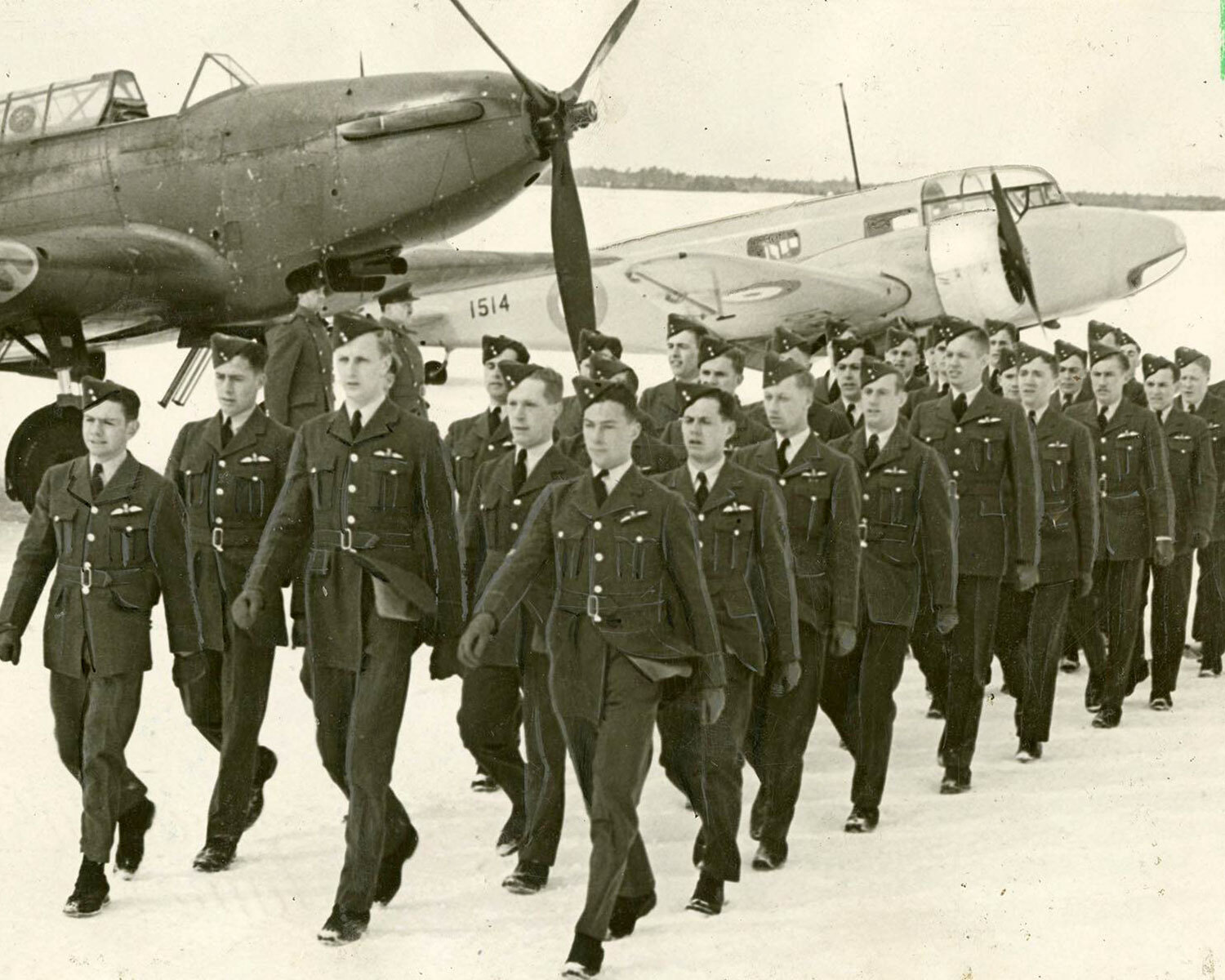
Wings Parade, 1944. Young Canadians who completed their fly training under the Commonwealth Air Training Plan. (Photo: Toronto Star Photograph Archive, Toronto Public Library, 12/28/1940)
Wings Parade, 1944. Young Canadians who completed their fly training under the Commonwealth Air Training Plan.
Photo: Toronto Star Photograph Archive, Toronto Public Library, 12/28/1940

A serious war effort came too late to save most of continental Europe from fascist control. By the end of September, Poland was conquered. By the end of June 1940, Denmark, Norway, Belgium, Luxemburg, the Netherlands and France followed Poland in defeat. The prospect of liberating Europe became increasingly grim as Nazi Germany strengthened its position through the formation of the Axis coalition. Shortly before the fall of France, Italy entered the war as Germany’s ally. The Japanese Empire, which similarly embraced military conquest to further its imperial aspirations, signed a mutual assistance pact with Germany and Italy in September 1940. Although Hitler urged Japan to assist them in the war against the Soviet Union, the Japanese instead launched a surprise attack against the American naval base at Pearl Harbor in Honolulu, Hawaii on December 7, 1941. The following day, the Japanese also attacked the British Crown colony of Hong Kong, which was defended by a garrison of local militia — British, Indian and Canadian troops.

For the second time in the 20th century, the Canadian military entered a world war ill-equipped for large-scale conflict. Canada immediately deployed what forces it could spare: one infantry brigade was sent to Iceland to relieve the British garrison, one fighter squadron was sent to Britain, and four destroyers sailed to the British Isles. It was not a substantial force relative to the size of the British and German militaries, but in further similarity to the First World War, the gradual mobilization of Canada’s peoples, industries, resources and ingenuity made its contributions to the Allied war effort indispensable. Canada would participate in pivotal operations — including the Battle of the Atlantic, the Battle of Britain and the invasions of Sicily, Italy and Normandy. By the war’s end, Canada had the world’s third-largest navy and the fourth-largest air force. The 1st Canadian Army was also formidable and included three infantry divisions and two armoured divisions. As another notable achievement, the Canadian military undertook operations that combined all three military services for the first time in its history.

As this resource explores, Ontario provided crucial support in the growth and development of the Canadian military. More than 400,000 men and women from Ontario served in the military, constituting approximately 40 per cent of Canada’s military personnel. The first section of this resource examines these contributions in accordance with the three military branches: the Royal Canadian Air Force, the militia/army, and the Royal Canadian Navy. It also examines the military’s changing policies regarding the recruitment of women and visible minorities. The second section provides an overview of the mobilization of Ontario’s industries for war production and its educational institutions for military research. The last section considers Ontario’s contradicting history of being a place of refuge and oppression.

Military operations and experiences

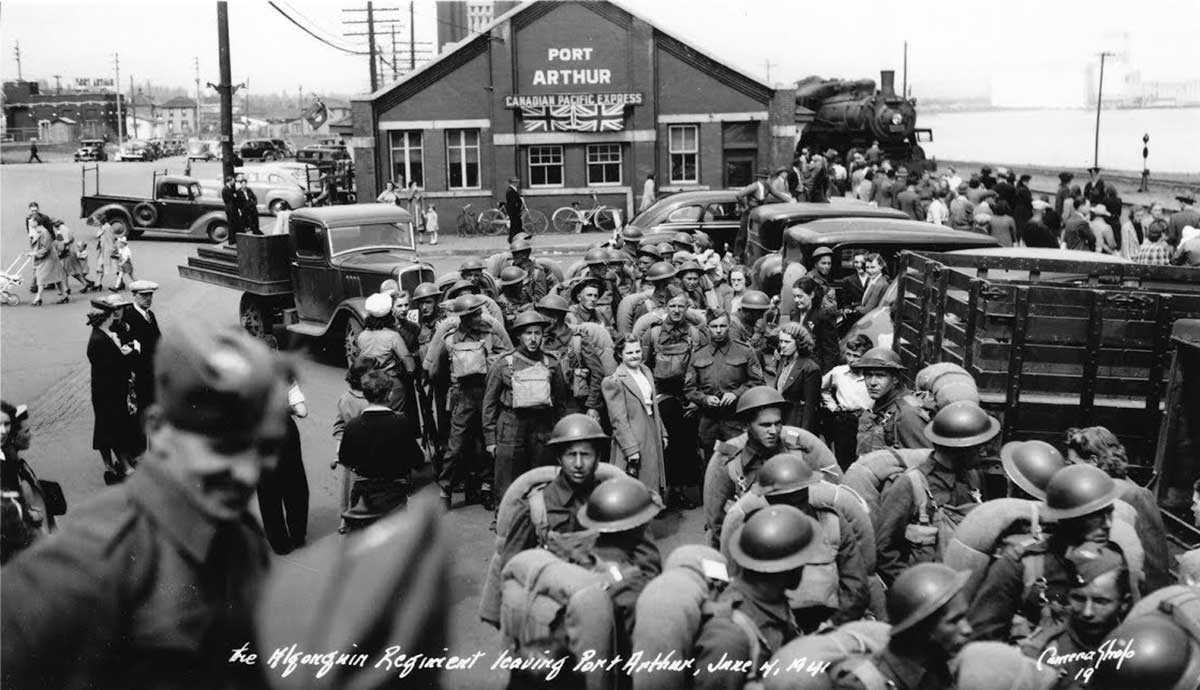
The Algonquin Regiment, shown here leaving Port Arthur in 1941, served in a home defence role until 1943 when it embarked for Britain. It landed in France in 1944 and continued to fight in northwest Europe until the end of the war. The hydro-electric building seen in the back-left corner still stands in Thunder Bay. (Photo: Department of National Defence)

The Algonquin Regiment, shown here leaving Port Arthur in 1941, served in a home defence role until 1943 when it embarked for Britain.

Photo: Department of National Defence

By the summer of 1940, Nazi Germany had conquered most of continental Europe, and the United Kingdom was defending itself against the German Luftwaffe during the Battle of Britain. During these trying times, Canada became the United Kingdom’s most important ally.

Military operations and experiences

Industry and research

An inside look at the nuclear research complex at Chalk River, 1945. (Photo: National Research Council Canada)

An inside look at the nuclear research complex at Chalk River, 1945.

Photo: National Research Council Canada

Ontario was a mineral-rich province that offered many strategic resources for military production. It also had a large population.

Industry and research

Civilian victims of war

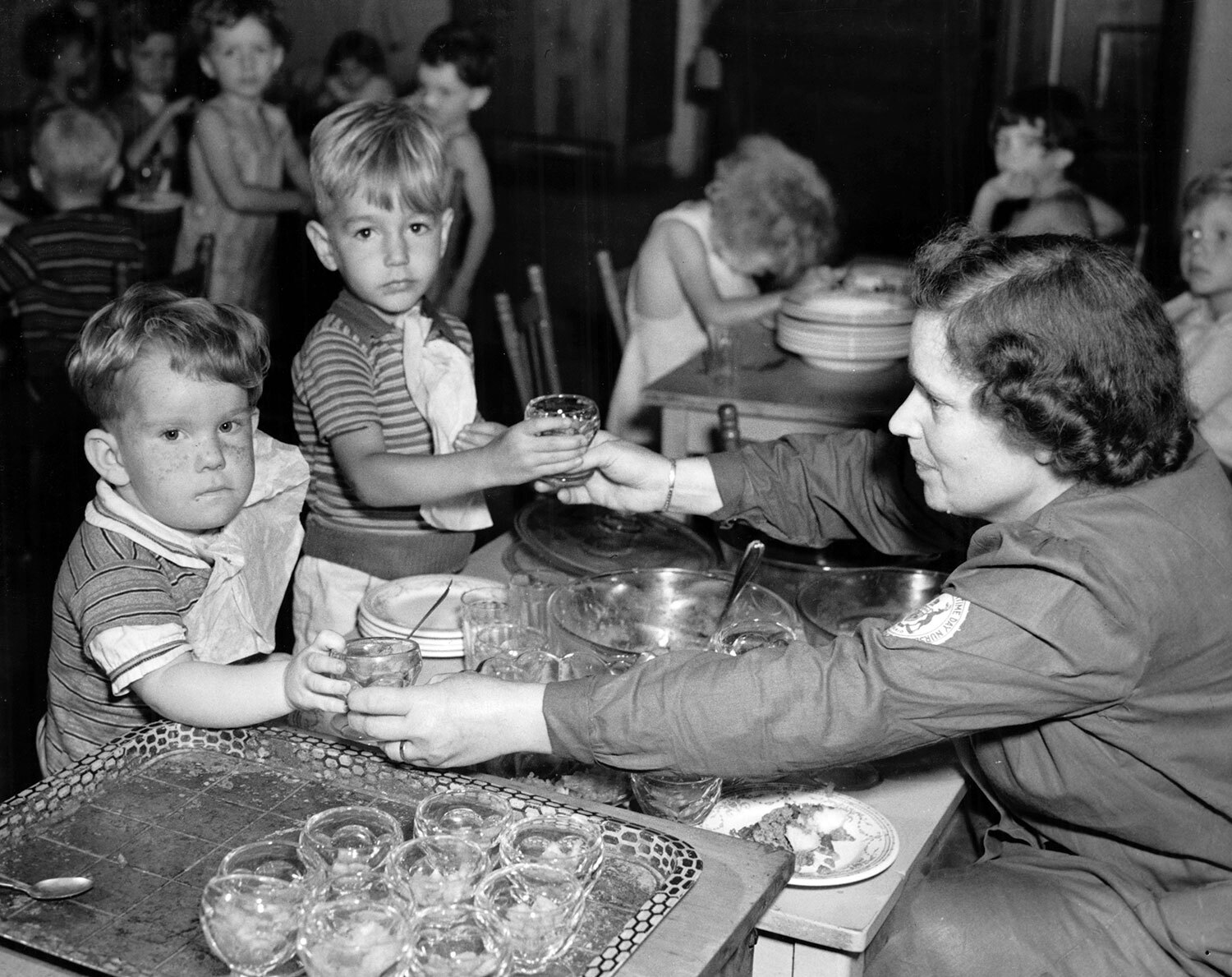
Children eating at a wartime nursery at the General Engineering Company in Scarborough. (Photo: Archives of Ontario)

Children eating at a wartime nursery at the General Engineering Company in Scarborough.

Photo: Archives of Ontario

As a means of “protecting” Canada from the enemies found within, some Canadian citizens were indiscriminately stripped of their liberties and interned alongside Nazi sympathizers and prisoners of war.

Civilian victims of war

Resources

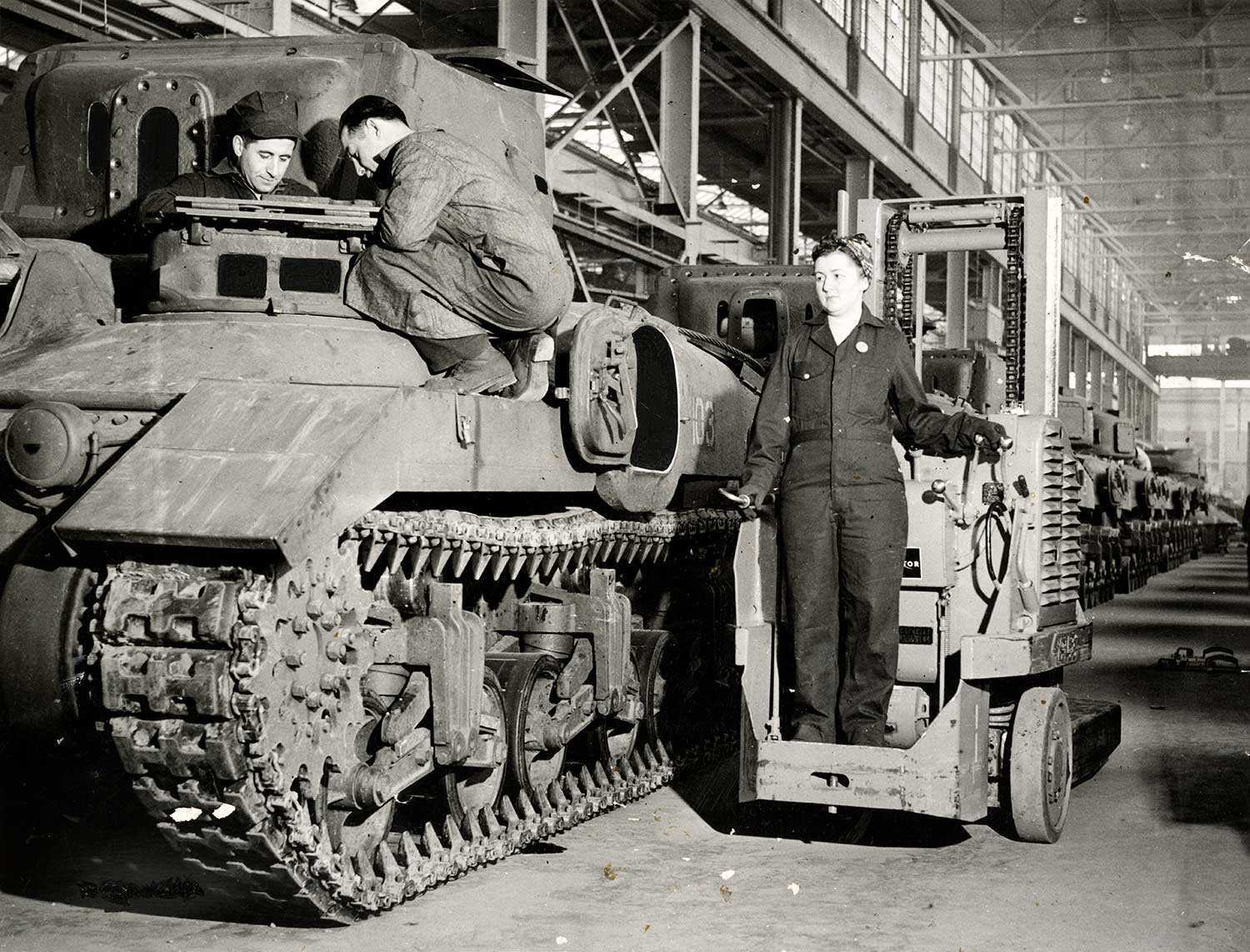
A woman operates heavy equipment along the long production line while men install the mechanical equipment of a ram tank. The Toronto Star published this image in 1942. (Photo: Toronto Public Library)

A woman operates heavy equipment along the long production line while men install the mechanical equipment of a ram tank. The Toronto Star published this image in 1942.

Photo: Toronto Public Library

This narrative cannot possibly tell every story about the Second World War. Explore these resources for more information.

Resources