


Telling Indigenous stories: Trent students propose new narratives for historical plaques
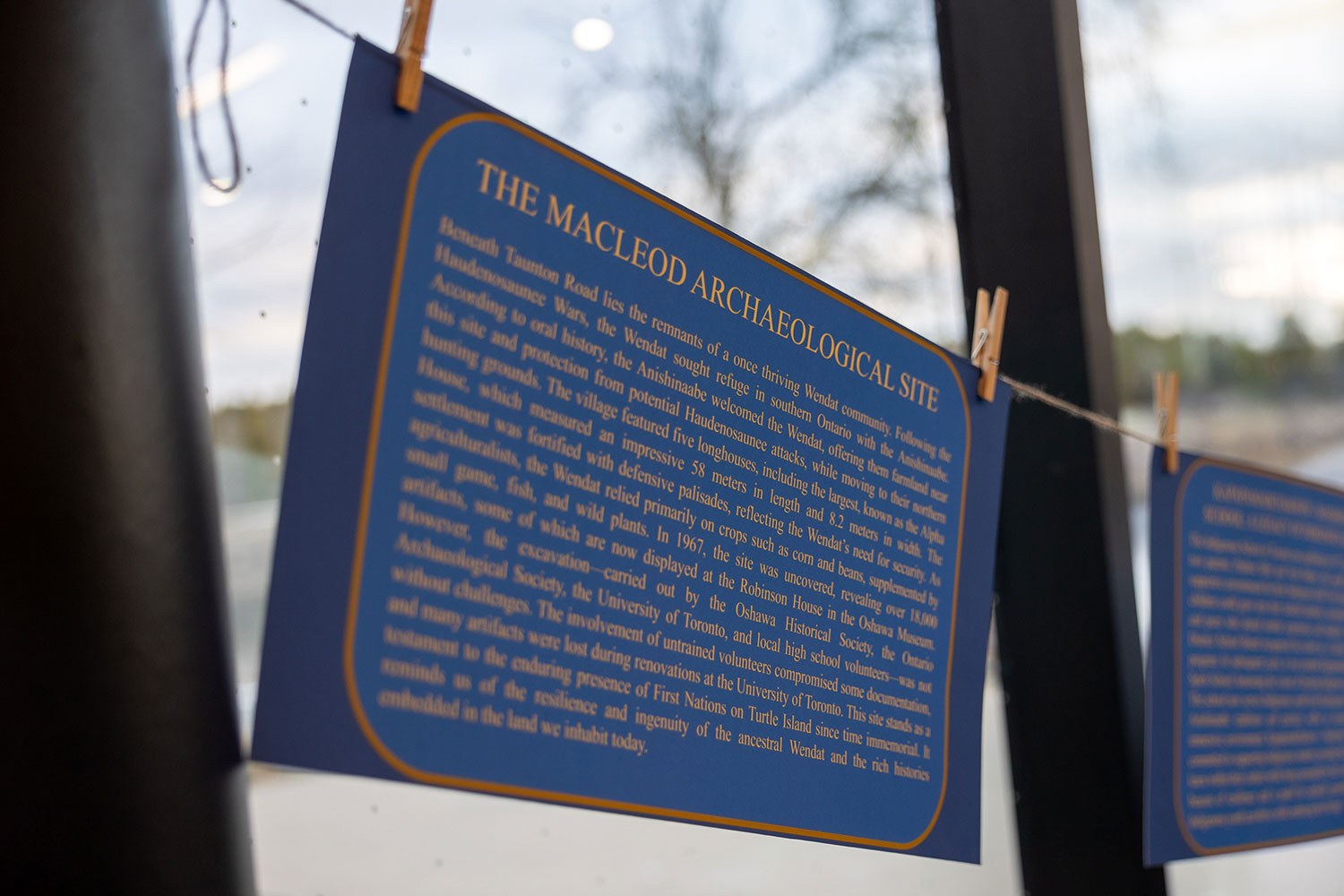
Trent University students’ reimagined plaques
Photo: Trent University

Historical plaques across Canada often focus on the lives and activities of early European settlers, overlooking Indigenous presence or occasionally referencing Indigenous people only in relation to settler events and perspectives. These stories marginalize Indigenous histories, making them largely invisible within public commemorations.
A decade on from the 2015 Truth and Reconciliation Commission (TRC) Final Report and the corresponding 94 Calls to Action, an increasingly wider range of stories about the past are being told though historical commemoration, the media and provincial and territorial curricula. Progress has been slow, however, and many Canadians continue to graduate from high school with little to no understanding of the country’s settler colonial past and present, the existence and significance of treaties between Indigenous nations and the British Crown/Canadian state, the repeated breaches of these treaty agreements by the Canadian government or the far-reaching impacts of the Indian Act. These historical blind spots in Canada mean that we often fail to engage with uncomfortable truths of our past, a failure that limits our ability to fully comprehend our present.
As a response to the TRC report, Trent University adopted an Indigenous Course Requirement (ICR) in Fall 2018, ensuring that all undergraduate students take at least one half-credit course from an approved list of courses with Indigenous content. Indigenous Studies (INDG) 1001 is the highest enrolment ICR course at Trent, providing students with an introduction to Indigenous histories and contemporary issues while also exploring topics including Indigenous resistance, treaties and the impacts of settler colonization.
To help students critically engage with public historical memory and apply course concepts, an assignment that was focused on historical plaques was introduced to the course. Plaques are a useful tool as they offer a concise narrative about a specific place. But they can also omit important stories of the past — particularly regarding Indigenous presence, agency and perspective. Using plaques encourages students to interrogate dominant historical narratives in their own home territories and to explore the Indigenous histories and contemporary understandings that are often overshadowed. This assignment asks students to choose an Ontario provincial plaque from their community, critically assess the narrative presented, and propose text for another story that could be shared instead. In crafting their new plaque, students are encouraged to highlight Indigenous presence, perspectives and contributions.
Trent instructors found that the provincial plaque exercise provided an engaging way for students to interact with historical narratives and to reflect on the power of stories in shaping our understanding of both the past and present. This assignment also opened the door for students to consider whose voices are left out of dominant historical narratives and how stories of the past can be shared in more inclusive and meaningful ways. The assignment has evolved into a meaningful way for students to analyze how public history is constructed, imagine alternative narratives and produce new plaque texts that highlight Indigenous agency, advocacy, resistance or resurgence.
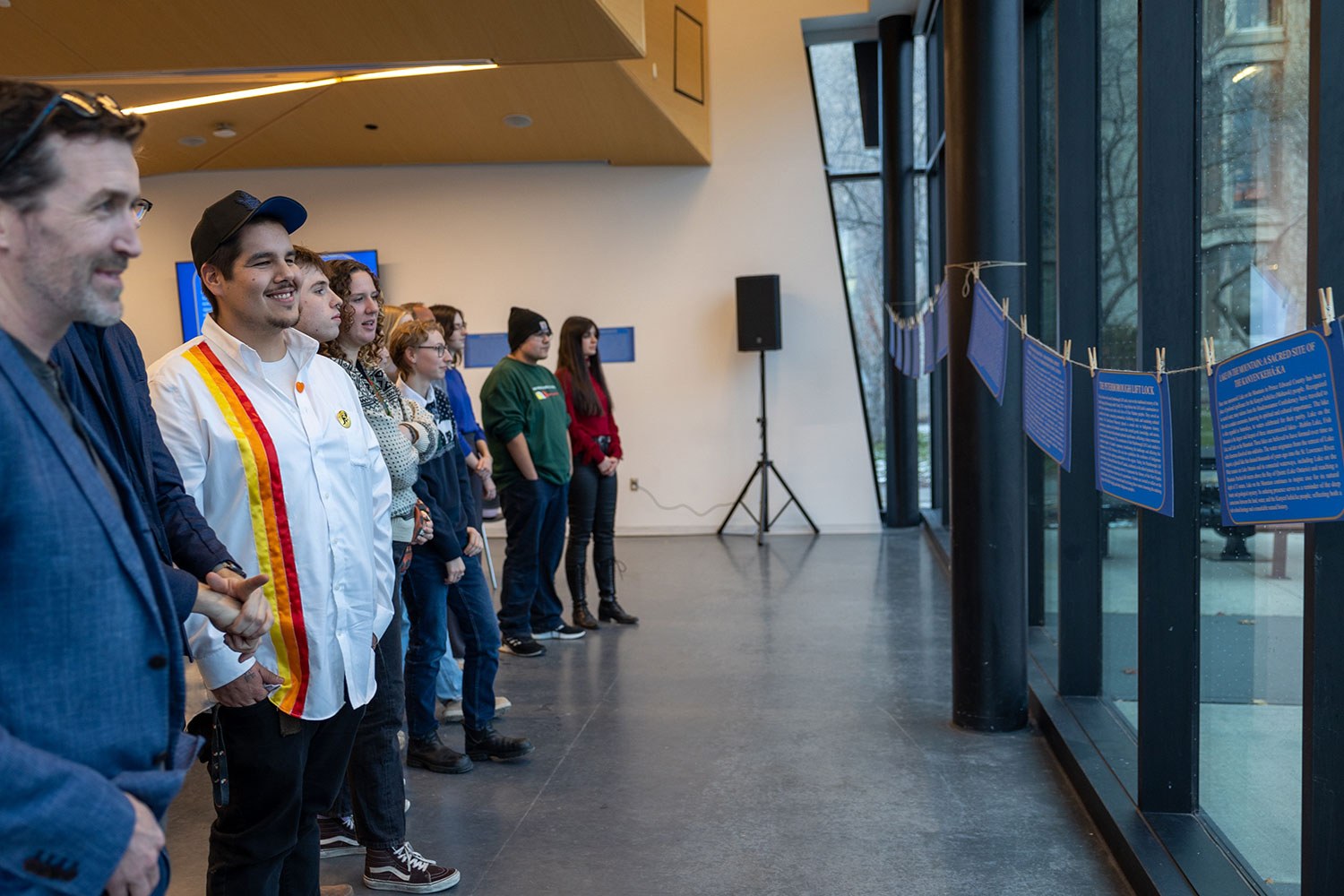
"Indaanikesidoonaa Indaadibaajimowinan: Expanding the Stories We Tell" event
Photo: Trent University
Through the fall of 2024, professors in the Chanie Wenjack School for Indigenous studies at Trent partnered with the Ontario Heritage Trust to support students with the provincial plaque project. During the semester, Trust staff supported the assignment with feedback on student submissions and a guest lecture about provincial commemoration. The collaboration also led to the “Indaanikesidoonaa Indaadibaajimowinan: Expanding the Stories We Tell” event that displayed students’ reimagined plaques and promoted thoughtful conversations about the commemoration of Indigenous stories, lands and cultures across the province. Many of these plaques are now showcased on a website to continue conversations about deepening our collective understanding of the complexities and possibilities of commemorating Indigenous histories in Ontario.
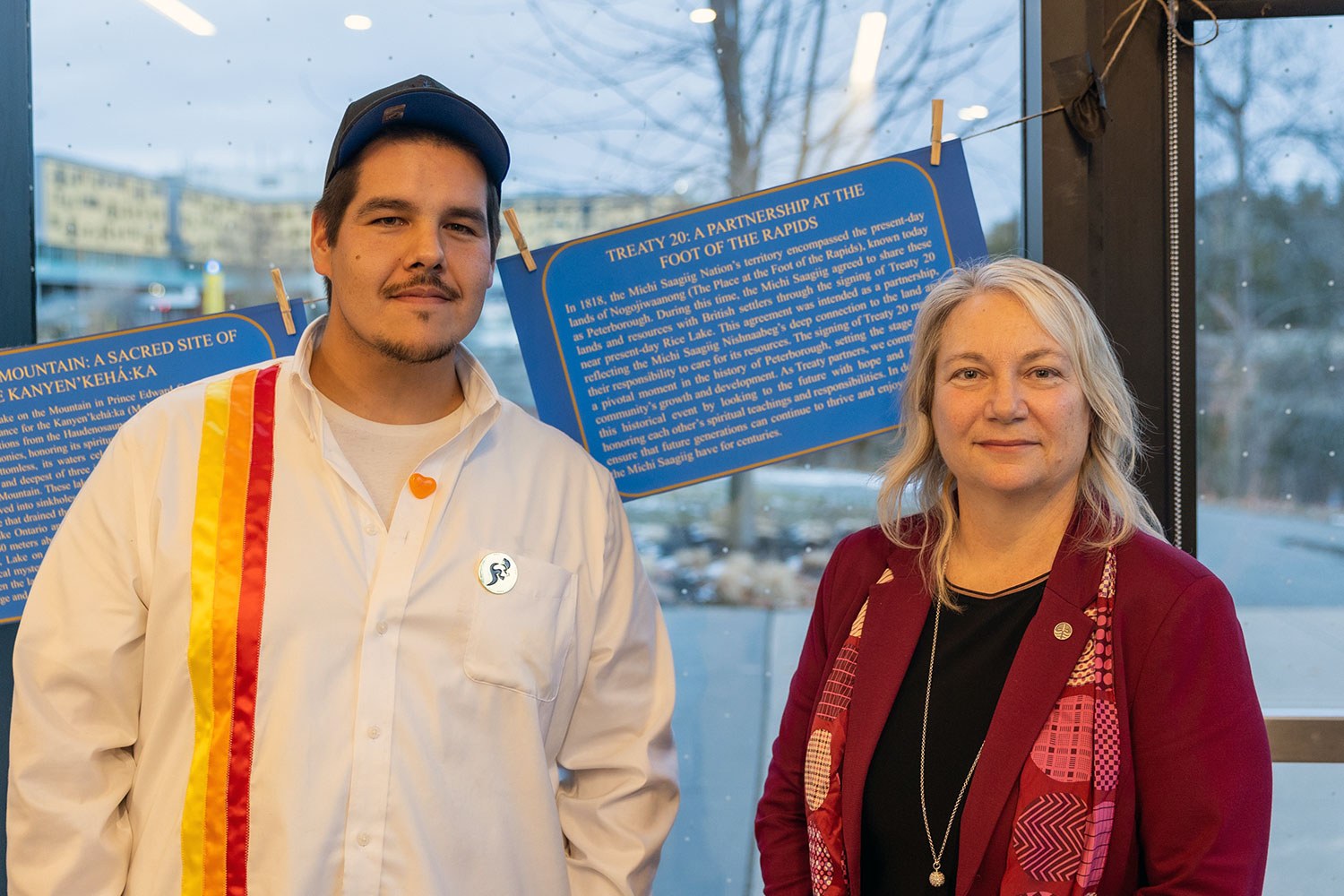
Devon Jacobs with Trent University President and Vice-Chancellor Cathy Bruce.
Photo: Trent University
Devon Jacobs, who is Michi Saagiig Nishnaabeg from Curve Lake First Nation and a former student in INDG 1001, reflects on his experience with the historical plaque assignment:
We were encouraged to explore beyond the classroom, to seek out plaques and dissect the recorded accounts being presented to the public. Growing up in Curve Lake First Nation, I sought guidance from fellow community members on how to approach this assignment. I was encouraged to explore the Smith Town Hill Monument on Parkhill Road in Nogojiwaanong (Peterborough). I was stunned to discover that any acknowledgment of the Michi Saagiig Nation had been omitted in favor of depicting a story of discovery by colonial settlers. This resulted in some personal frustration due to the lack of honour and respect shown towards my ancestors. I chose to make this plaque the focus of my analysis and to propose a story for a different plaque that foregrounds Michi Saagiig Nishnaabeg relationships to our territory while also discussing Treaty 20, which allowed Europeans to settle in Nogojiwaanong and the surrounding area.
One year later, this assignment has had profound and lasting effects on me. Because I sought advice from my community, I have bonded with my fellow community members. Also, when I come across monuments or plaques, I now assess the stories told and contemplate what might be missing. Above all, I better understand the territory I grew up in. I can honour my ancestors more appropriately and effectively because of the shared knowledge. The historical plaque assignment stands out because it was designed to generate meaningful conversations and research involving local historical relevance. During my time at Trent University, this was by far the most engaging and impactful experience as a student, and I am proud of the project I delivered.
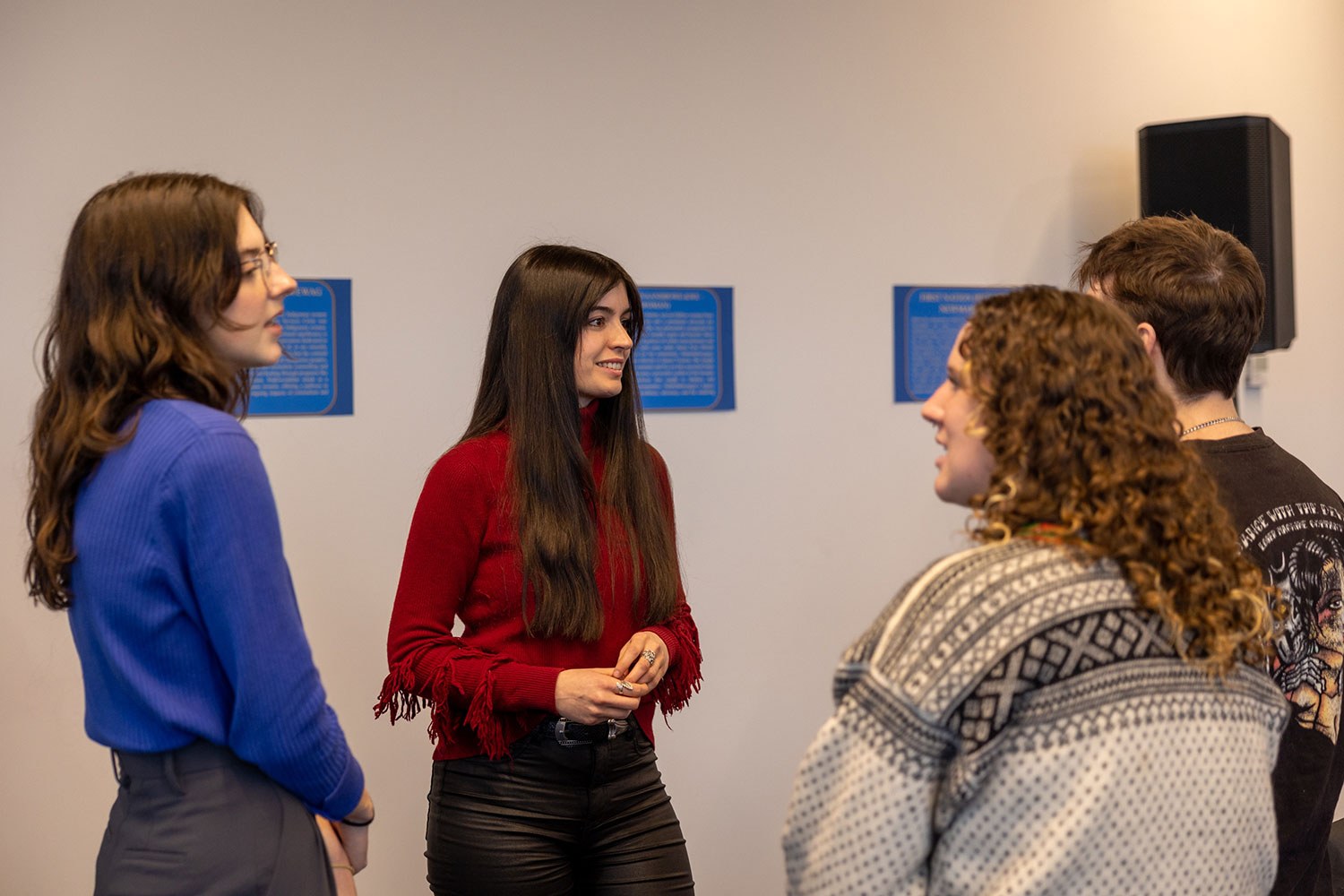
Talia Symington-Kruus and other students.
Photo: Trent University
Talia Symington-Kruus completed INDG 1001 in the fall of 2024 and offers the following insights on historical narratives and the historical plaque assignment:
The land knows the truth, lives it, holds it and remembers it. We know the truths we are taught — the histories written and documented a mixture of truth, selective narratives, bias and perspective passed down through generations. These histories can be gateways to connection with the land, but only if they reflect the full truth of all the people and experiences rooted in that place. “Canadian” history was founded by settler colonial frameworks and academic biases. But as these evolve, so must the way we learn and share history. Plaques are one way we encounter history across Ontario and connect with the places we live. They have the potential to reflect the land's truth when written with care and representation for all people involved. This assignment gave us, as students, the opportunity to act as keepers of truth, using both knowledge we've learned and that which we continue to uncover. I chose to write a plaque on the 1836 Manitoulin Treaty, a process that allowed me to engage with the truth of the land and reflect on my responsibilities as a settler on Turtle Island. Projects like this help us contribute to the ongoing work of truth-telling and accountability by challenging dominant narratives and sharing stories that acknowledge the rich and complex history of the land now known as Ontario.
Overall, this project continues to share stories that centre Indigenous perspectives, experiences, resistance and resurgence as a means of advancing a more inclusive and comprehensive understanding of both historical and present-day realities. The process of researching, writing and sharing these stories creates an experiential and participatory learning experience where students expand and deepen their historical awareness. Broadening commemorative narratives to include Indigenous perspectives encourages critical reflection on Canada’s past and supports the ongoing work of truth-telling.
More about Indaanikesidoonaa indaadibaajimowinan: Expanding the Stories We Tell
Indaanikesidoonaa indaadibaajimowinan: Expanding the Stories We Tell is part of an ongoing partnership with Trent University and the Ontario Heritage Trust, exploring Indigenous histories and experiences within the Trust’s Provincial Plaque Program. As our partnership expands, we continue to look forward to working with students at the post-secondary and secondary school levels in welcoming underrepresented perspectives and shaping the future of the Provincial Plaque Program. We are grateful to Canada Life for their continued sponsorship of the Trust's Youth Strategy Program.