


A place where nature can run wild
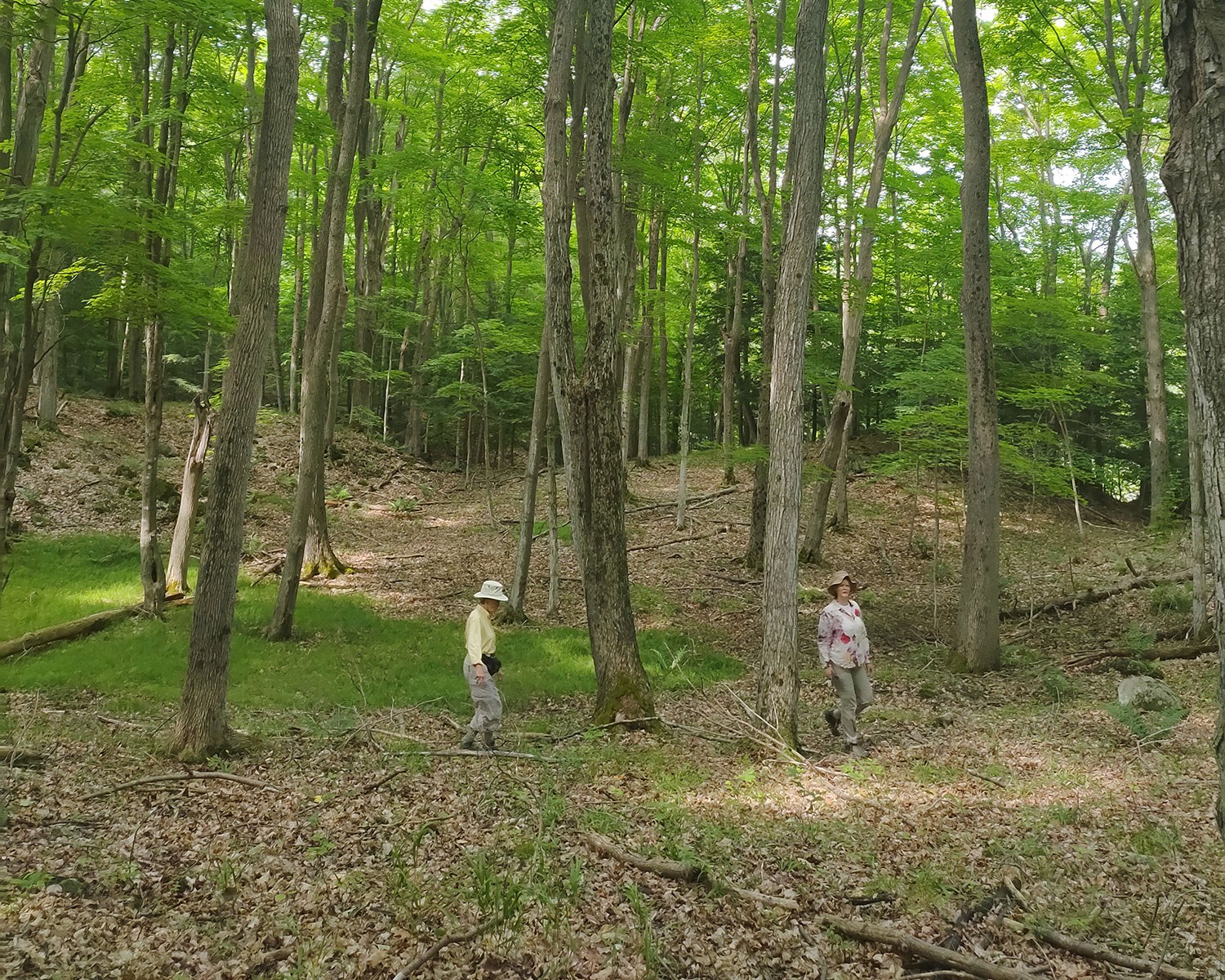
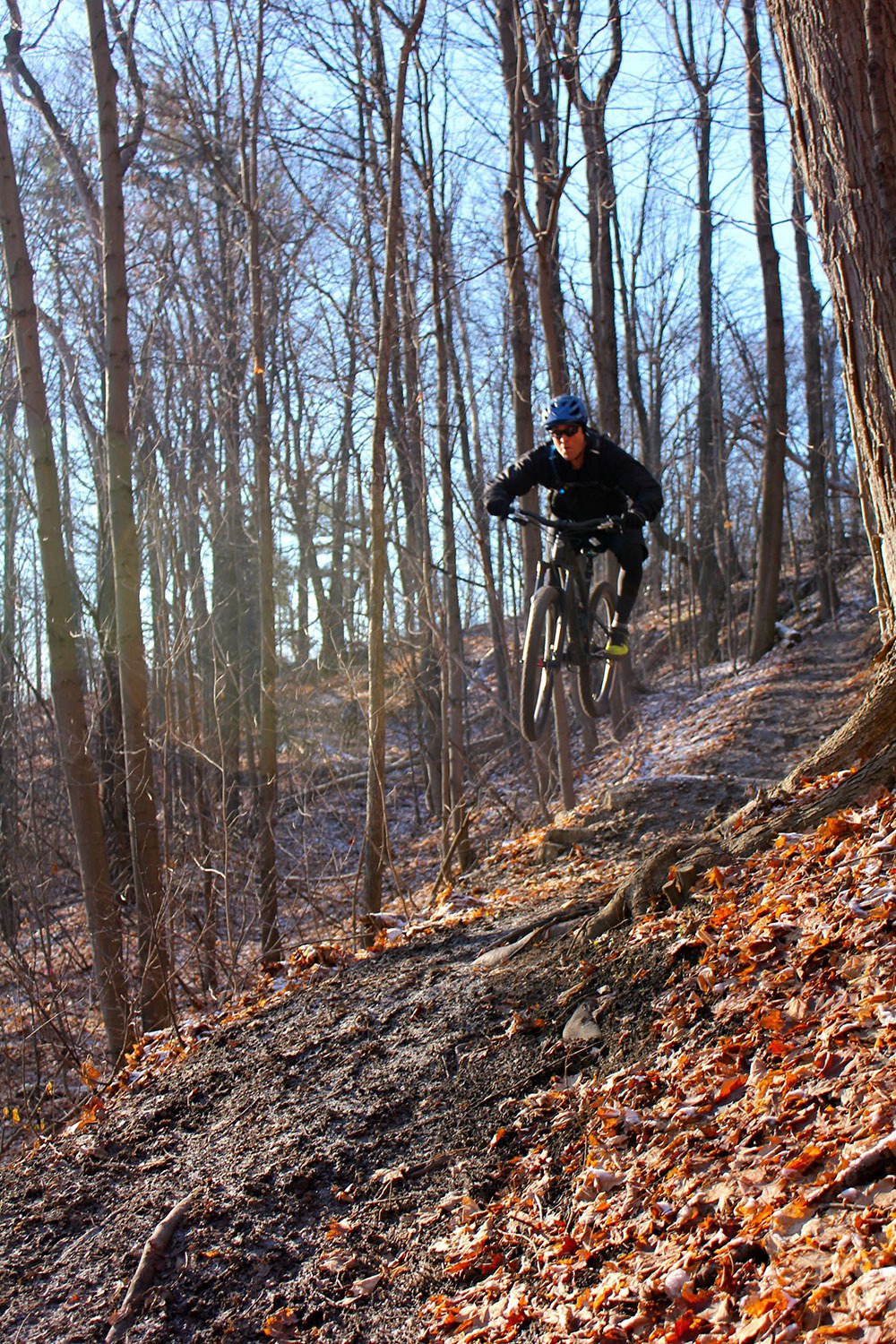
Photo: Upland forest (2024)

Have you ever wondered how natural heritage protection happens on private land? How can landowners ensure that nature, biodiversity and unique natural features on their properties are safeguarded for generations to come?
The Ontario Heritage Trust (the Trust) plays a unique role in protecting Ontario’s heritage. One of the protection tools available to the Trust are conservation easements, which safeguard provincially significant natural, cultural and archaeological heritage resources. Authorized under section 10(1)(c) of the Ontario Heritage Act, conservation easements are a valuable tool for Ontarians who wish to preserve unique heritage features of their properties in perpetuity.
There is an intuitive connection between humans and land that is tangible. A conservation easement can help safeguard this relationship. It also extends to protection on an ecological level by ensuring that important natural features, threatened ecosystems specific to the area, and endangered flora and fauna remain and thrive.
Through these voluntary agreements, property owners commit to specific covenants or agreements that restrict certain activities or require approval from the Trust, ensuring that decisions about changes or additions to a property protected by an easement support long-term conservation. These covenants are registered on title and run with the land, meaning they apply to all future owners as well.
Protecting land with a conservation easement allows the unique natural heritage to be protected in perpetuity. The land becomes a space where the beauty of diverse ecosystems — and the life they support — can be experienced and understood.
Recently, I spoke with Ed Fletcher and Heather Jamison from the Sydenham area who recently signed a conservation easement with the Trust to protect their property. I asked what inspired them to embark on this journey and what makes their property so special. While it can be difficult to capture such personal reflections on paper, I am grateful for their willingness to share their story.
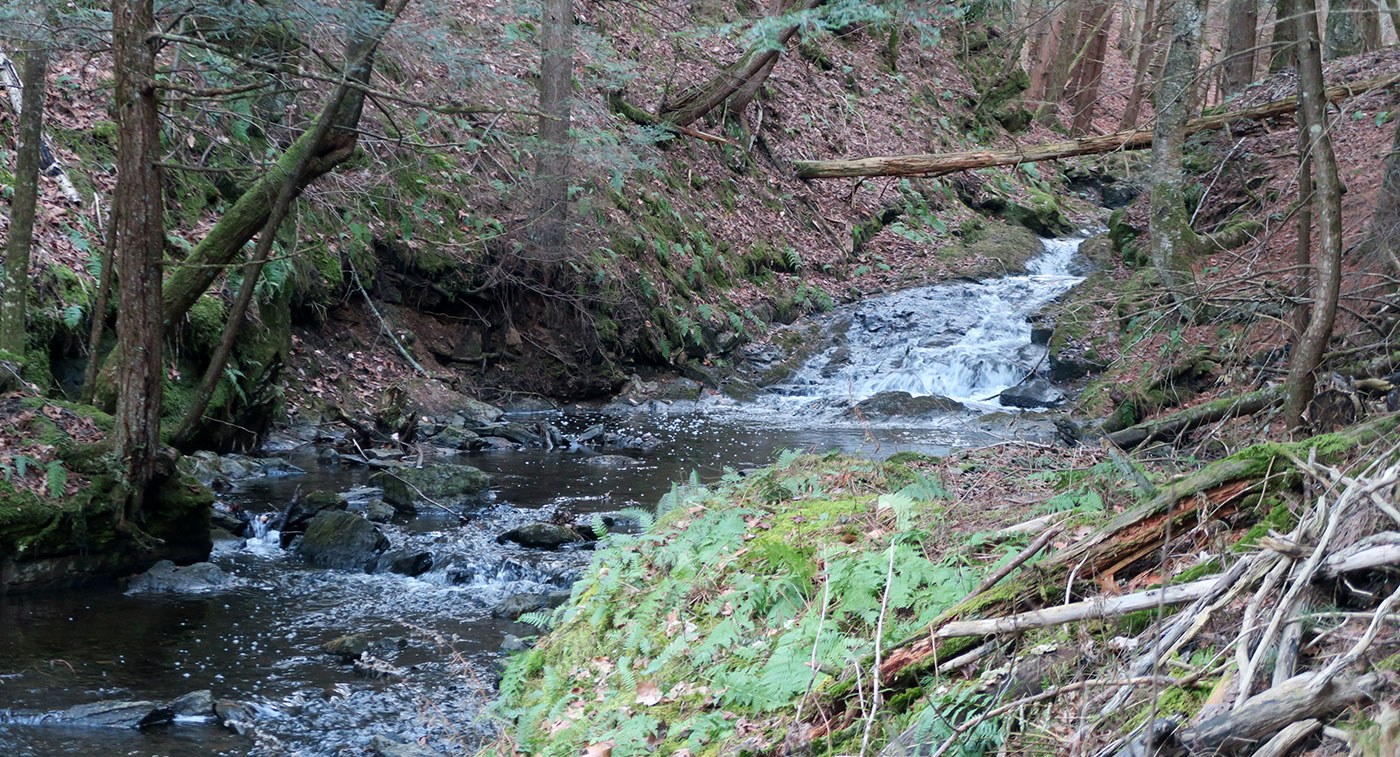
Photo: Sloping waterfall and creek (2017)
The Fletcher-Jamison Property
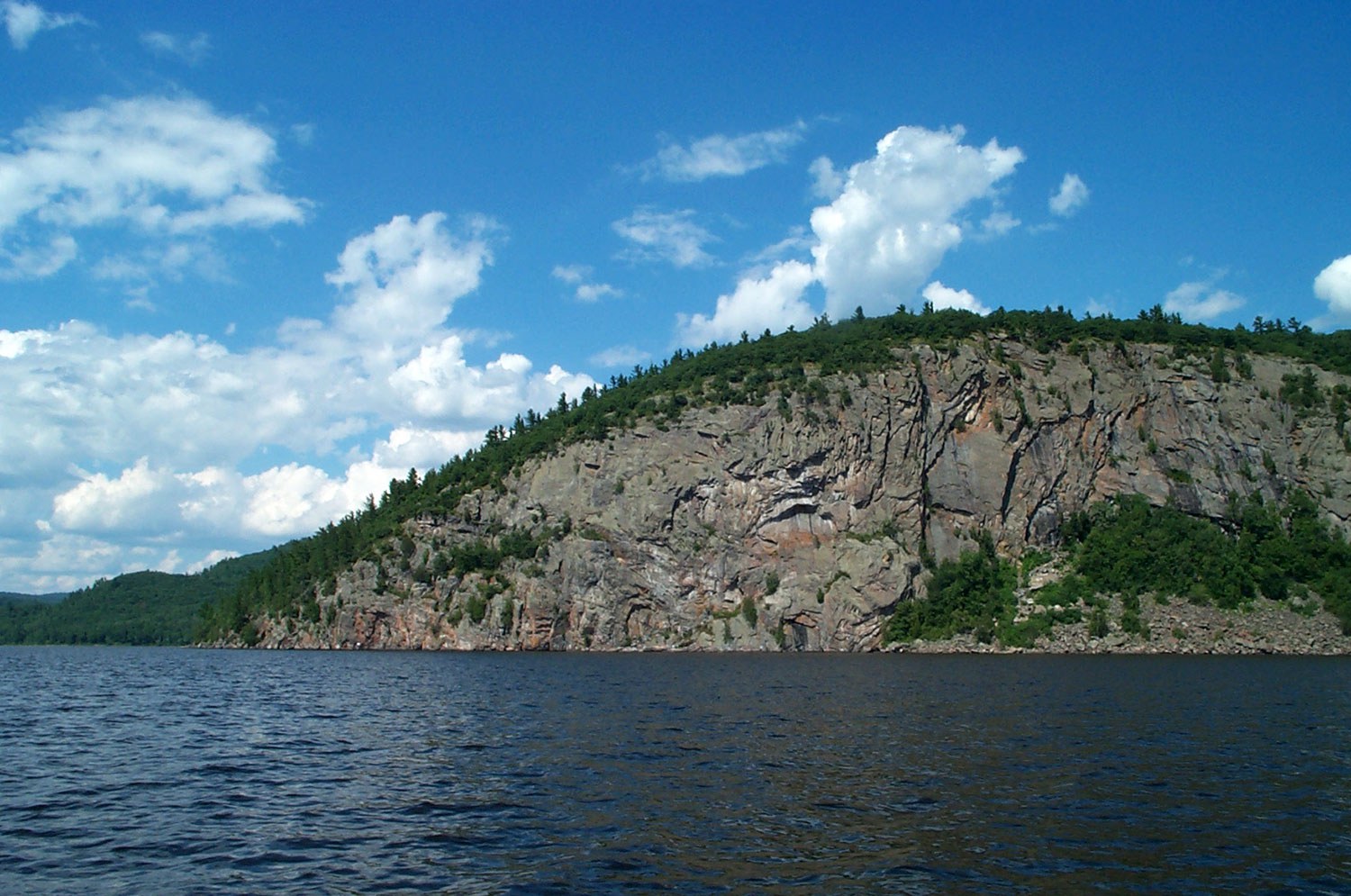
Located in the Township of South Frontenac, this nearly-40-hectare (100-acre) forest forms a vital part of the Frontenac Arch Biosphere Reserve and encompasses the southern shoreline of Bulls Eye Lake, a quiet bay off Sydenham Lake. The conservation easement on this property ensures the long-term protection, maintenance, restoration and enhancement of the property’s diverse natural features, while preventing activities that could damage these sensitive ecosystems.
The property’s provincial significance lies in its rich ecological value: it supports rare species, mature forest stands and a diversity of habitats, while bordering both a significant water body and the provincially significant Eel Bay-Sydenham Lake wetland. Its undisturbed wetlands and woodlands provide important staging habitat for many sensitive species.
The Trust plays an active role by reviewing and discussing any proposed alterations to the property and conducting periodic on-site monitoring. Stewardship is further strengthened through a partnership with the Land Conservancy for Kingston, Frontenac, Lennox and Addington (KFLA). Their knowledgeable team of naturalists supports the easement by gathering ecological data, completing flora and fauna inventories, and monitoring changes, encroachments and risks, such as invasive species or other disturbances.
Together, this agreement, along with an existing Trust easement on the lake’s north shore, secures the entire shoreline of Bulls Eye Lake. By protecting this site, the Trust is safeguarding a key ecological link within a broader network of conserved lands, helping to maintain the integrity and resilience of natural systems in this region of the province.
Throughout our conversation, notice how strongly the easement reflects the owners’ desires for protecting the property they cherish.
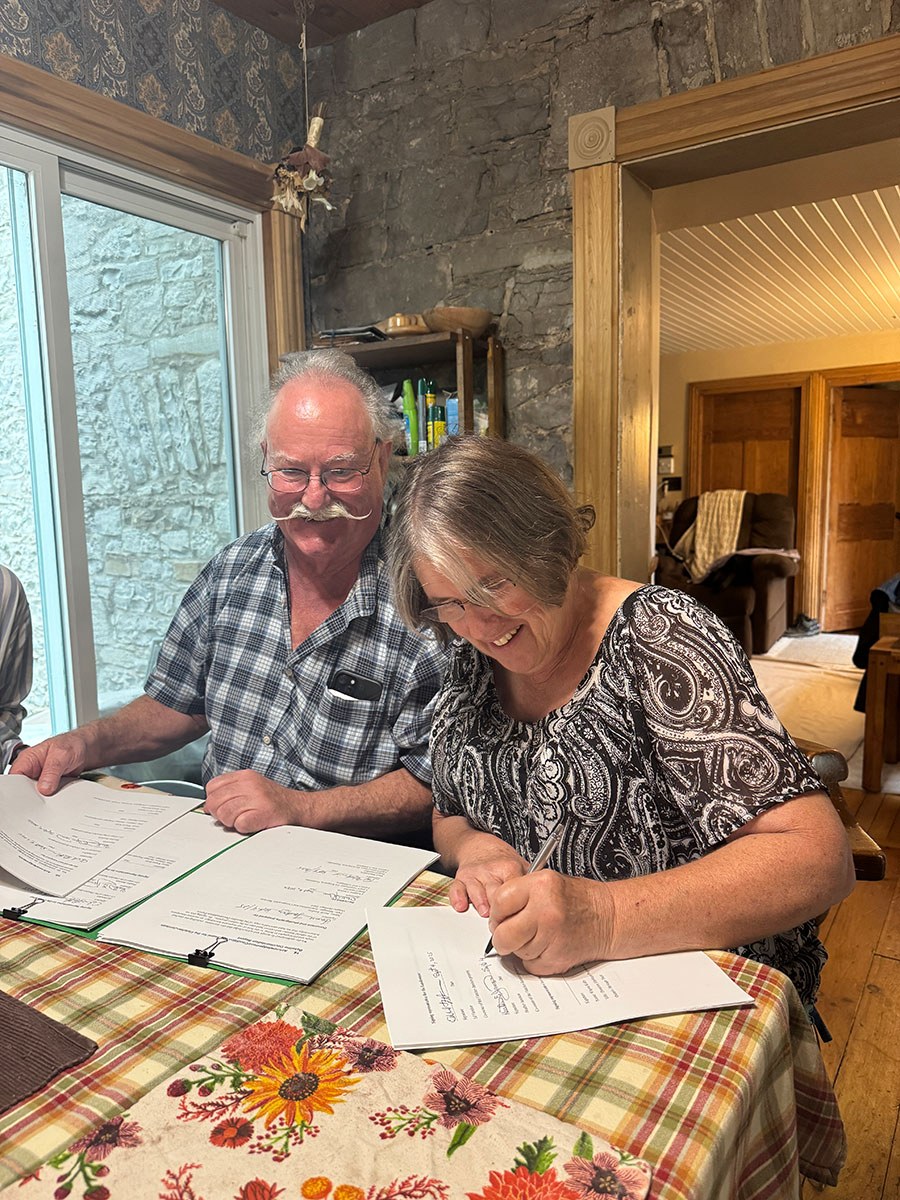
Ed and Heather at the signing of the easement documents, September 2025
Catherine Wisniowski: What first attracted you to the idea of a conservation easement for your property?
Ed Fletcher and Heather Jamison: We were attracted to the idea because Ed’s father, Larry, had been talking to the Covingtons, a neighbour, about the easement that they were putting on their property — also with the Ontario Heritage Trust. He wanted to protect the land that he owned and we had had several conversations about it. Unfortunately, he passed away prior to starting the process. On the day he died and while at the Covingtons’ place to celebrate the finalization of their property easement, we began the journey to complete an easement on a piece of our land. It has been a tribute to Ed’s father and, for our family, has become a memorial to him, his love of the land and his desire to see it preserved for generations to come.
CW: What does “perpetuity” mean to you?
EF and HJ: “Perpetuity” means that the property and its surrounding features, including shoreline habitat, will be free from development and will stay in its natural state for generations to come. The unique features and species of wildlife, flora and fauna will remain and flourish. Perhaps, as the area becomes more of an urban setting, the lands will be a more suitable location for displaced animals than under someone’s deck eating garbage! It will be a place where nature can remain wild.
CW: If you could name just one, what do you think is the most important protected feature on your property?
EF and HJ: It is hard to name just one favourite feature. There are many important ones — such as the sheer numbers of fern varieties, red-shouldered hawks and geological land formations. Sometimes, it is just being able to go out back and revel in being able to walk in the calm of it all, to be awed by how it got that way, to be inspired by the surrounding environment and to be touched by the sights and sounds of the insects, the animals and the birds.
CW: What is something (a specific spot, tree or formation) that draws you out to the property? Why?
EF: The sloping waterfall. Besides, producing a different ambience each time you visit, it is a location that was a favourite of my father.
HJ: There are sections of old growth where I find the size of trees left untouched quite mindboggling.
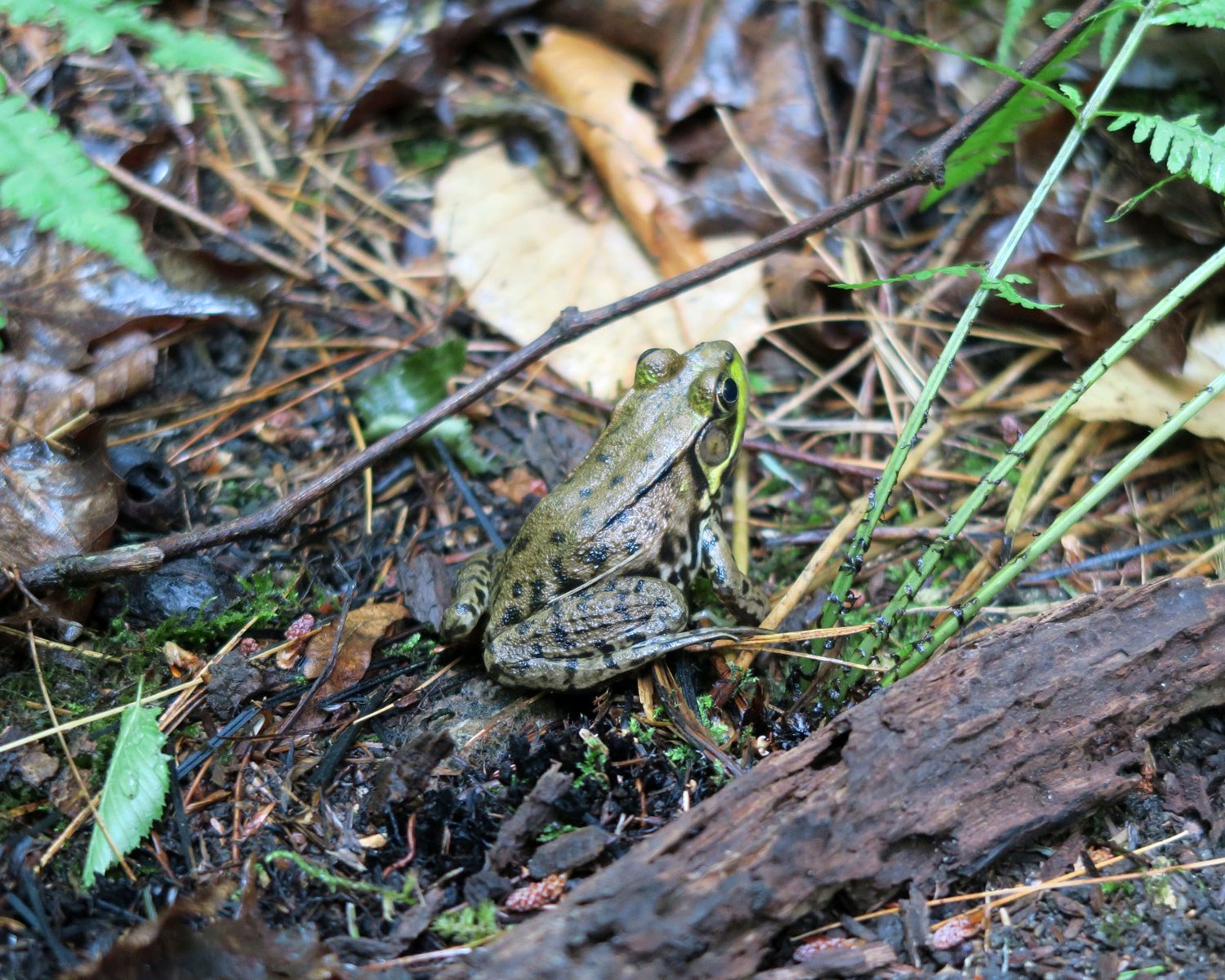
Green frog (Lithobates clamitans) (2016)
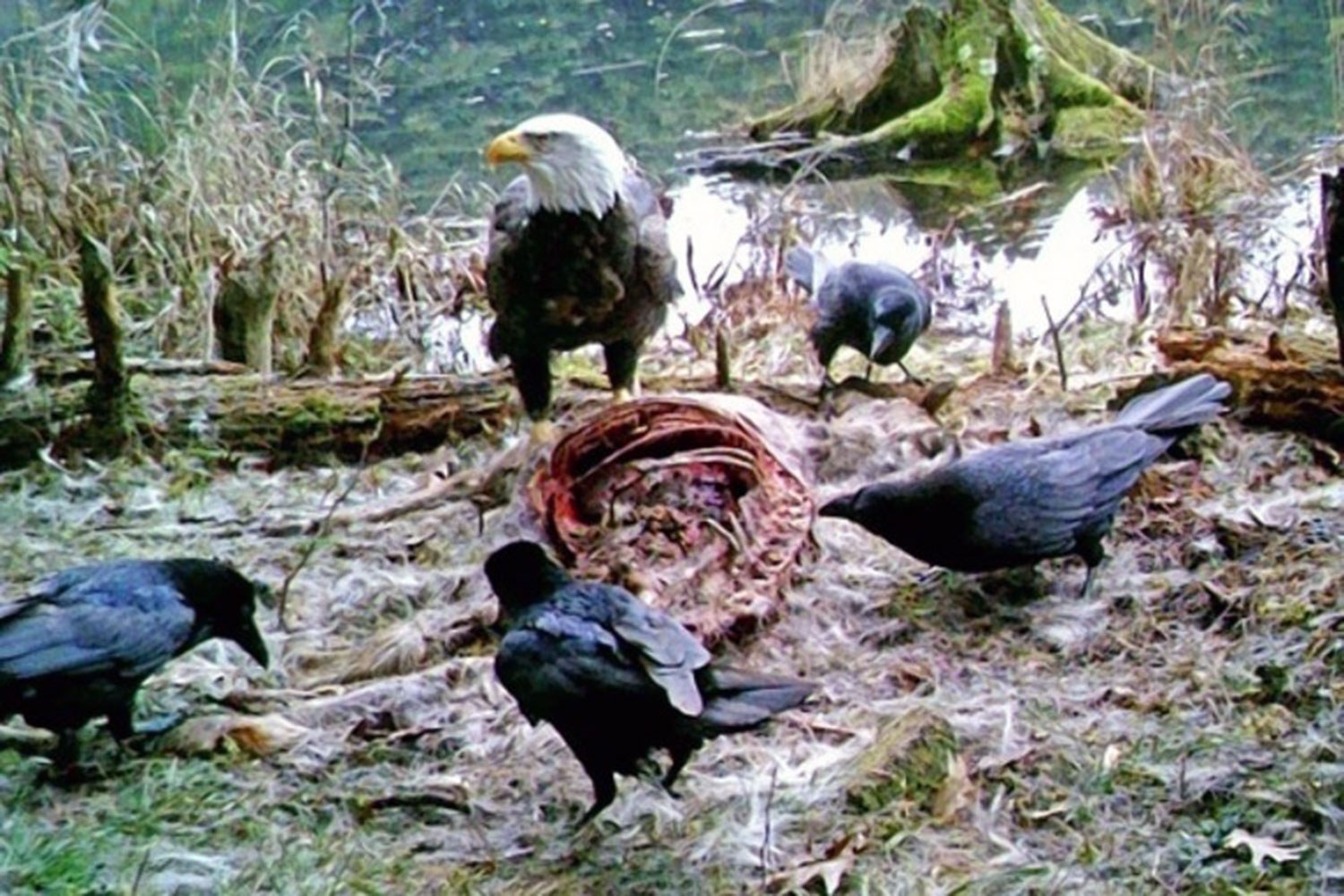
Adult bald eagle, Haliaeetus leucocephalus, and American crows, Corvus brachyrhynchos (wildlife camera, 2017)
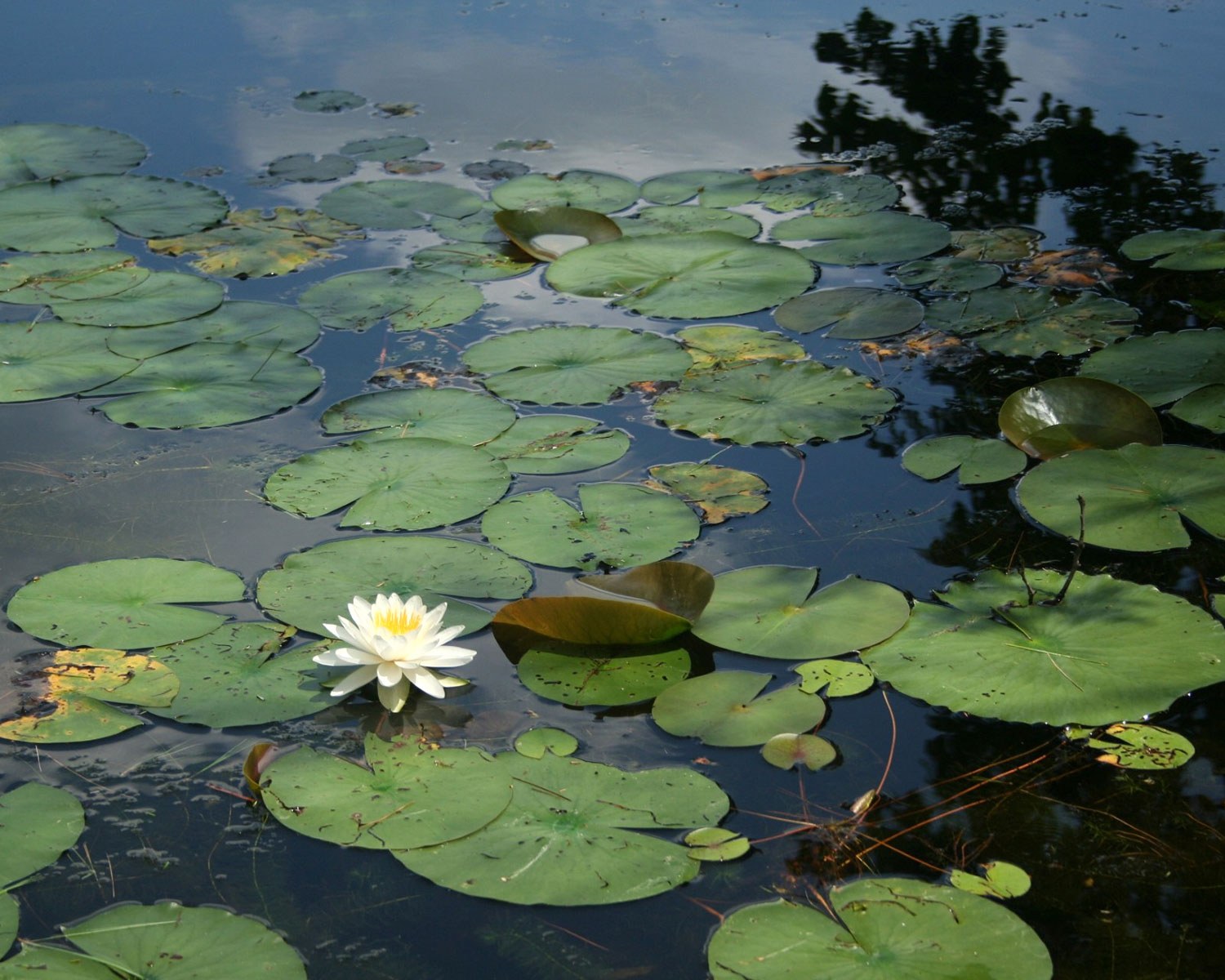
American white water lily (Nymphaea odorata) (2016)
CW: Is there a species you remember seeing more often in the past that has since disappeared or is less frequently seen today?
EF and HJ: Some of the species that we remember being more plentiful include trilliums, trout lilies and leeks. Over the past few years, the rainfall in the area seems to have decreased and the winter winds seem to be stronger, resulting in greater tree damage. We also perceive a decreased forest density.
CW: There is a lake and shoreline that borders the property. What makes the aquatic area so special to you?
EF and HJ: The lake is special to us because it is like a kettle lake, (that is, it’s 40 feet deep in the middle with steep sides). It is a wonderful lake to swim in. The entrance is out of the way and narrow, restricting access to and damage from fast boats, jet skis and water skiers. The undisturbed and quiet waters here offer spawning areas along the vegetated shorelines and islands. The sensitive aquatic and shoreline habitats are a hub where wildlife thrives.
CW: Any other interesting facts or stories about the property?
EF and HJ: In the 1800s, this area was heavily logged and mined for mica and feldspar. No active mining was done within the boundary of our property. However, it was done on adjacent lands, and some exploration did take place. Due to the rugged ridges, lumbering was too difficult to conduct and was not economical. Even some sought-after species of trees such as yellow birch were left unharvested. Today, there are some areas of old growth forest that continue to exist — white pines and a monster-sized burr oak.
CW: In your opinion, why is it so important for private landowners to consider protection through conservation easements?
EF and HJ: In a world of urban growth and development with a focus on profit, it is incredibly important to preserve and protect as many unique properties as possible. Present and future generations need to understand how interconnected we are and how our survival depends on these environments.
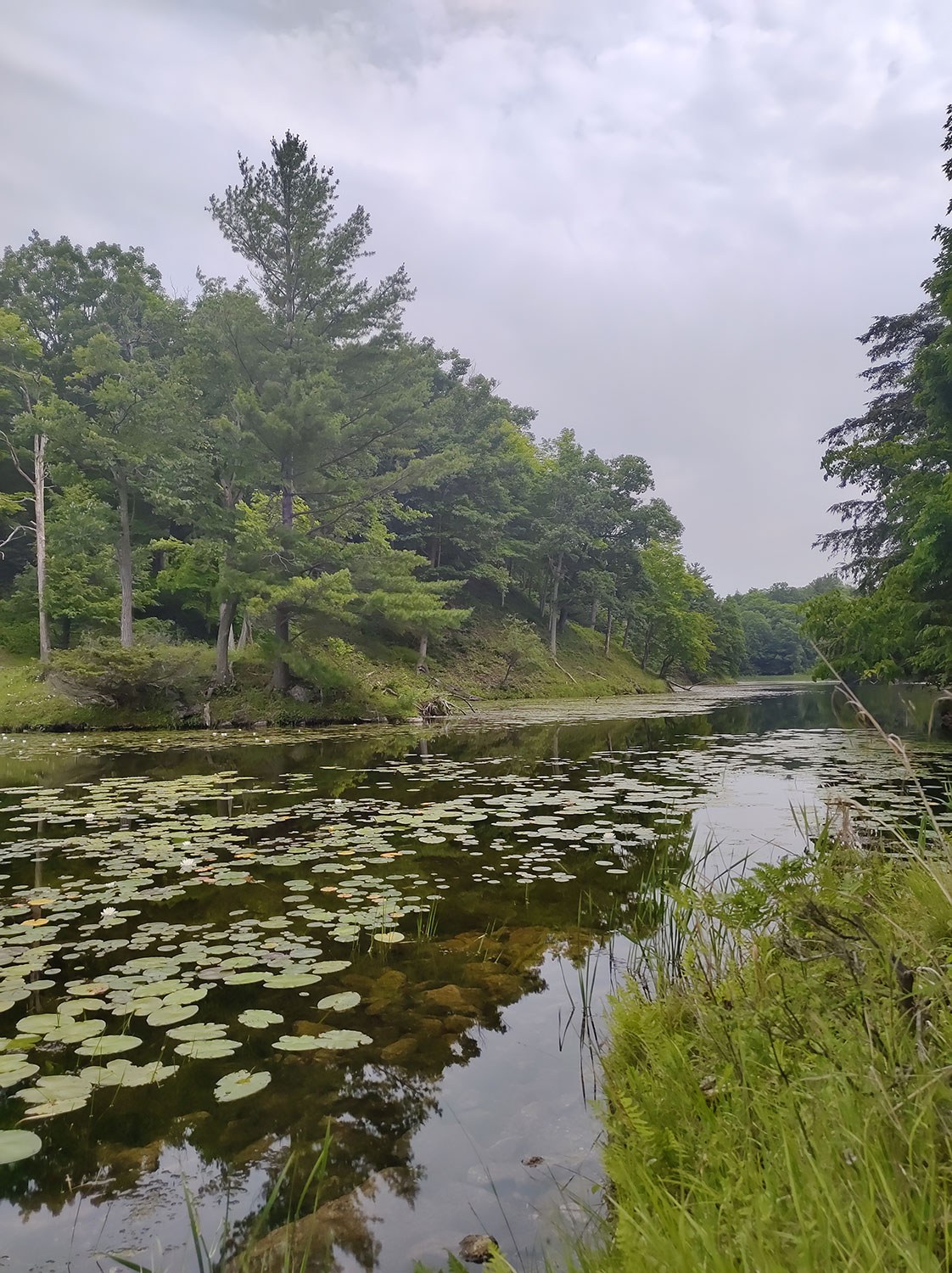
Marsh area (2024)
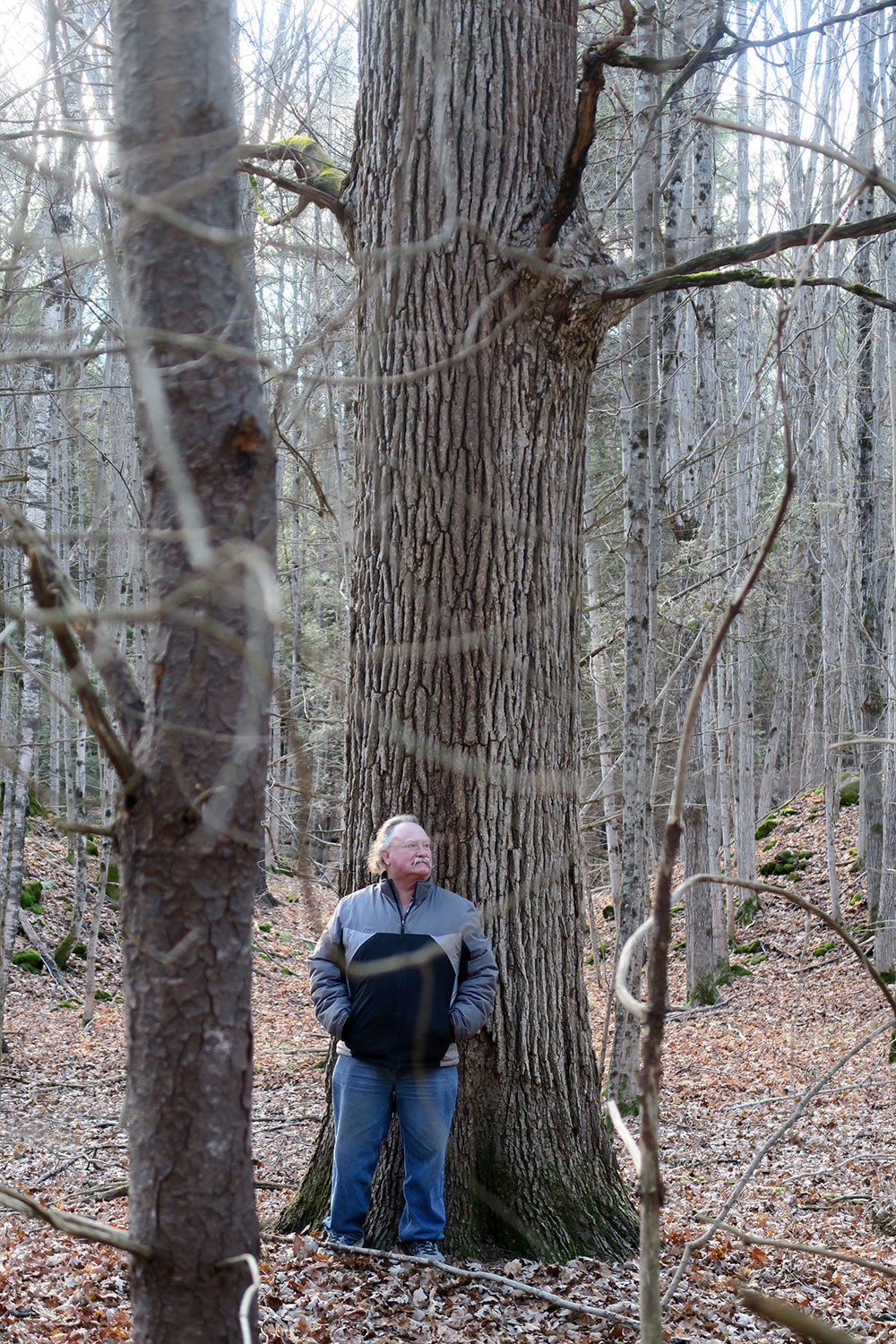
Ed Fletcher and large burr oak (2017)
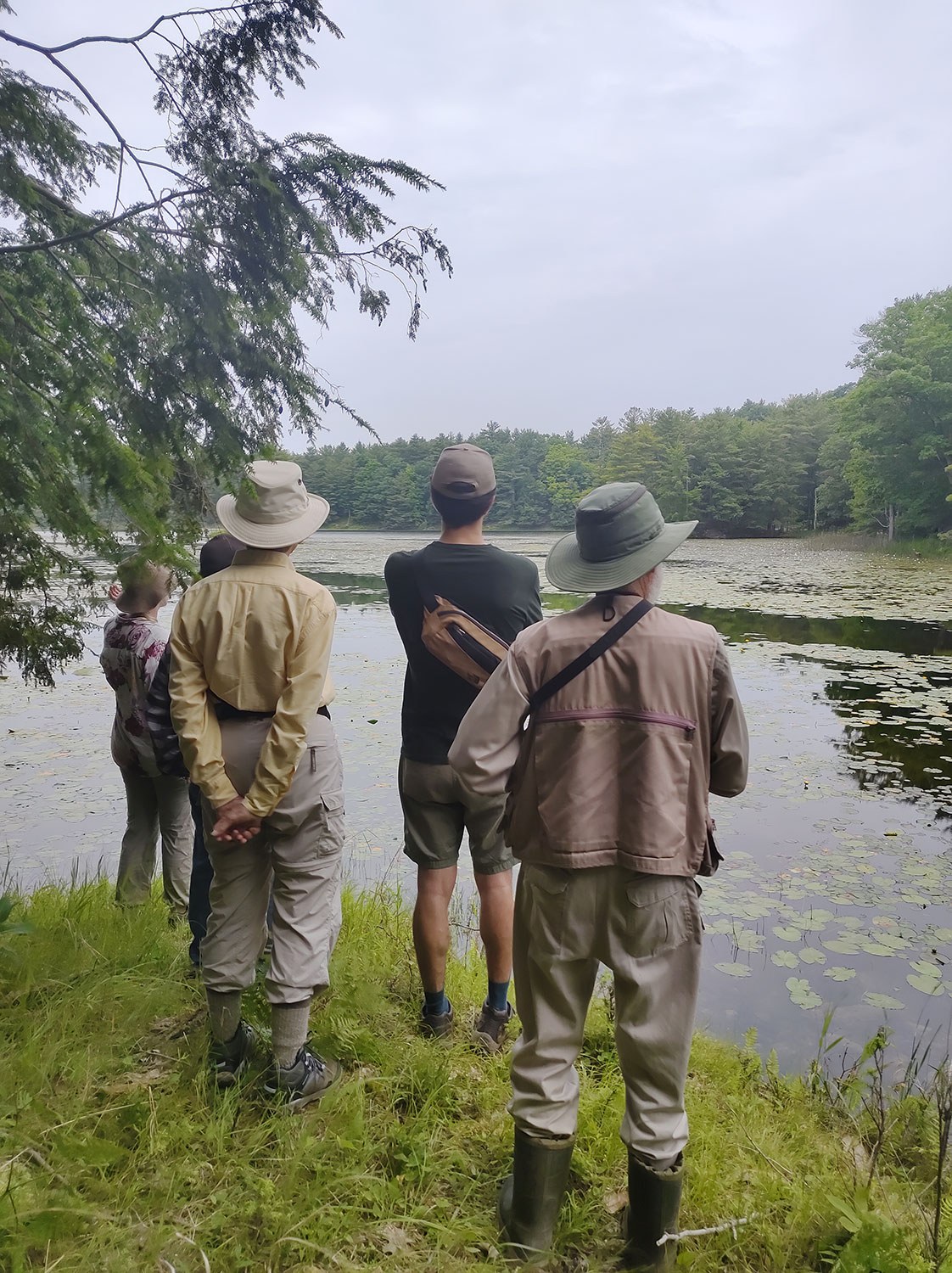
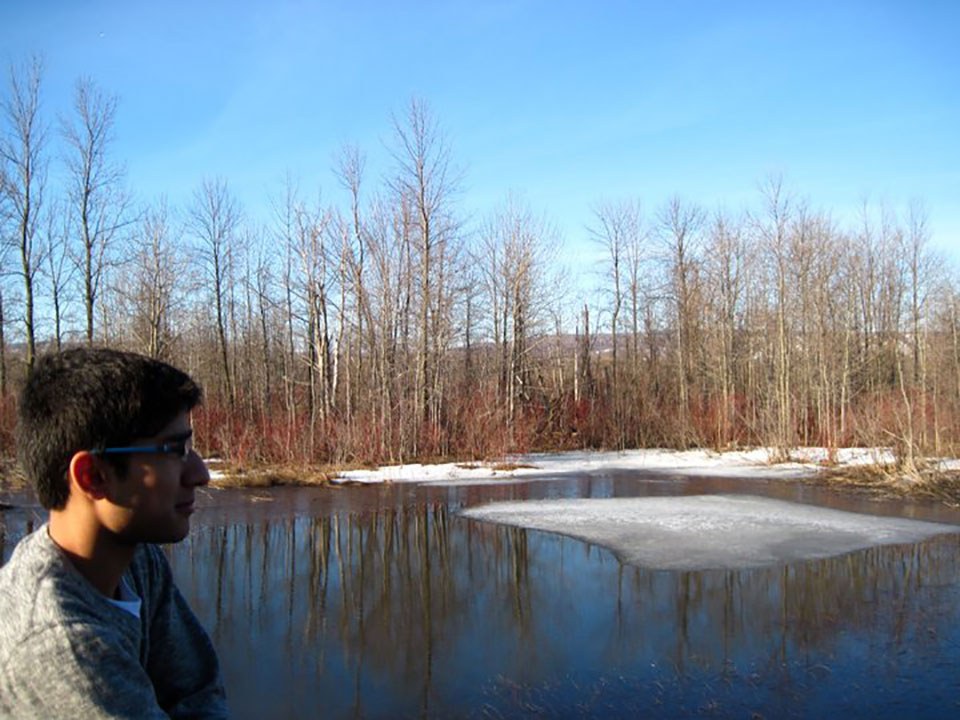
Admiring the shoreline (2024)
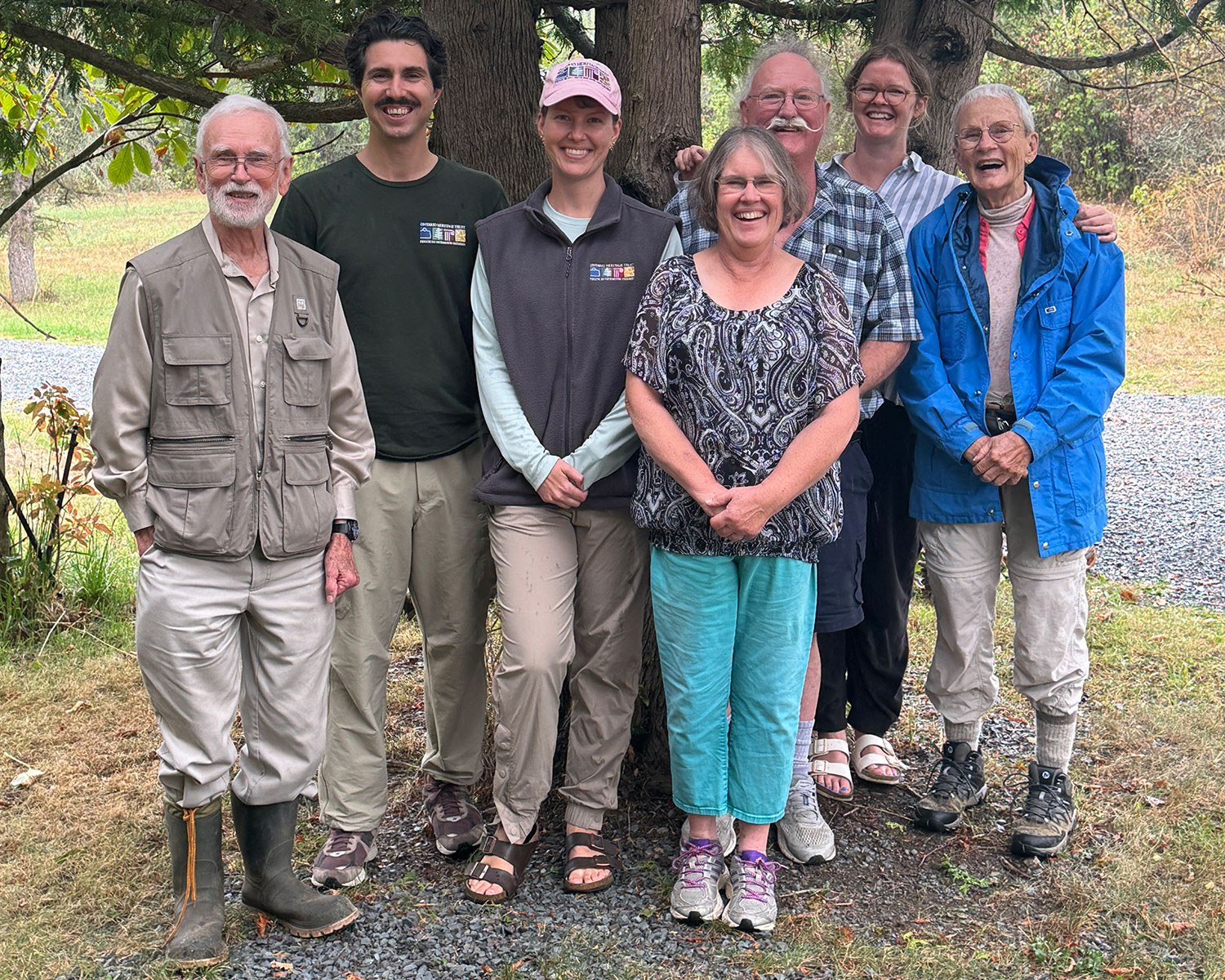
Left to right: Paul Mackenzie (Land Conservancy for KFLA), Sammy Bayefsky (the Trust), Catherine Wisniowski (the Trust), Heather Jamison, Ed Fletcher, Jamie Joudrey (the Trust) and Chris Cannon (Land Conservancy for KFLA), September 2025.
Looking ahead
For Ed and Heather, it’s obvious that their land has always been a source of wonder and joy. The conservation easement is a safeguard that ensures the land’s story will continue to unfold. Ed and Heather continue to pass along their deep understanding of the beauty found in nature and share it with their family.
So, what comes next? The Ontario Heritage Trust — in partnership with Ed and Heather and local monitoring partner, the Land Conservancy for Kingston, Frontenac, Lennox and Addington — will focus on stewardship activities, monitoring and much more. These efforts will focus on keeping the land in a natural, wilderness state while protecting critical habitat for species at risk found on the land. These actions will also, in turn, contribute to the protection of the broader surrounding ecosystem.
Thank you, Ed and Heather, for your inspiration, dedication, and — most importantly — for trusting us to stand beside you in protecting this remarkable property in perpetuity.