


Driving tour
Along Lake Ontario: From Cobourg to Colborne
The plaques on this 45-minute driving tour showcase how several of the small communities along the shore of Lake Ontario got started and how they contributed to the province’s development.
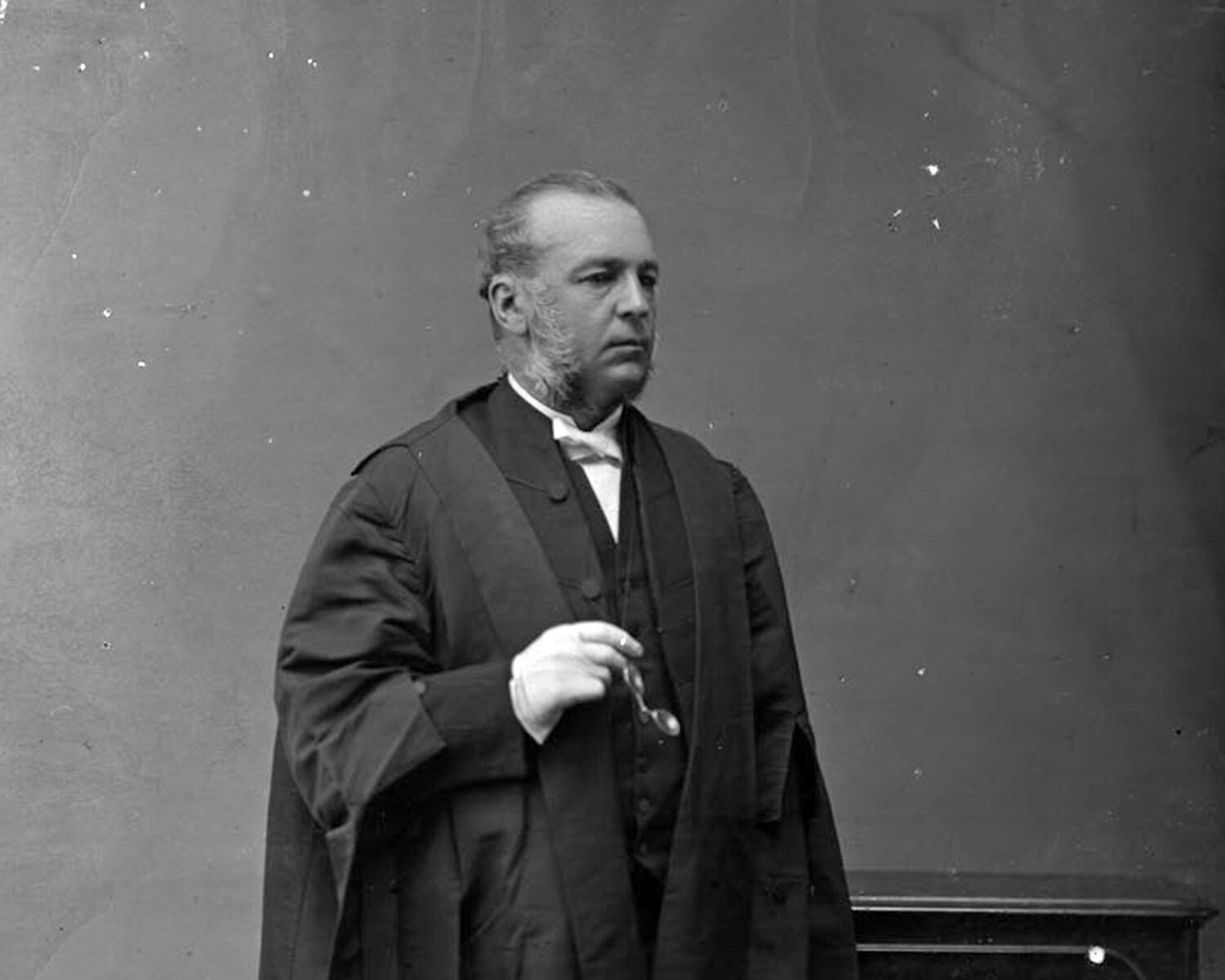
The Honourable James Cockburn
Photo: Library and Archives Canada
Honourable James Cockburn 1819-1883, The
This Father of Confederation came to Canada in 1832 as a child. After becoming a lawyer here in Cobourg, he entered politics and shared in drafting the plan for Confederation. In 1867, he was elected the first Speaker of the new House of Commons.
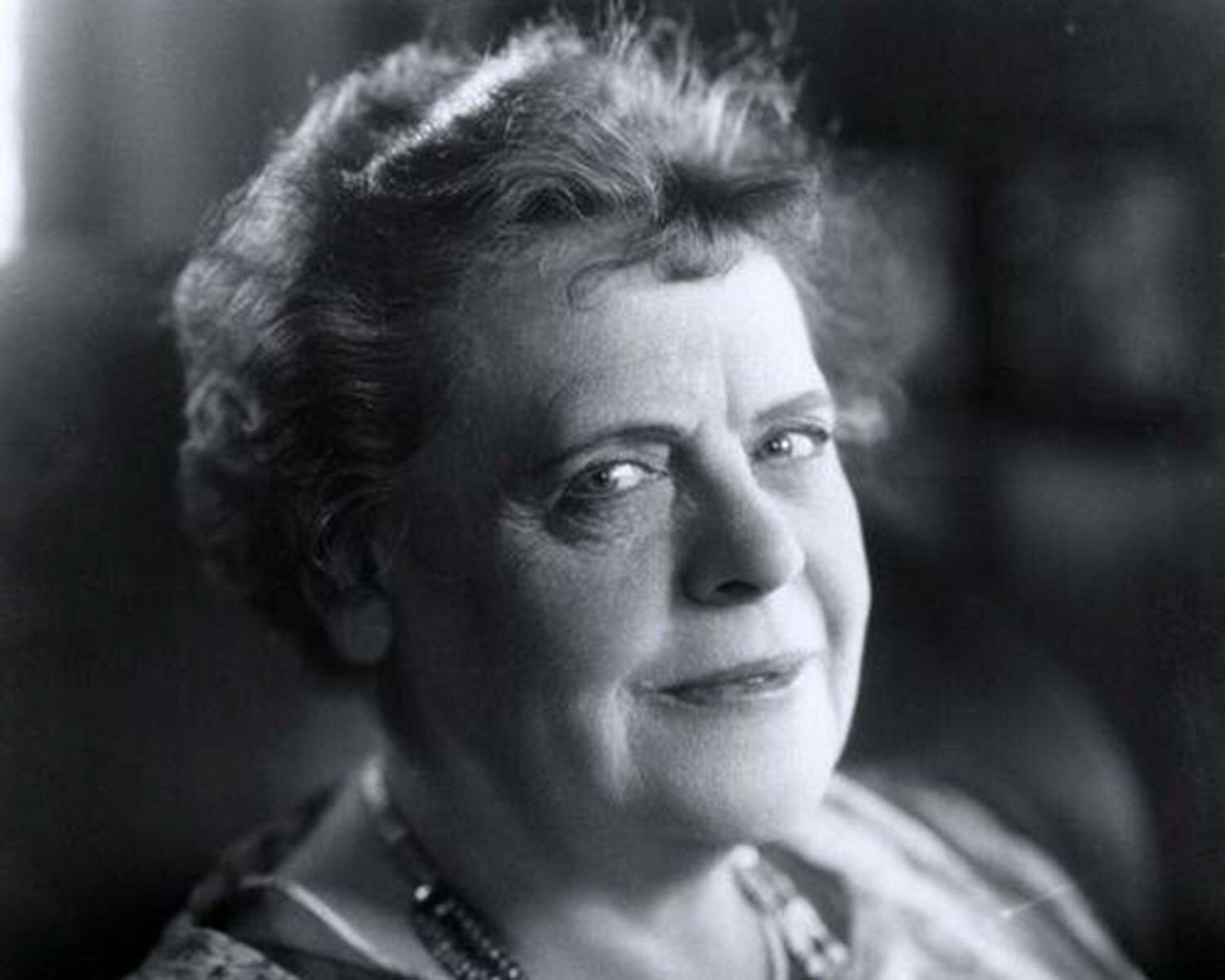
Marie Dressler 1868-1934
Born in this house as Leila Maria Koerber, Marie Dressler became the stage name of this actress who became successful in silent and talking films — including alongside Charlie Chaplin and Greta Garbo. Dressler won an Academy Award in 1931.
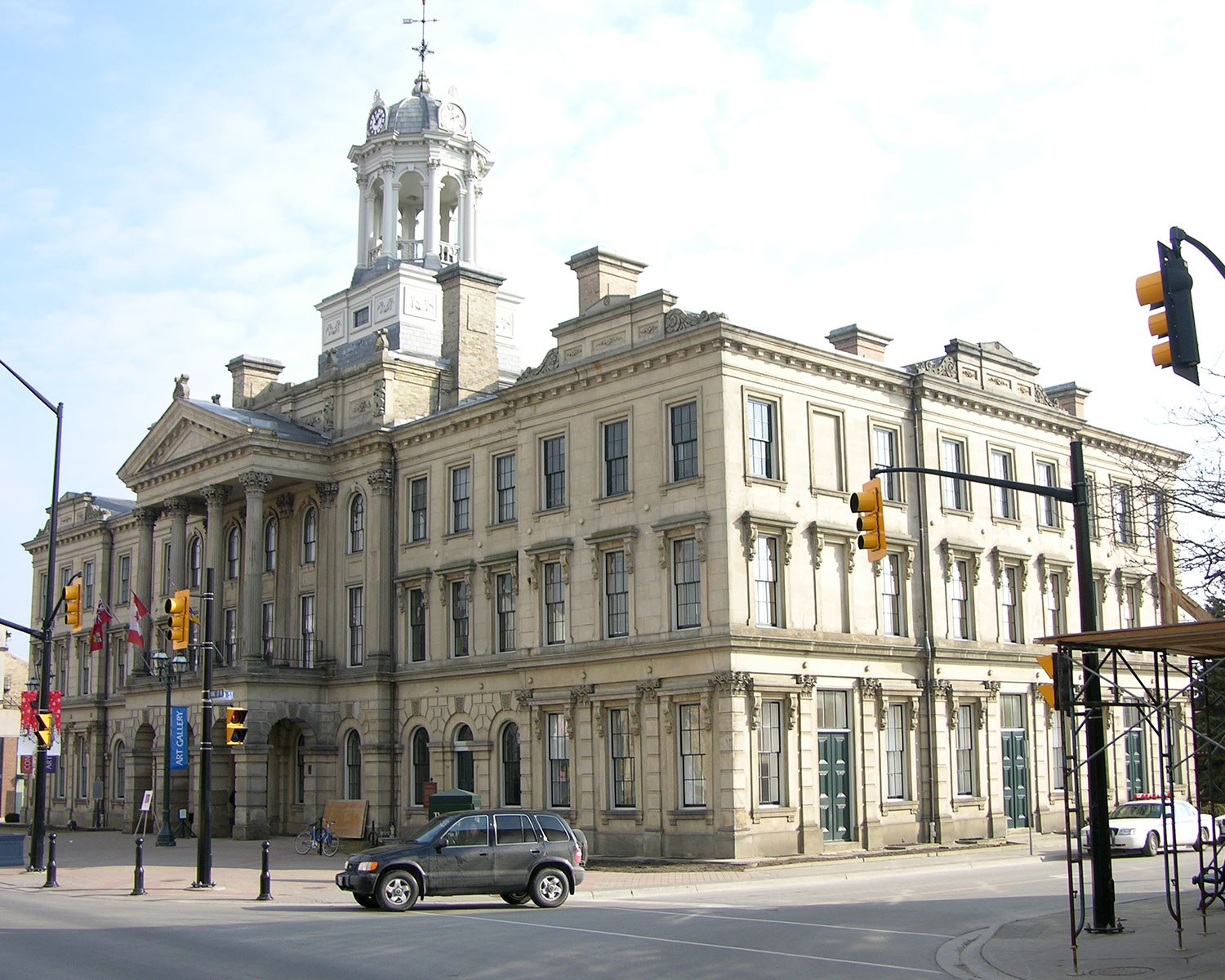
Victoria Hall, Cobourg
Victoria Hall
This imposing classical structure was built as an expression of civic pride and confidence. Finished in 1860, it housed a courtroom and a concert hall. Its distinctive cupola remains a landmark. In 1983, it re-opened following an extensive restoration program.
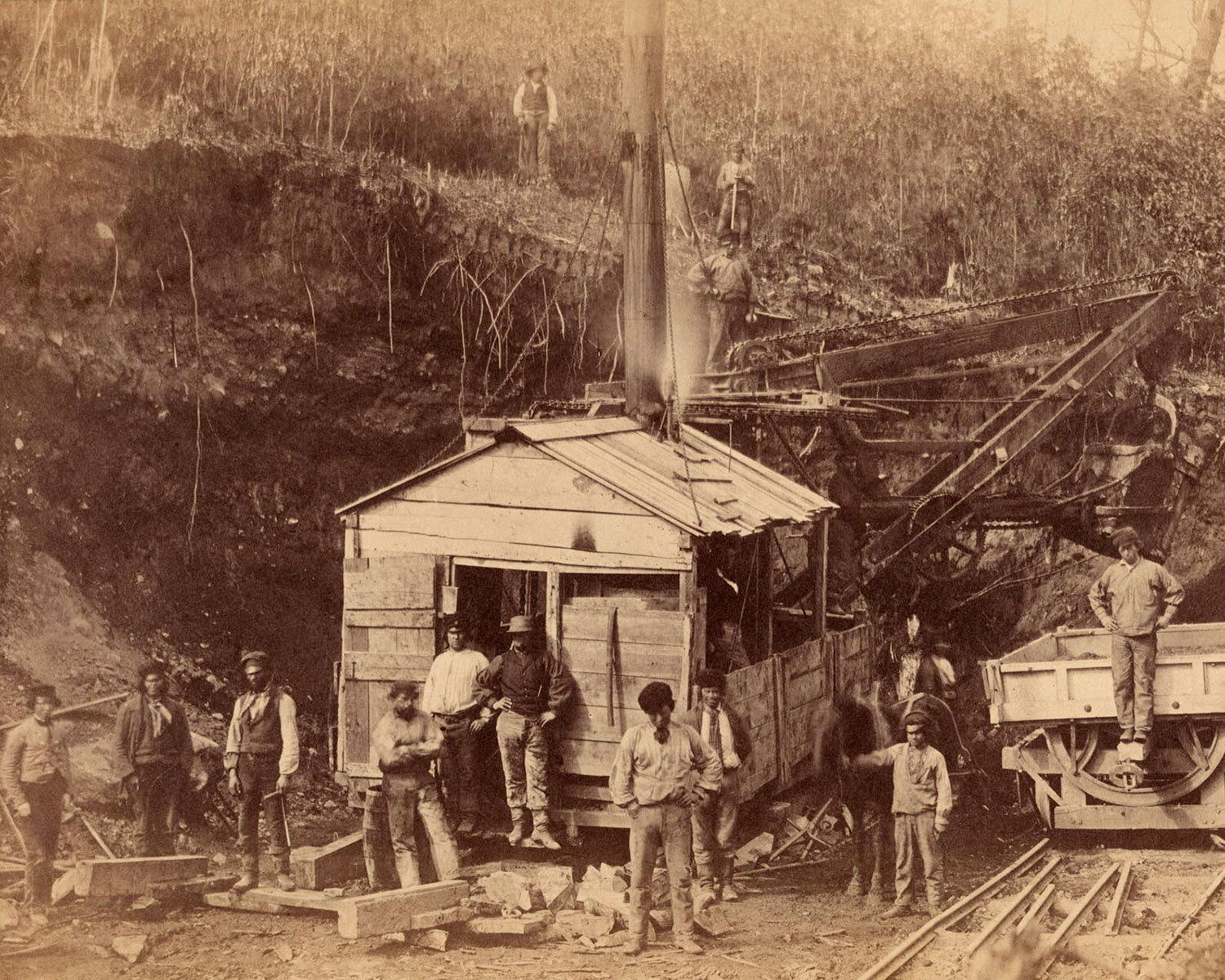
Building the Cobourg and Peterborough railway
Photo: Library and Archives Canada
Cobourg and Peterborough Railway 1852-1898, The
It was important to establish a railway line between Cobourg and Peterborough. In fact, the citizens of Cobourg were largely responsible for this particular line, which opened in 1854. Unfortunate circumstances — including debilitating ice along the Rice Lake bridge — made the line unsafe and, ultimately, unprofitable.
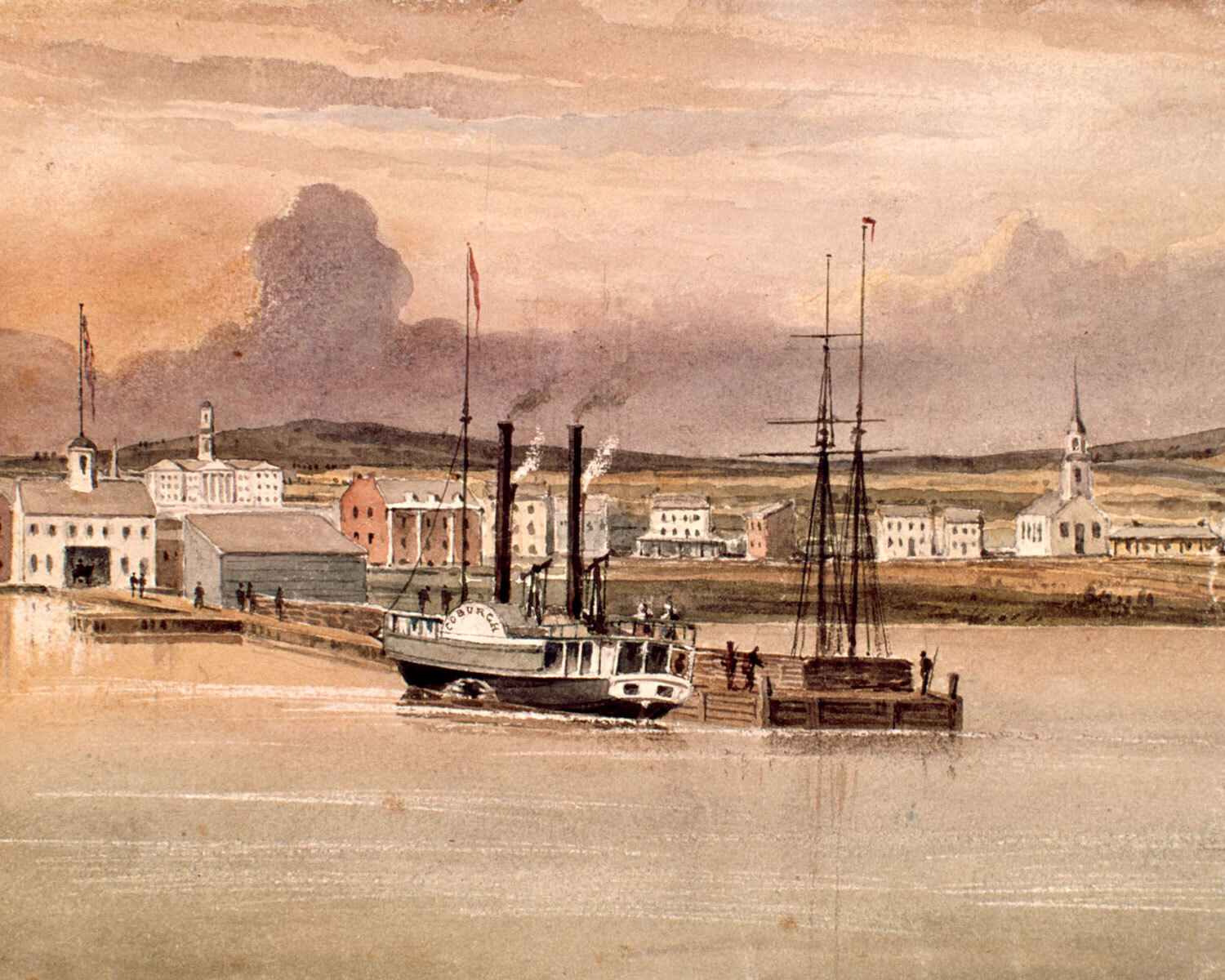
Cobourg, Lake Ontario
Photo: Philip John Bainbrigge Collection, Library and Archives Canada, 1983-47-78
Founding of Cobourg, The
In the first years of the 19th century, mills helped to establish a settlement here. Then came the completion of Kingston Road and harbour improvements. Known originally as Hamilton, Cobourg was incorporated as a town in 1850.
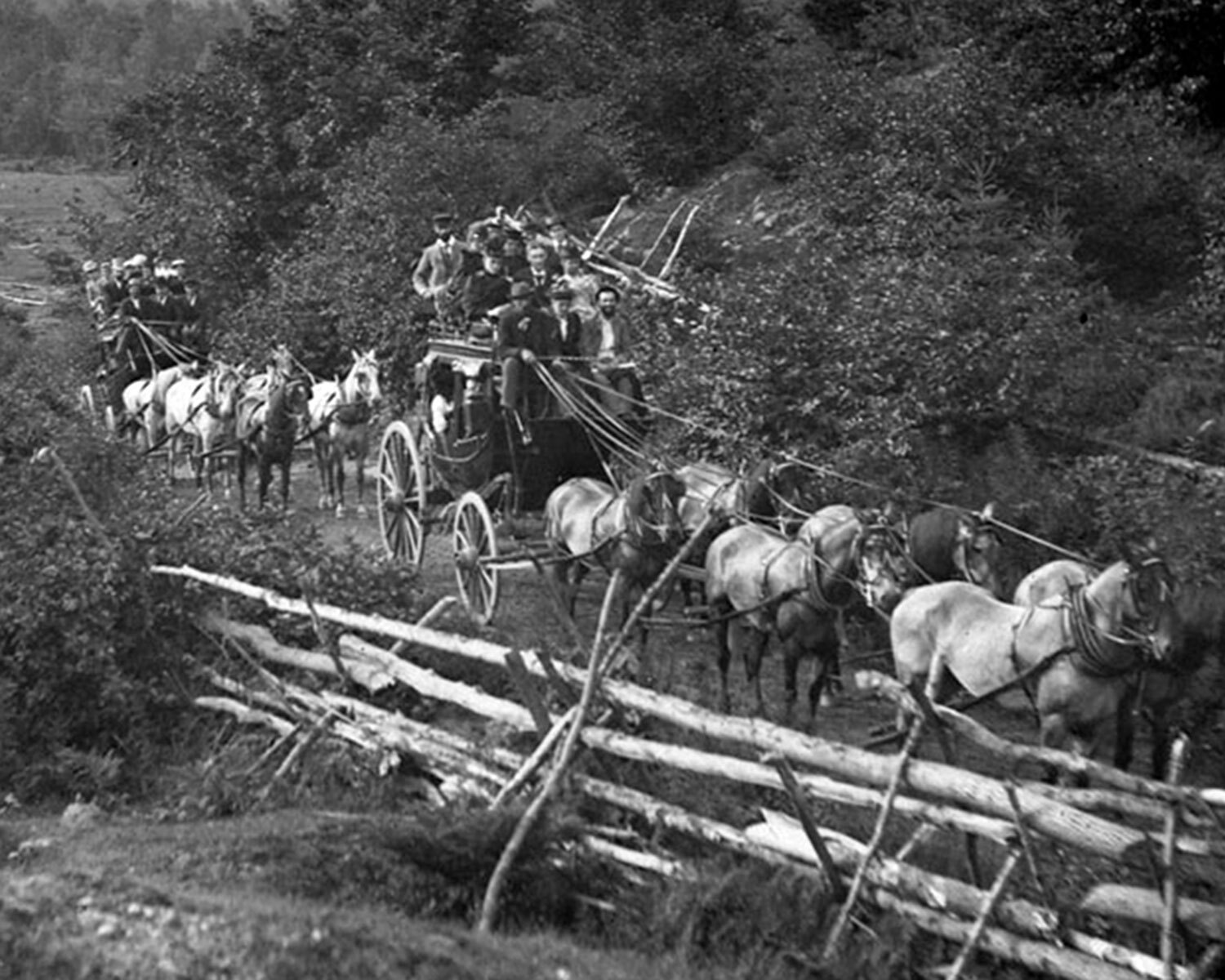
Stagecoaches
Photo: Norman Denley/Library and Archives Canada, PA-066580
William Weller 1799-1863
Weller contributed to some of Cobourg’s growth by offering a stagecoach operation between Hamilton and Montreal. In 1840, he made record time (37 hours and 40 minutes) conveying the Governor General from Toronto to Montreal.
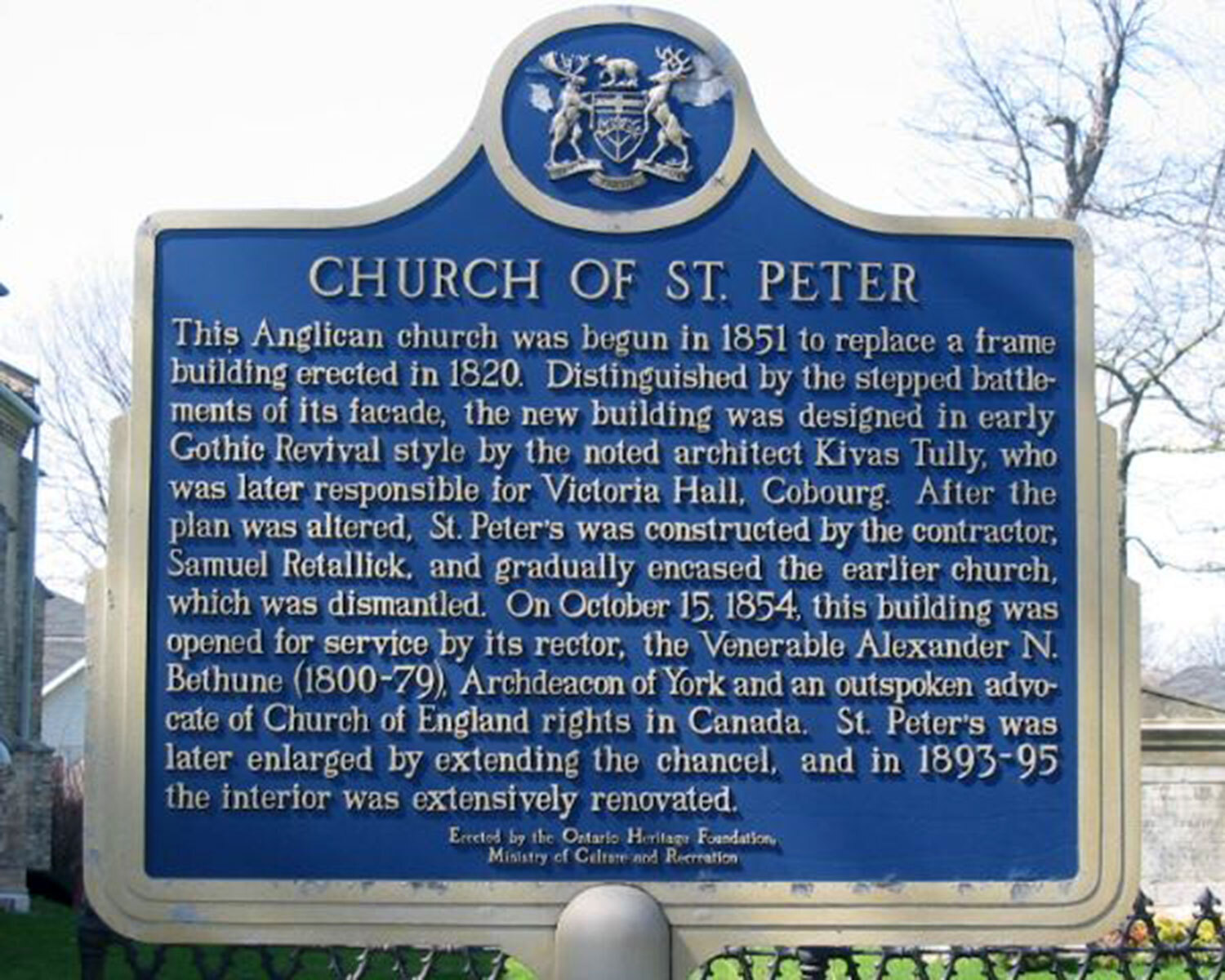
Provincial plaque commemorating the Church of St. Peter in Cobourg
Photo: Alan Brown, www.ontarioplaques.com
Church of St. Peter, The
This church replaced an earlier building from 1820. Distinguished by stepped battlements on its façade, the new building was designed in the early Gothic revival style by noted architect Kivas Tully, who would later design Victoria Hall. The new building opened for service in 1854.
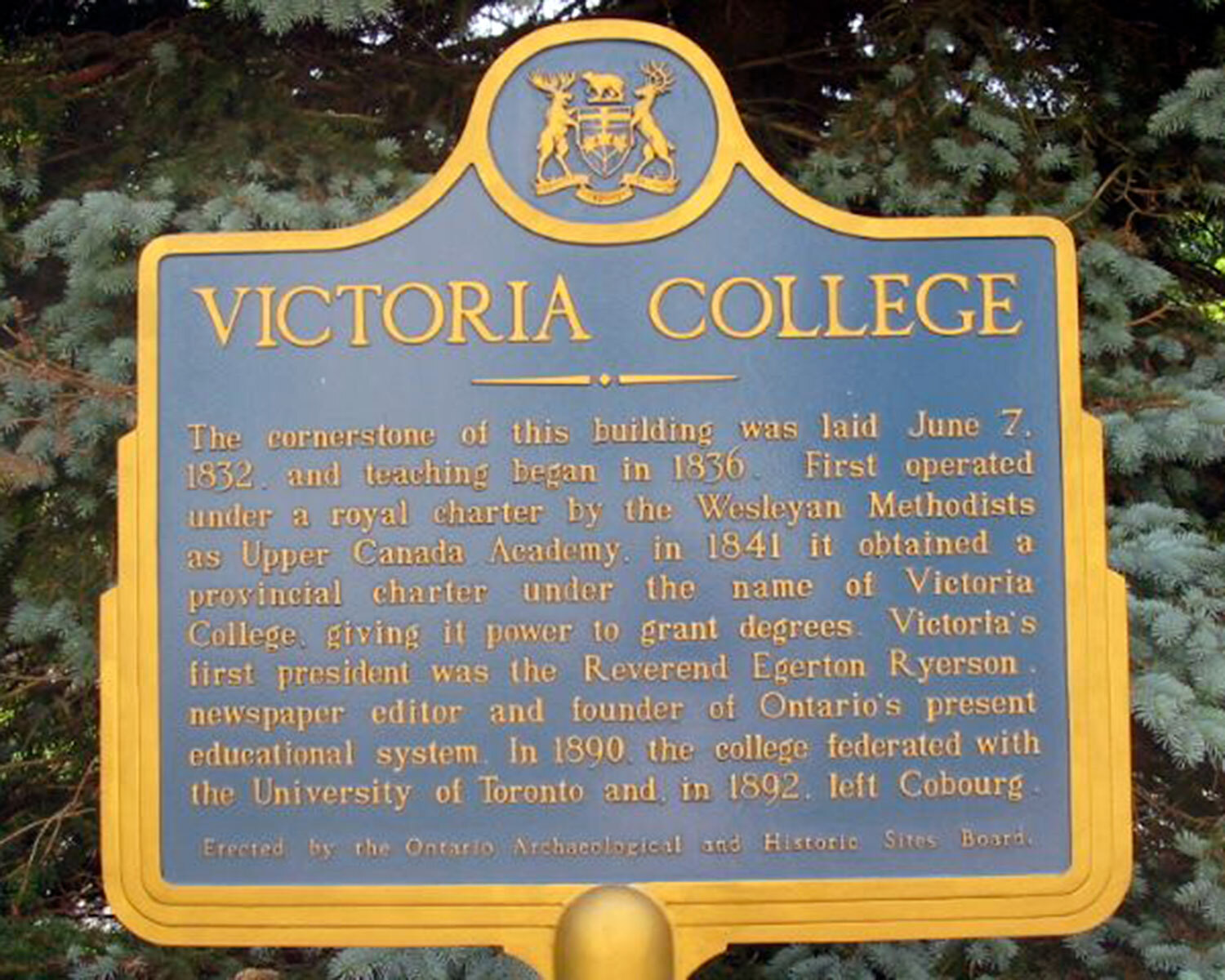
Provincial plaque commemorating Victoria College in Cobourg
Photo: Alan Brown, www.ontarioplaques.com
Victoria College
Teaching began at this new college in 1836. By 1841, they were granting degrees. In 1890, it federated with the University of Toronto and, two years later, left Cobourg.
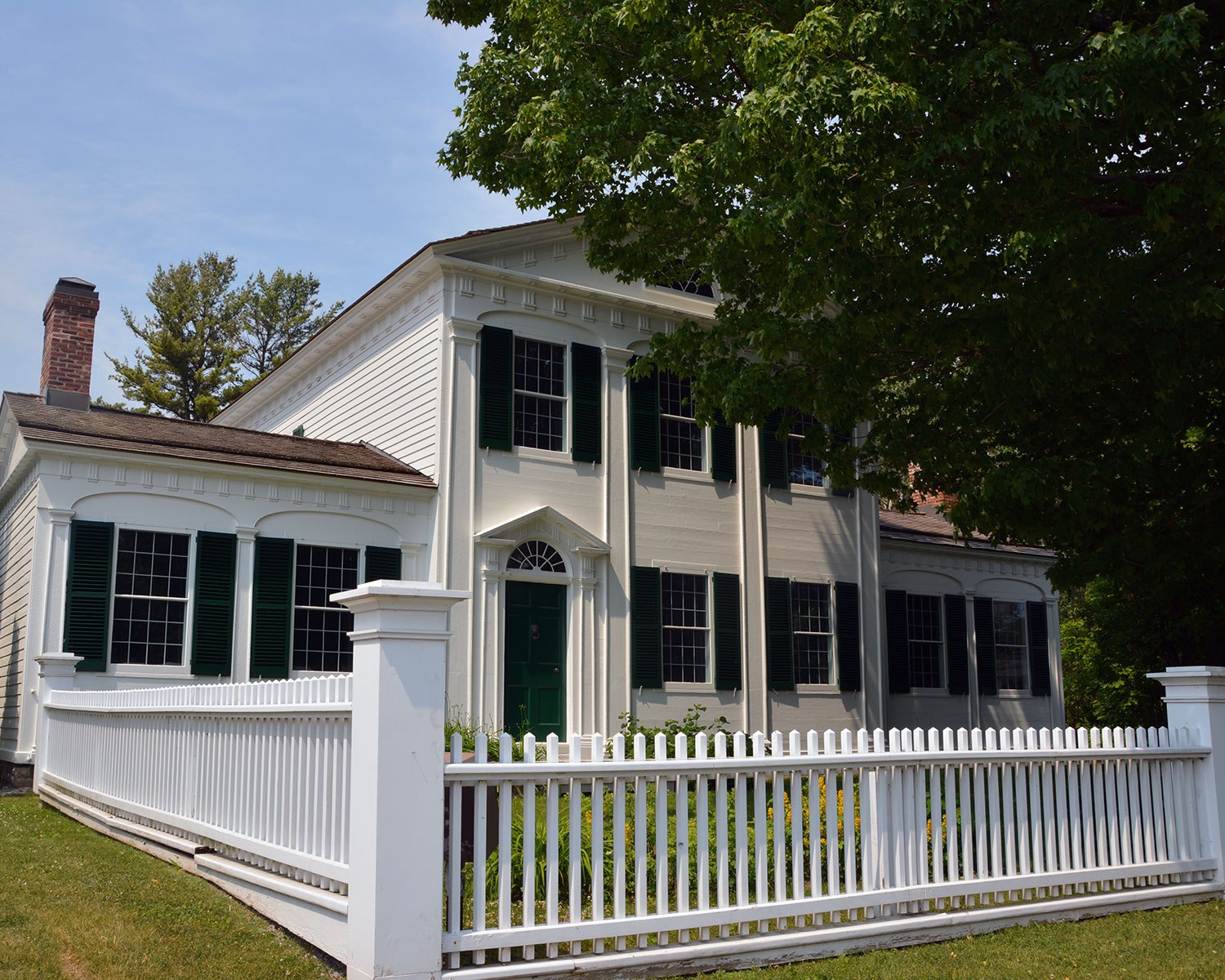
Barnum House exterior, Grafton
Barnum House
Eliakim Barnum came to this area in 1807 from the United States and began a thriving milling business, a tavern and distillery. With success, he was able to build this house — one of Ontario’s finest examples of neoclassical architecture. The house remained in the Barnum family until 1917.
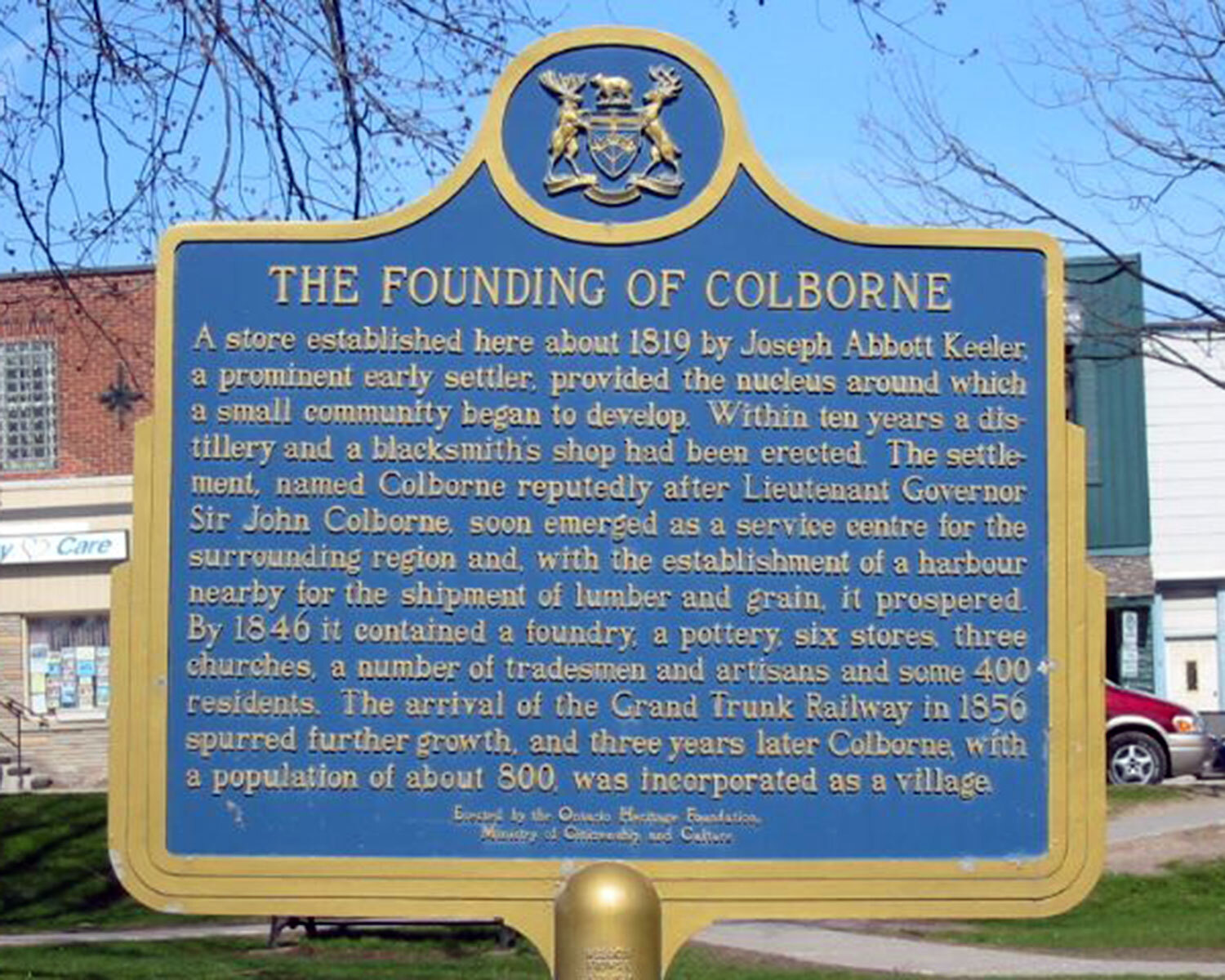
Provincial plaque commemorating The Founding of Colborne
Photo: Alan Brown, www.ontarioplaques.com
Founding of Colborne, The
A store established here around 1819 by Joseph Keeler, a prominent local merchant and early settler, provided the nucleus around which the community of Colborne began. The settlement thrived as more businesses started. The arrival of the Grand Trunk Railway in 1856 spurred further growth and, three years later, Colborne was incorporated as a village.