


Ontario's military heritage —
3. The Great War (Resources)
Learn more about the Great War through these additional sources.
Heritage Matters
Explore the Trust’s Heritage Matters e-magazine to learn more about Ontario’s past. Below you will find articles related to the First World War:
External resources:
Archives of Ontario: Canadian Posters from the First World War
Archives of Ontario: Dear Sadie Love, Lives, and Remembrance from Ontario’s First World War
Canada’s First World War: A Centennial Series on ActiveHistory.ca
CBC Service and Sacrifice | Canada: The Story of Us, Episode 6
CBC’s Francis Pegahmagabow: Best Sniper of WWI | Canada: The Story of Us
You might also be interested in
Check out these other exhibits about the Great War.
Ontario's military heritage — 3. The Great War (Ontario's wartime economy)
![Norman James holds the first shell manufactured in Toronto. (Photo: City of Toronto Archives, Fonds 1244, Item 852 Date: [1914?])](https://www.heritagetrust.on.ca/uploads/Exhibits/WW1-Munitions-factory-1500px.jpg)
In August 1914, the people of Ontario were coping with a major recession. The onset of the Great War further compounded pre-existing hardships because access to British credit was suspended, stock exchanges closed, Atlantic shipping ceased and public fears led to a rush of gold withdrawals. Gradually, international and national efforts restored economic stability, and the financial shock of going to war dissipated.
Visit Ontario's military heritage — 3. The Great War (Ontario's wartime economy)Ontario's military heritage — 3. The Great War (Schools and students at war)
![University of Toronto recruits drill on campus. (Photo: City of Toronto Archives, Fonds 1244, Item 763 Date(s) of creation of record(s) [1918?])](https://www.heritagetrust.on.ca/uploads/Exhibits/GW-military-recruits-U-of-T-1500px.jpg)
Public schools, colleges and universities are widely recognized as establishments of learning and accreditation. During the Great War, however, schools in Ontario were mobilized for the war effort. School grounds were repurposed as sites for drills, military experiments and rehabilitation centres for returned soldiers. Some schools also incentivized their students to enlist and allowed their campuses to become recruitment grounds.
Visit Ontario's military heritage — 3. The Great War (Schools and students at war)Ontario's military heritage — 3. The Great War (Anti-alien hostility)
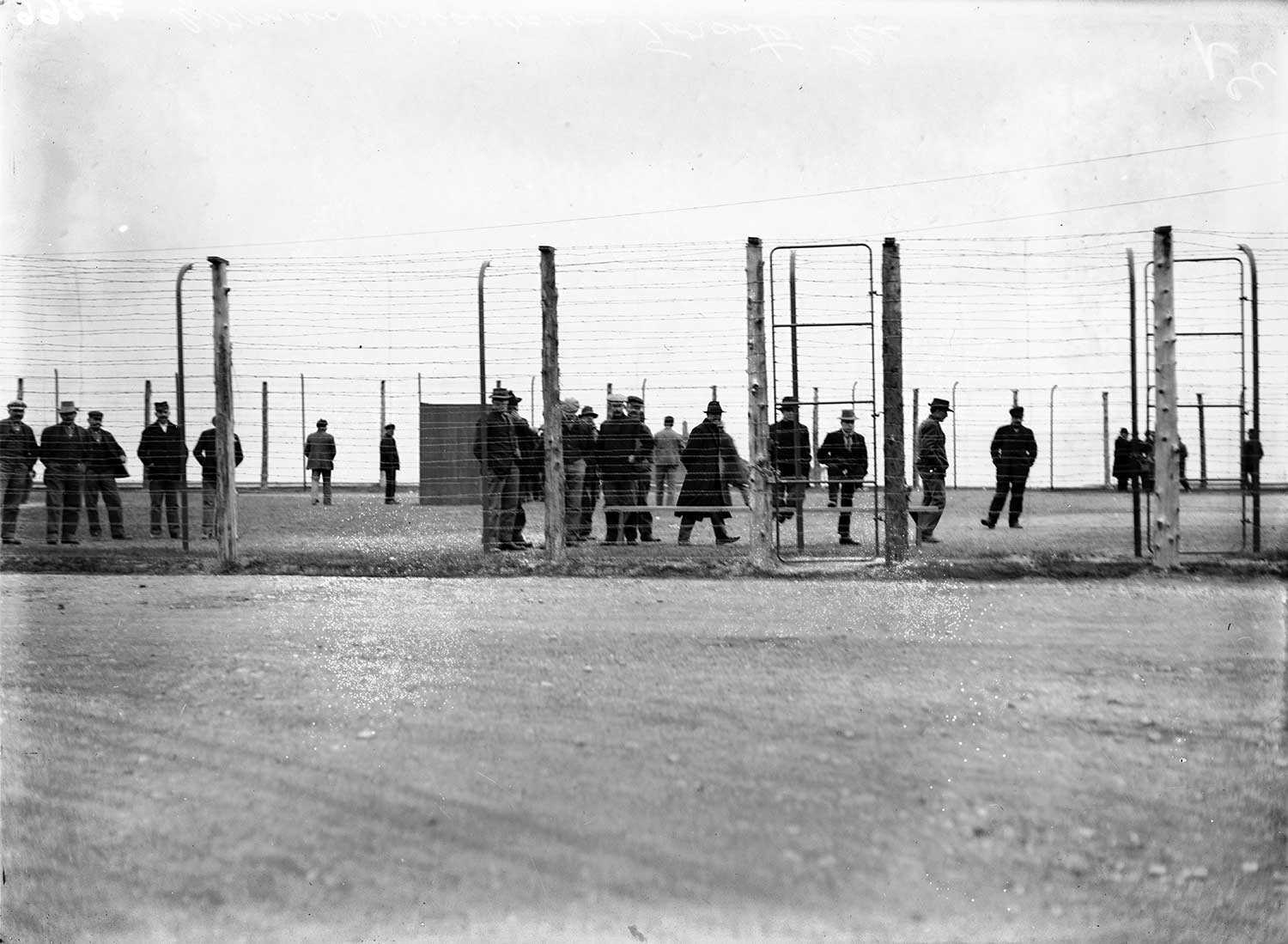
During the war, the term “enemy aliens” was used to draw attention to the threat posed by these non-naturalized residents of so-called enemy origin. Often the use of this designation ignored ethnic particularities, such as how Ukrainian immigrants refuted association with the Austro-Hungarian empire.
Visit Ontario's military heritage — 3. The Great War (Anti-alien hostility)Ontario's military heritage — 3. The Great War (Donning the khaki)
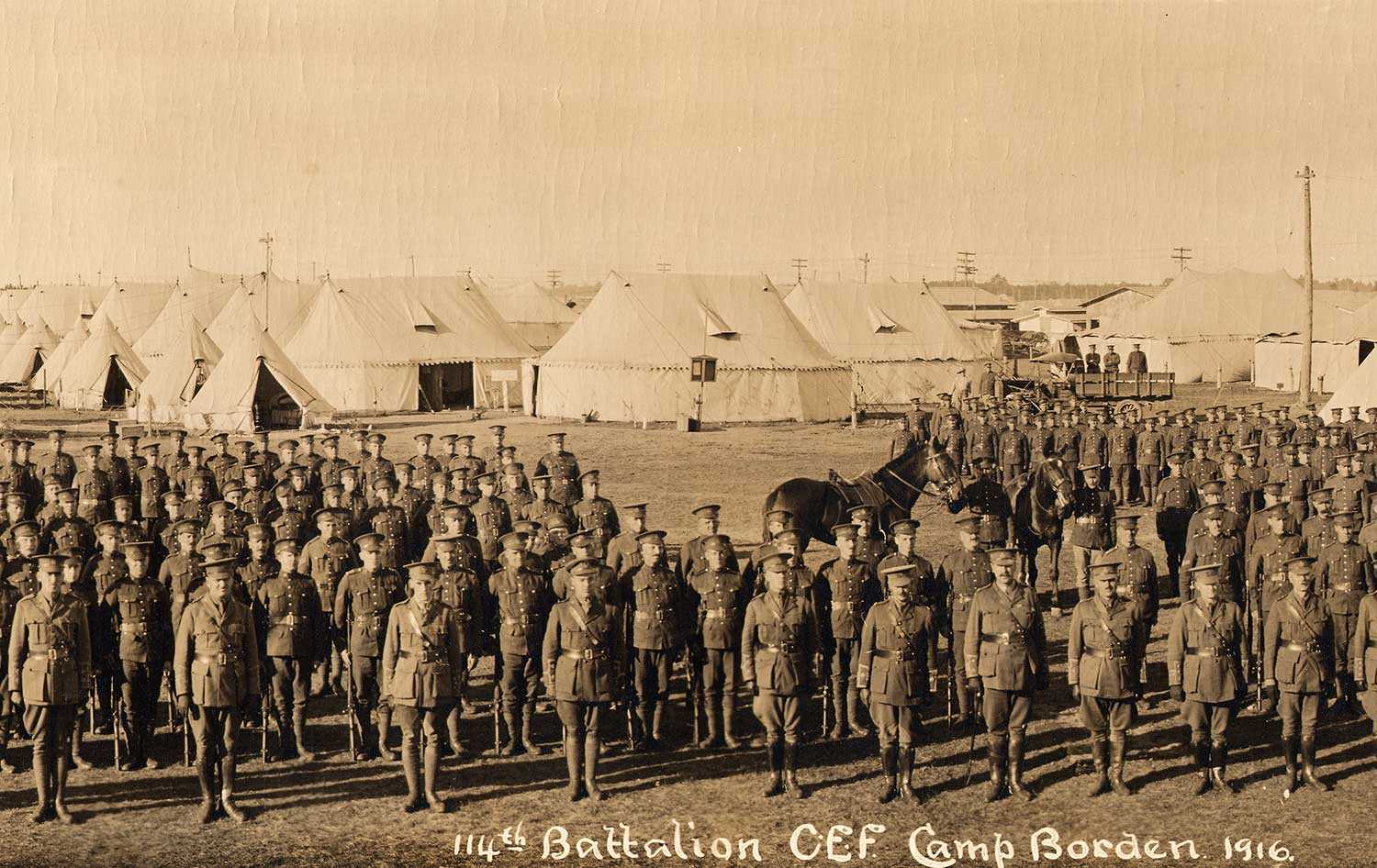
The soldiers who fought overseas in the Canadian Expeditionary Force (CEF) experienced a war like no other before it. The ingenuity of the modern industrial age was used to construct international war machines designed for efficient and brutal destruction. And yet, all the sophisticated machinery, tools and weaponry still required flesh and blood to operate.
Visit Ontario's military heritage — 3. The Great War (Donning the khaki)