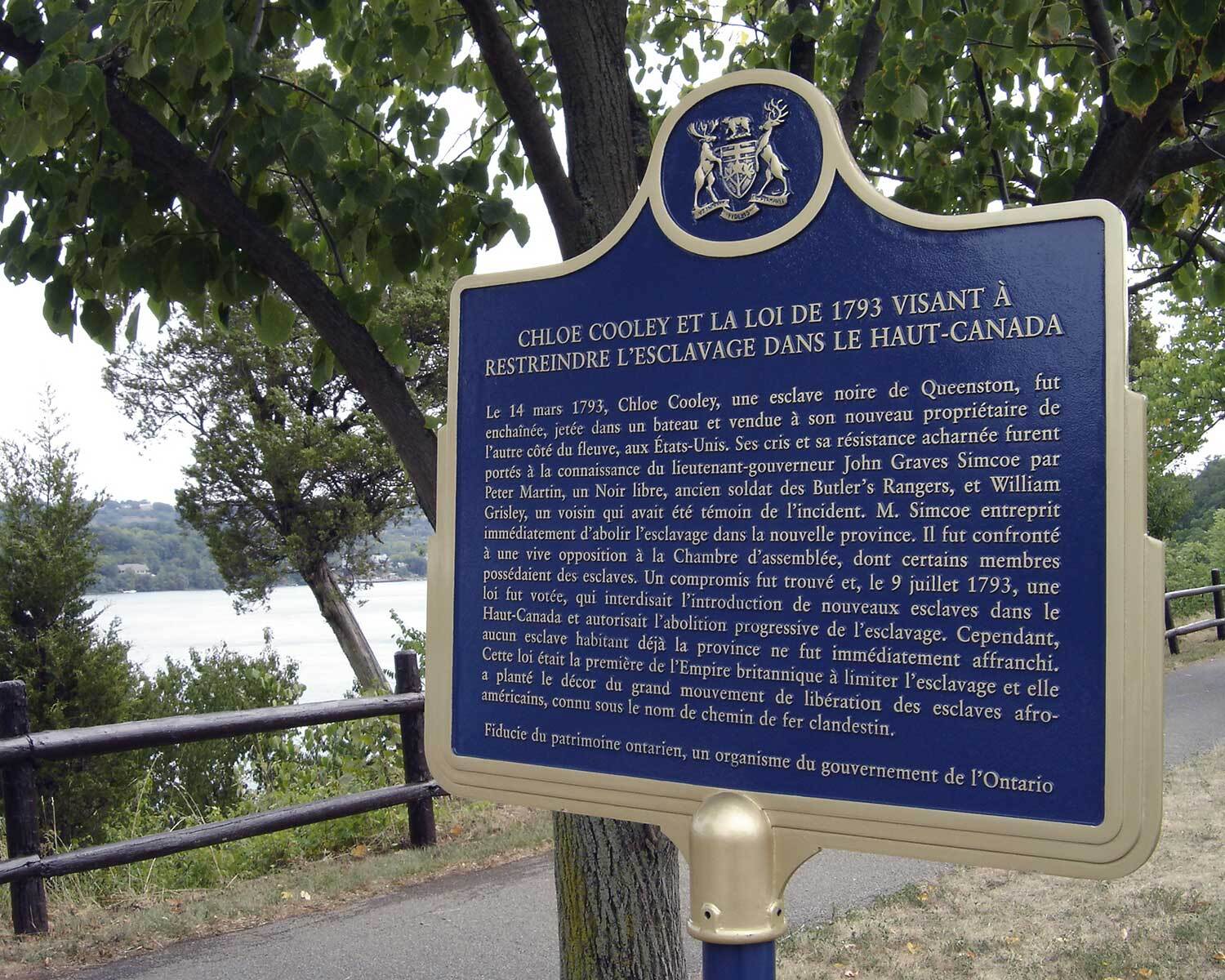


Chloe Cooley and the 1793 Act to Limit Slavery in Upper Canada
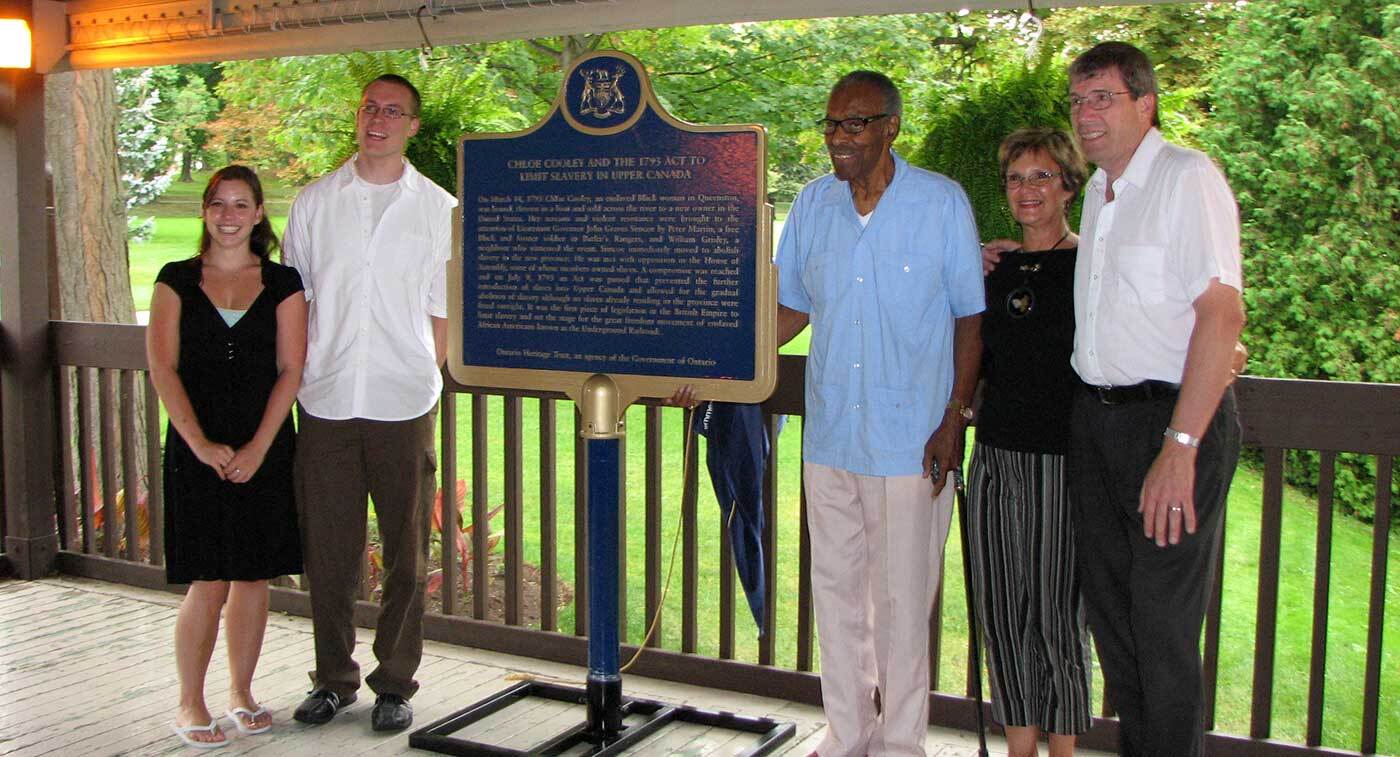
Location:
On the east side of the Niagara Parkway, north of Vrooman's Point, bottom of Line 6 Road, Queenston Heights
Themes:
Black heritage, People, Politics and law, Women's History
Unveiling year:
2007
Plaque text:
On March 14, 1793 Chloe Cooley, an enslaved Black woman in Queenston, was bound, thrown in a boat and sold across the river to a new owner in the United States. Her screams and violent resistance were witnessed by a neighbour, William Grisley, who informed Peter Martin, a free Black and former soldier in Butler's Rangers. They brought the incident to the attention of Lieutenant Governor John Graves Simcoe who immediately moved to abolish slavery in the new province. He was met with opposition in the House of Assembly, some of whose members owned slaves. A compromise was reached and on July 9, 1793 an Act was passed that prevented the further introduction of slaves into Upper Canada and allowed for the gradual abolition of slavery although no slaves already residing in the province were freed outright. It was the first piece of legislation in the British Empire to limit slavery and set the stage for the great freedom movement of enslaved African Americans known as the Underground Railroad.