


Walking tour
The nation's capital
While in Ottawa, wander its streets to explore these provincial plaques that contribute to Ontario’s unique history. Meet some of the people who played a part in the city’s development. And stop along the way to see some of the architectural wonders of the nation’s capital. Duration: 1 hour 45 minutes
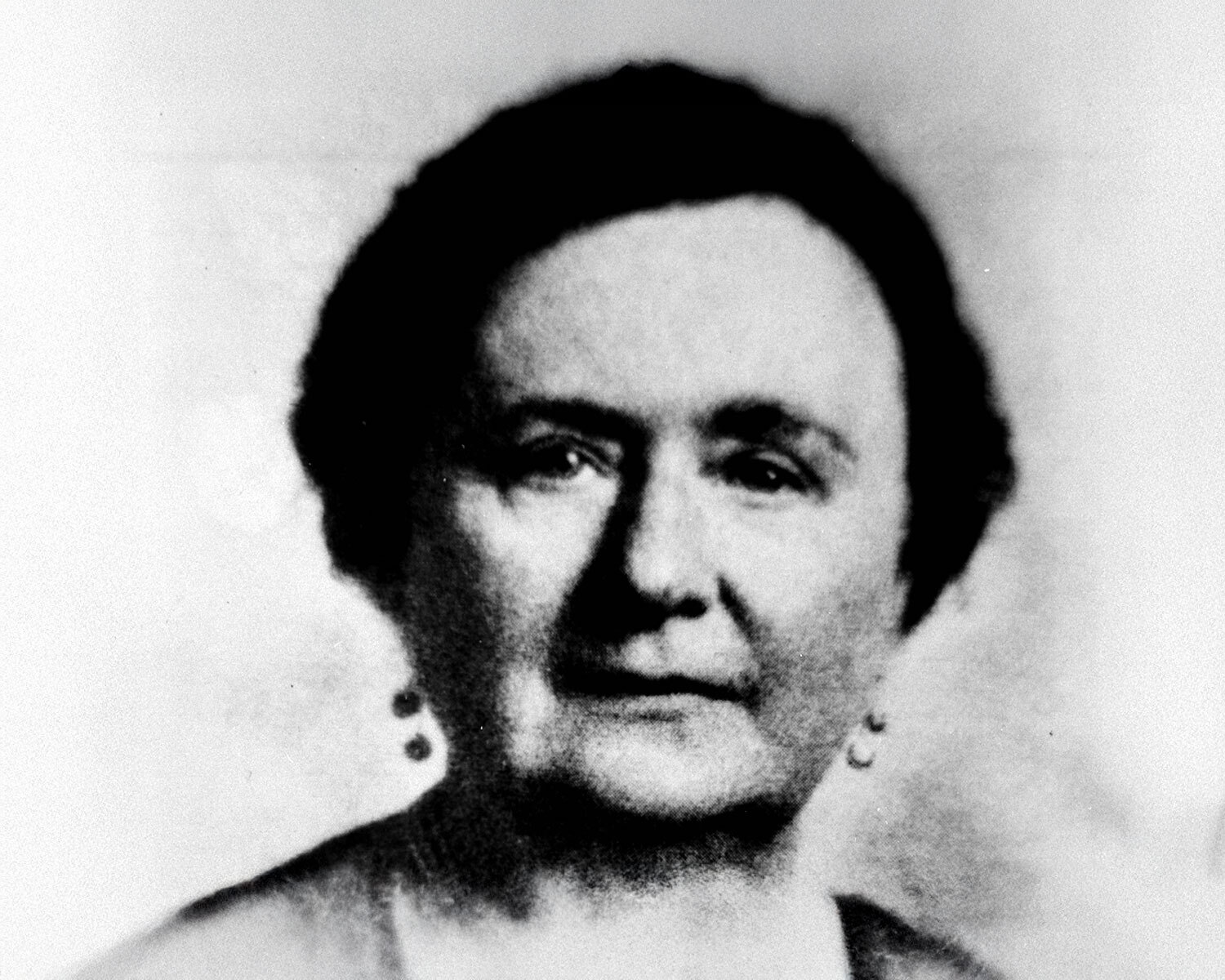
Almanda Walker-Marchand and the Fédération des femmes canadiennes-françaises
Walker-Marchand moved to Ottawa where she established this organization dedicated to helping French-Canadian soldiers and their families during and after the First World War. The organization expanded beyond Ottawa to form chapters in Francophone communities across Canada.
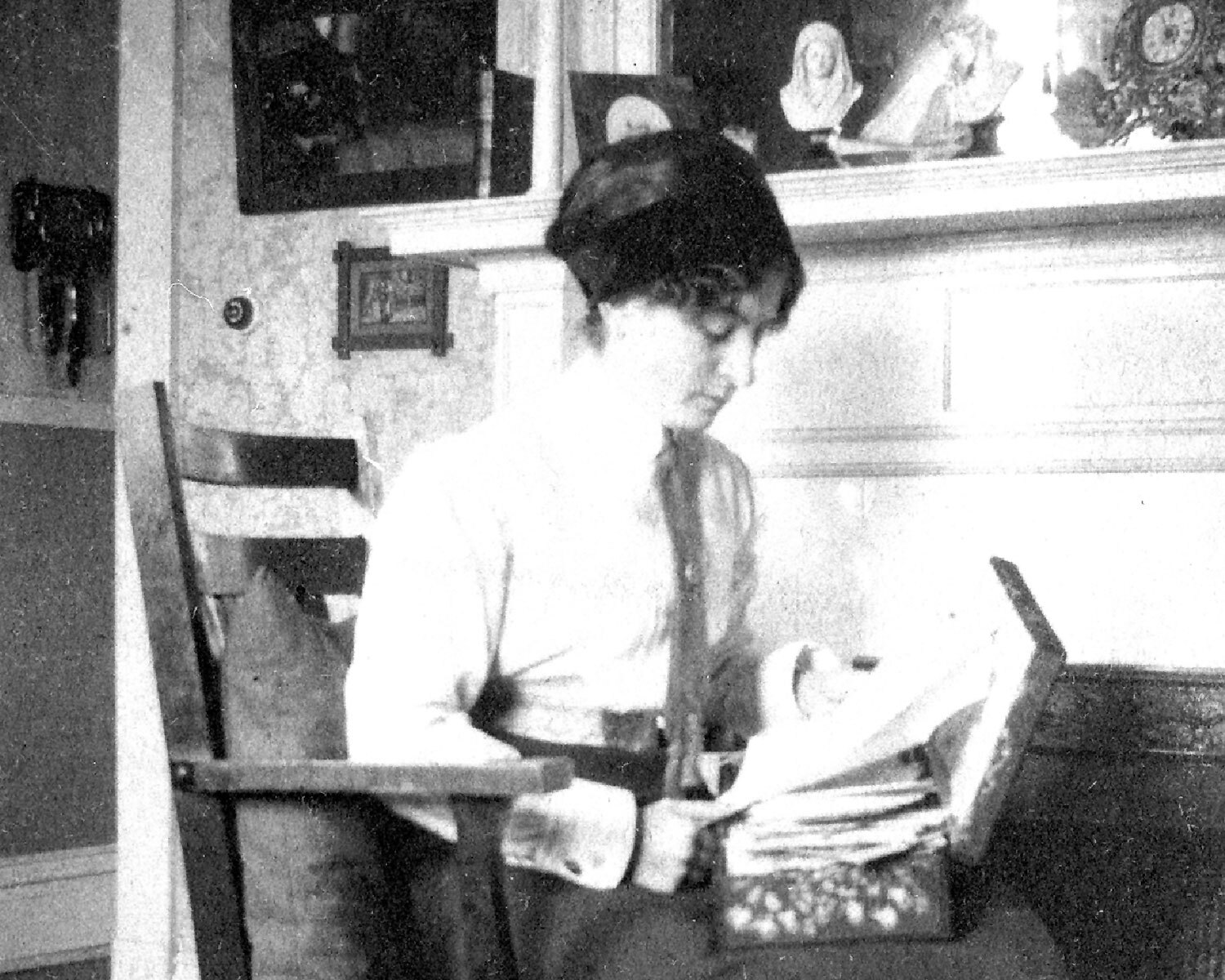
Marie-Rose Turcot 1887-1977
Turcot moved to Ottawa at the age of 20 to take a job in the civil service. Later, she became a journalist and writer, and also worked in broadcast journalism. She was active in several French-Canadian cultural organizations as well as a collector of Franco-Ontarian folk tales.
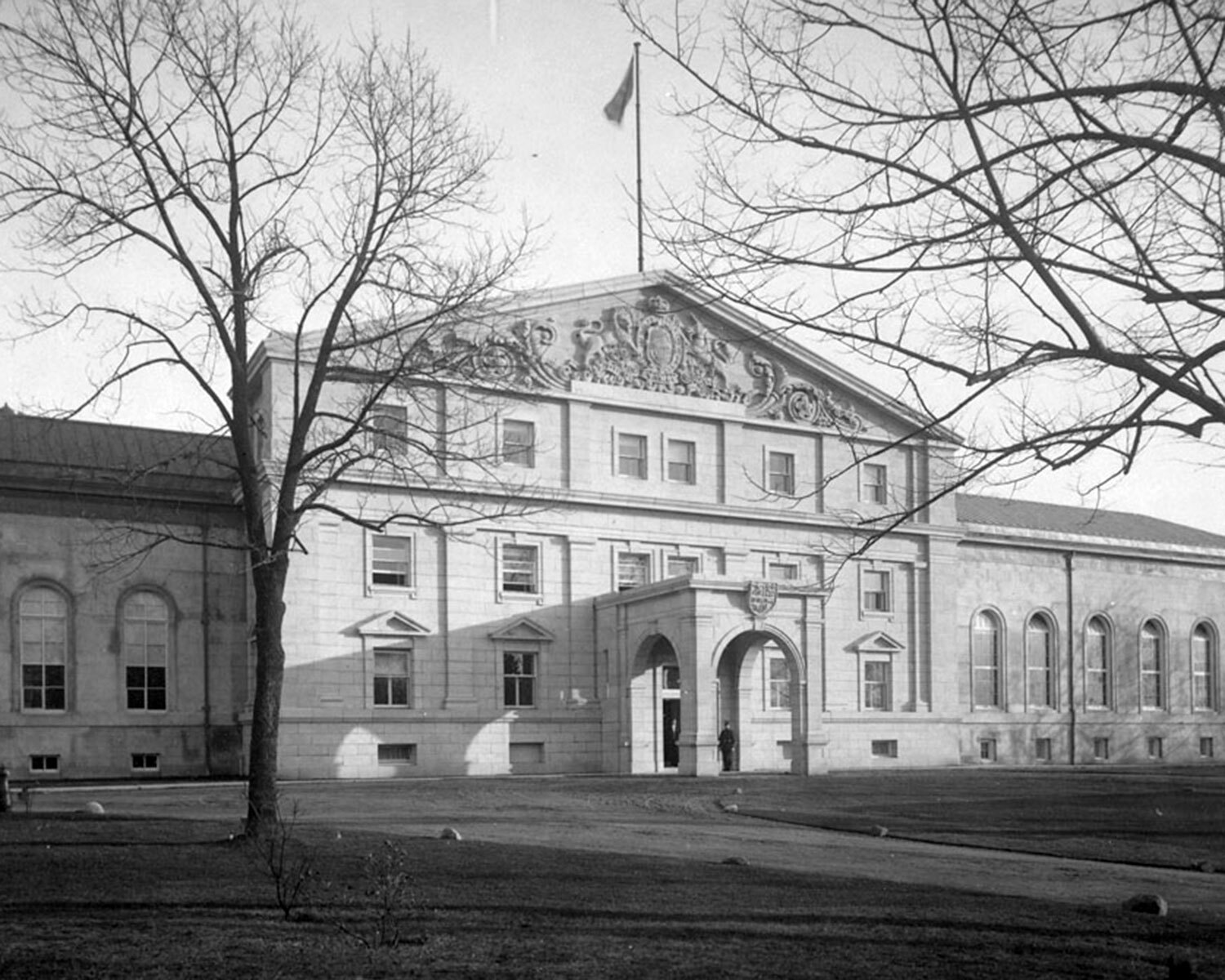
Rideau Hall, 1913
Photo: Library and Archives Canada/PA-053035
Thomas McKay 1792-1855
This Scottish-born master mason came to Ottawa to work on the entrance locks of the Rideau Canal and the first bridge that spanned the Ottawa River to connect Ottawa and Hull (now Gatineau). McKay built his residence, Rideau Hall, in 1838 — which was purchased by the Government of Canada to become the official residence of the Governor General.
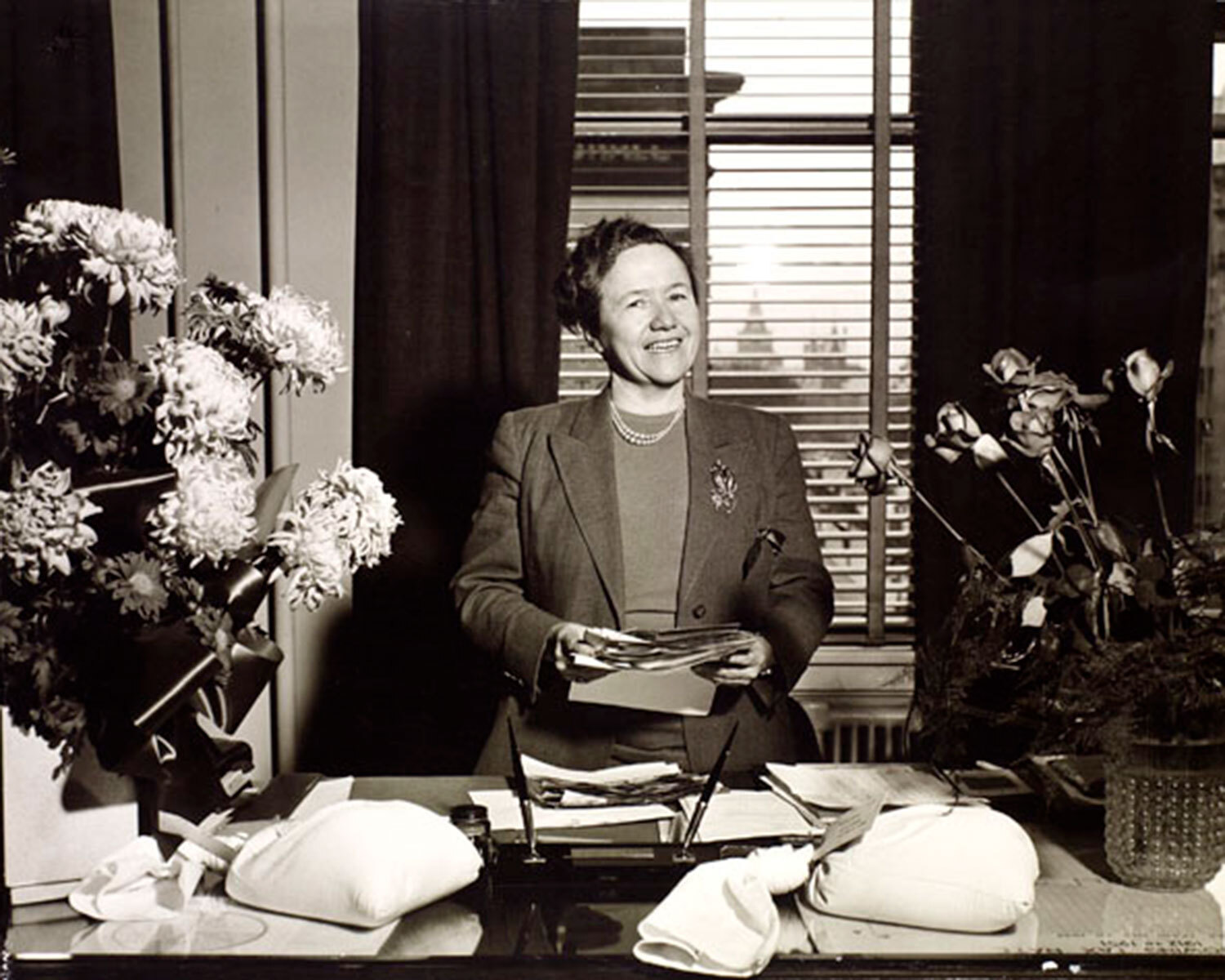
Mayor Charlotte Whitton, 1952
Photo: Tsin Van/Library and Archives Canada/e008299475
Charlotte Elizabeth Whitton, O.C., C.B.E. 1896-1975
Whitton was the first woman mayor of Ottawa. Throughout her lifetime, she worked fiercely and energetically to improve social conditions.
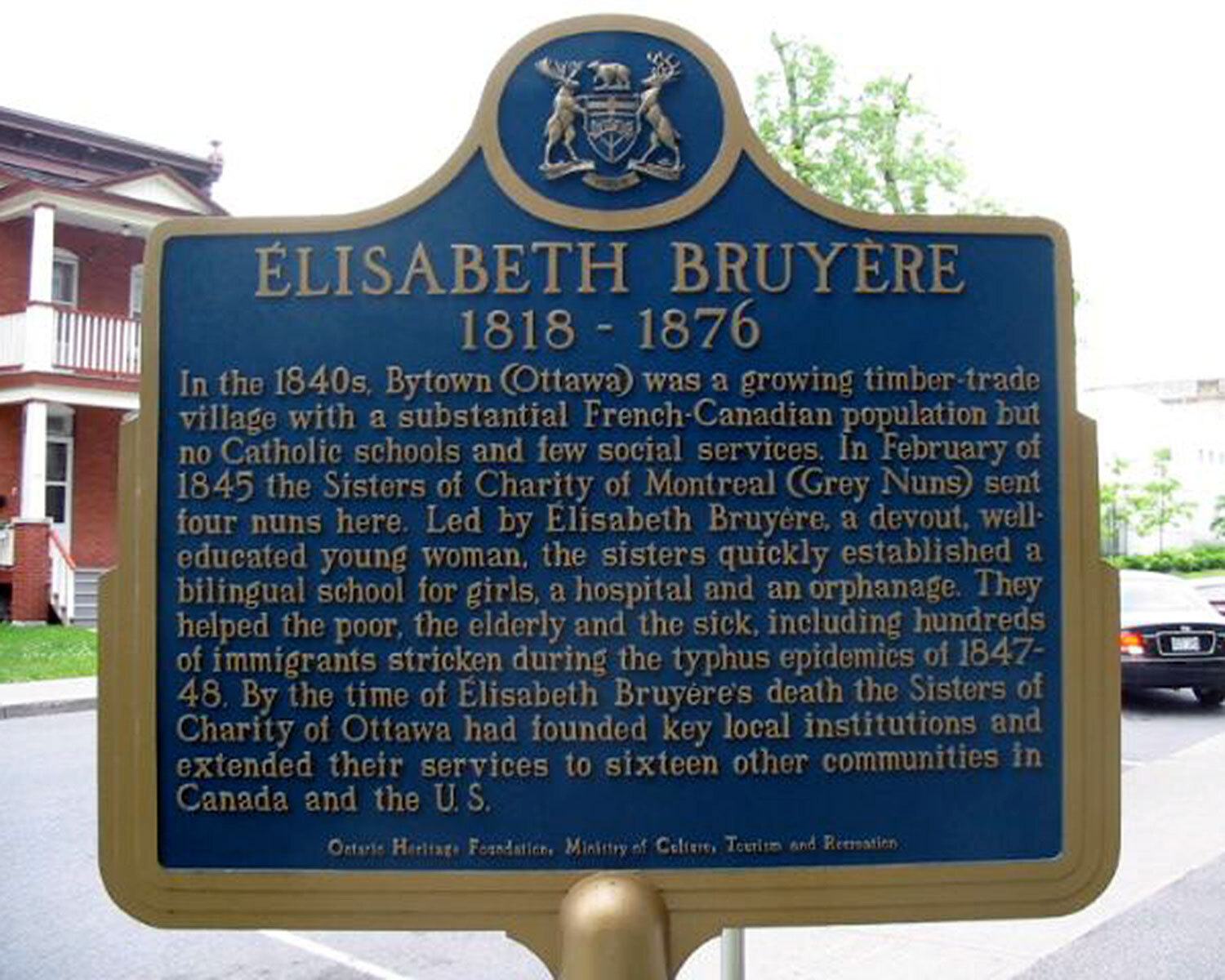
Provincial plaque commemorating Elisabeth Bruyère, Ottawa
Photo: Alan Brown, www.ontarioplaques.com
Elisabeth Bruyère 1818-1876
Ottawa in the 1840s (still Bytown then) was a growing timber-trade village with a substantial French-Canadian population but no Catholic schools and few social services. In 1845, four nuns, led by Bruyère, arrived and establish a school, hospital and orphanage, as well as established many social services.
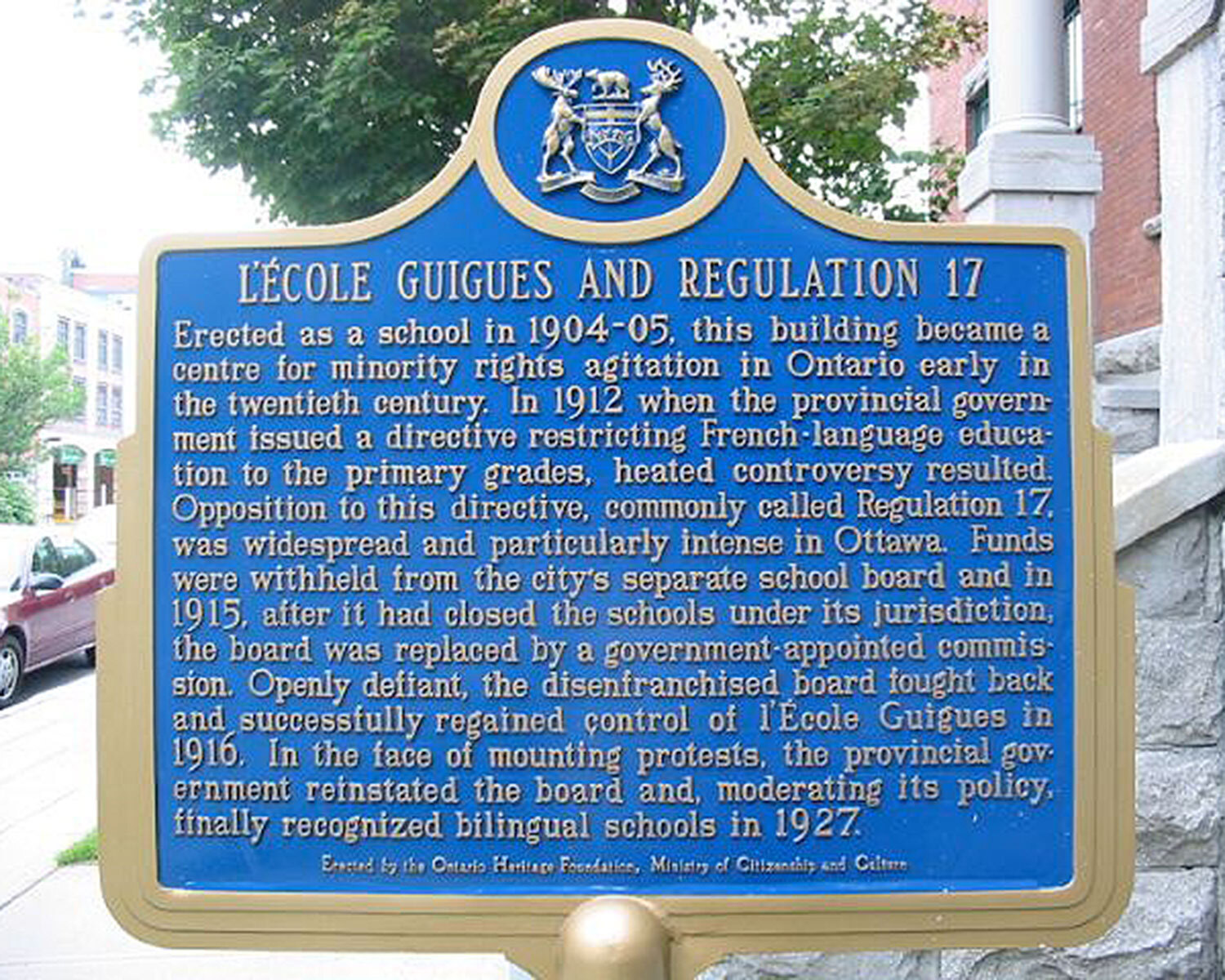
Provincial plaque commemorating l'école Guigues and Regulation 17
Photo: Alan Brown, www.ontarioplaques.com
École Guigues and Regulation 17, l'
Begun as a school, this building became a centre for minority rights agitation in Ontario in the early 20th century. When the provincial government issued a directive (known as Regulation 17) in 1912, it meant restricting French-language education. Opposition was widespread but particularly intense in Ottawa.
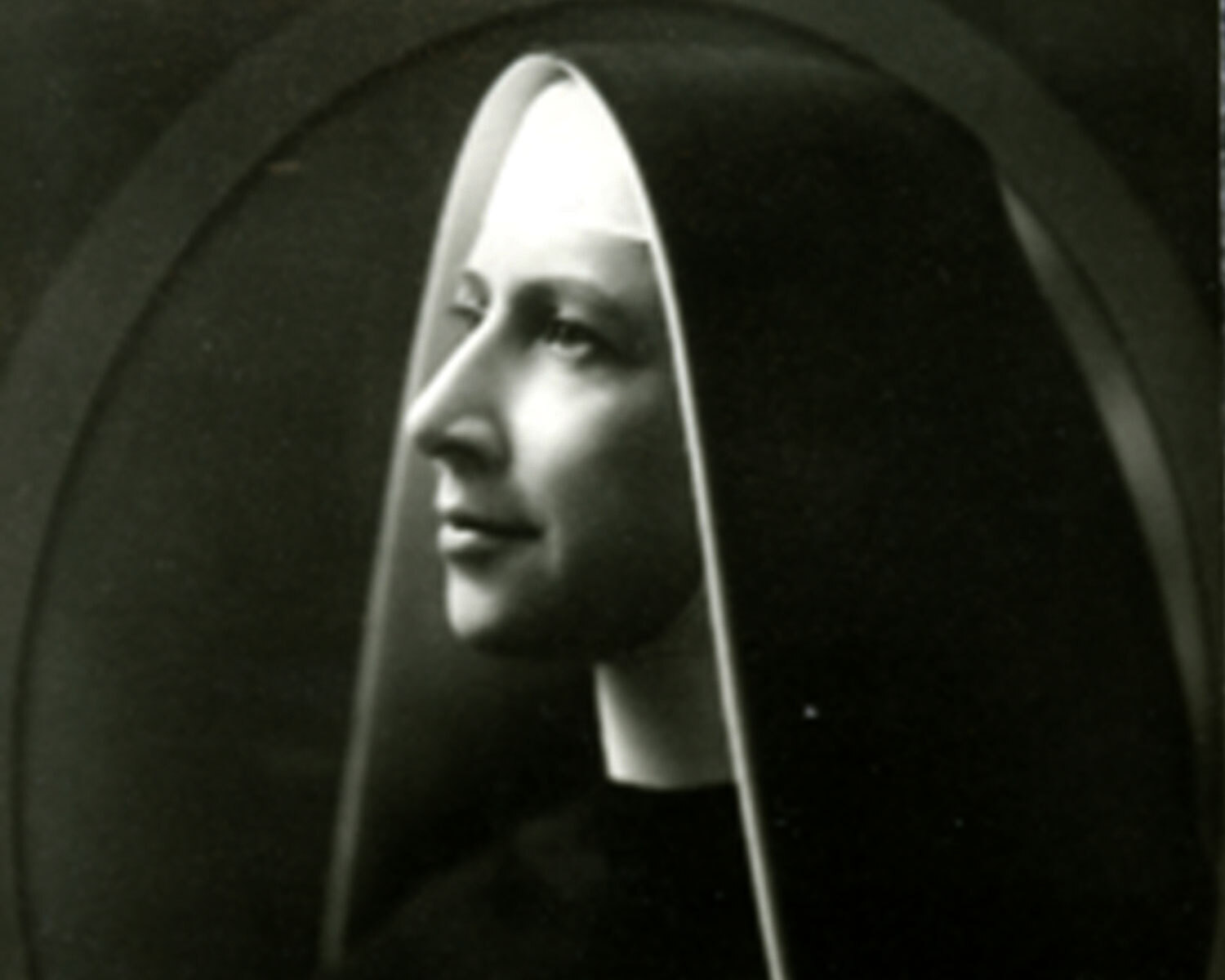
Mother Marie Thomas d'Aquin, 1921, Ottawa
Photo: Archives of the Sisters of the Jeanne d'Arc Institute
Mother Marie Thomas d’Aquin 1877-1963
Originally from near Bordeaux, France, Jeanne Branda felt a calling to become a nun and a teacher. In 1899, she joined the Dominican Sisters of Nancy, where she took on the name Sister Marie Thomas d’Aquin. She moved to the United States and then, while visiting Ottawa in 1914, agreed to head the Jeanne d’Arc Institute.
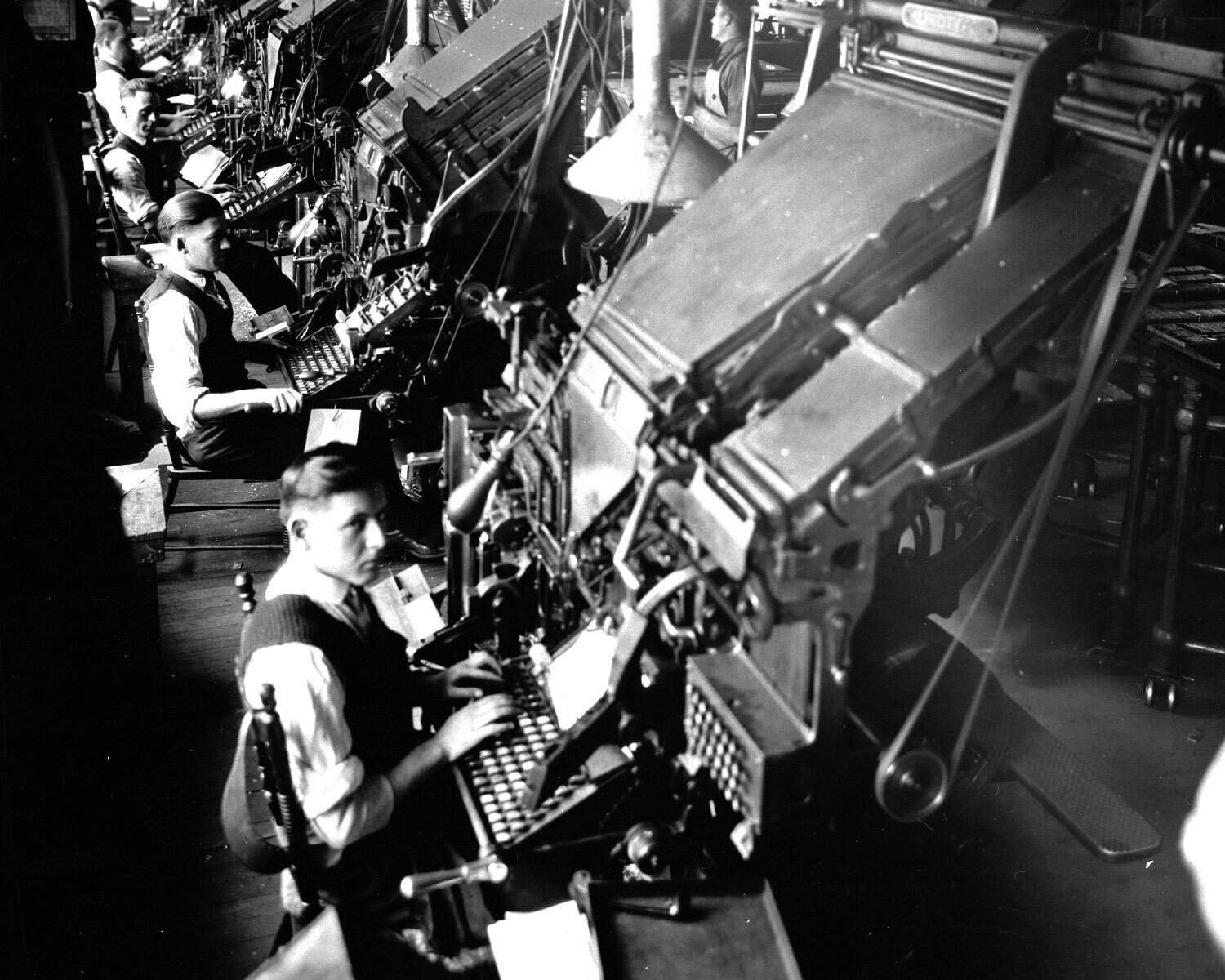
Linotype workshops at Le Droit newspaper, c. 1923, Ottawa
Photo: Studio Dery, Hull, University of Ottawa, CRCCF, Le Droit Collection, C71
Le Droit
In 1912, French-Canadian educational and religious groups came together to discuss the founding of a newspaper that could be used to protest Regulation 17, which severely restricted the teaching of French in Ontario schools. From this, Le Droit was born — a French-language daily newspaper. Le Droit continues to support and defend Franco-Ontarian rights.
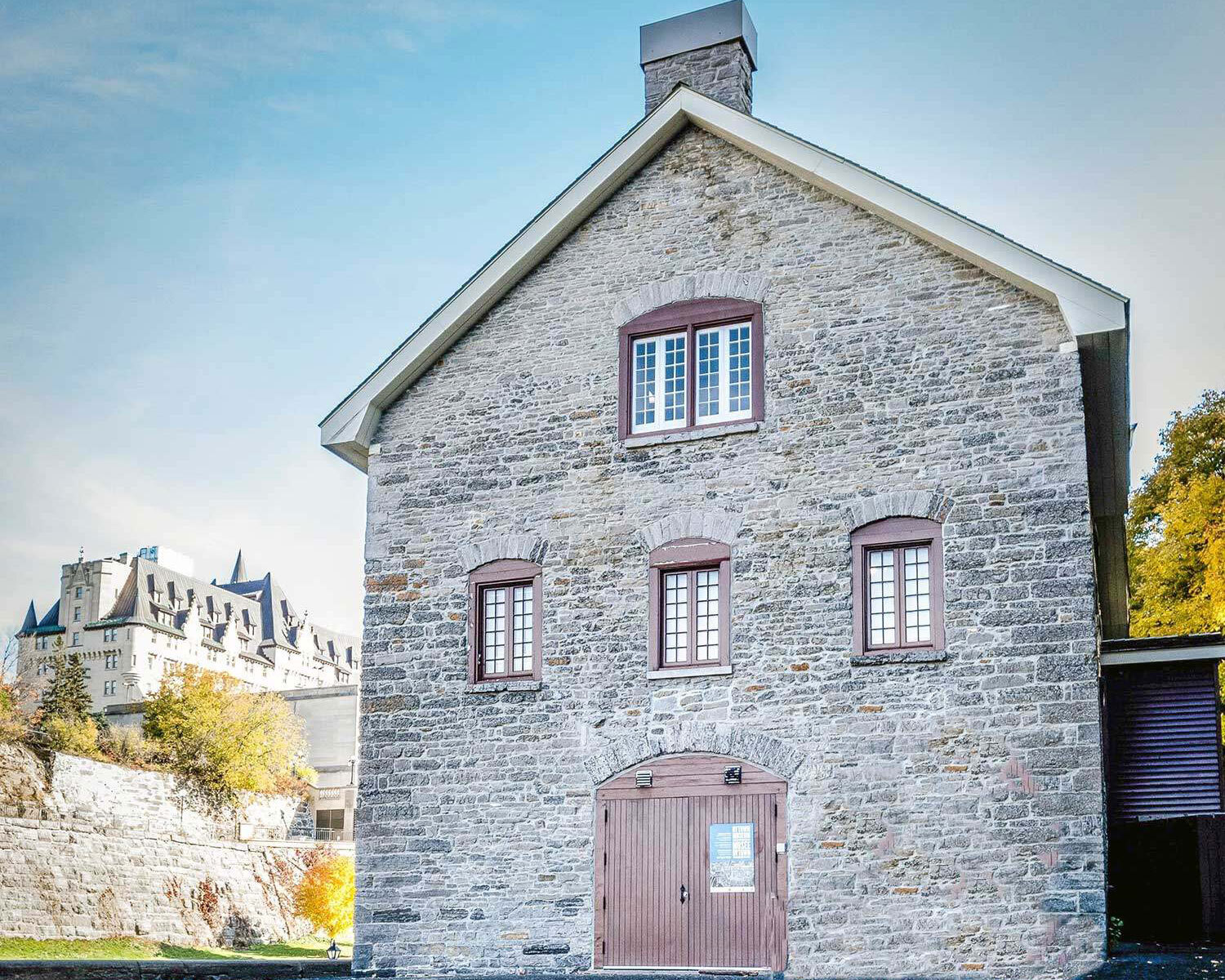
Bytown Museum: Commissariat Building
Photo: Courtesy of Doors Open Ottawa
Commissariat Building 1827
Today a museum, this structure is the oldest existing stone building in Ottawa. During the construction of the Rideau Canal, it was a storehouse, office and treasury. The building was turned over to the Canadian government in 1864.