


Find content throughout the website that has been tagged:
Transportation systems and communications
Clear all
Transportation systems and communications (12)
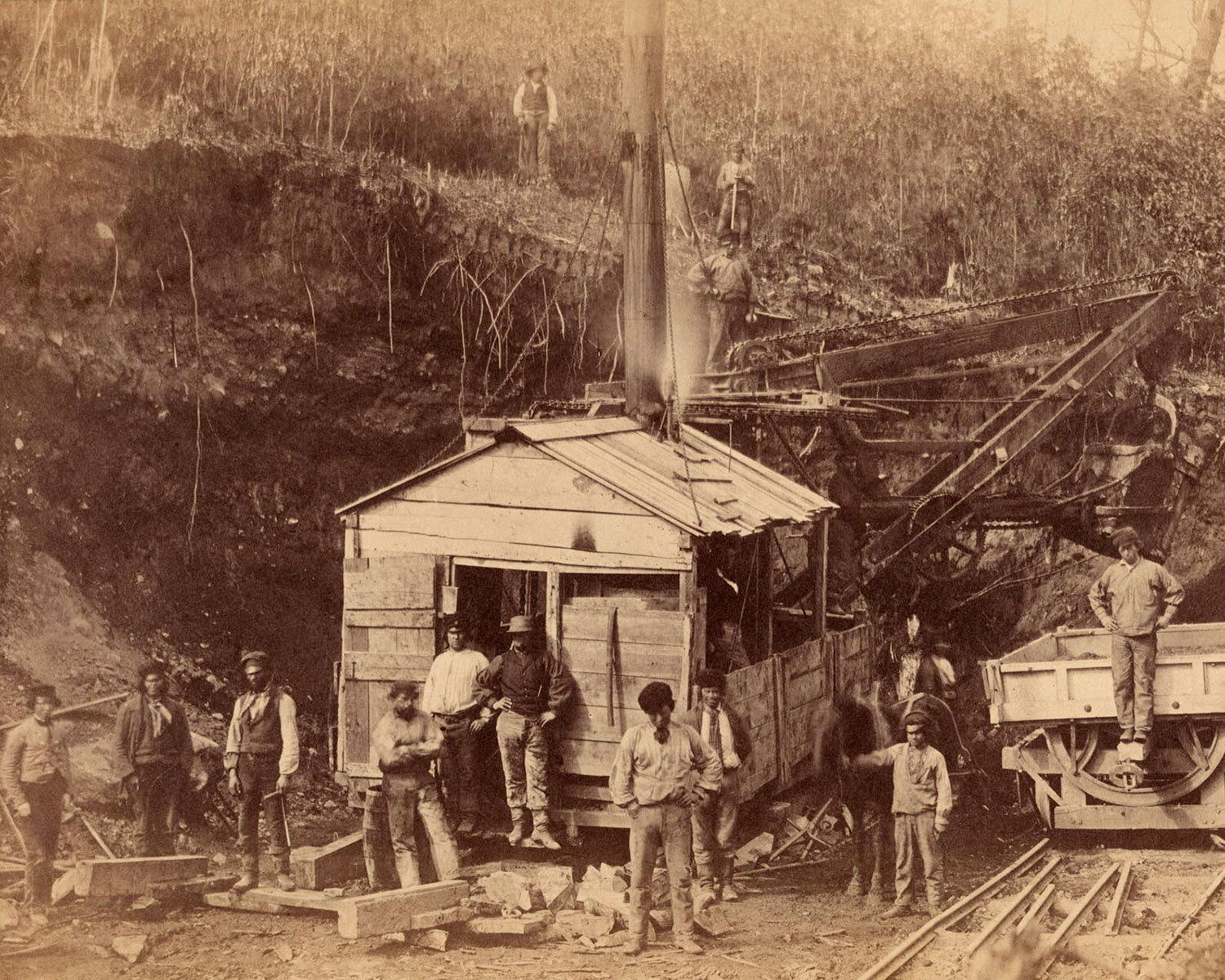
Cobourg and Peterborough Railway 1852-1898, The
It was important to establish a railway line between Cobourg and Peterborough. In fact, the citizens of Cobourg were largely responsible for this particular line, which opened in 1854. Unfortunate circumstances — including debilitating ice along the Rice Lake bridge — made the line unsafe and, ultimately, unprofitable.
Learn more
About
Plaque
Cobourg and Peterborough Railway 1852-1898, The in Transportation systems and communications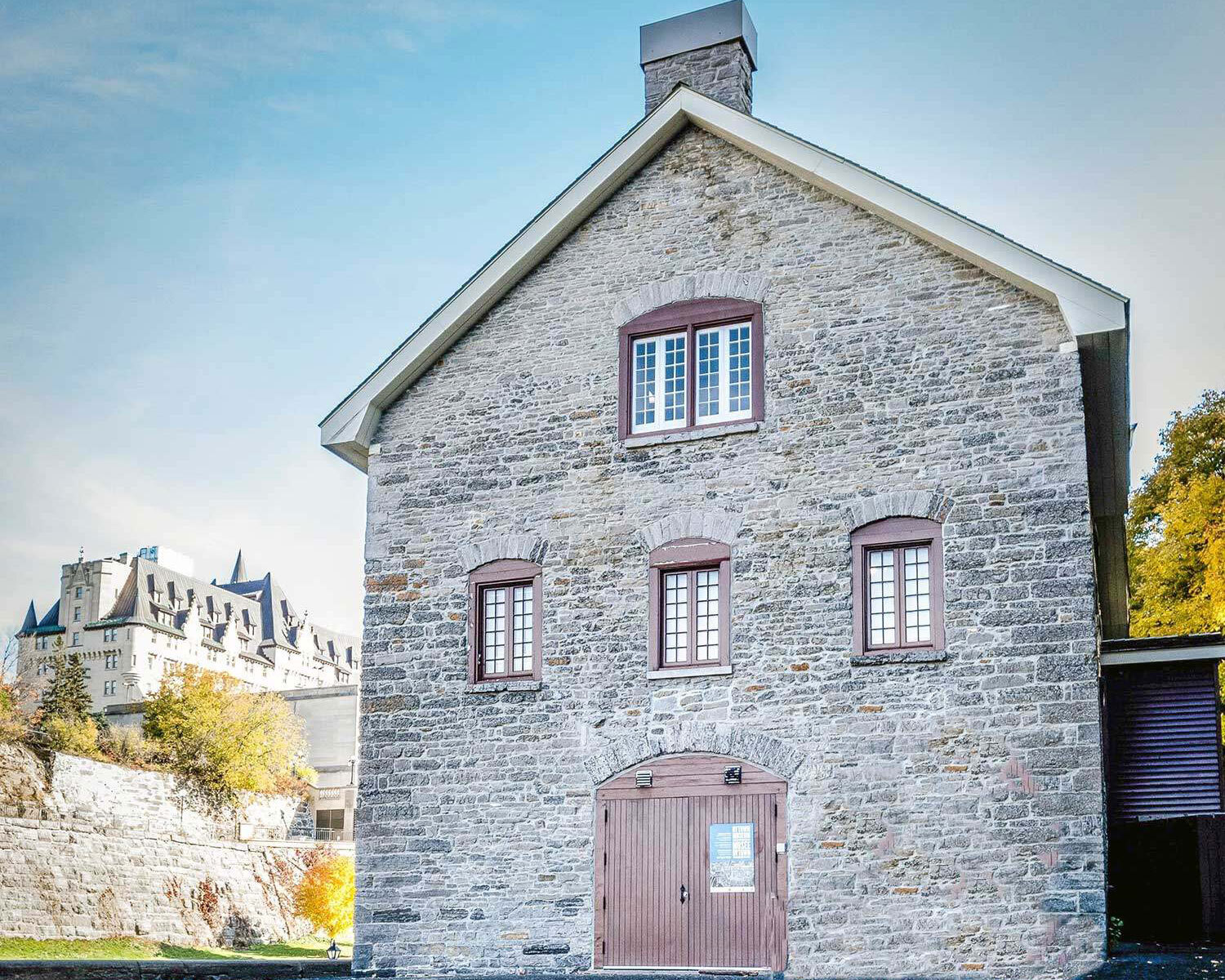
Commissariat Building 1827
Today a museum, this structure is the oldest existing stone building in Ottawa. During the construction of the Rideau Canal, it was a storehouse, office and treasury. The building was turned over to the Canadian government in 1864.
Learn more
About
Plaque
Commissariat Building 1827 in Transportation systems and communications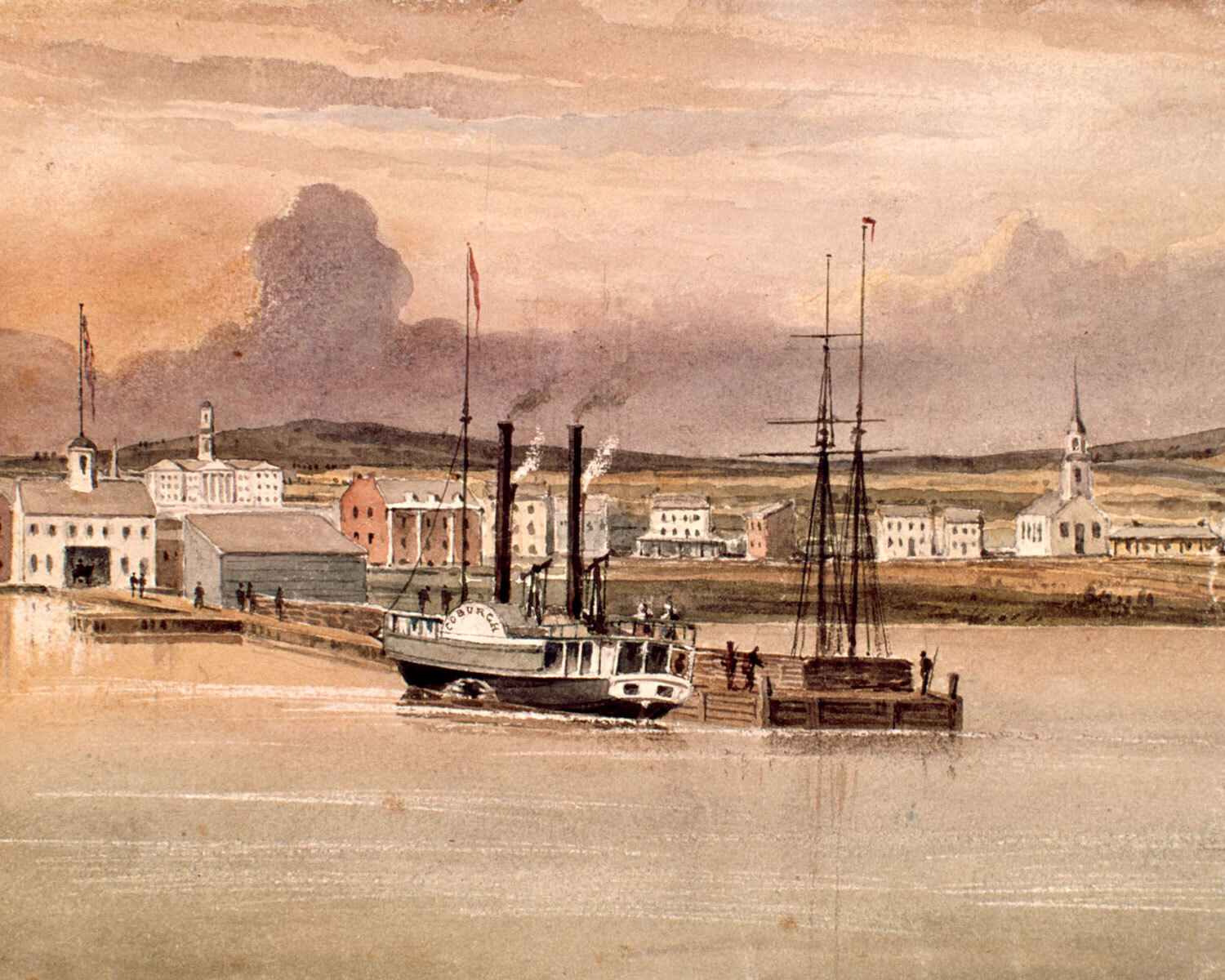
Founding of Cobourg, The
In the first years of the 19th century, mills helped to establish a settlement here. Then came the completion of Kingston Road and harbour improvements. Known originally as Hamilton, Cobourg was incorporated as a town in 1850.
Learn more
About
Plaque
Founding of Cobourg, The in Transportation systems and communications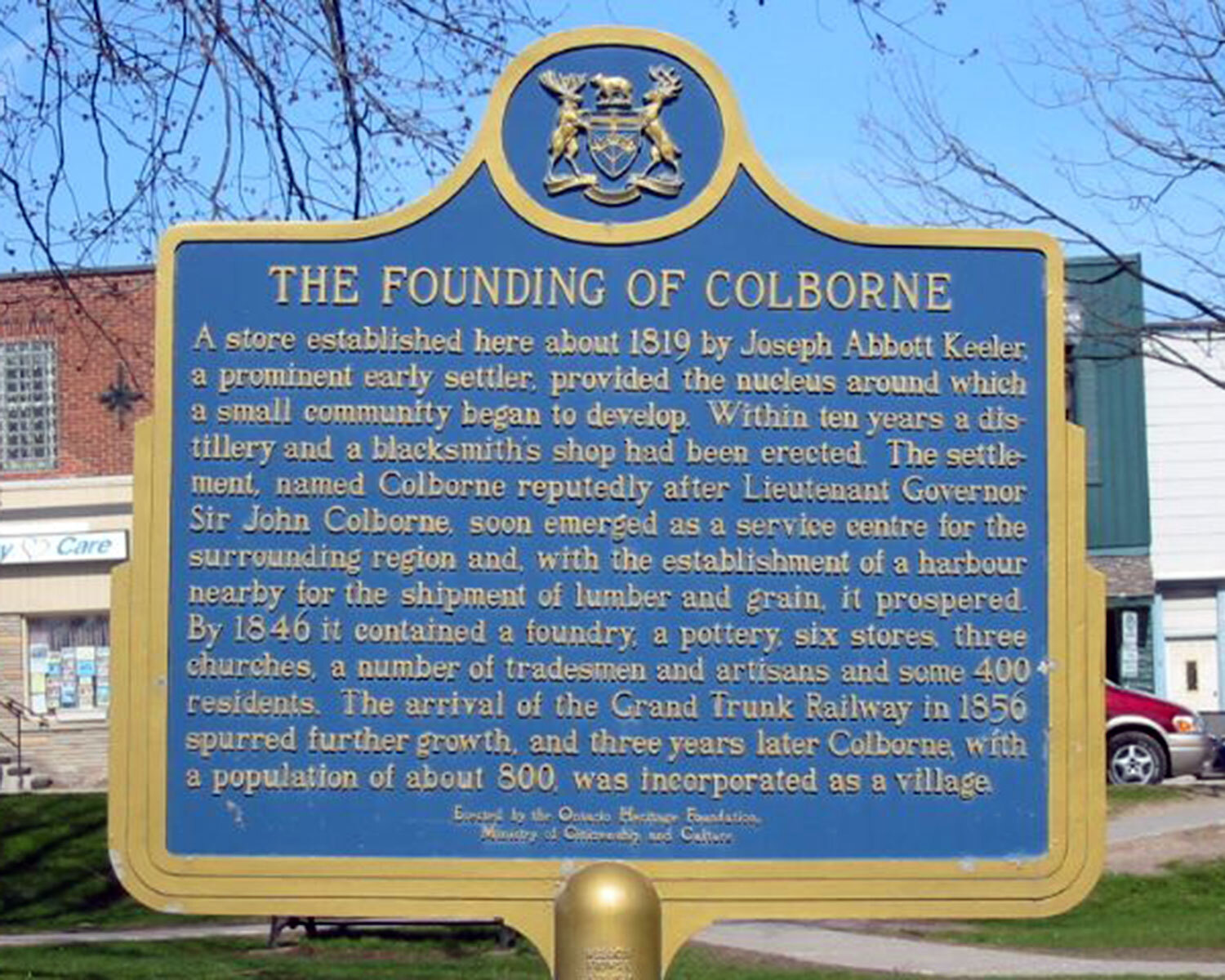
Founding of Colborne, The
A store established here around 1819 by Joseph Keeler, a prominent local merchant and early settler, provided the nucleus around which the community of Colborne began. The settlement thrived as more businesses started. The arrival of the Grand Trunk Railway in 1856 spurred further growth and, three years later, Colborne was incorporated as a village.
Learn more
About
Plaque
Founding of Colborne, The in Transportation systems and communications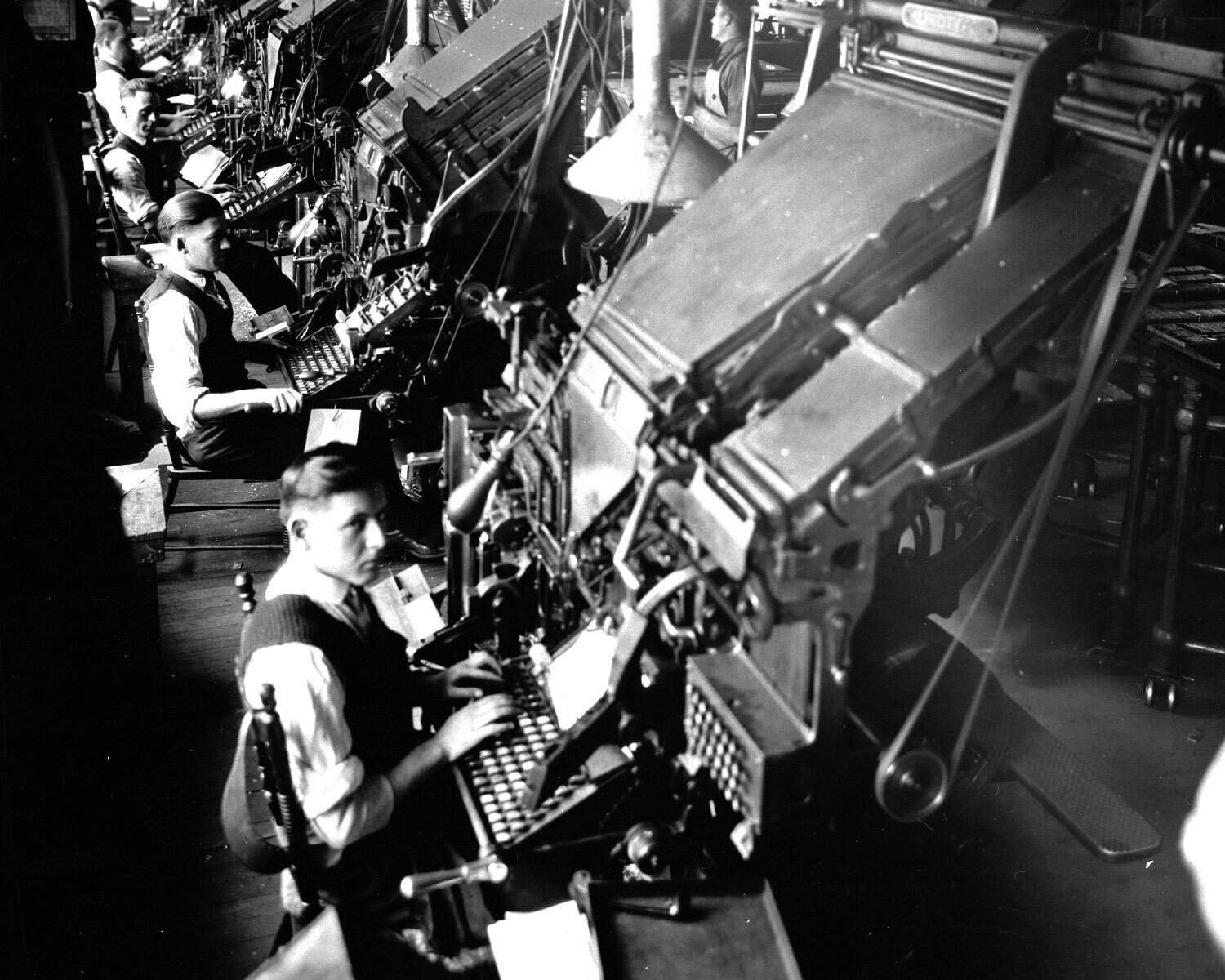
Le Droit
In 1912, French-Canadian educational and religious groups came together to discuss the founding of a newspaper that could be used to protest Regulation 17, which severely restricted the teaching of French in Ontario schools. From this, Le Droit was born — a French-language daily newspaper. Le Droit continues to support and defend Franco-Ontarian rights.
Learn more
About
Plaque
Le Droit in Transportation systems and communications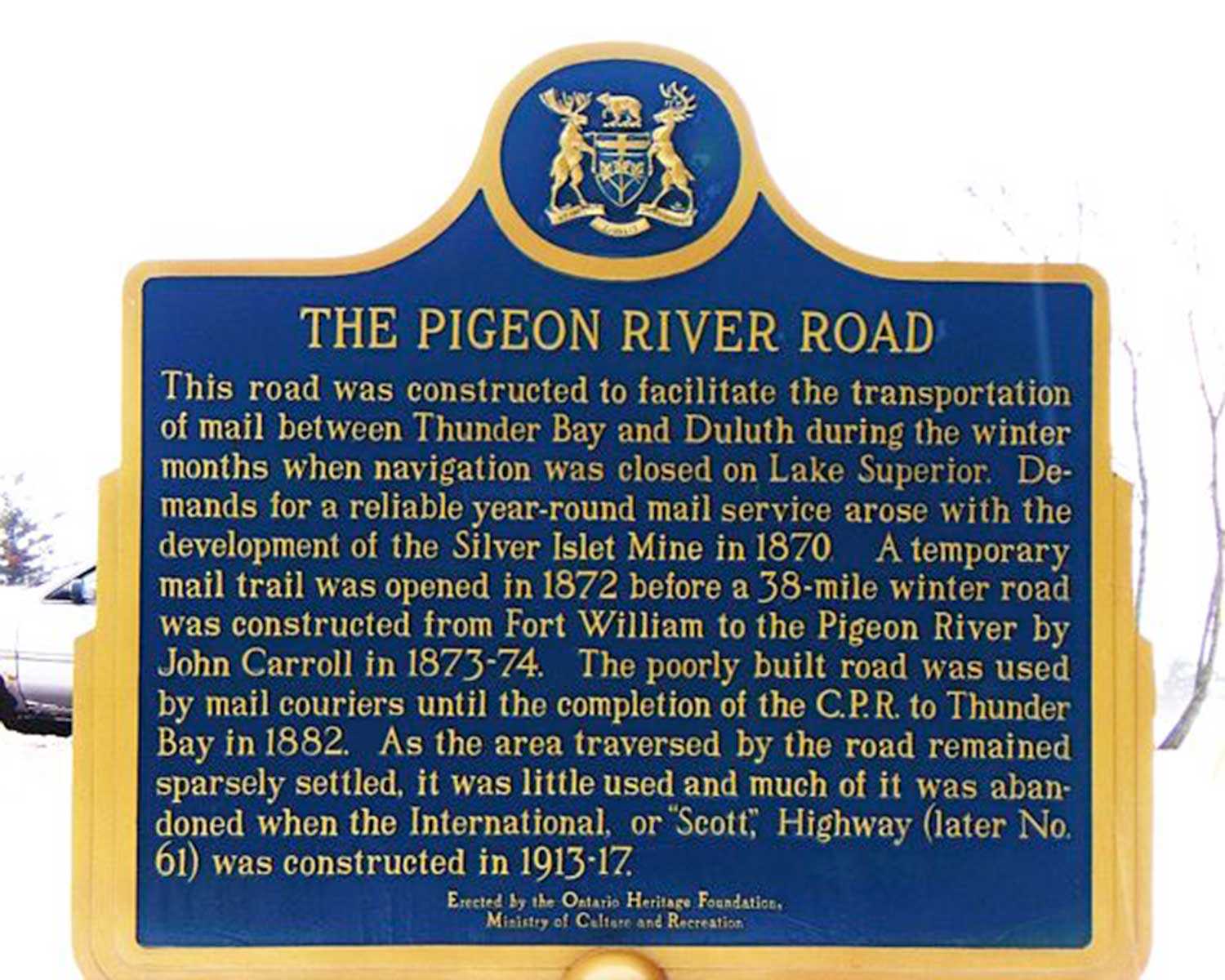
Pigeon River Road, The
This abandoned roadway was used to deliver the mail for a decade until the Canadian Pacific Railway was completed in 1882.
Learn more
About
Plaque
Pigeon River Road, The in Transportation systems and communications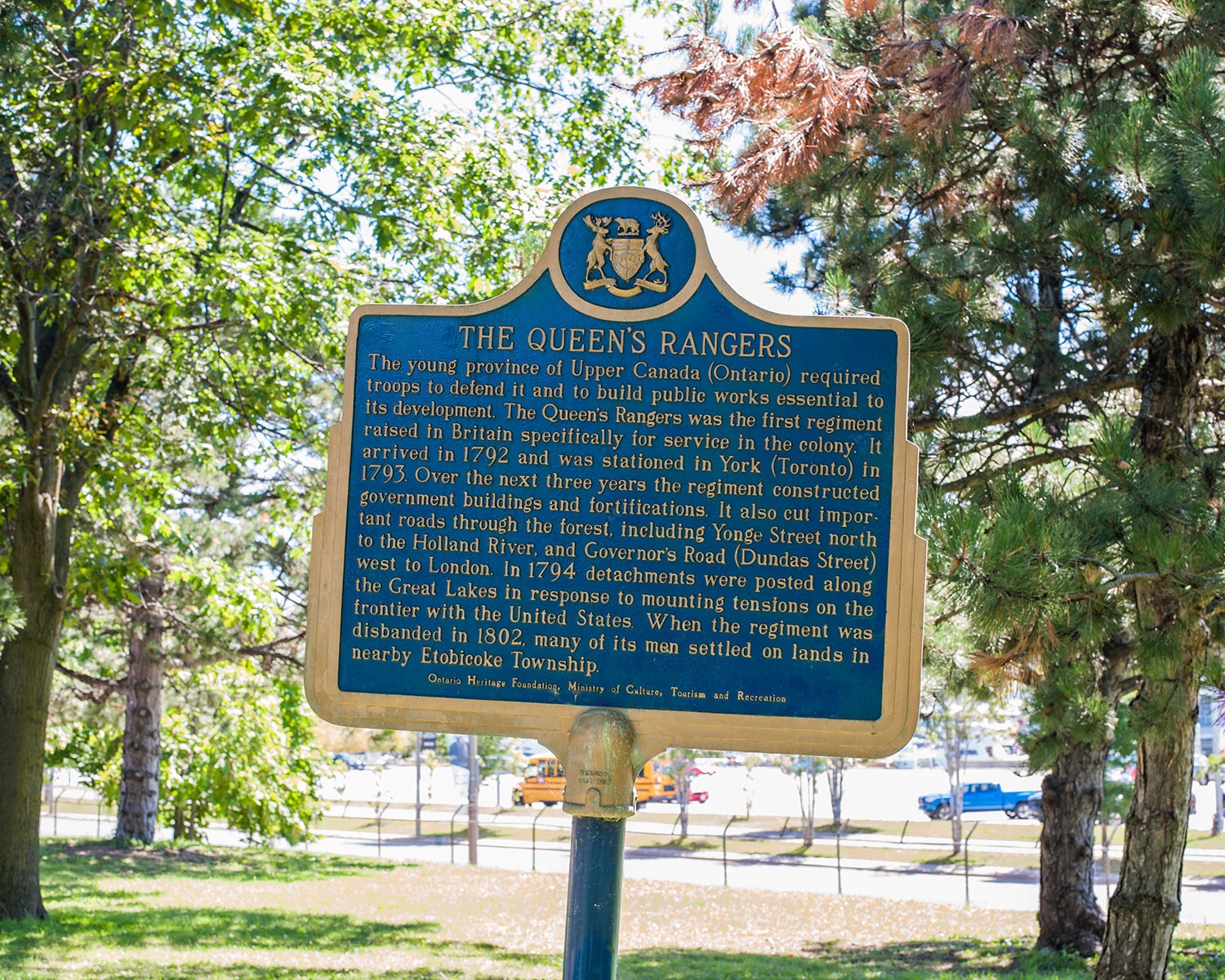
Queen's Rangers, The
This plaque honours the first British regiment raised specifically for service in Upper Canada (now Ontario).
Learn more
About
Plaque
Queen's Rangers, The in Transportation systems and communications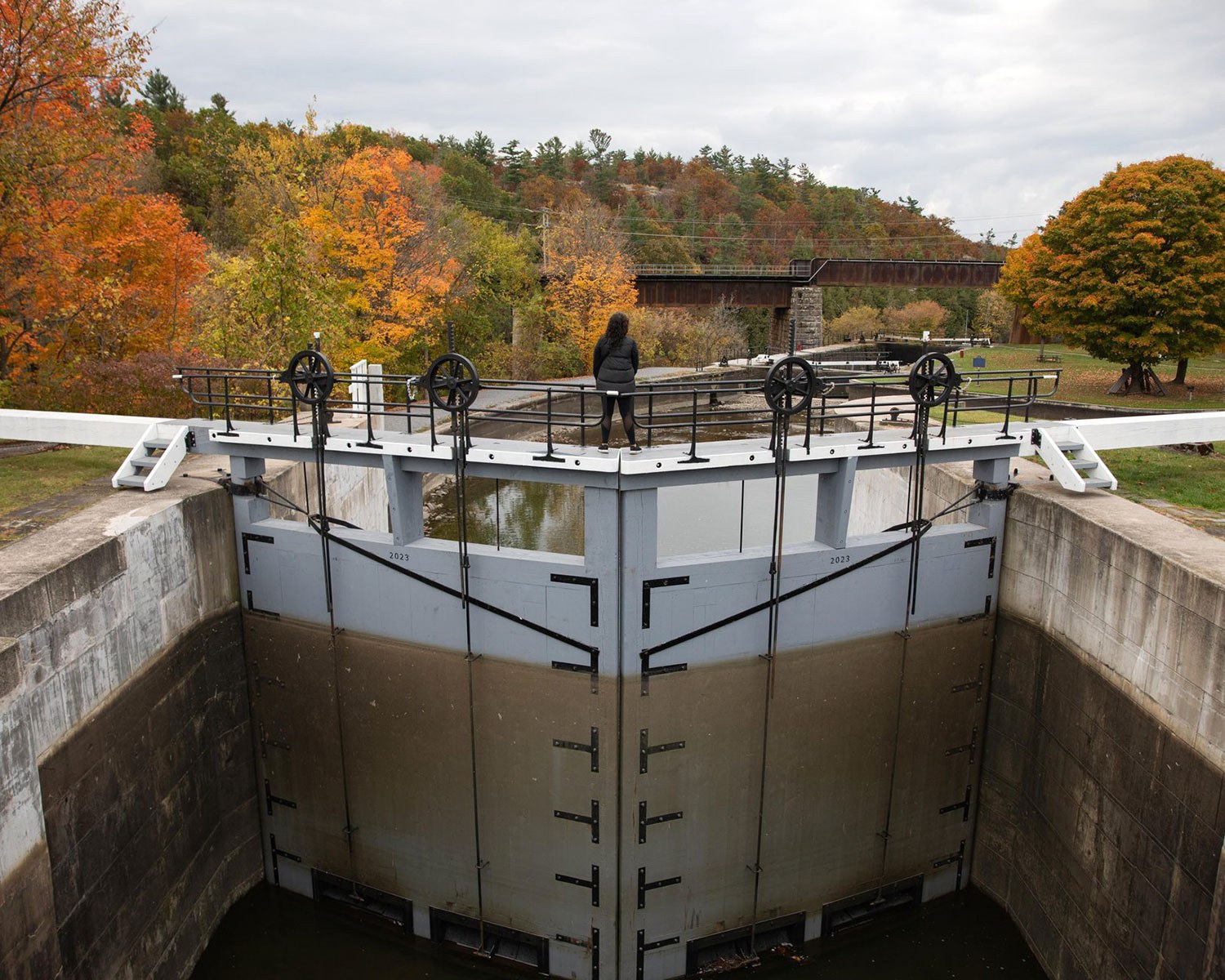
Rideau Canal 1826-1832, The
This UNESCO World Heritage Site opened on May 24, 1832 to provide a secure military route between Upper and Lower Canada.
Learn more
About
Plaque
Rideau Canal 1826-1832, The in Transportation systems and communications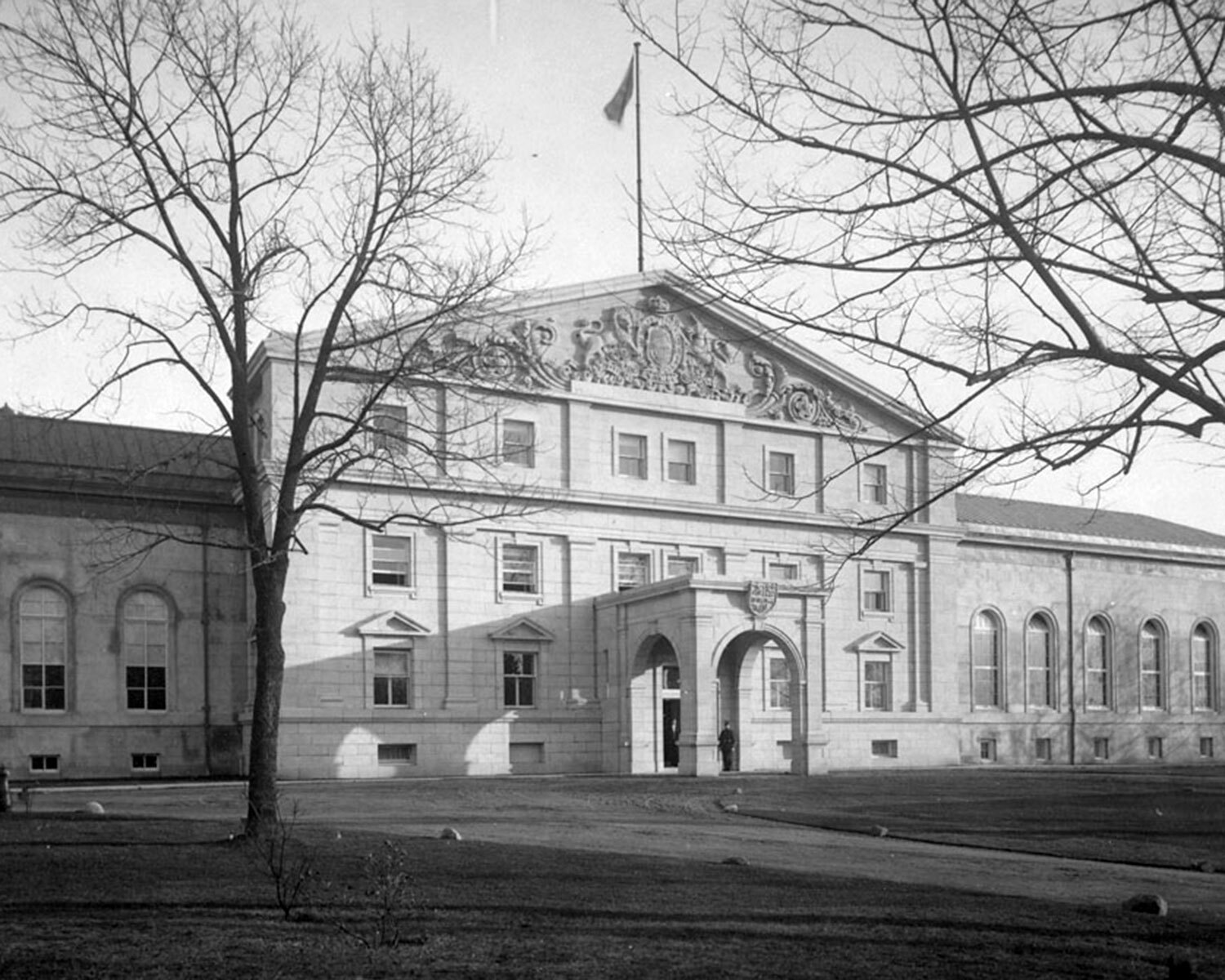
Thomas McKay 1792-1855
This Scottish-born master mason came to Ottawa to work on the entrance locks of the Rideau Canal and the first bridge that spanned the Ottawa River to connect Ottawa and Hull (now Gatineau). McKay built his residence, Rideau Hall, in 1838 — which was purchased by the Government of Canada to become the official residence of the Governor General.
Learn more
About
Plaque
Thomas McKay 1792-1855 in Transportation systems and communications
Western Route of the CPR, The
In June 1875, the first sod on the Canadian Pacific Railway’s line from the Lakehead to the West was turned here in Fort William. The last spike was driven in 1885.
Learn more
About
Plaque
Western Route of the CPR, The in Transportation systems and communications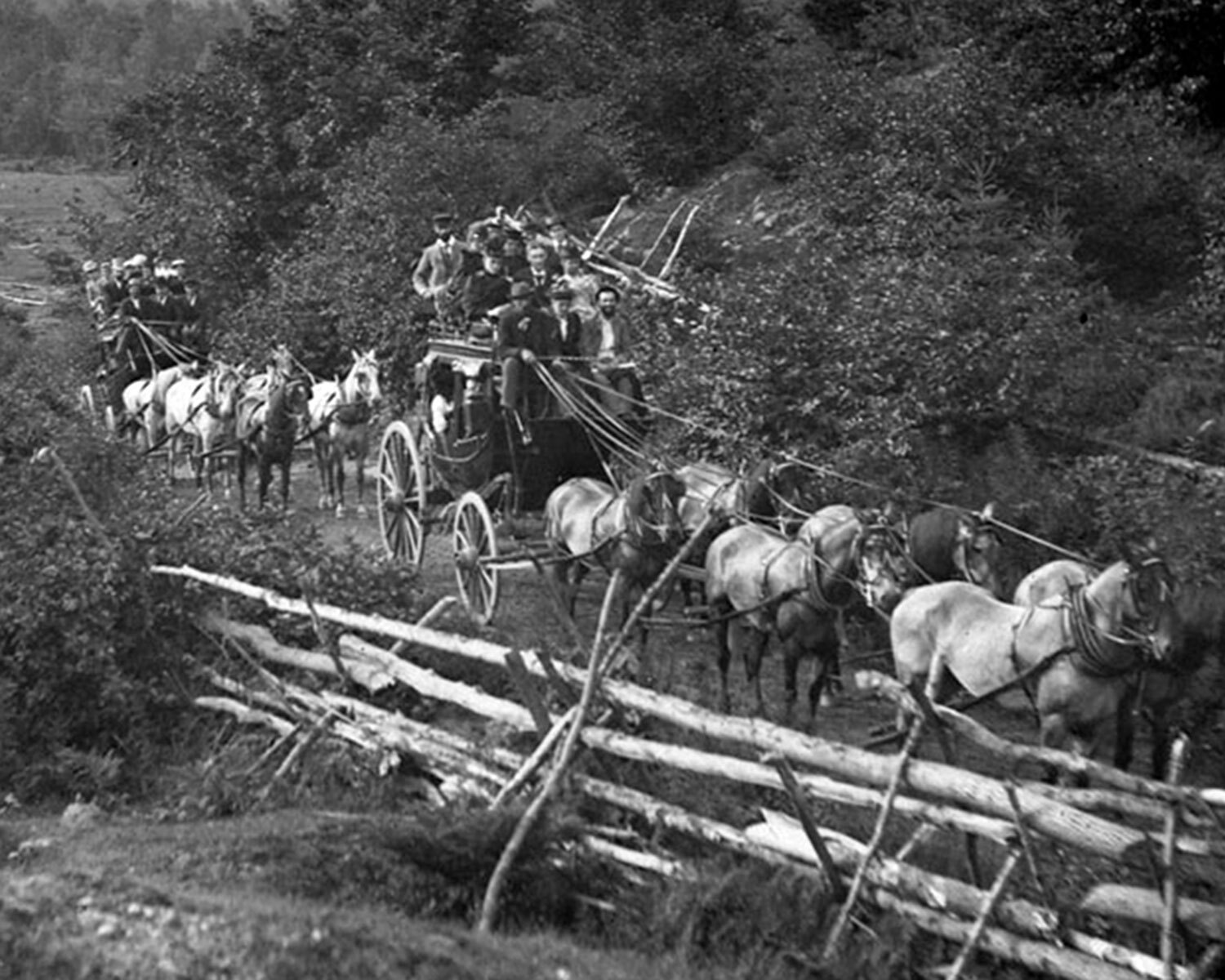
William Weller 1799-1863
Weller contributed to some of Cobourg’s growth by offering a stagecoach operation between Hamilton and Montreal. In 1840, he made record time (37 hours and 40 minutes) conveying the Governor General from Toronto to Montreal.
Learn more
About
Plaque
William Weller 1799-1863 in Transportation systems and communications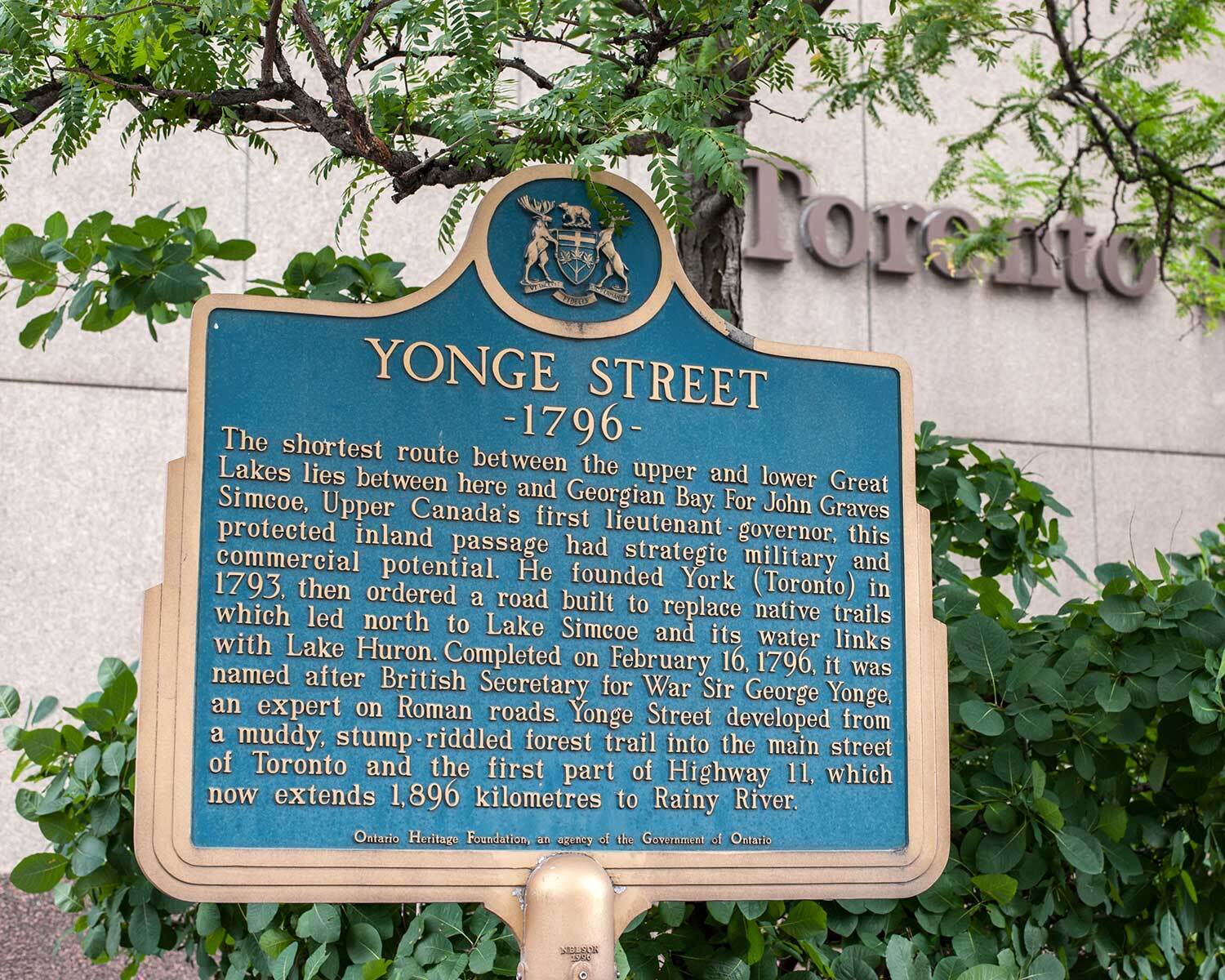
Yonge Street 1796
The longest street in the world was built by Ontario’s first lieutenant governor, John Graves Simcoe, to connect his recently founded Town of York with the naval base at Penetanguishene on Georgian Bay.
Learn more
About
Plaque
Yonge Street 1796 in Transportation systems and communications