


Layer by layer — 2. First Parliament throughout the ages
Indigenous people have lived on this land for over 13,000 years. Today, this land continues to be home to these communities and many other diverse Indigenous Peoples.
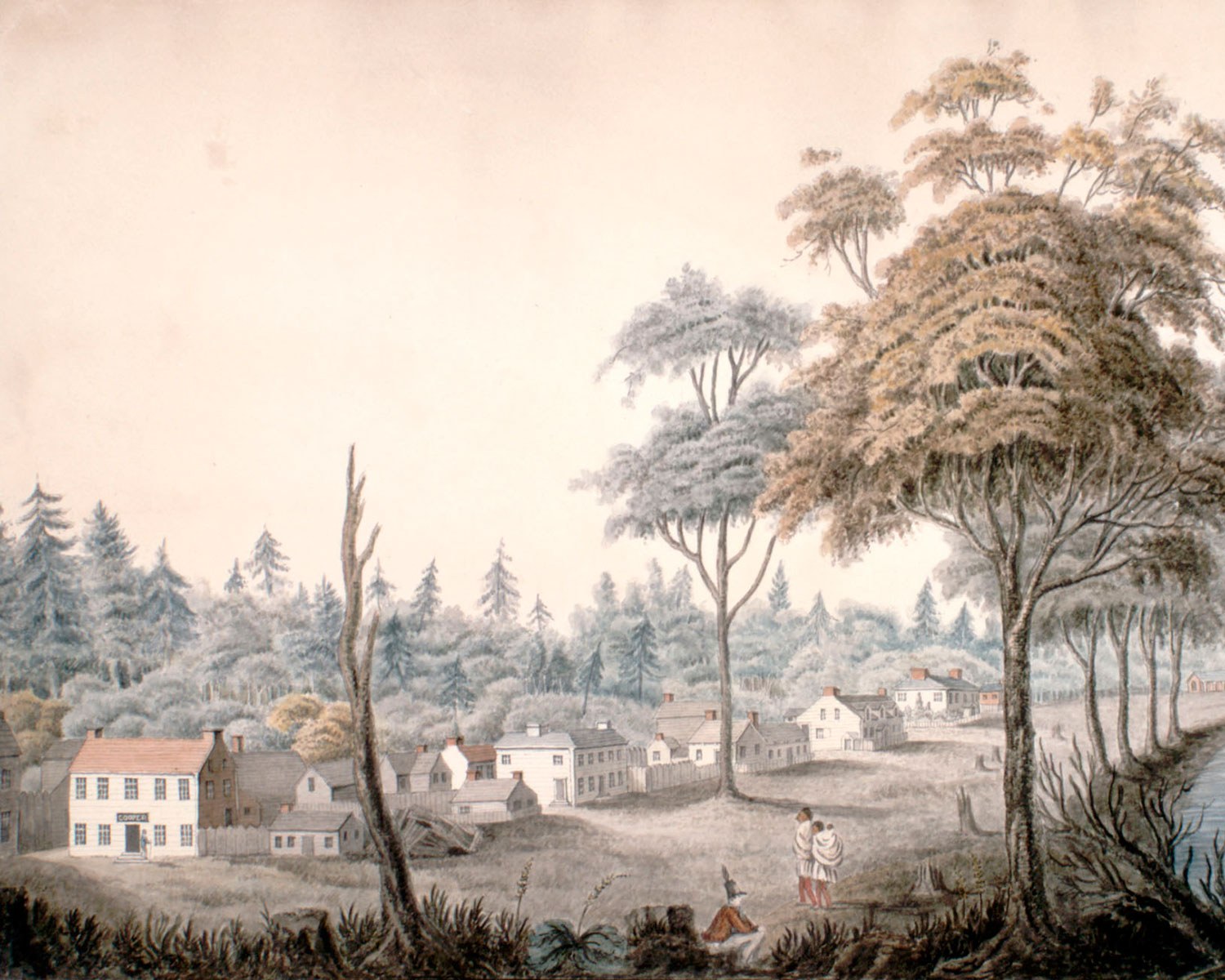
The lands of Tkaronto
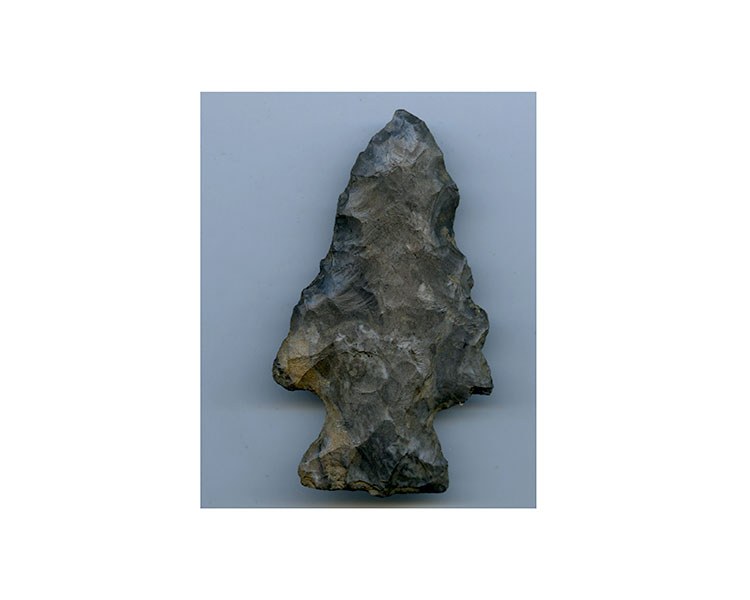
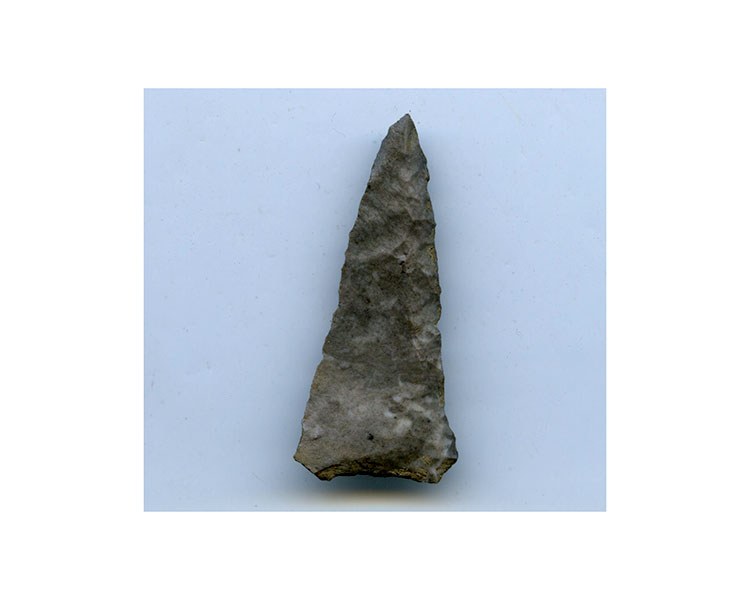
Indigenous people have lived on this land for over 13,000 years. The north shore of Lake Ontario is the traditional land of the Wendat, Haudenosaunee, Anishinaabek and Métis. Today, this land continues to be home to these communities and many other diverse Indigenous Peoples.
The shoreline and rivers created a network for travel and trade. The Toronto Carrying Place Trail is a traditional route from Lake Ontario to Lake Simcoe that roughly follows the Humber and Rouge rivers. These rivers, like the Don, were also important for fishing. The land was heavily forested and marshy, with a unique ecosystem called the black oak savannah covering the sandy soil along the lakeshore. These savannahs grew fruits, berries and nuts for harvesting and had open areas for hunting.
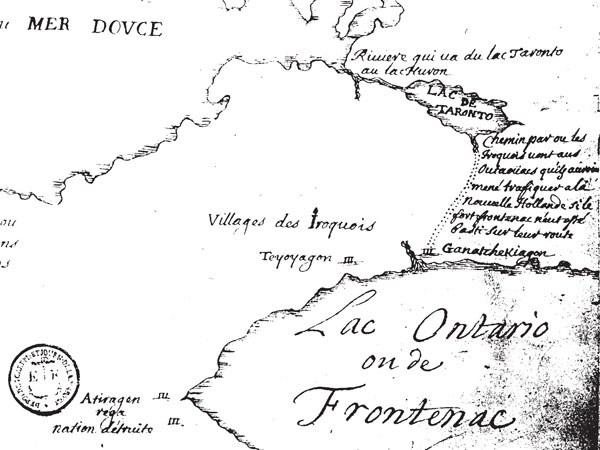
Map of the north shore of Lake Ontario showing the Rouge River’s branch of the Carrying Place Trail, the settlements Teiaiagon and Ganatsekwyagon, and Lake Simcoe (labelled Lac De Taronto). Believed to be drawn by Louis Jolliet in 1673.
The names we still use in this area reflect its traditional importance to the Indigenous communities. The Indigenous name Tkaronto roughly means “where the trees are standing in the water,” derived from Haudenosaunee and Wendat words. Ontario is also from a Wendat or Haudenosaunee word meaning “sparkling water” or “handsome lake.”
Two large Indigenous settlements existed in the area during the 17th century. To the west, Teiaiagon overlooked the lower Humber River. To the east, Ganatsekwyagon sat on the Rouge River. In the early 18th century, the French arrived in the region. They established several forts and trading posts to expand their access to the fur trade. The arrival of Europeans disrupted the way of living for the Indigenous Peoples living here. But while the fur trade flourished, so too did conflict and disease.
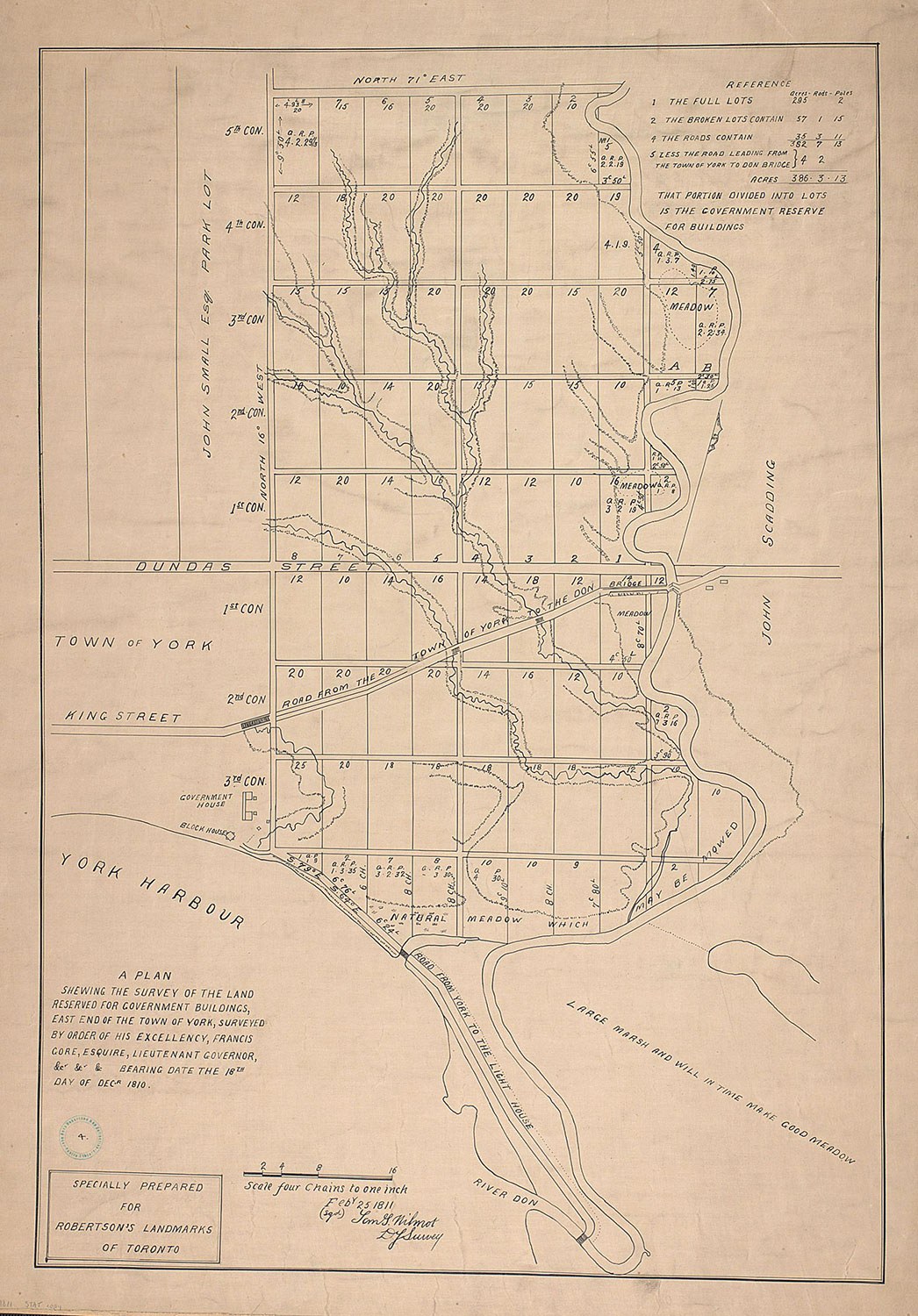
The British claimed control over the area in 1763. With the controversial 1787 “Toronto Purchase,” the British “bought” the land from the Mississaugas. The purchase was renegotiated in 1805 because the permanence of the initial agreement was unclear. In the meantime, the British settled the Town of York. Fishing rights over the creeks and rivers were supposedly granted to the Mississauga. But the British designated the areas east and west of the small settlement as Crown land, including the lower Don River and Taddle Creek.
In the centuries since, the landscape has changed dramatically. Only small patches of forest remain in parks and ravines. Many of the rivers and creeks are now buried under the city. The few that remain are no longer suitable for fishing and are too shallow for canoes.
First Parliament in session
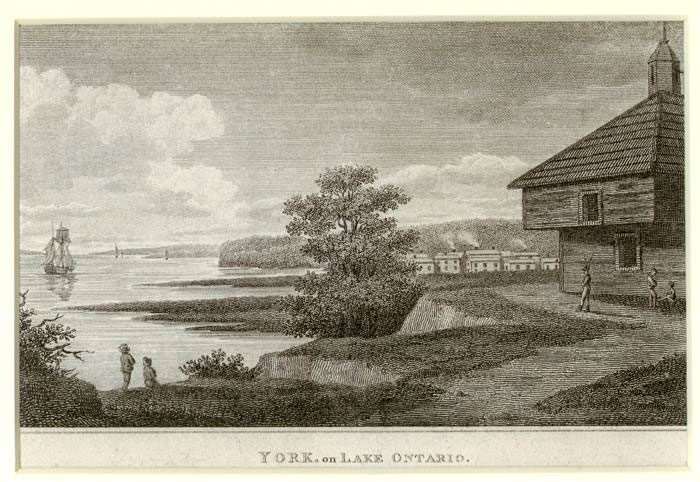
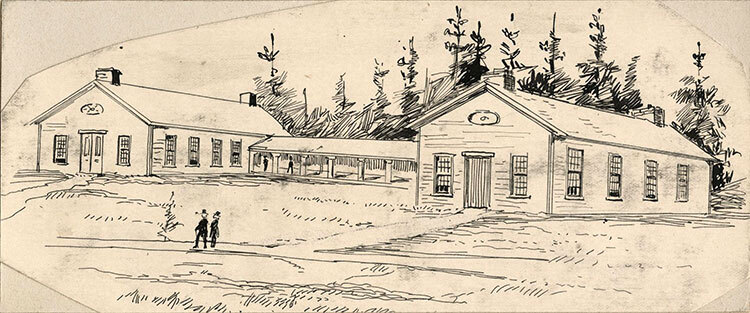
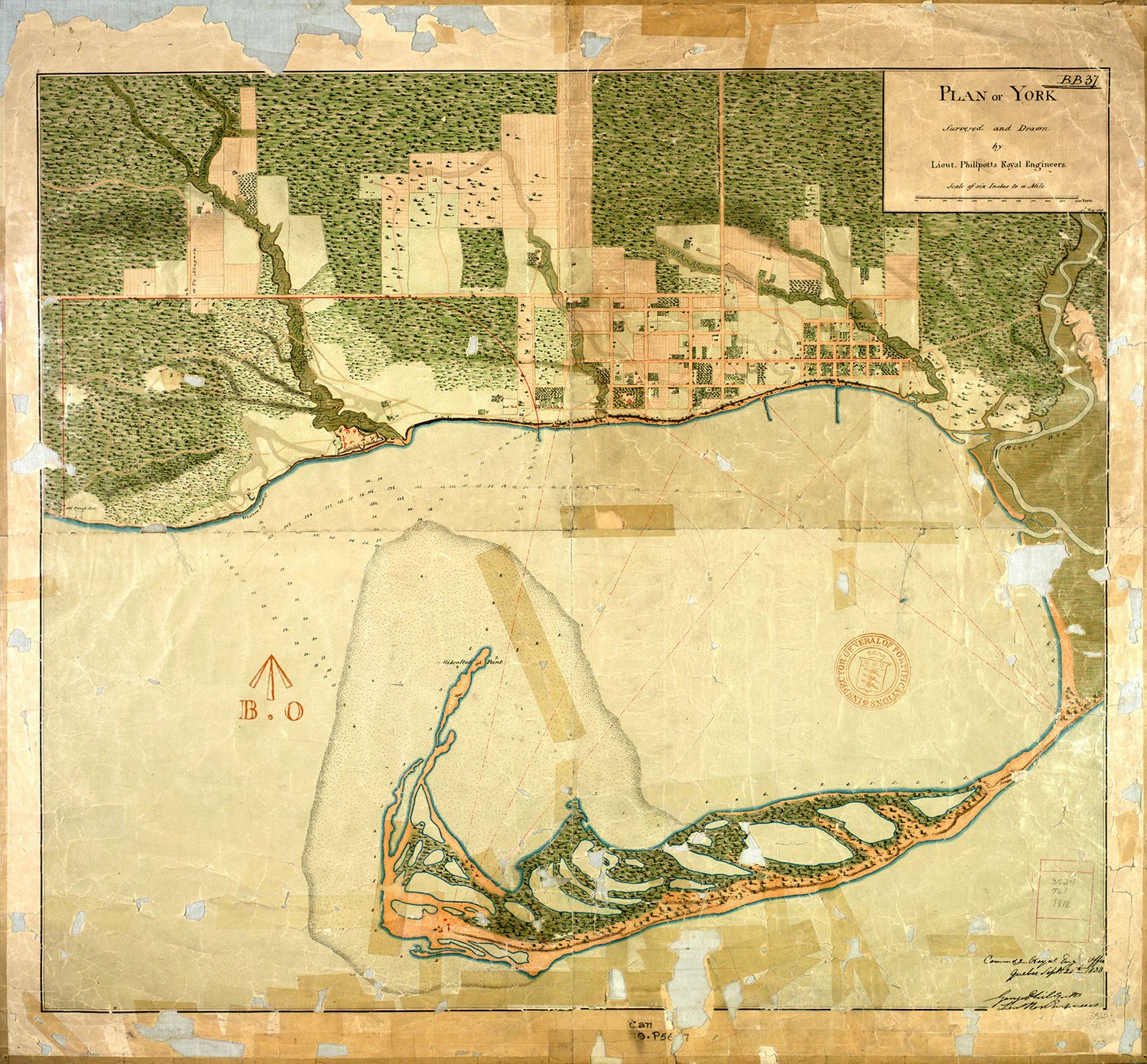
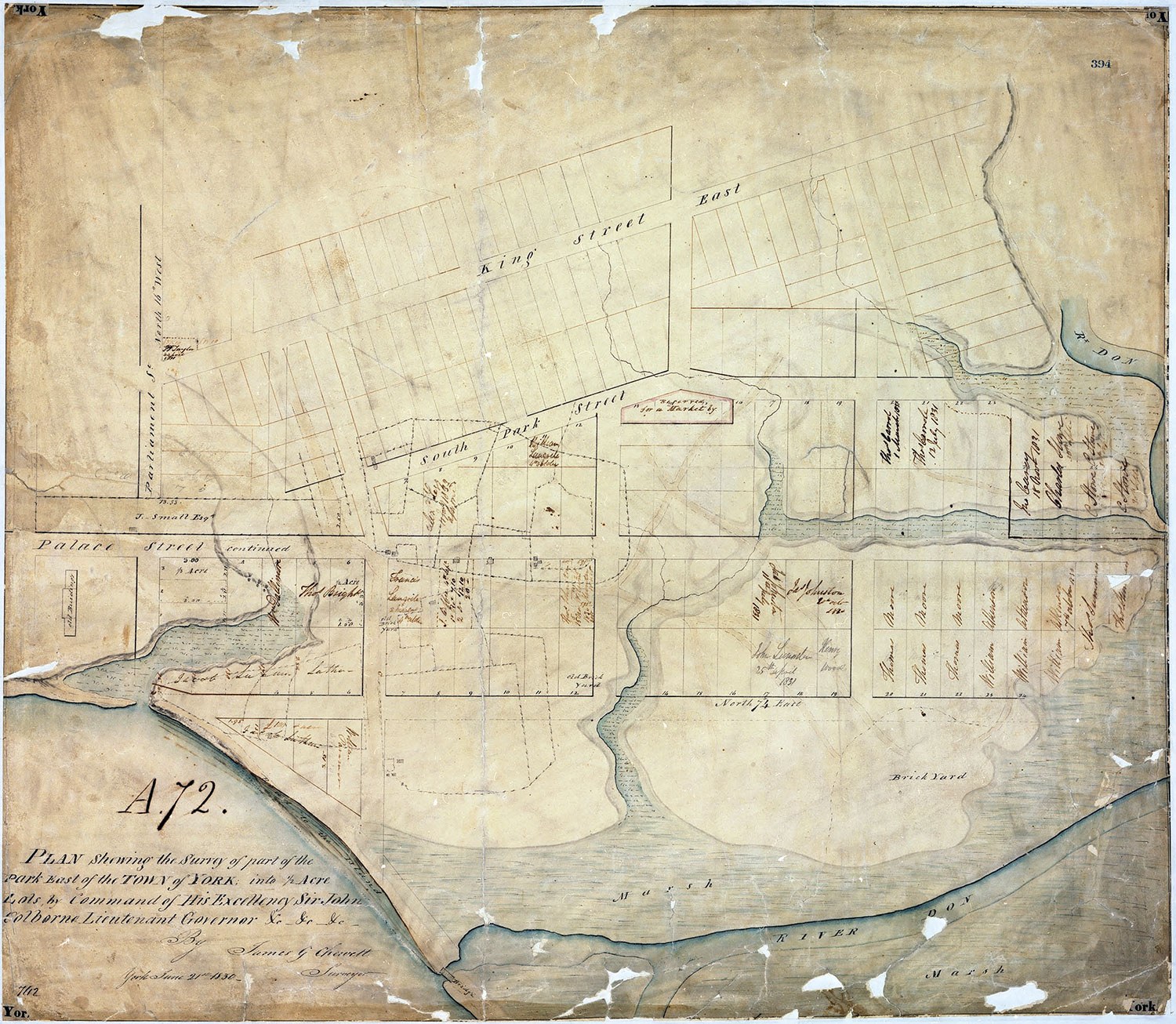
The Town of York was settled by the British in 1793. It was quickly chosen to be the capital of Upper Canada, replacing Newark (known today as Niagara-on-the-Lake). A plot was picked for the Parliament buildings on Crown land to the east in a low-lying marshy field near the mouth of the Don River. Construction began swiftly. Two small brick buildings were erected. Each measured about 7 metres (23 feet) by 12 metres (39 feet) and were set about 20 metres (66 feet) apart. They were probably 1.5 storeys tall to accommodate a small viewing gallery. The north building was for the House Assembly and the south building was for the Legislative Council. Some other small buildings were located nearby for committee meetings. A neighbouring blockhouse was also constructed to house a small military garrison.
The first meetings in these Parliament buildings took place in 1797. The members of Parliament only met for about two months out of the year. For the rest of the time, the buildings were used for other public events including the Anglican congregation prior to their church being built. The presence of Parliament gave the small Town of York some splendour and importance. But the buildings themselves were modest and located on the outskirts of town. They underwent several repairs and improvements over the next decade. A covered walkway was added in 1805 to connect both buildings and wooden flooring was installed in the north building.
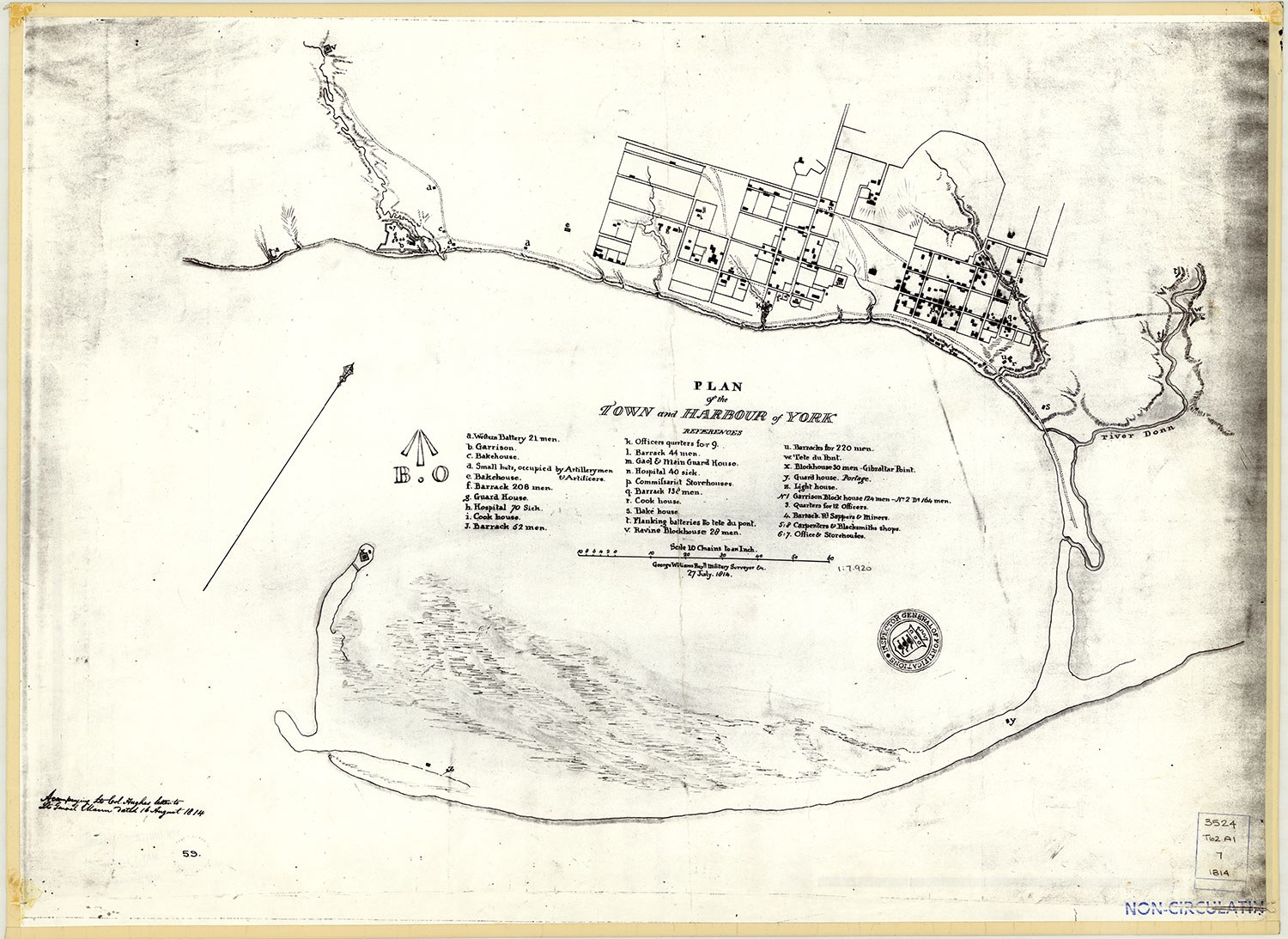
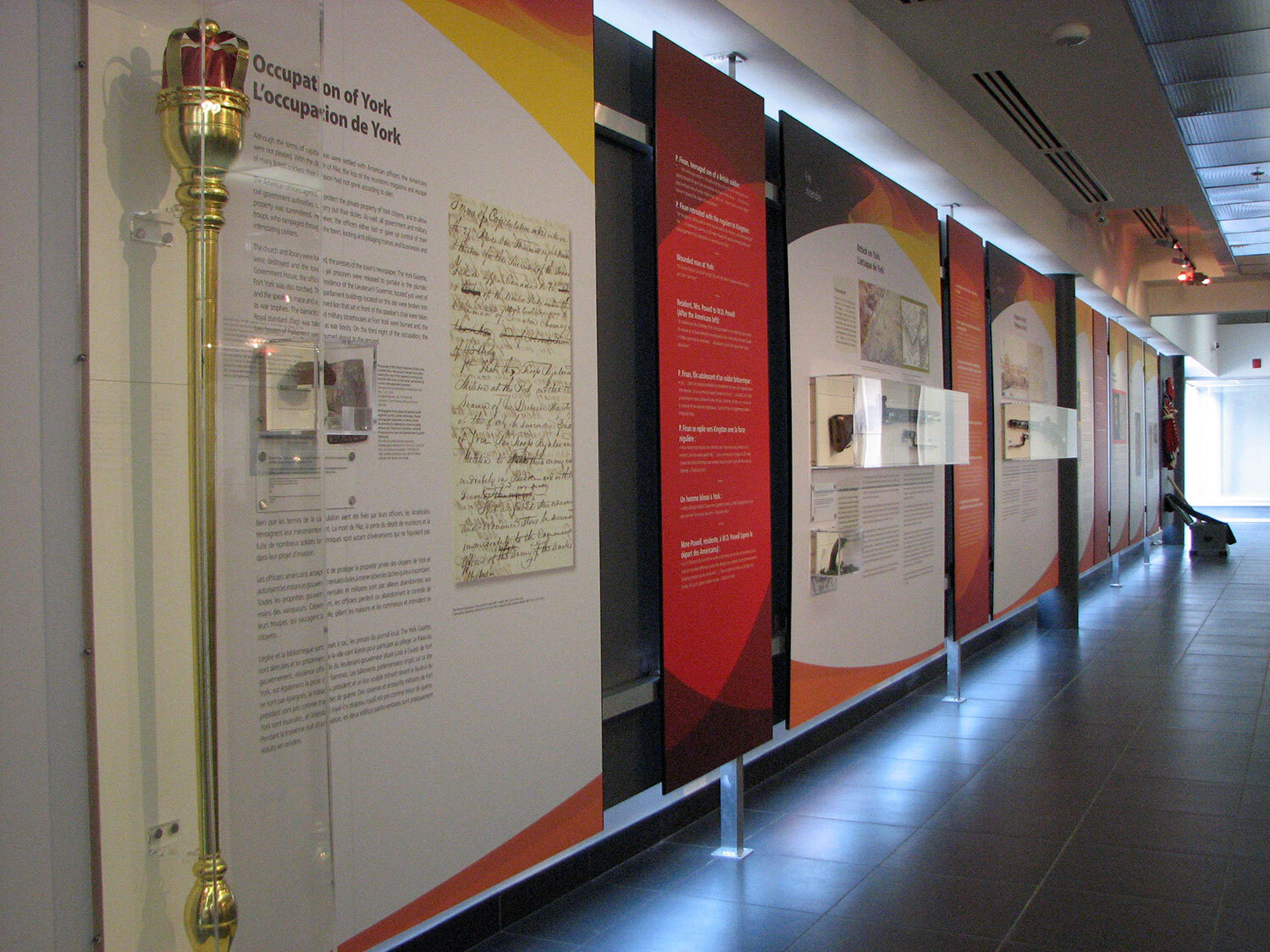
These First Parliament buildings stood for 16 years, until the War of 1812. In 1813, the Americans invaded York. The British army stationed at York withdrew after famously blowing up the fort’s gunpowder magazine to prevent the Americans from capturing the fort. American troops then occupied the town for a few days. During this time, they looted and burnt down the Parliament buildings and nearby blockhouse.
After the war, the buildings were hastily repaired and temporarily used as a barracks. Then they briefly accommodated new immigrants. In the wake of the war, the British considered moving the capital to Kingston. But the town’s citizens petitioned to keep it at York and rebuild the Parliament buildings. In 1820, Parliament was rebuilt. The new building sat between the two older buildings, using them as wings. Only four years later, on December 30, 1824, an accidental fire started in the north wing. The fire was reportedly caused by an overheated chimney. During the blaze, Parliament was severely damaged, and never rebuilt. While York remained the capital until 1841, a new, larger and more modern parliament building was constructed on Front Street West.
Images:
This engraving by William Leney shows the blockhouse built between the Parliament buildings and the lakeshore. (Photo: Toronto Public Library)
This late-19th-century sketch shows what the First Parliament buildings may have looked like in the early 1800s. (Photo: Toronto Public Library)
Gallery
Swipe
An era behind bars
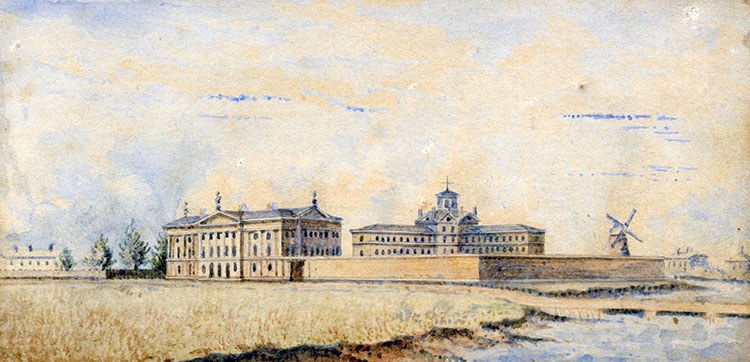
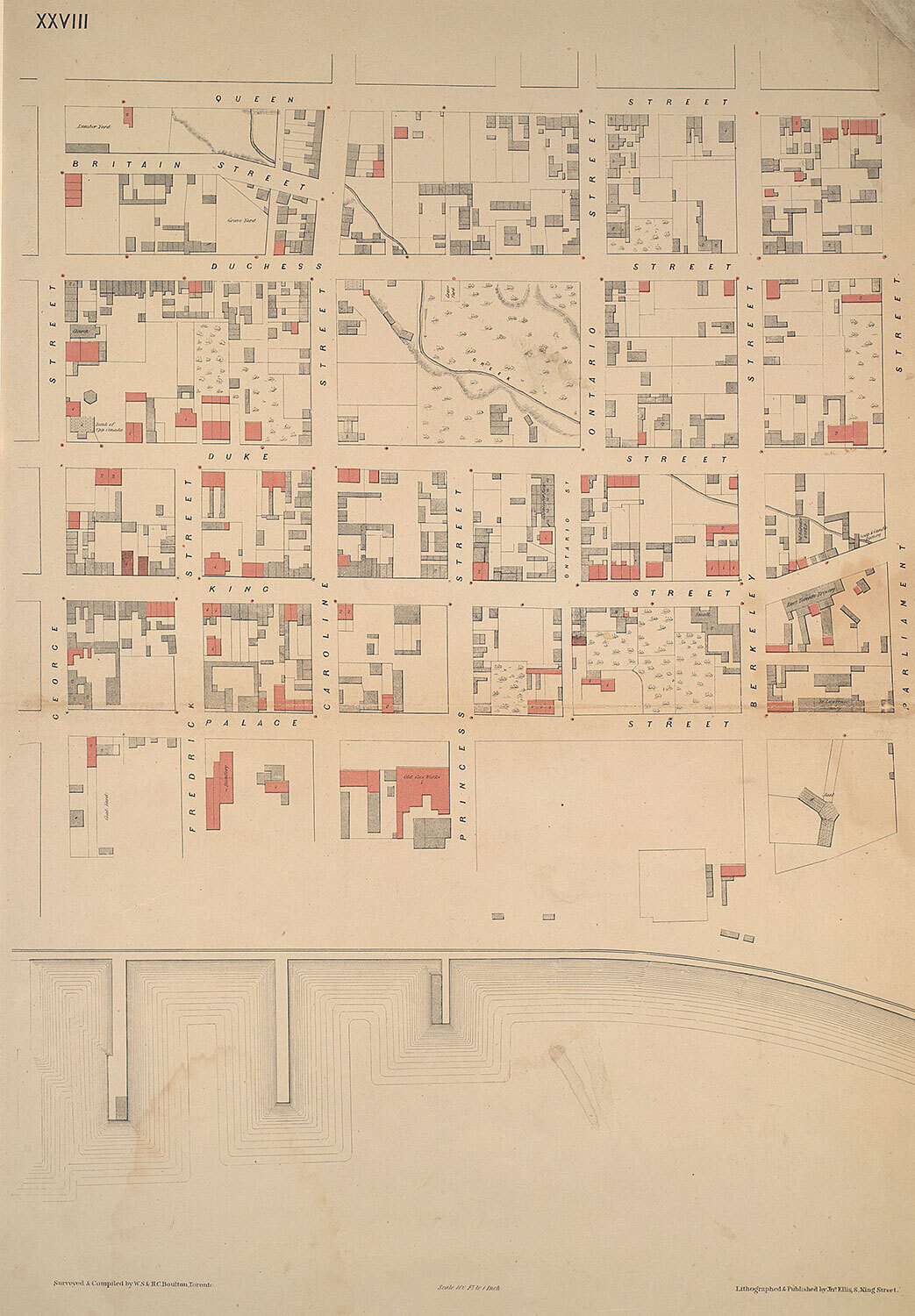
When the county government was looking for a place to build Toronto’s third jail, they chose the First Parliament area. After the 1824 fire, the site was left a vacant lot. Construction of the jail began in 1838 and was completed in 1840. The building had a five-storey central tower with two wings jutting out from the sides. The large limestone and brick structure loomed over the area. All accounts describe it as dull and dreary, with plain walls and small windows. A combination of felons, debtors, people deemed to be mentally ill, and anybody awaiting trial were imprisoned at the gaol. By 1846, the number of people housed here included 70 men, women and even children.
Photo: This watercolour by John George Howard shows a south view of the Third District Gaol and the planned, but never built, courthouse. Notice the stately buildings and the presence of a windmill, making the jail seem almost pleasant. (Credit: Toronto Public Library)
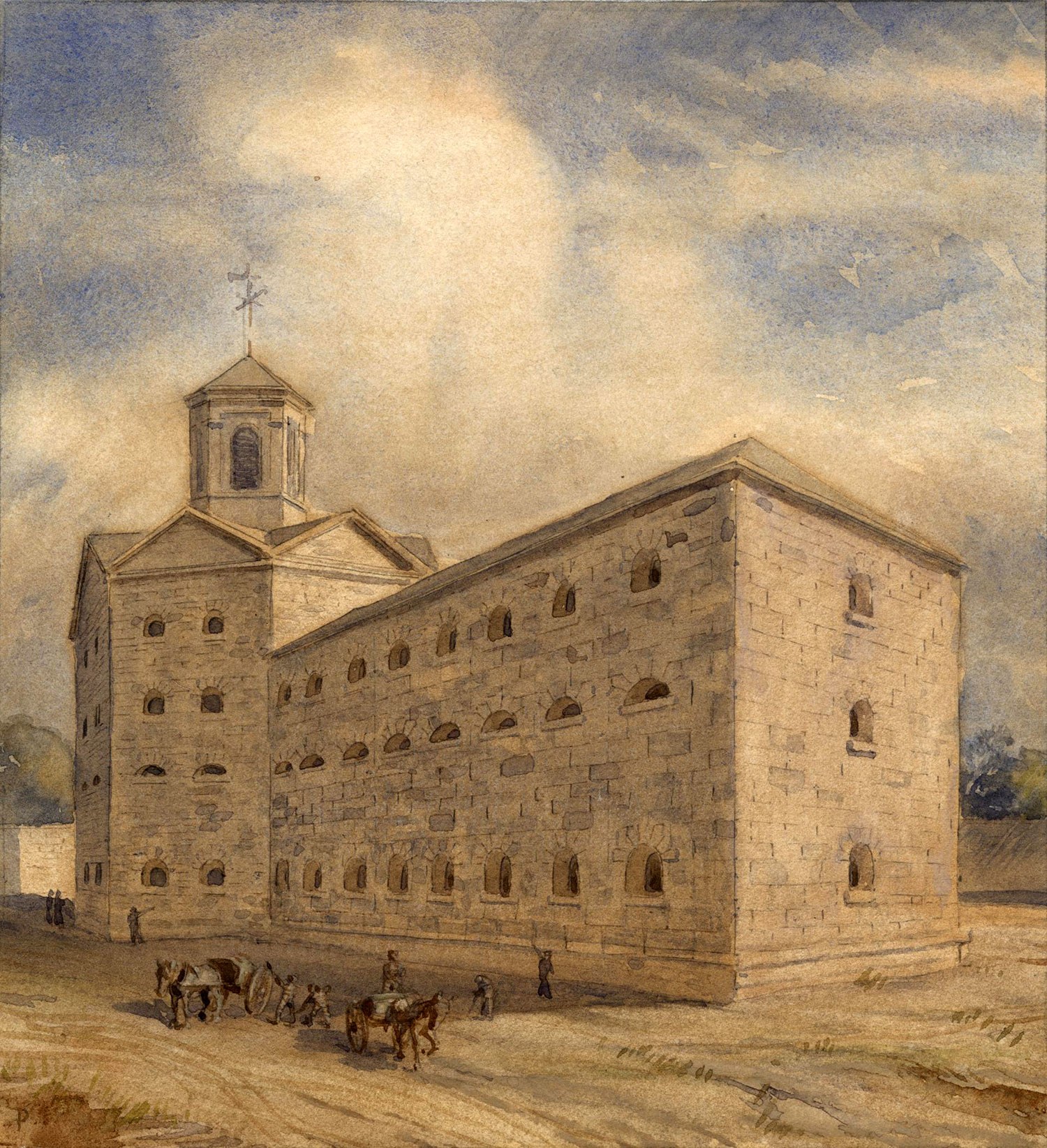
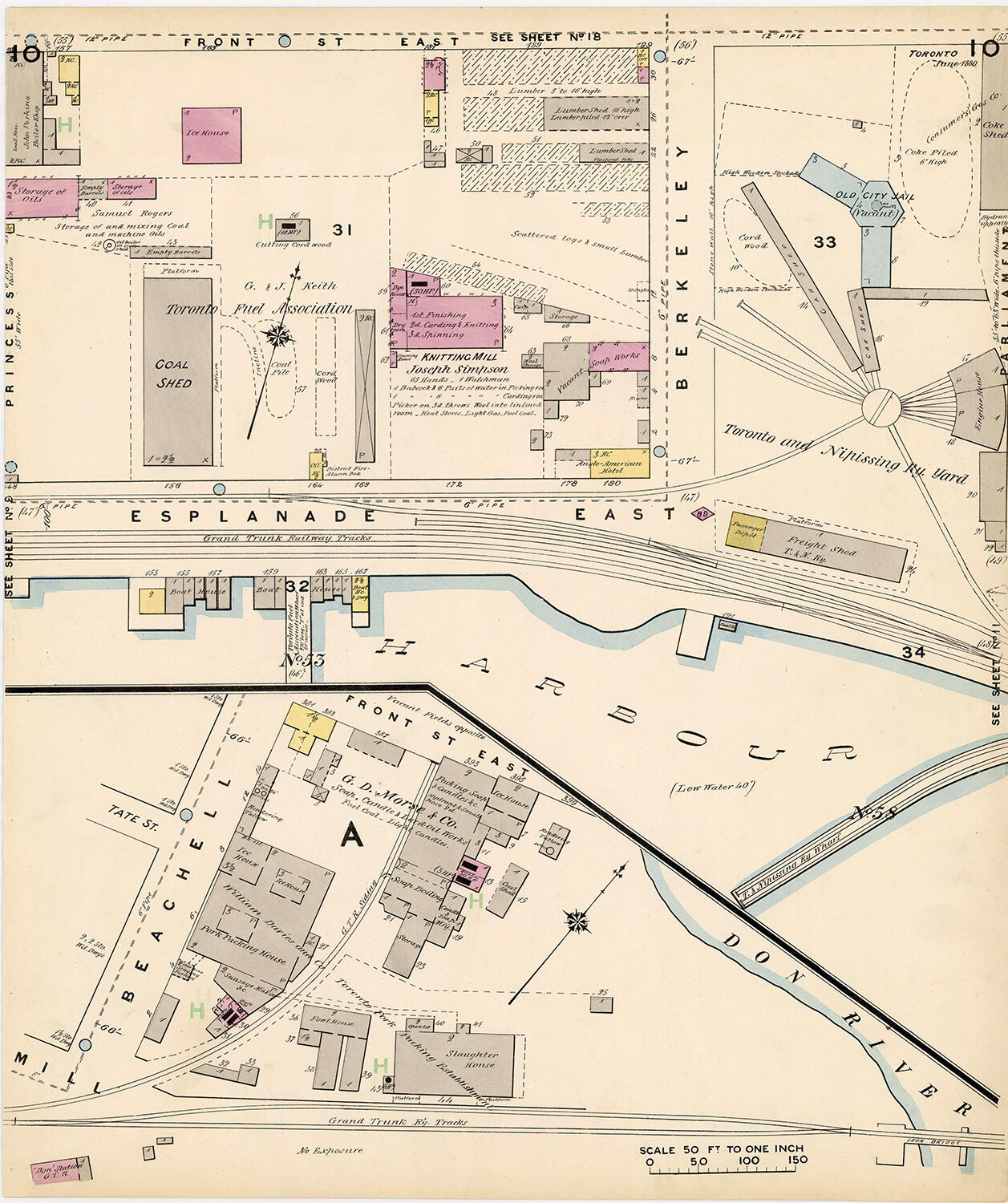
The jail remained in use until 1860. After that time, the building fell into disrepair and the property was leased to various individuals and companies — one of which was the Toronto and Nipissing Railway, which built a railyard along the south side of the lot. The Consumers’ Gas Company eventually bought the land. The old jail building remained abandoned for another eight years until it was finally demolished.
Gallery
Swipe
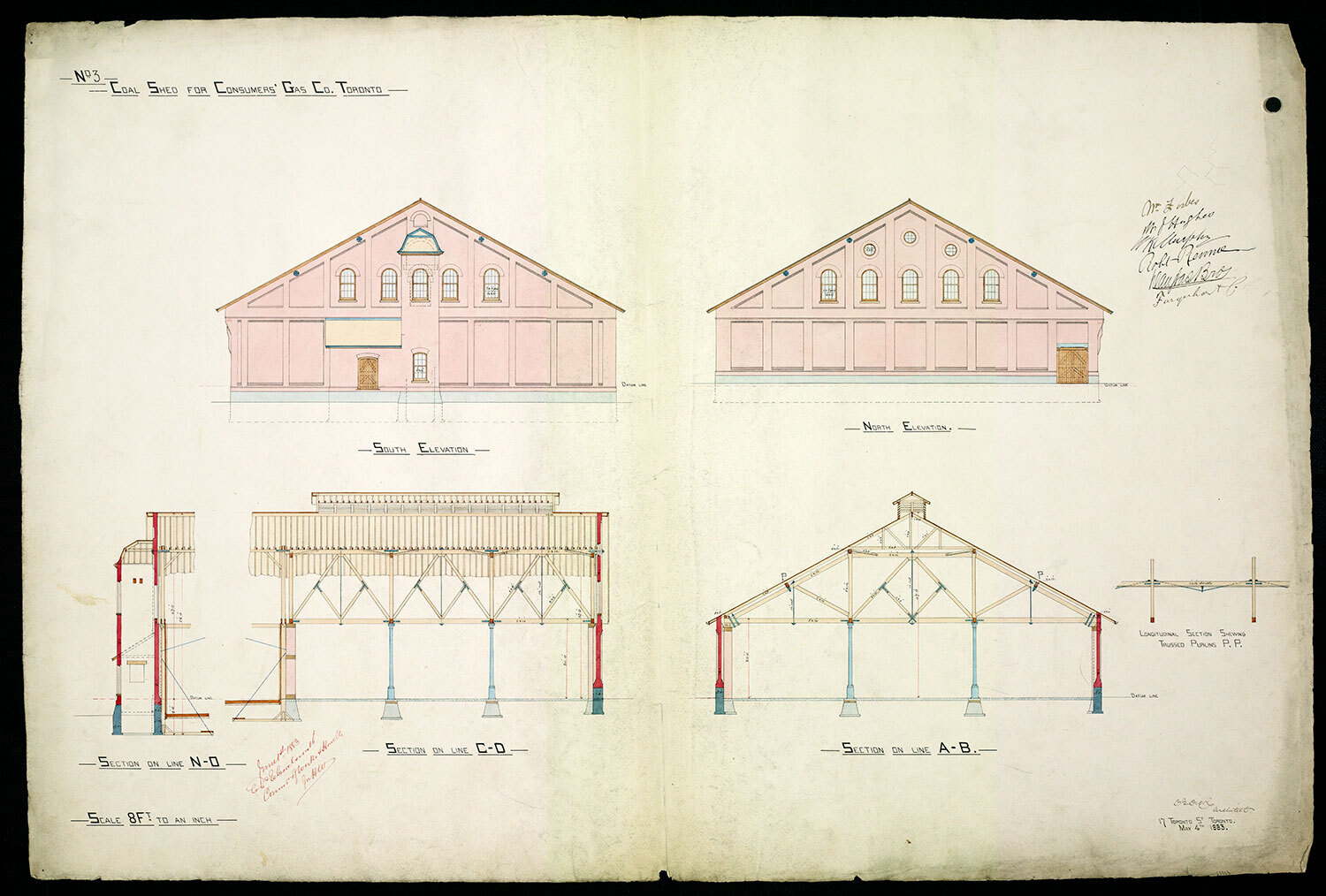
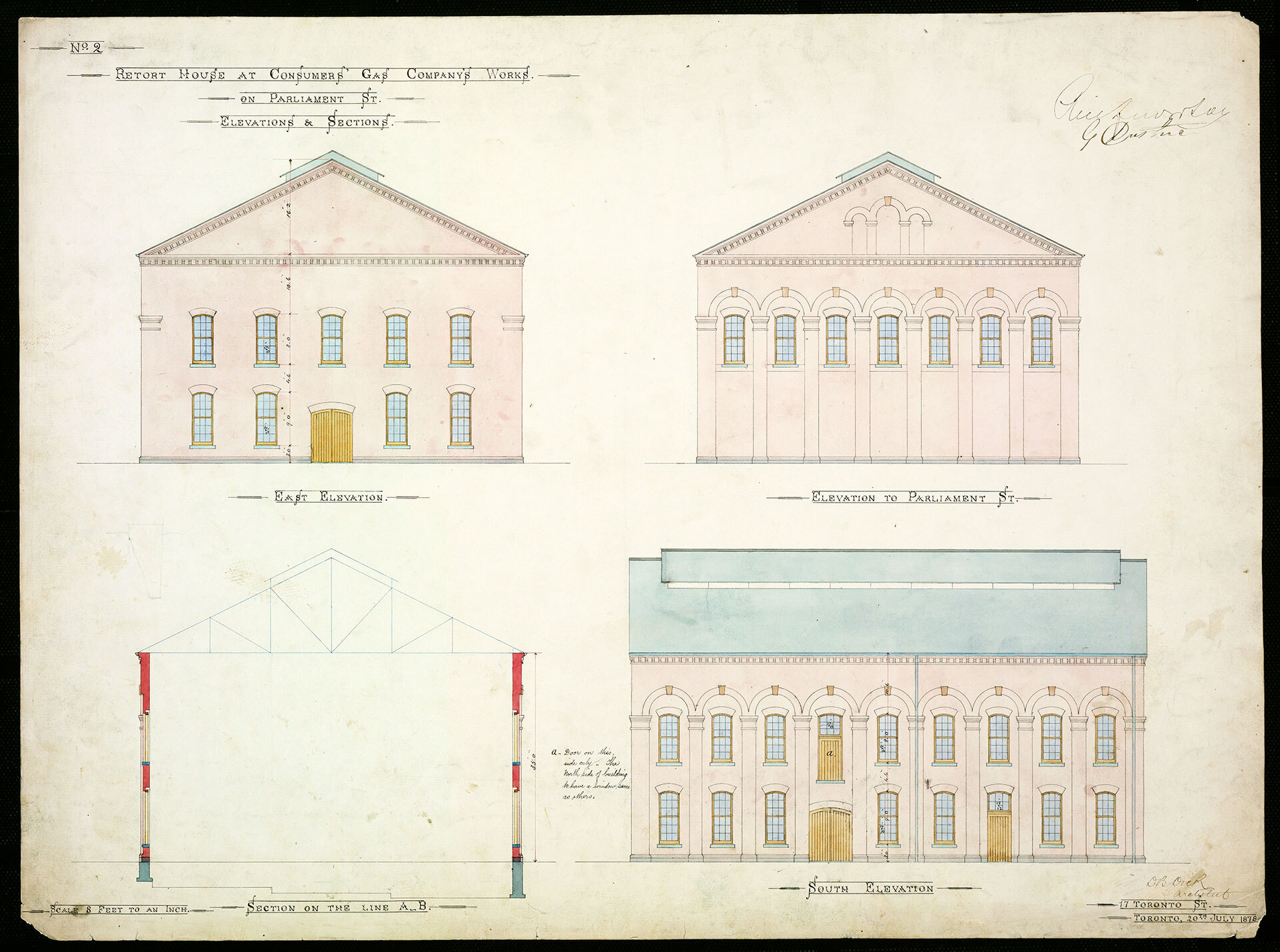
1883 architectural plans of the Consumers’ Gas coal shed
Photo: Archives of Ontario
Fuelling the city
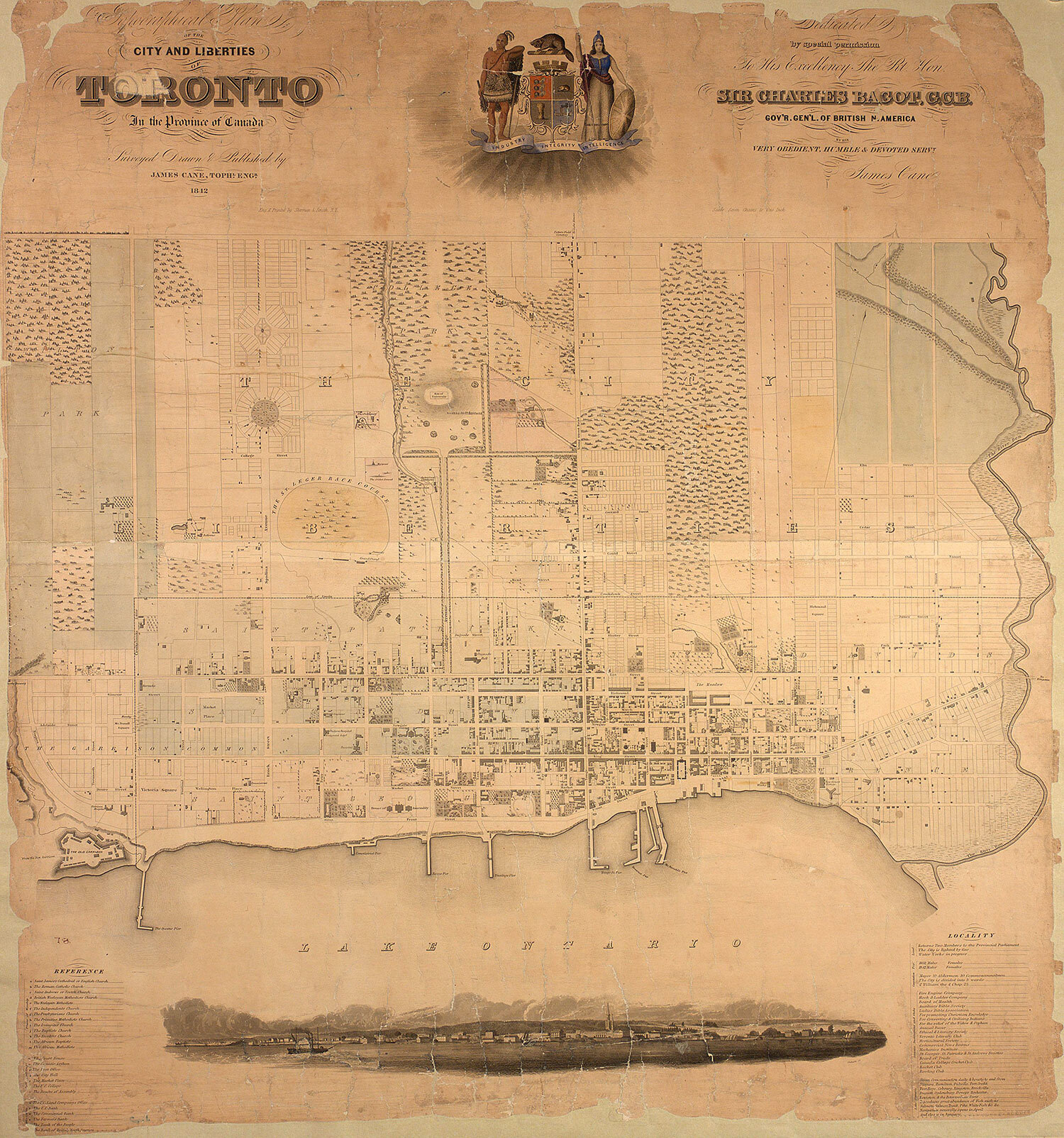
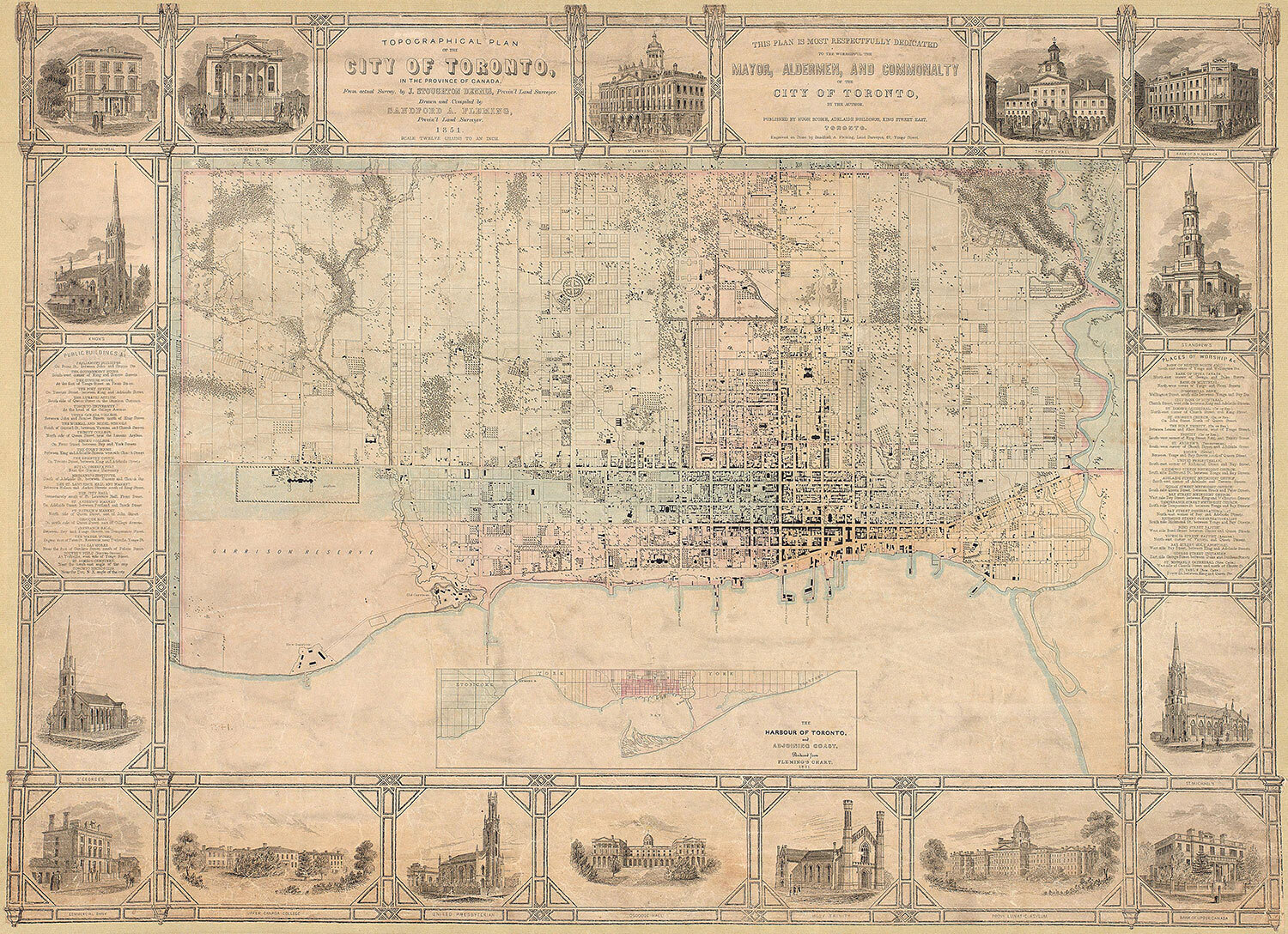
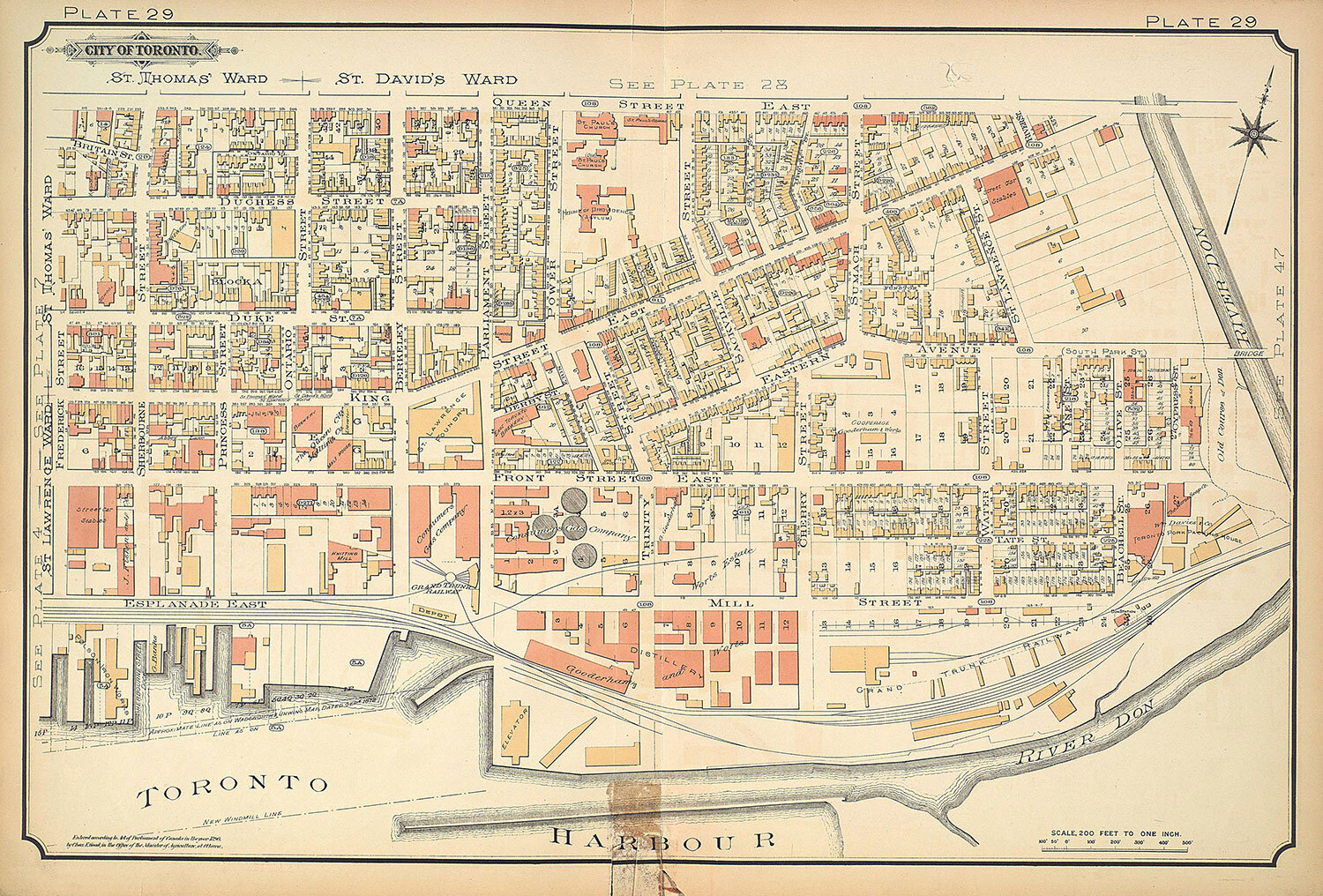
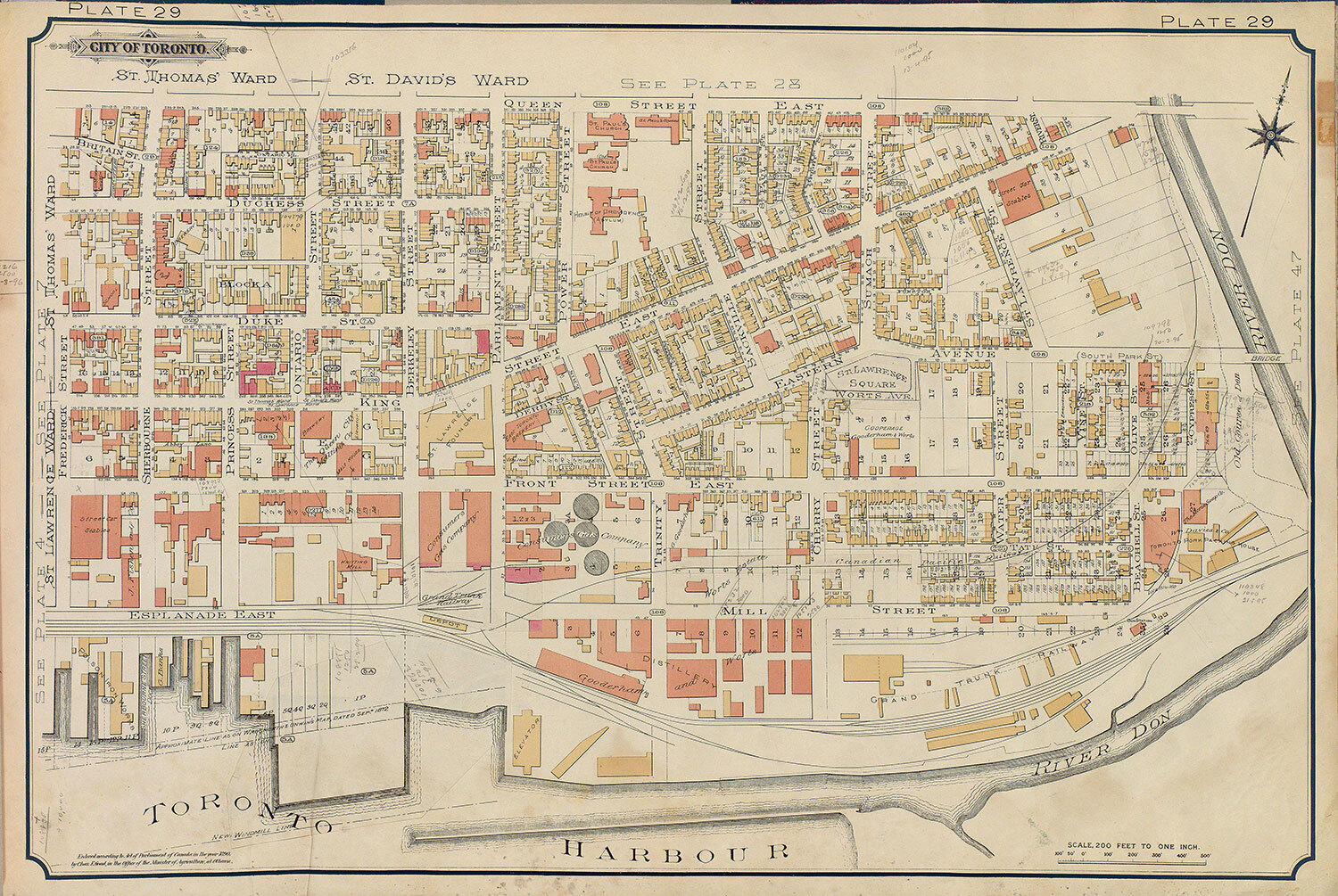
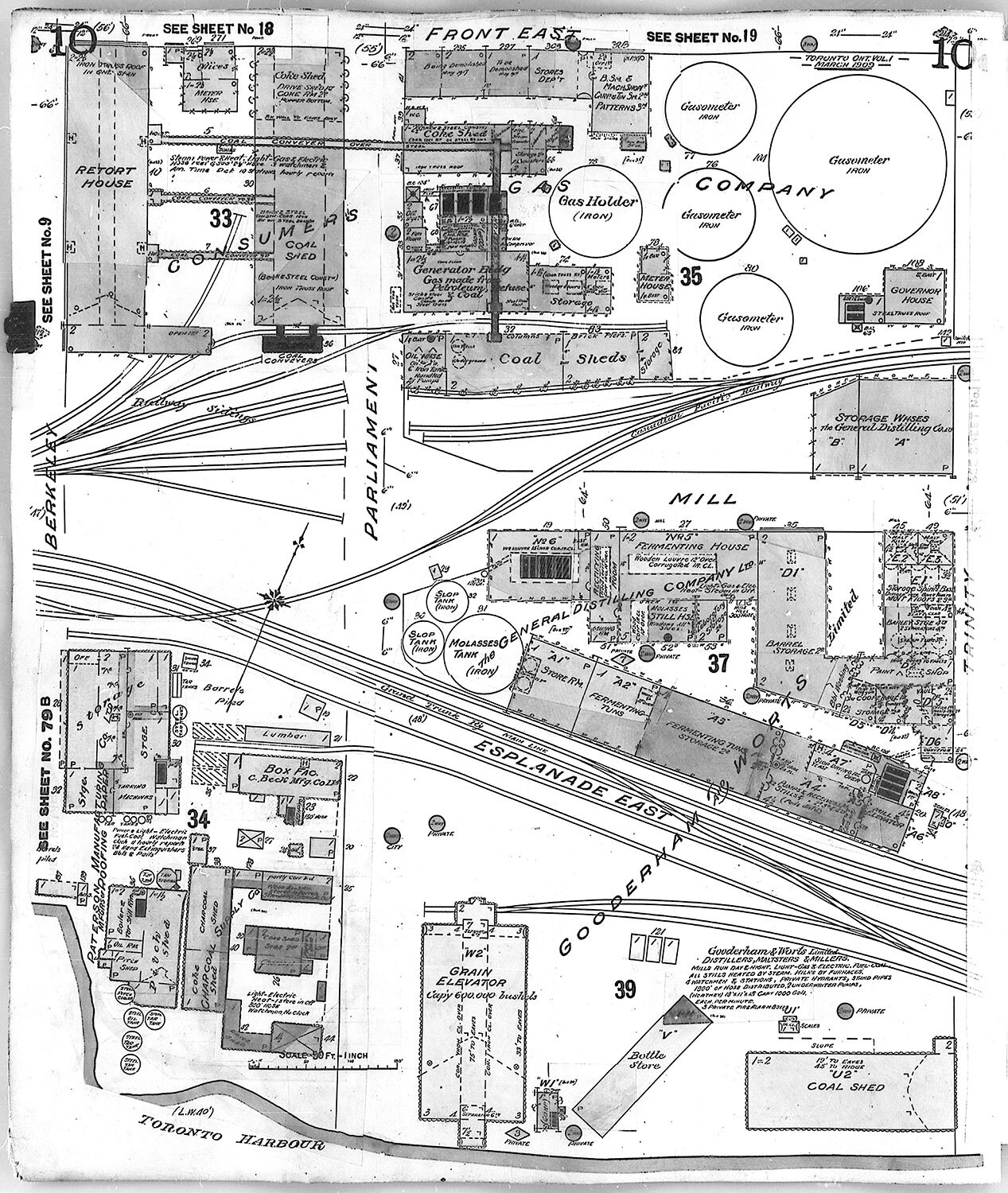
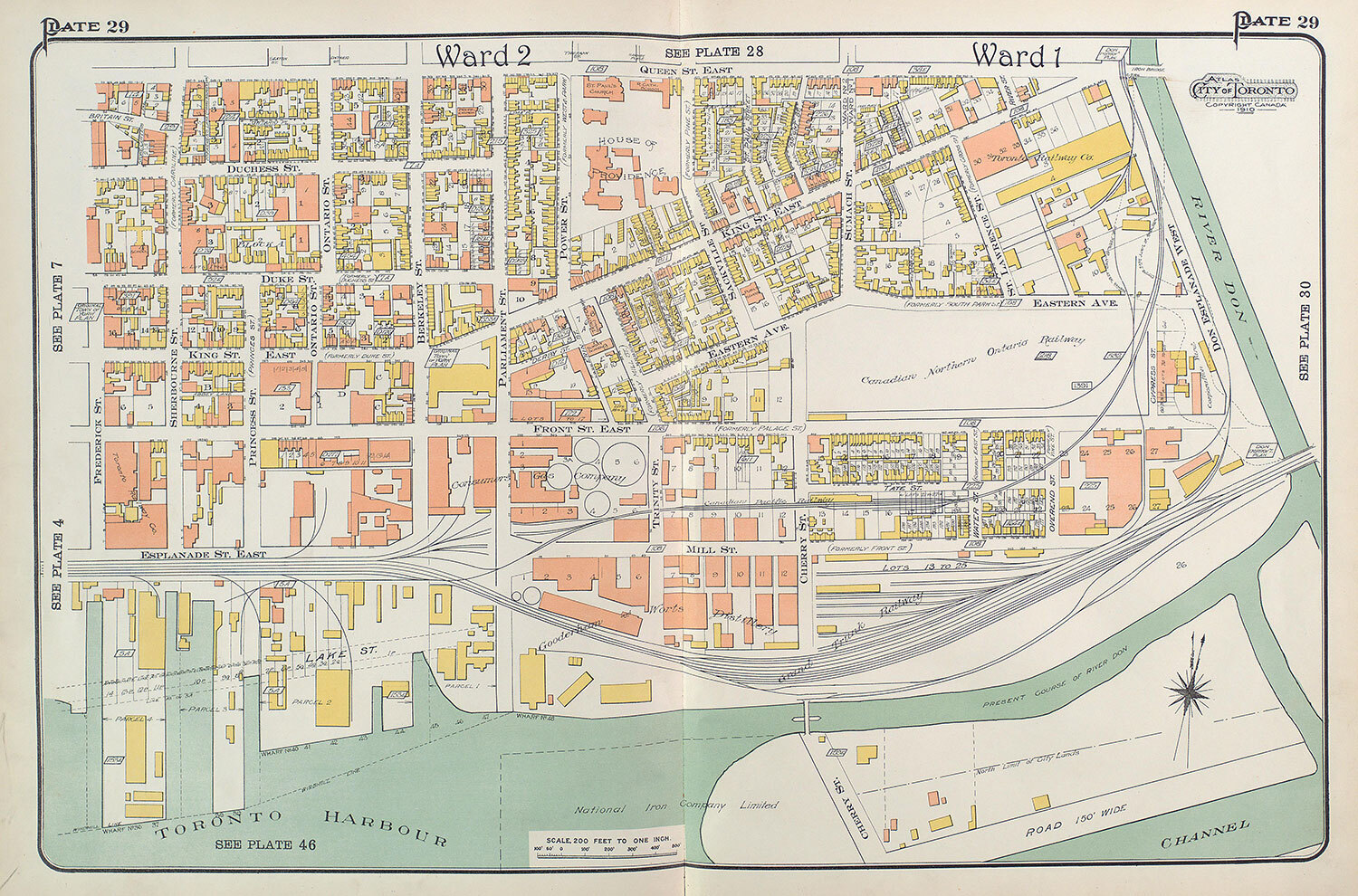
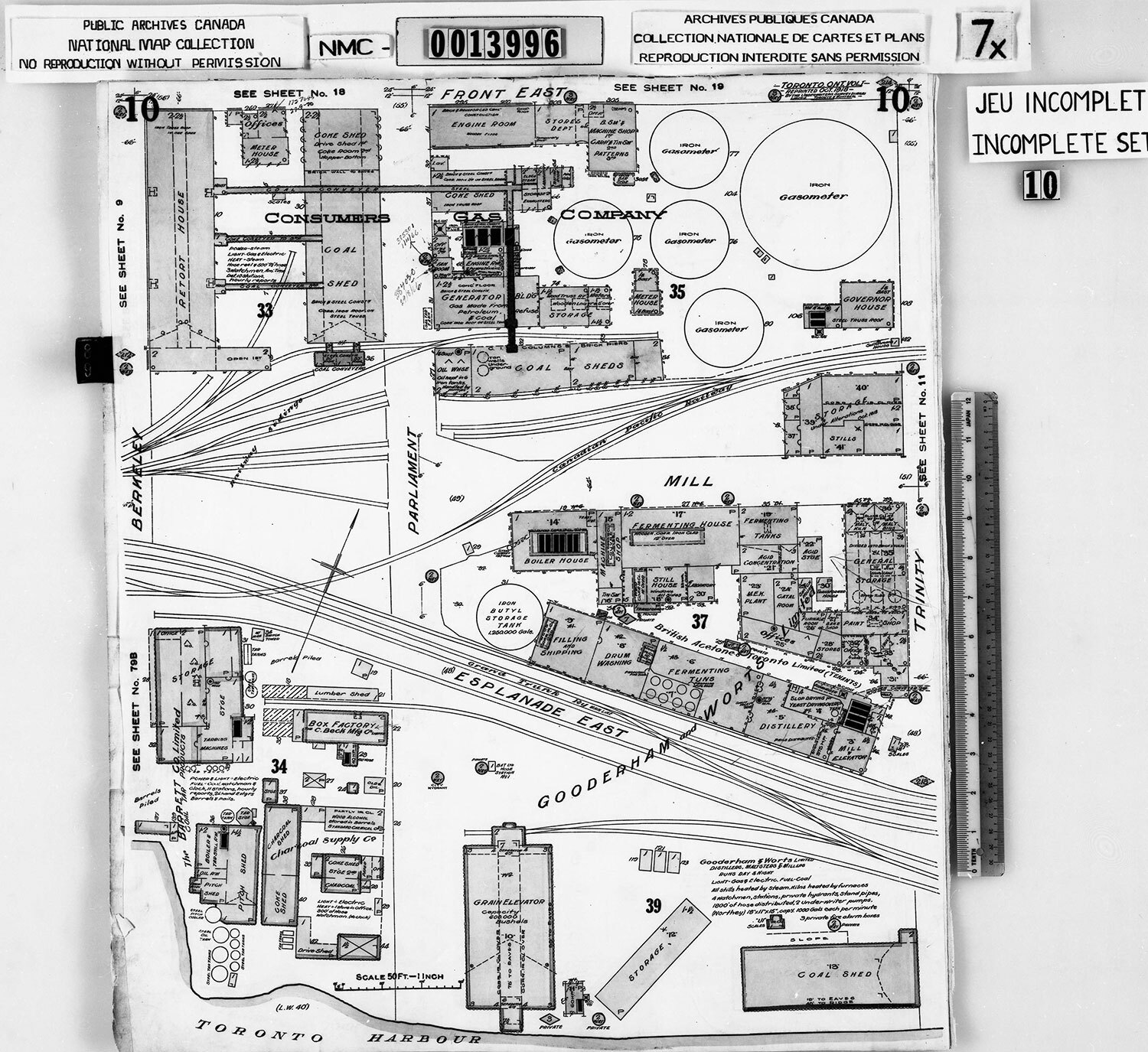
The Consumers’ Gas Company of Toronto acquired the property in 1879. The site and surrounding blocks were developed into a gasworks facility. Construction began in 1888 and was completed in 1889. The facility produced both coal gas and water gas for the purposes of lighting and heating in the rapidly expanding city. The production of gas helped fuel Toronto’s growth, which in turn increased the demand for gas. To increase capacity, several renovations expanded and updated the gasworks. By the 1940s, the plant was producing over 7 million cubic feet of coal gas and water gas every day.
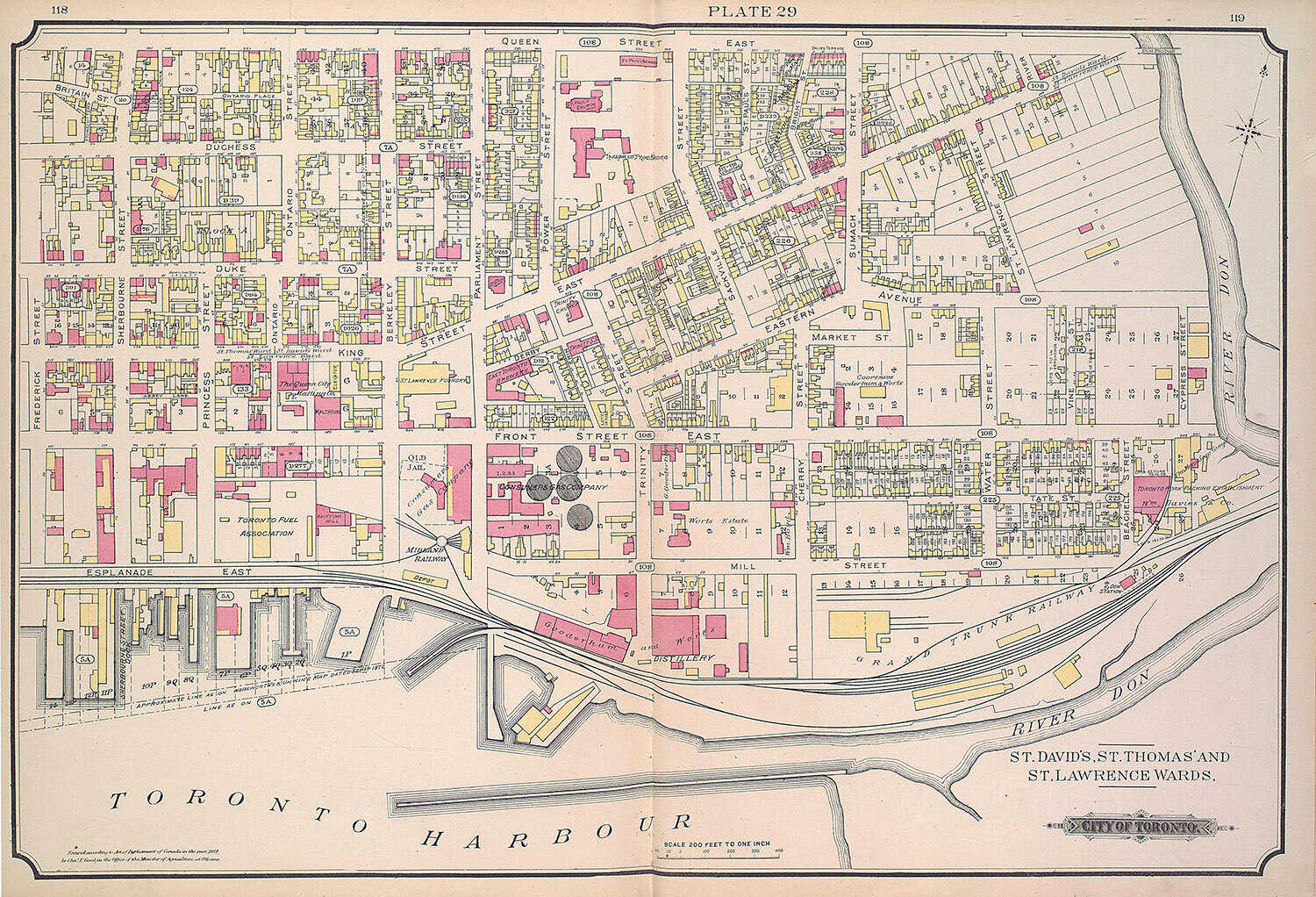
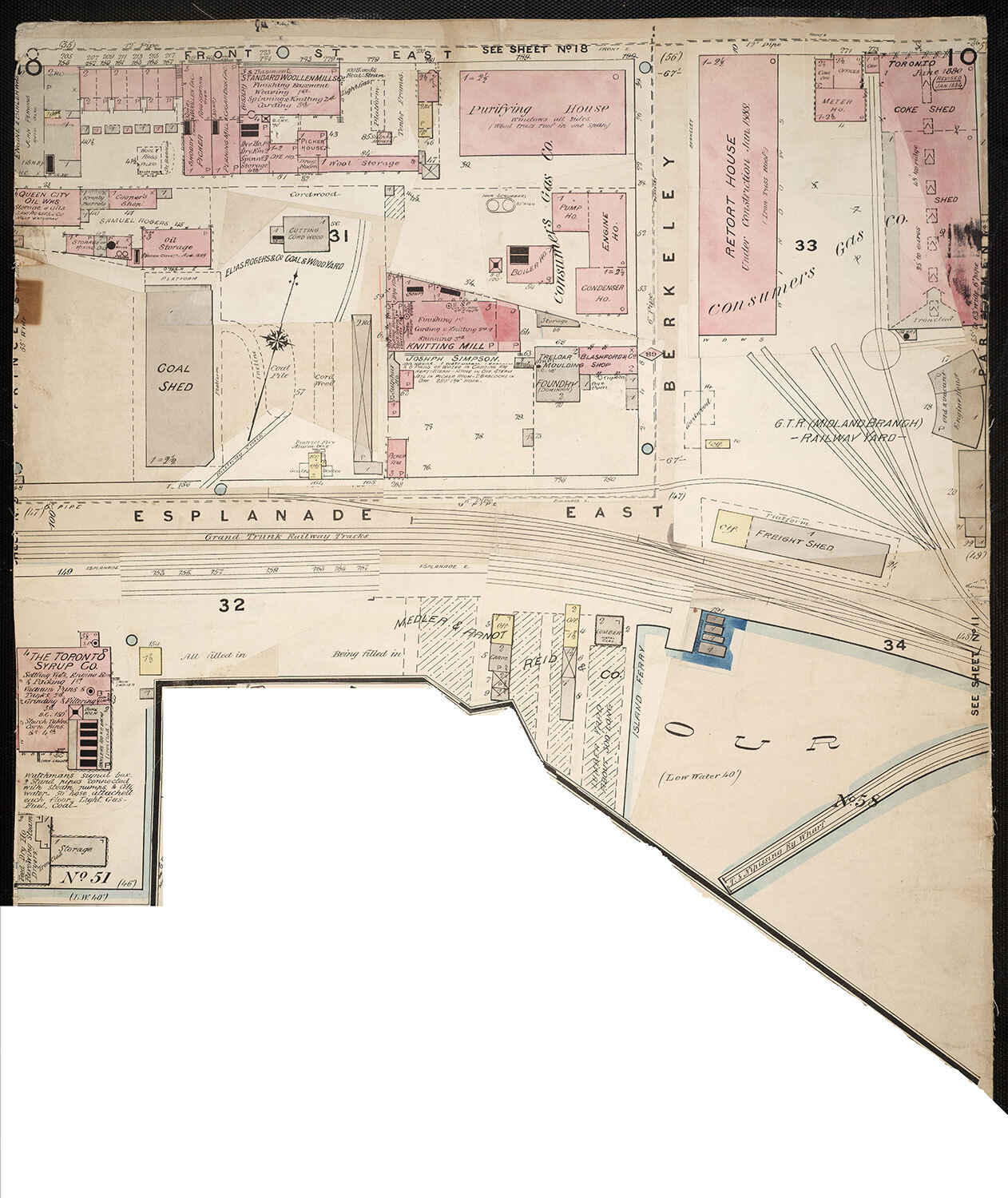
This site was suitable for industrial development because of the neighbouring Toronto and Nipissing Railway; the gasworks had a small railyard to the south. In early years, the railyard contained a large turntable, which you can see on maps from the time. The railway connection enabled the transport of coal and oil to the plant. The facility was initially built around the old jail, which sat roughly in the middle of the property. After the jail was demolished, the ground was paved, creating a courtyard. A rail spur ran through this courtyard. The two long buildings that flanked the courtyard were involved in the production of gas. Coal was transported throughout the facility by conveyors and by cart.
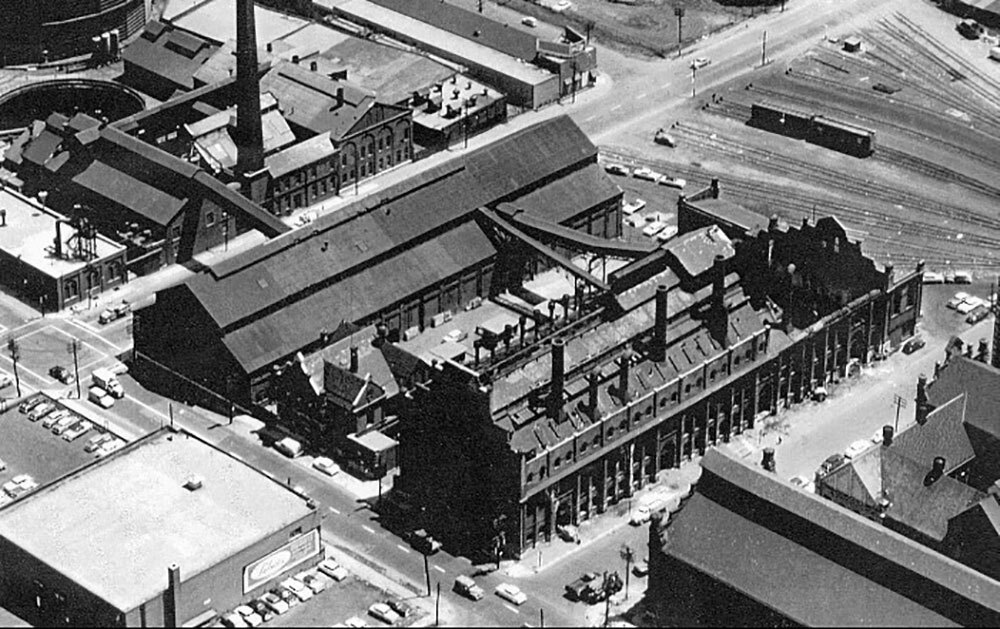
The Consumers’ Gas plant around 1950. You can see the retort house on the right and the coal shed on the left. In the back is the rail yard.
Photo: Toronto Sun collection
Eventually, the facility was unable to keep up with demand. When the gasworks was built, it was then considered to be on the outskirts of the city. But after years of urban growth, the plant was now firmly located downtown and there was no room for the facility to expand. Consumers’ Gas focused their development elsewhere. Slowly, the gasworks at First Parliament were phased out. In 1964, the property was sold.
Gallery
Swipe
The 20th century to present day
After Consumers’ Gas sold the site, it was split into four properties. In 1964, all properties were home to automotive businesses. These included a car wash, car dealership, gas service bar and car rental franchise. The most southerly property was owned by the city and was used as a public parking lot.
The First Parliament era, however, was not forgotten. The unexciting state of the former seat of government did not go unnoticed. In the late 1980s, the City of Toronto contracted Archaeological Services Inc. to research the site. They were asked to determine if any remains of First Parliament might survive under the centuries of concrete. It was not until 2000 that an archaeological excavation was conducted. Despite the tight space and timeline, the excavation exceeded expectations. Artifacts from the parliamentary period were uncovered. So too were remnants of the buildings themselves.
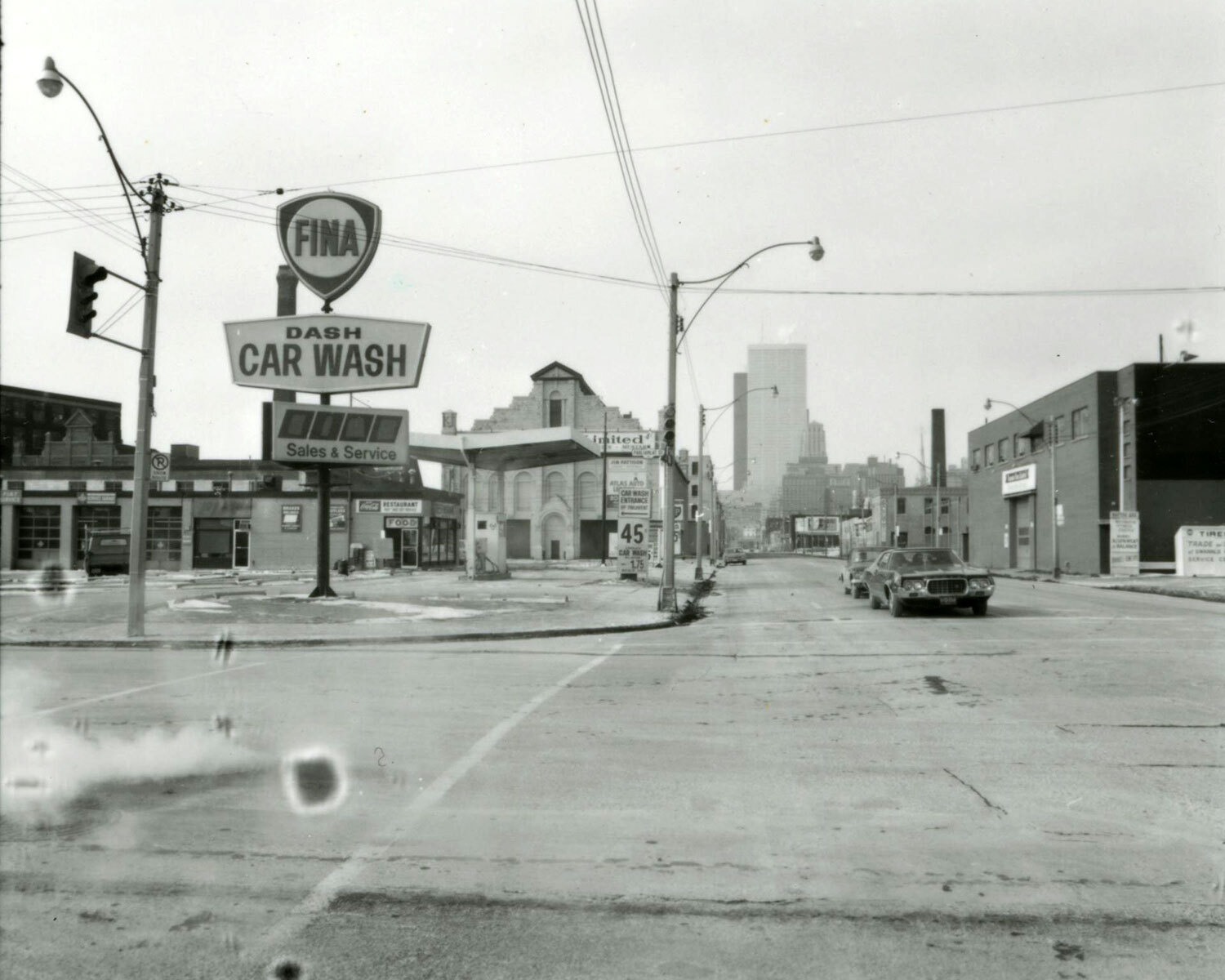
A photograph taken by Don Ritche in 1973 at the intersection of Parliament and Front streets. You can see the gas station and Fina Dash Car Wash that occupied the First Parliament site at the time.
Photo: Toronto Public Library
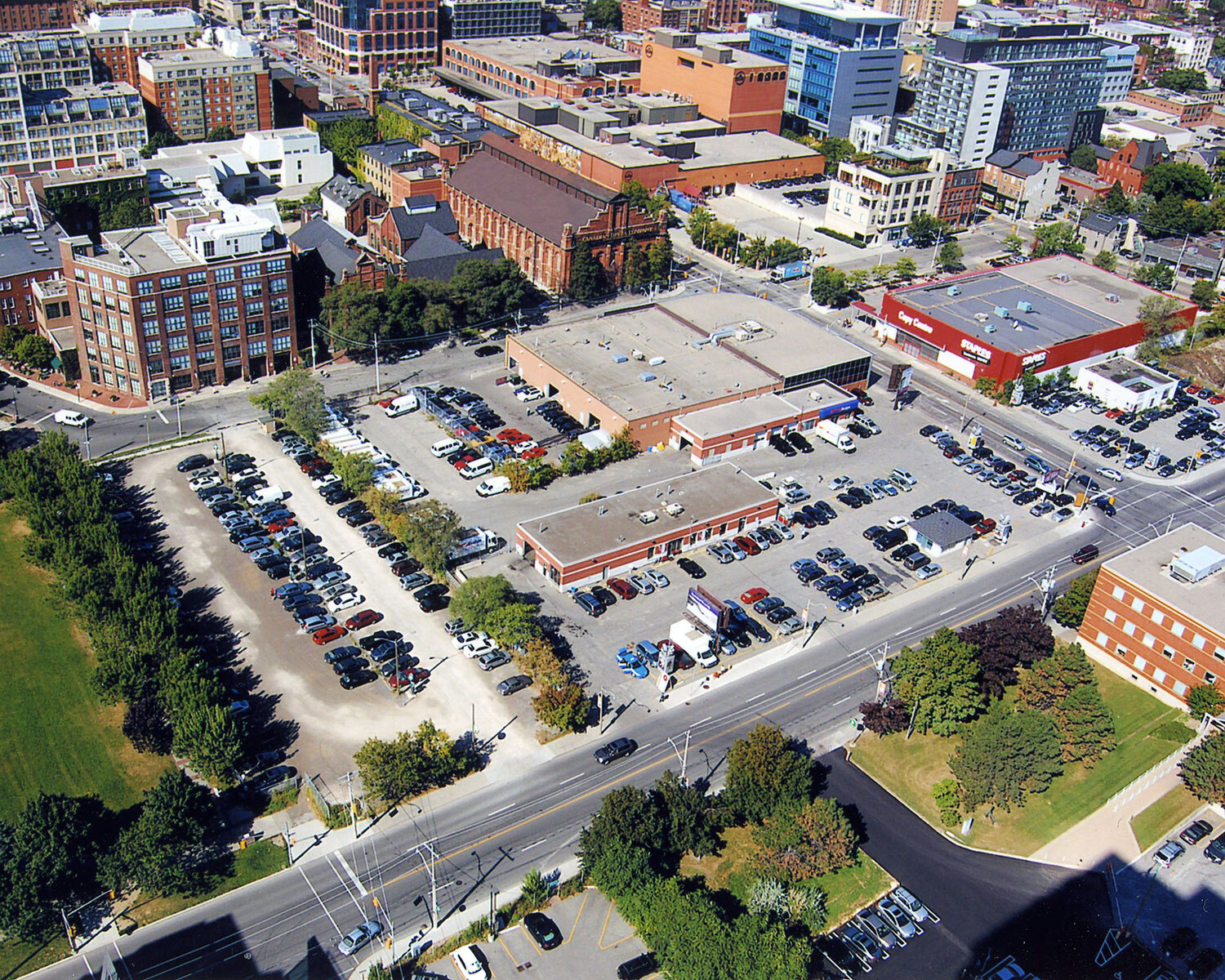
Aerial photo of First Parliament, circa 2005
Encouraged by the discoveries in 2000, there was a renewed push for the public to acquire all three properties. The hope was that the site and its history could be somehow commemorated. Community members, like Rollo Myers and the Citizens for the Old Town, archaeologists Ron Williamson and Archaeological Services Inc., and members of city government including Pam McConnell, councillor for the area, advocated for this outcome.
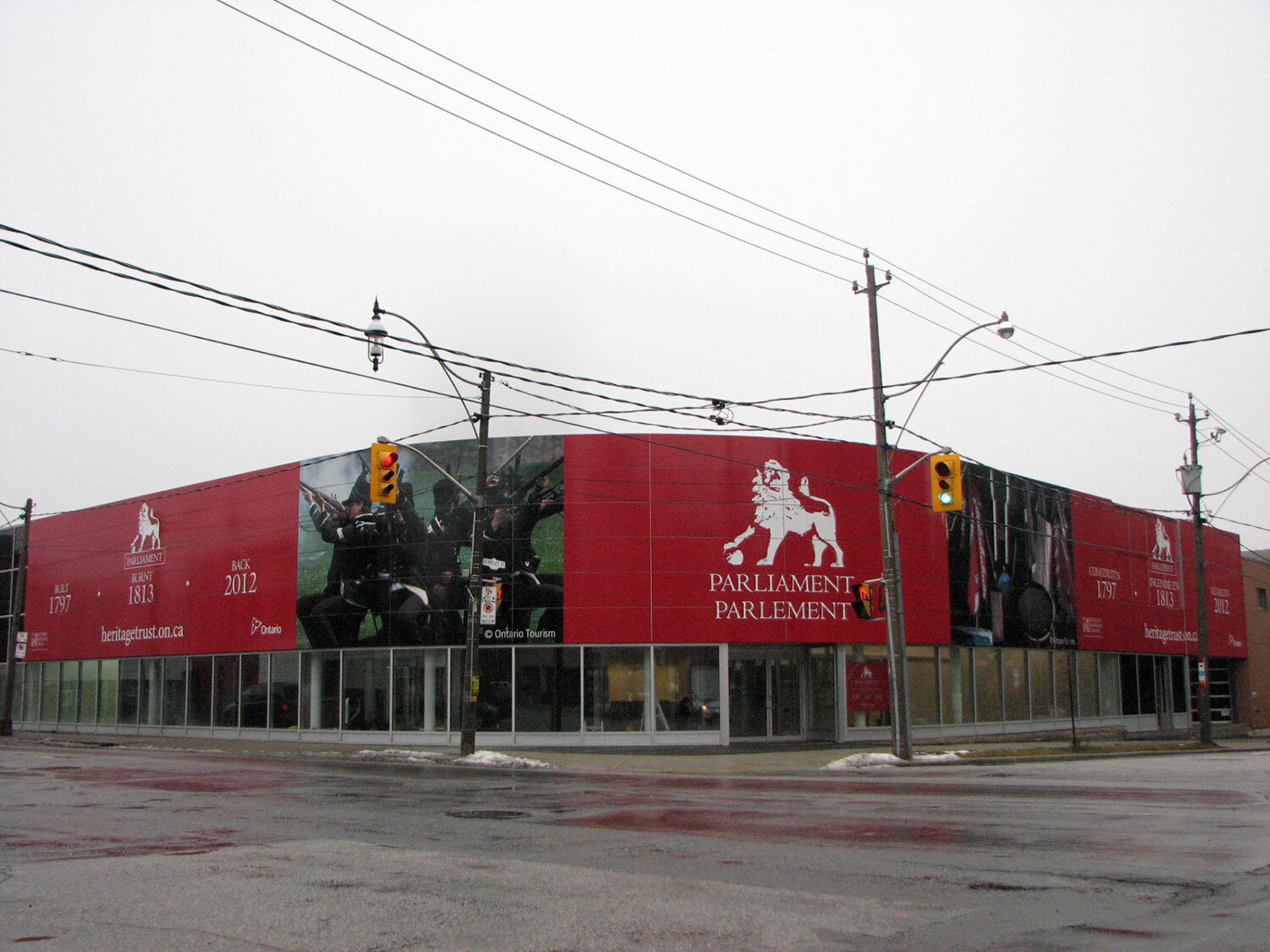
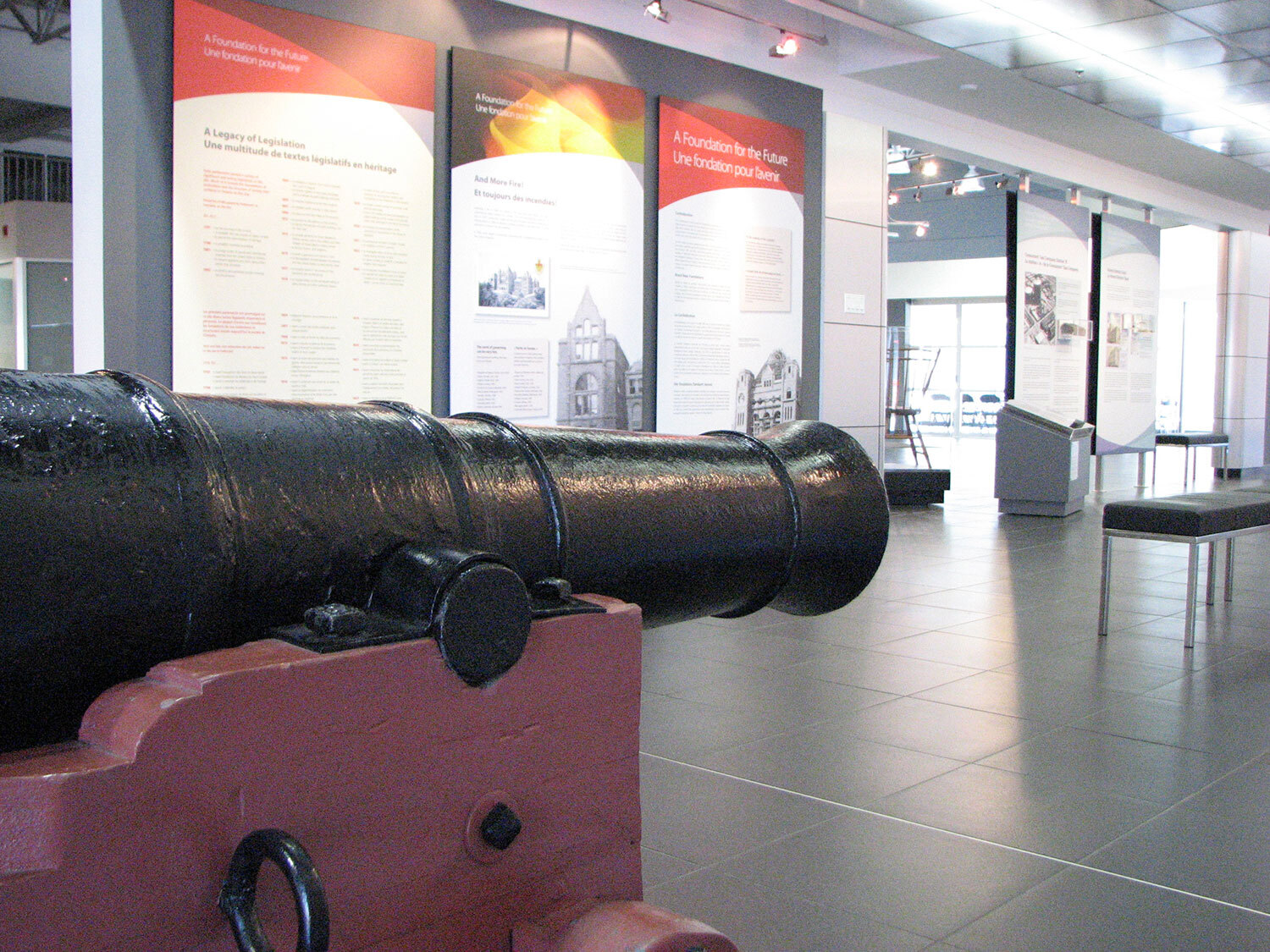
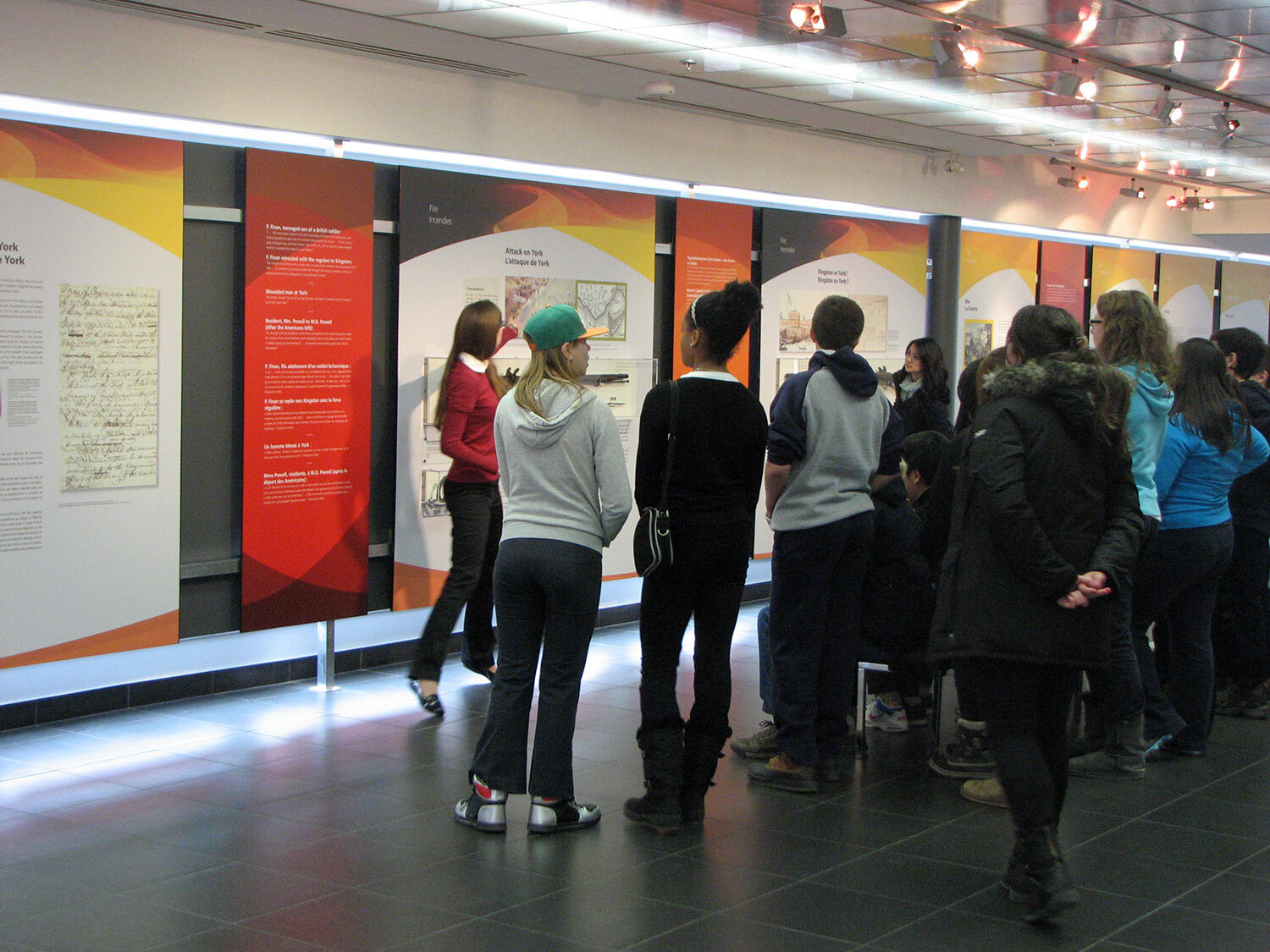
In 2005, one of the properties was acquired by the Ontario Heritage Trust. Pressure continued for the City of Toronto to acquire the other properties, which is indeed what finally occurred. There were several development proposals — from a park to a library to residential high-rises. In the meantime, the car dealership on the now-public property was temporarily remodelled into an interpretive centre. Here, an exhibit was set up for the bicentennial anniversary of the War of 1812. It was operated by the Ontario Heritage Trust between 2012 and 2014. Afterwards, the automotive industries continued to use the site until 2021 when the Government of Ontario acquired the whole block for Metrolinx and the upcoming Ontario Line subway construction. Archaeological excavations began again by Metrolinx from 2022 to 2024 in the area of the First Parliament buildings. Archaeological Services Inc. returned to expand and complete excavation in the area of the 2000 excavations. Stantec Inc. led the excavations on the entire block and completed the findings of the First Parliament south building by 2024.
Gallery
Swipe
You might also be interested in
Check out these other exhibits on the First Parliament Site
Layer by layer — 1. Introduction
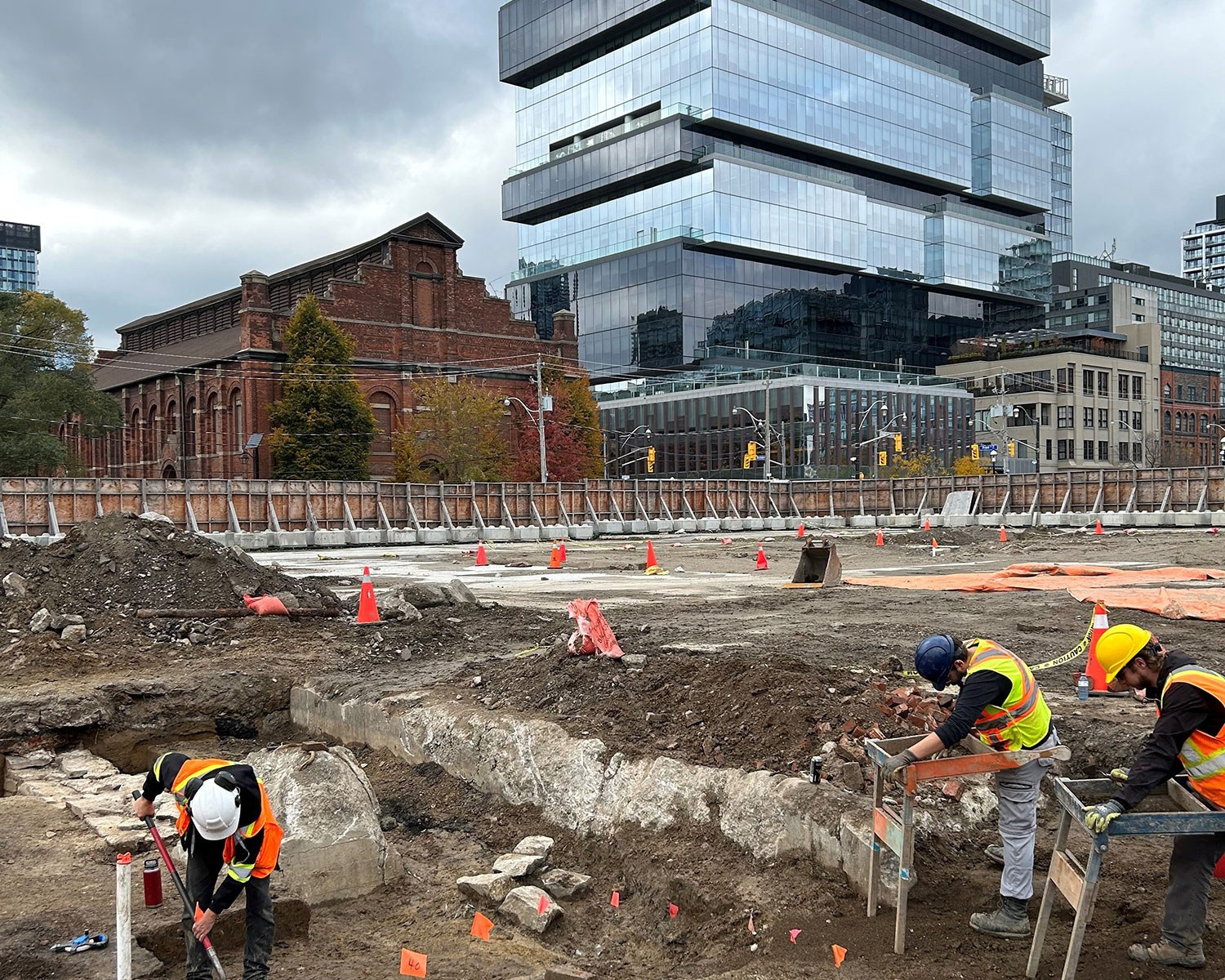
With centuries of buildup above, archaeologists were not hopeful that anything from the First Parliament buildings survived below. In 2000, they dug down, layer by layer, until they passed the remains of the jail. Then, to everyone’s surprise, they found what they were looking for: evidence of Ontario’s cradle of democracy.
Visit Layer by layer — 1. IntroductionLayer by layer — 3. Layers of history
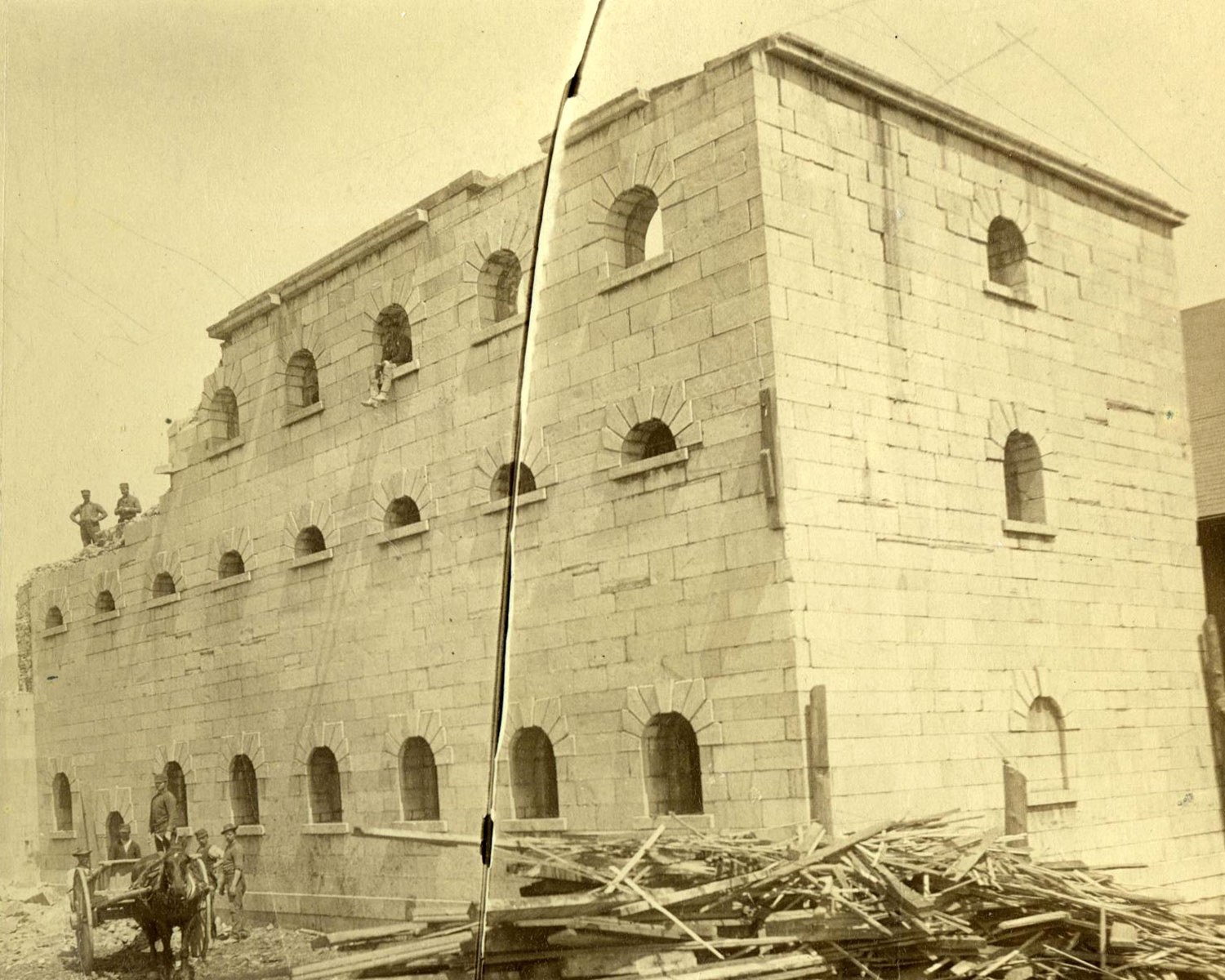
Archaeologists began their excavations at the First Parliament site in the fall of 2000. The project was focused on finding the remains of the First Parliament buildings. In the 200 years since the buildings were constructed, the city has changed dramatically. With centuries of urban buildup, the archaeologists were not sure there would be anything left.
Visit Layer by layer — 3. Layers of historyLayer by layer — 4. What is archaeology?
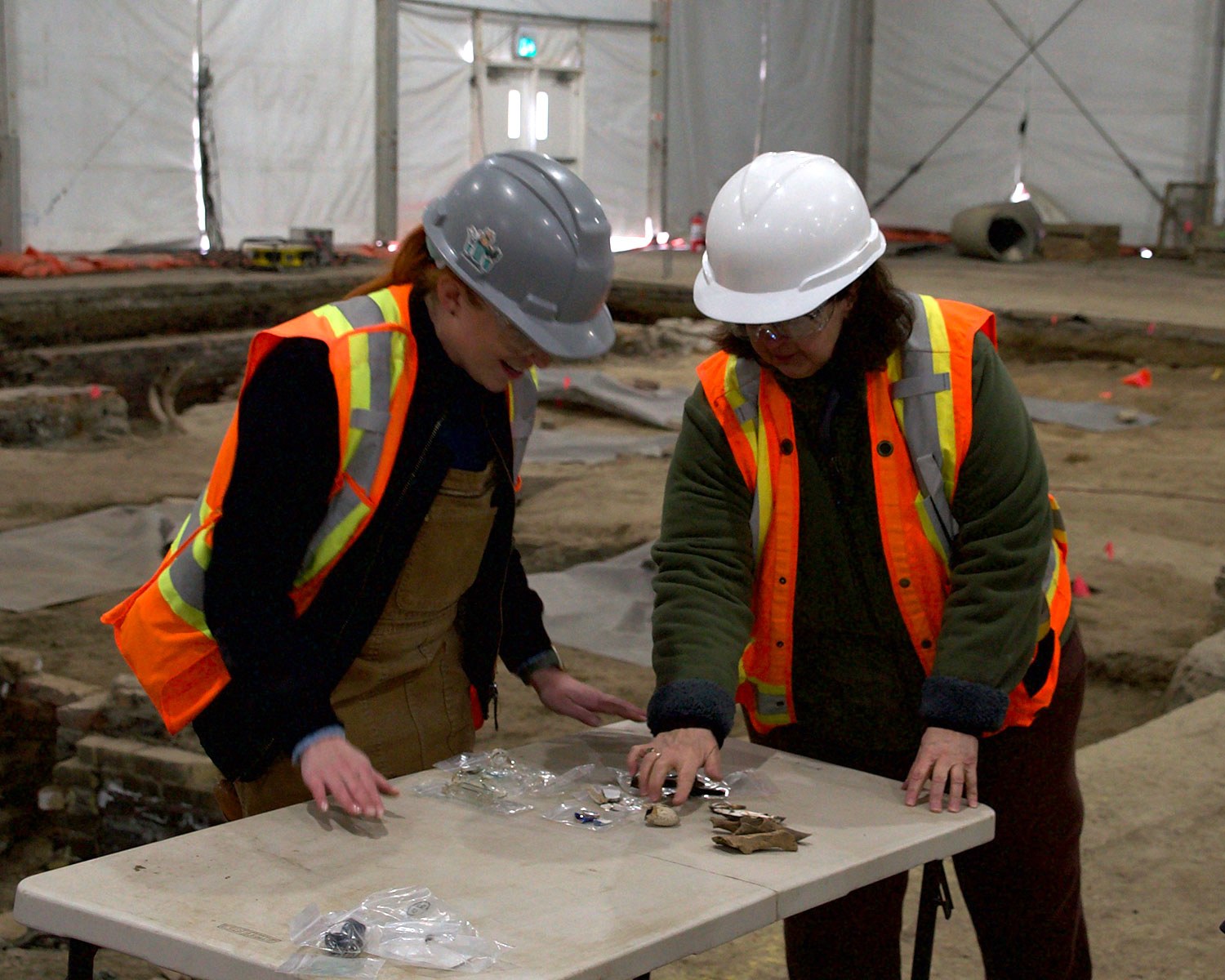
Artifacts and structures together form the physical history of past and present societies. By examining it all, we can better understand where and how people from the past lived. Excavations can tell us many things that books and records simply cannot.
Visit Layer by layer — 4. What is archaeology?Layer by layer — 5. Learning from artifacts
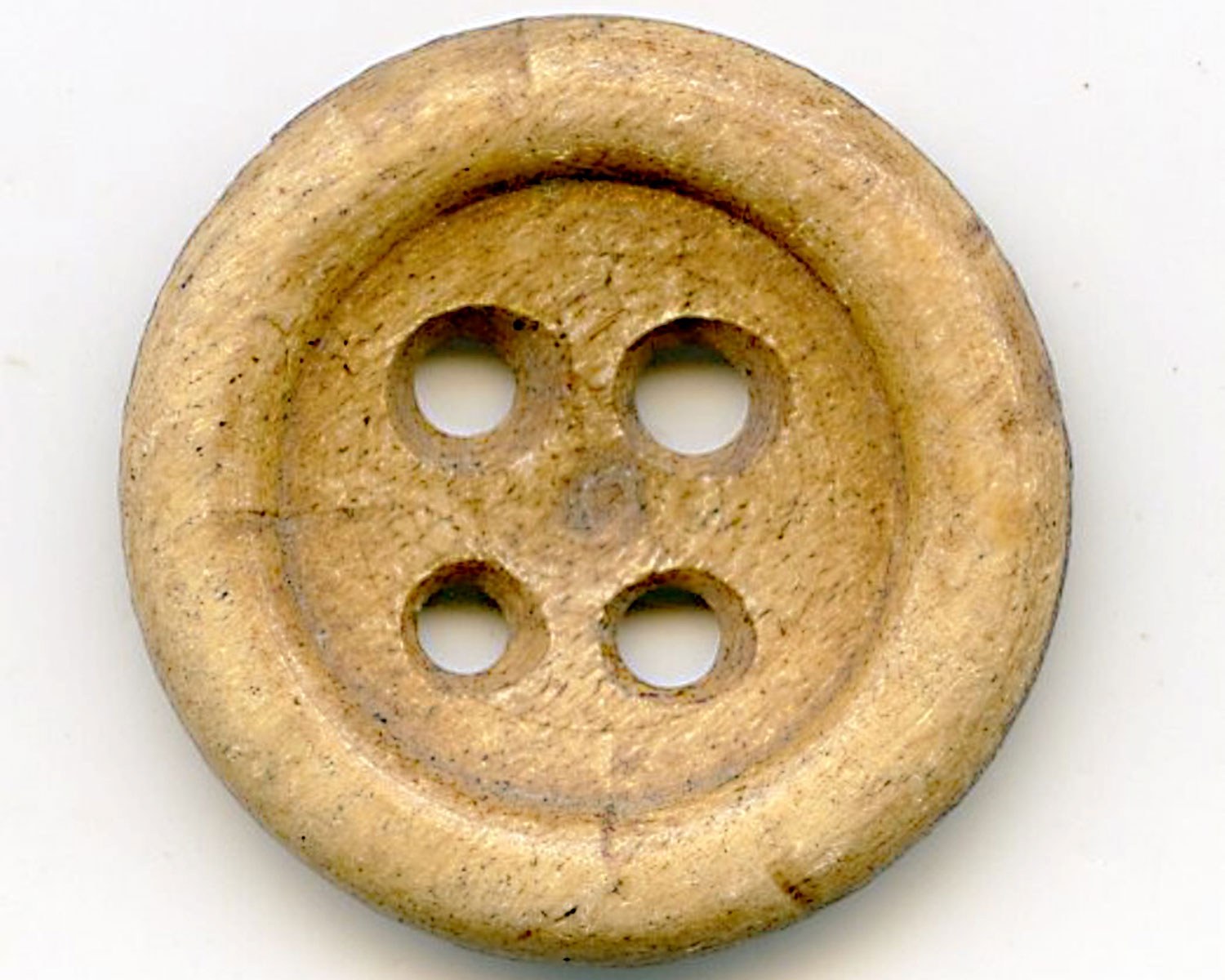
One of the most exciting parts of working on an excavation site is uncovering artifacts. Archaeologists rarely find objects intact. But even fragments of the past can be thrilling discoveries. The smallest sherds can tell us a lot about how people used the site and give us a glimpse into their lives.
Visit Layer by layer — 5. Learning from artifactsLayer by layer — 6. The legacy of First Parliament
The site of First Parliament played an important role in the history of Toronto and the province of Ontario. Fort York and First Parliament bookend the early city. These were the first two centres of colonial activity: military and administrative. It was a key part of the settlement’s foundation, establishing York as a political centre.
Visit Layer by layer — 6. The legacy of First Parliament