


Layer by layer — 3. Layers of history
Archaeologists began their excavations at the First Parliament site in the fall of 2000. The project was focused on finding the remains of the First Parliament buildings. In the 200 years since the buildings were constructed, the city has changed dramatically. With centuries of urban buildup, the archaeologists were not sure there would be anything left. But in that first year of excavation, they found what they were looking for: part of First Parliament!
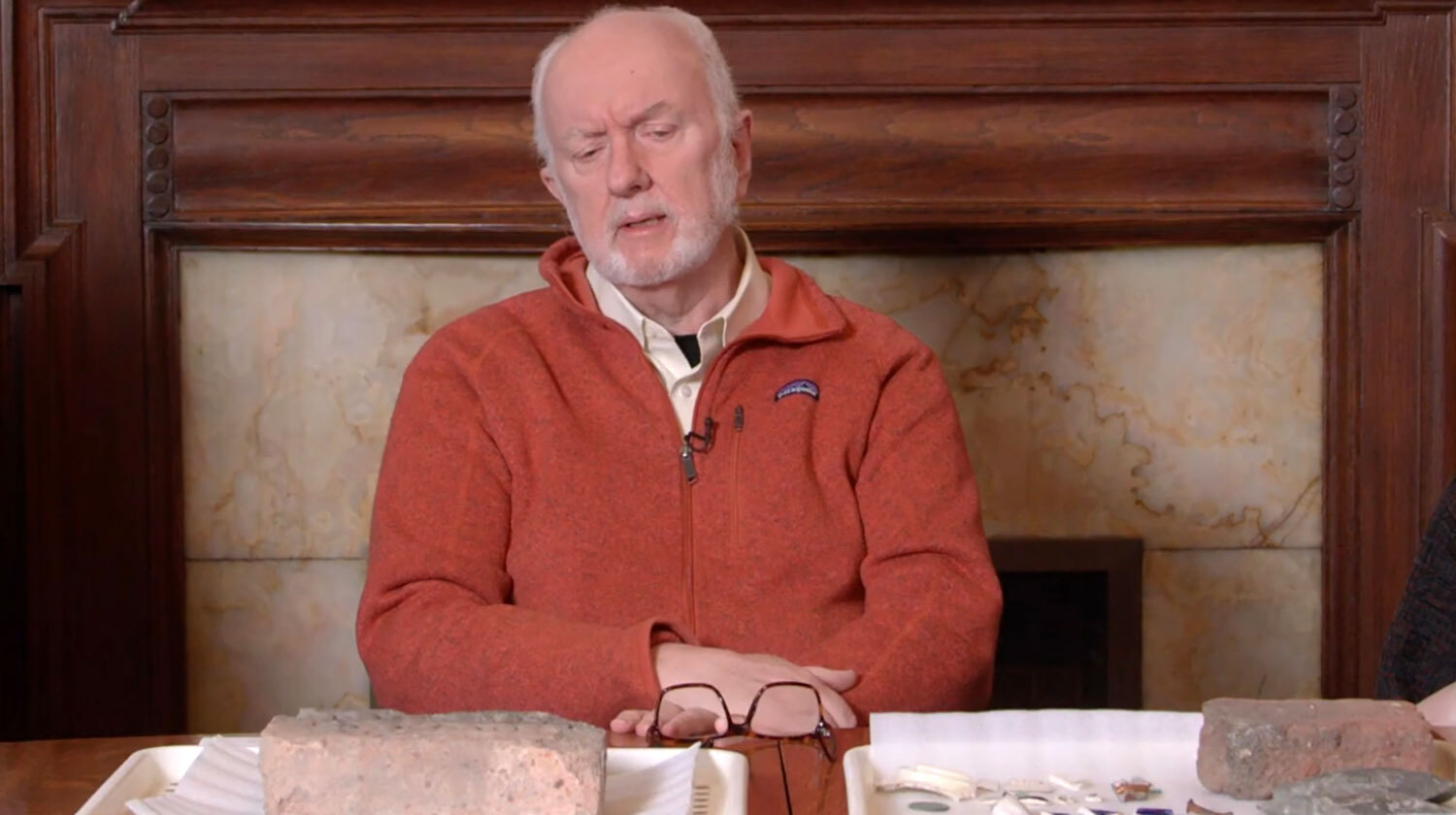
Archaeologist Ron Williamson talks about First Parliament and the early excavations
As archaeologists excavated First Parliament, they peeled back the layers of history. As they got deeper, they travelled back further in time. Archaeologists uncovered artifacts and architectural features from all the layers of history.
Gallery
Swipe
Car wash and parking lot
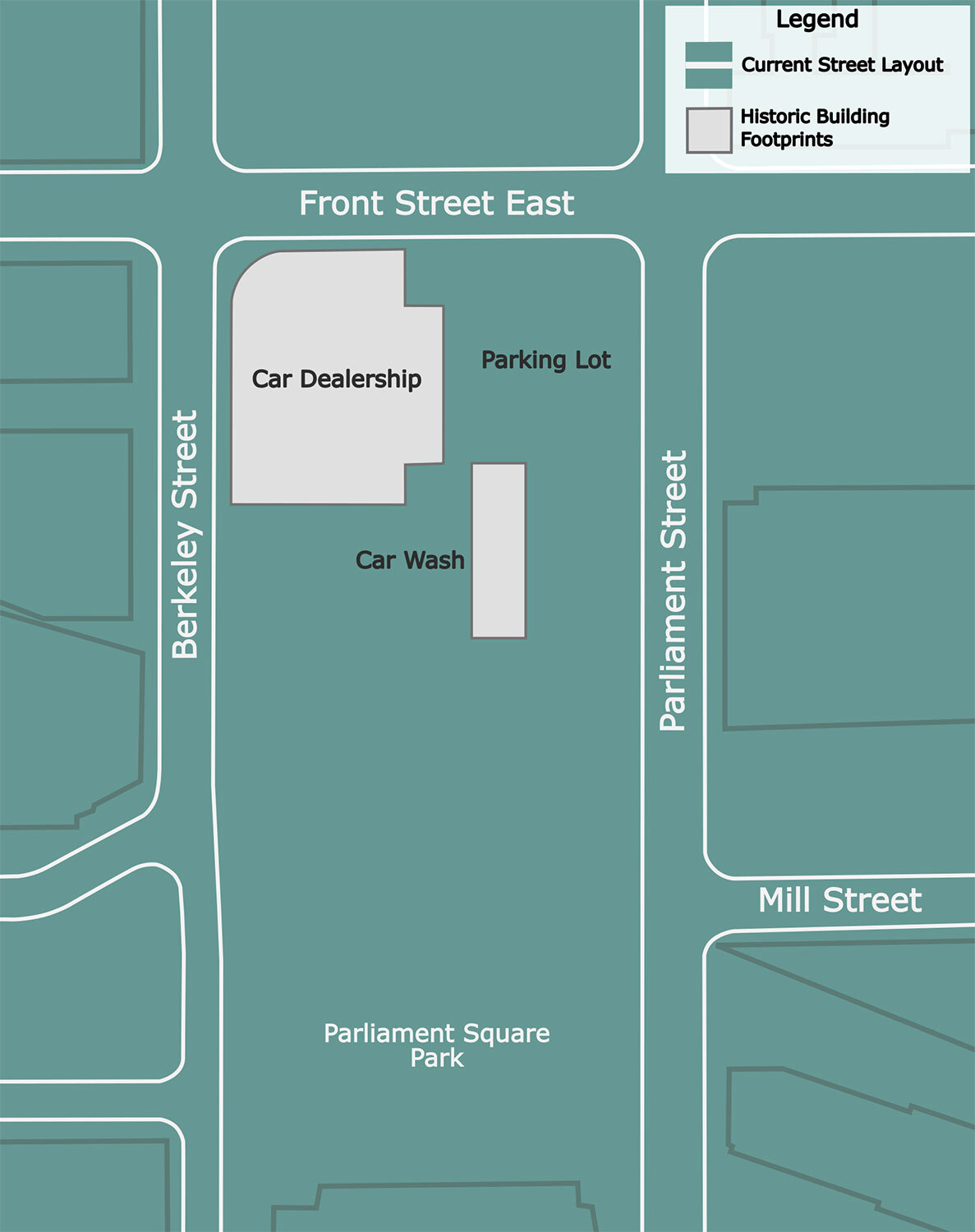
When archaeologists worked at the site in 2000 and again in 2011, the buildings from the automotive businesses were still standing. The archaeologists had to dig between these buildings and in the parking lots.
These modern businesses have recently been removed as part of the Metrolinx plan to construct the Ontario Line. The gas pipes and a tank from this period of automotive businesses were still buried. The archaeologists have had to work around these features. Even the most recent phase is part of the site’s history.
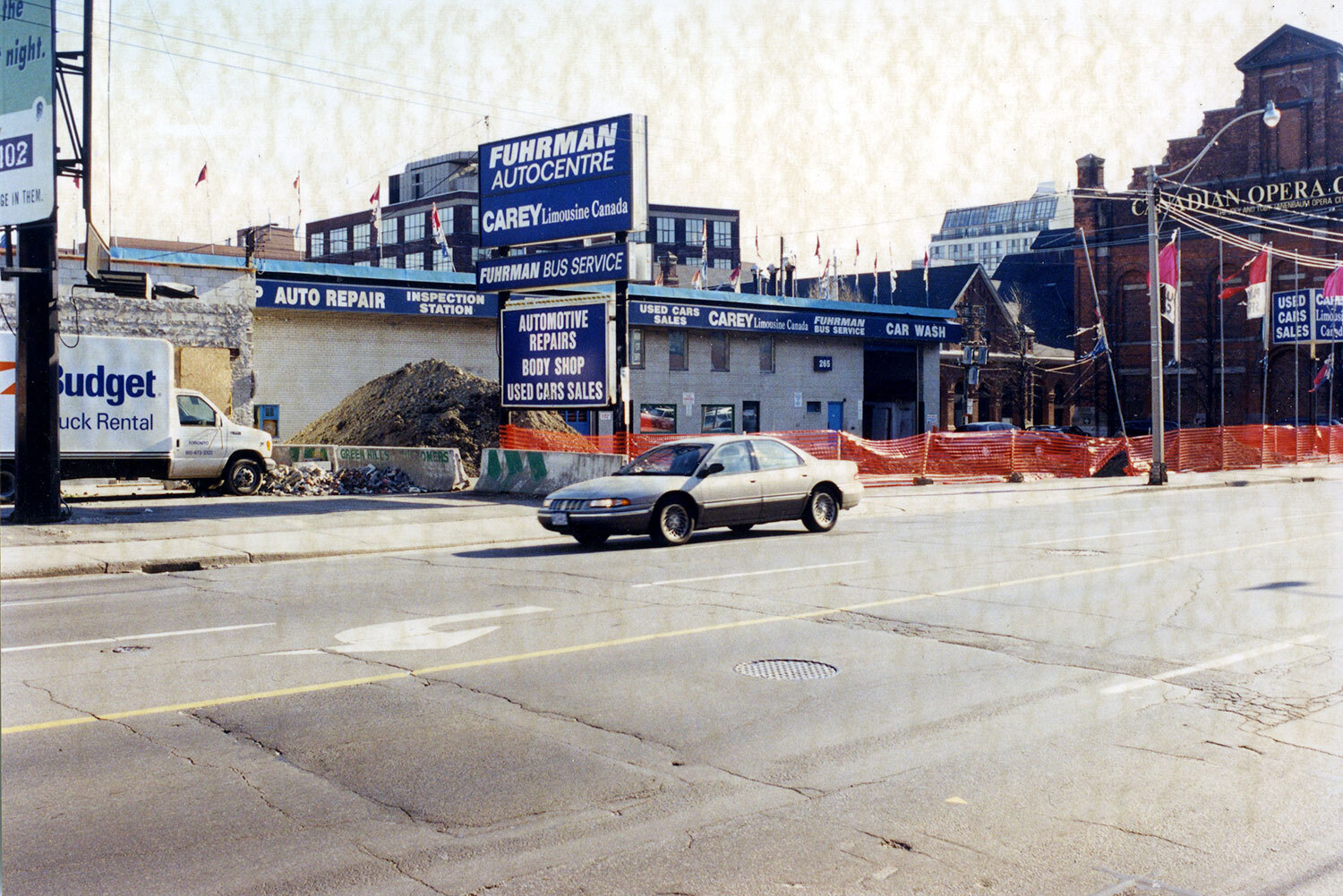
The excavations in 2000 had to work around the car shops
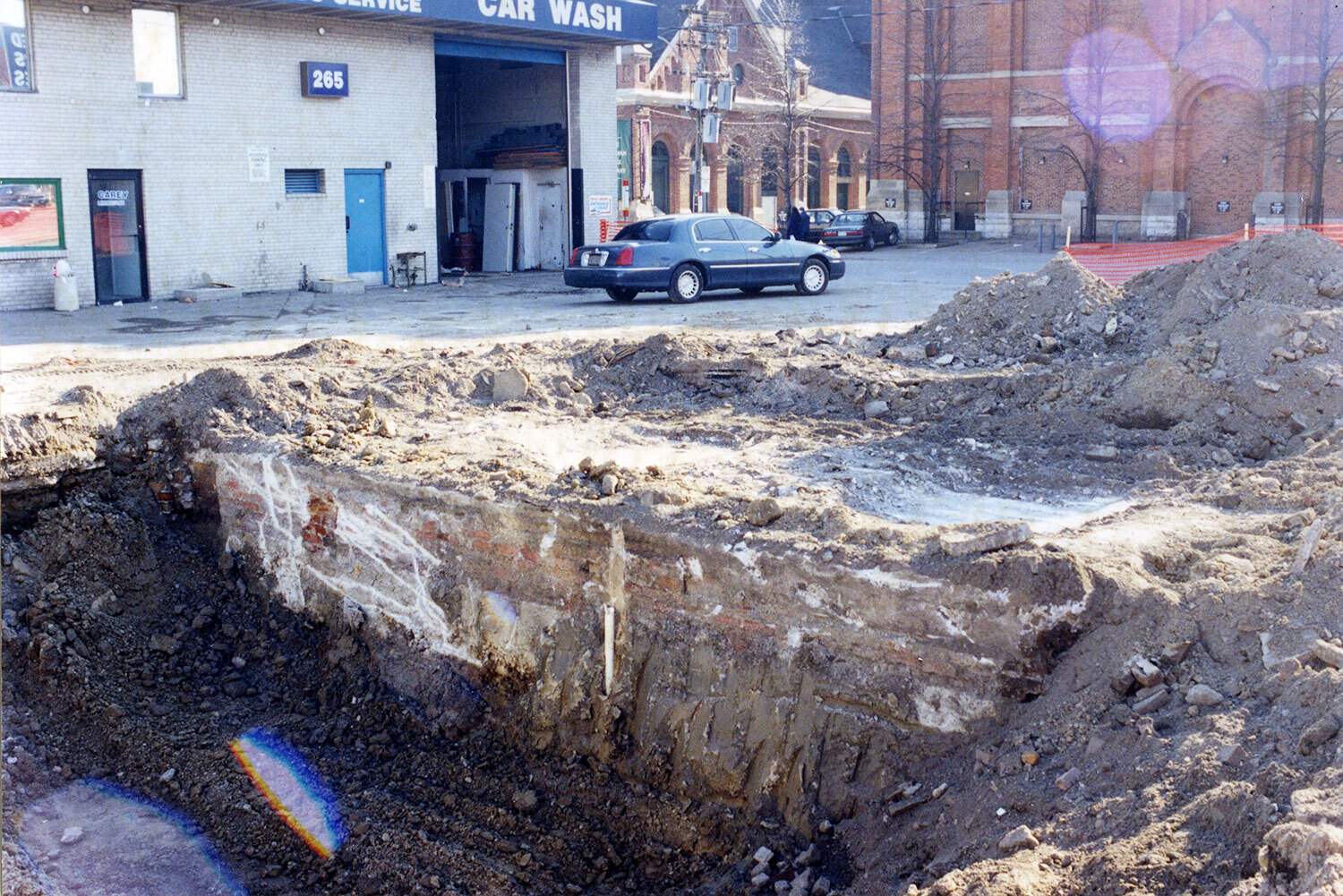
This trench in 2000 was dug in the parking lot
Uncovering the gasworks
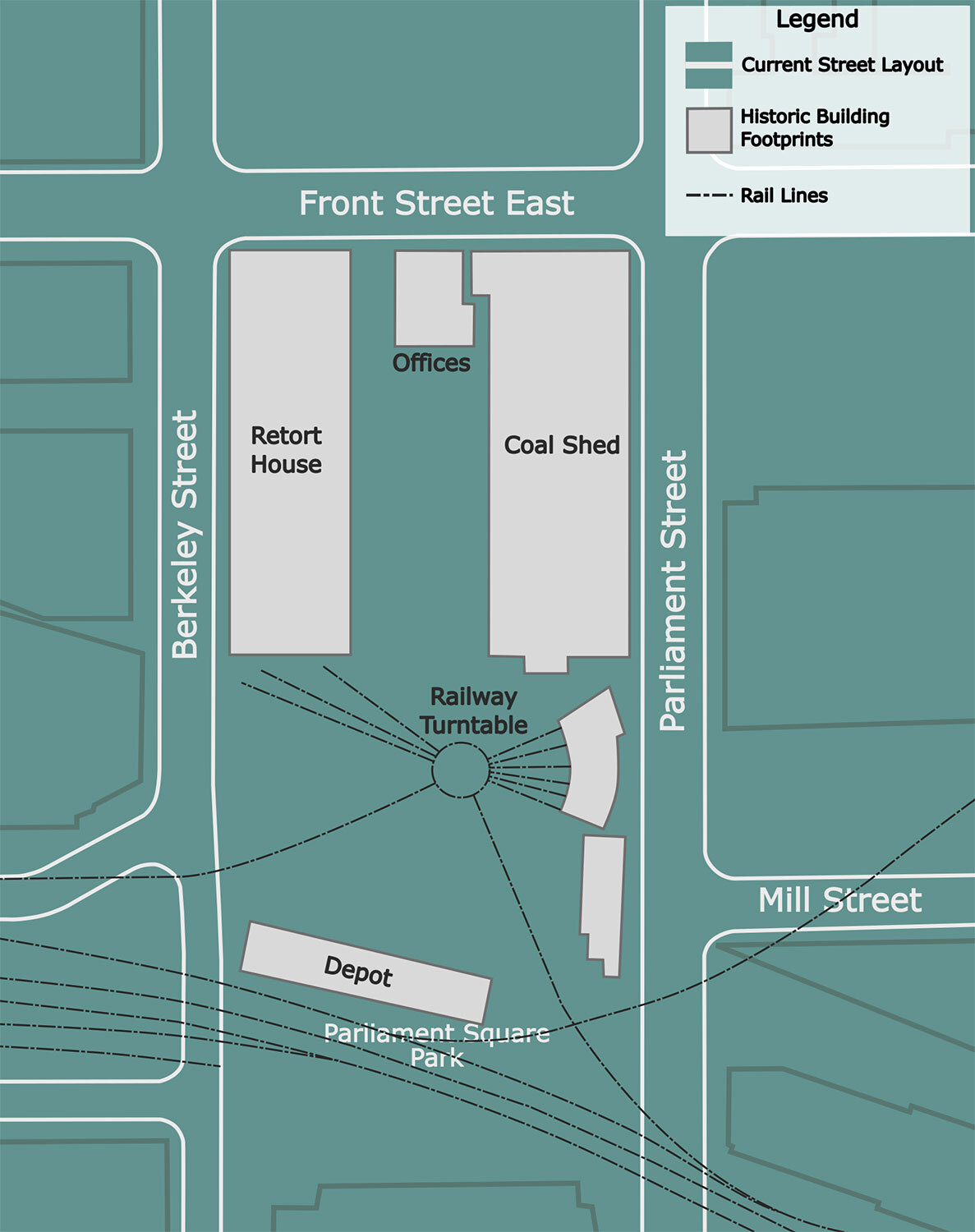
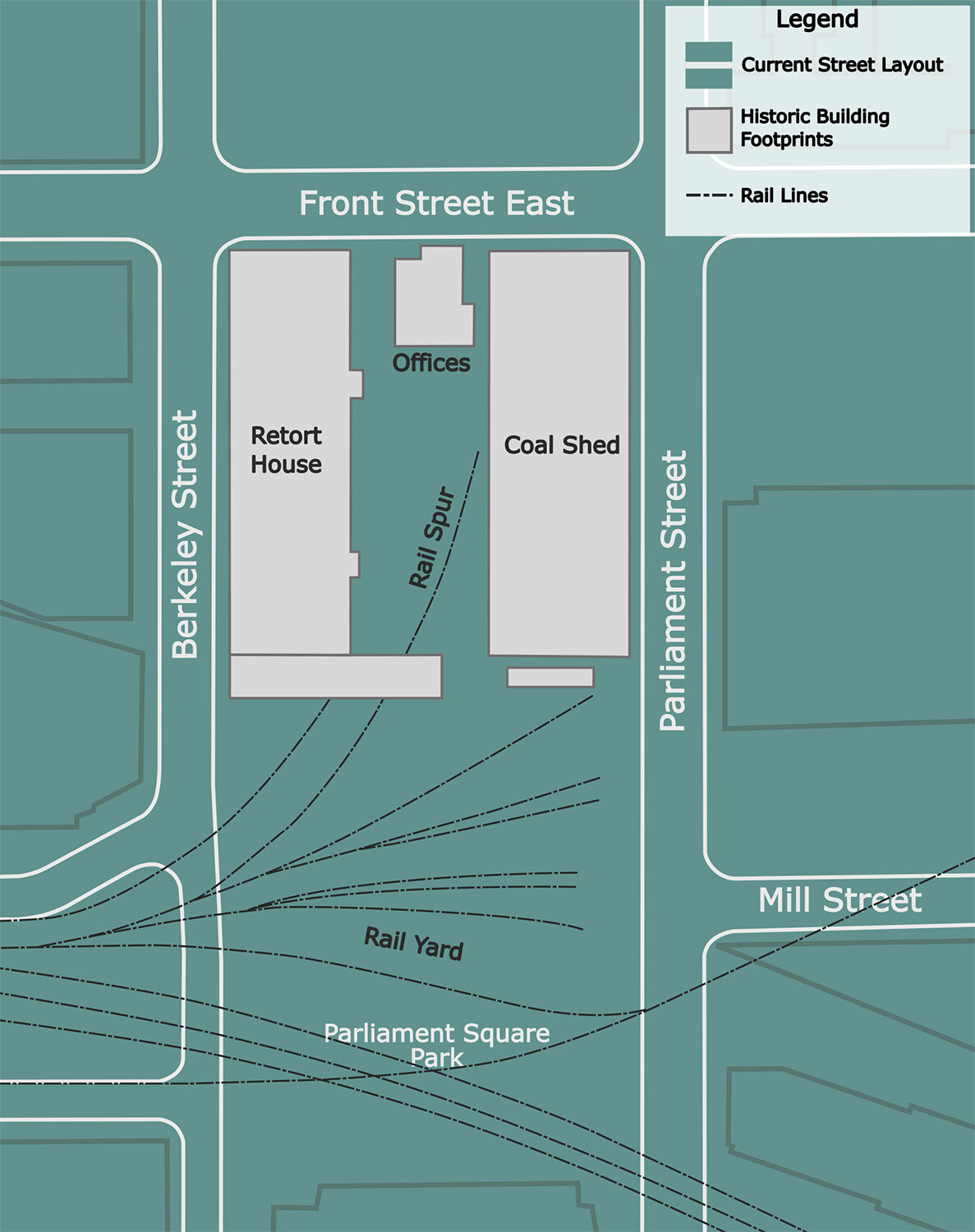
The excavations in 2000 intentionally focused on the courtyard of the Consumers’ Gas facility. Several features from the gasworks were uncovered, including a concrete footing and brick pier. Both are likely the foundations for conveyor belts, one of which can be seen on historical maps crossing the courtyard in roughly the same place. Additional brick and concrete piers were uncovered in more recent excavations.
Video: Listen to archaeologist Patrick Hoskins discuss the discoveries of the Consumers’ Gas plant in 2023
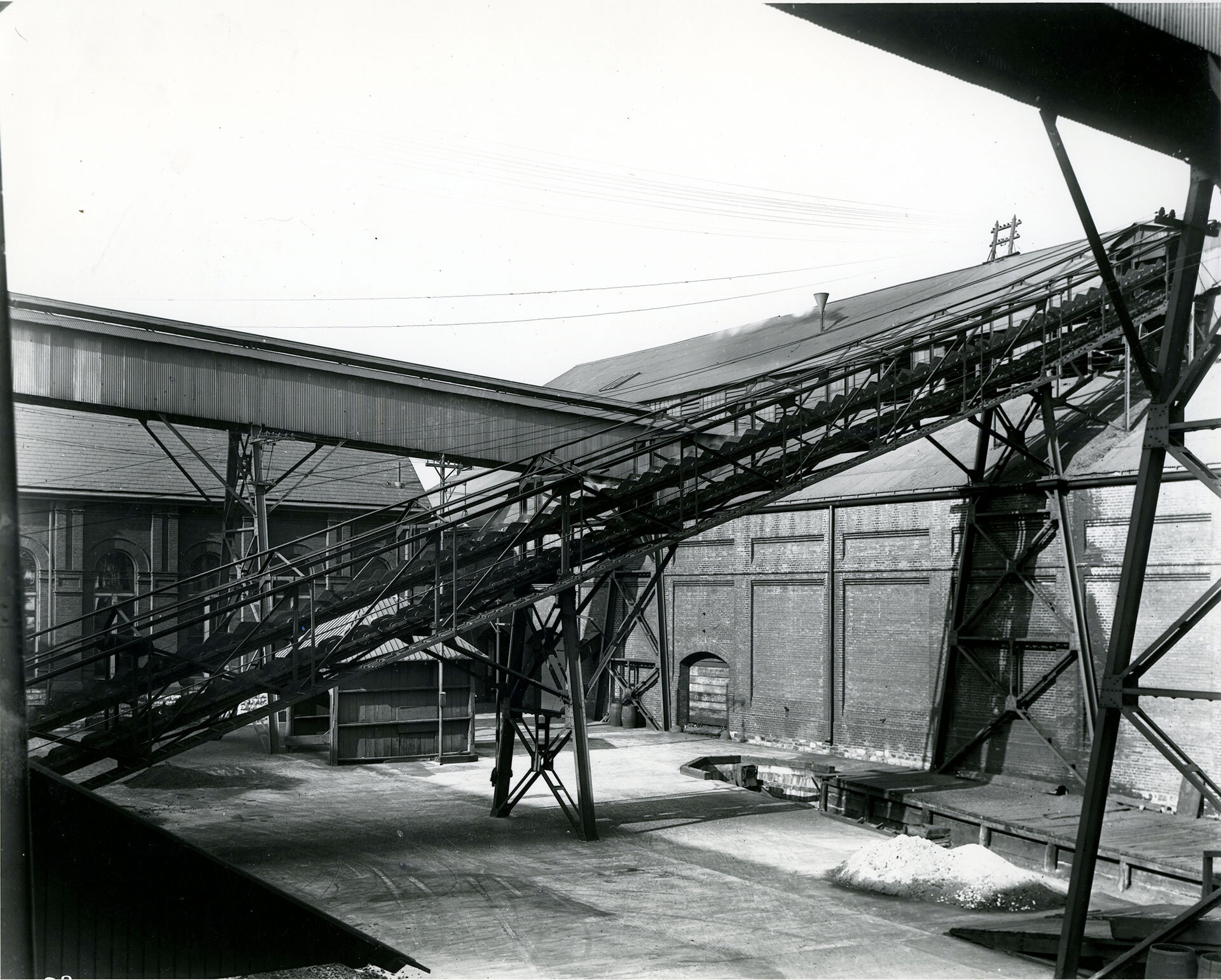
A brick retaining wall and several rail ties that were uncovered and documented match the rail spur that ran through the courtyard. Across this area, archaeologists also uncovered a thick layer of coal cinders. To make gas, coal is burned, creating cinders as a byproduct. This layer is possibly the coal cinder waste that spilled when being poured into carts along the rail spur. Below that was a layer of rubble, likely a result of the levelling of the area above the jail’s foundations. Several metal pipes were also uncovered, which appear to have been used for transporting water and steam that came in and out of the gas plants.
Gallery
Swipe
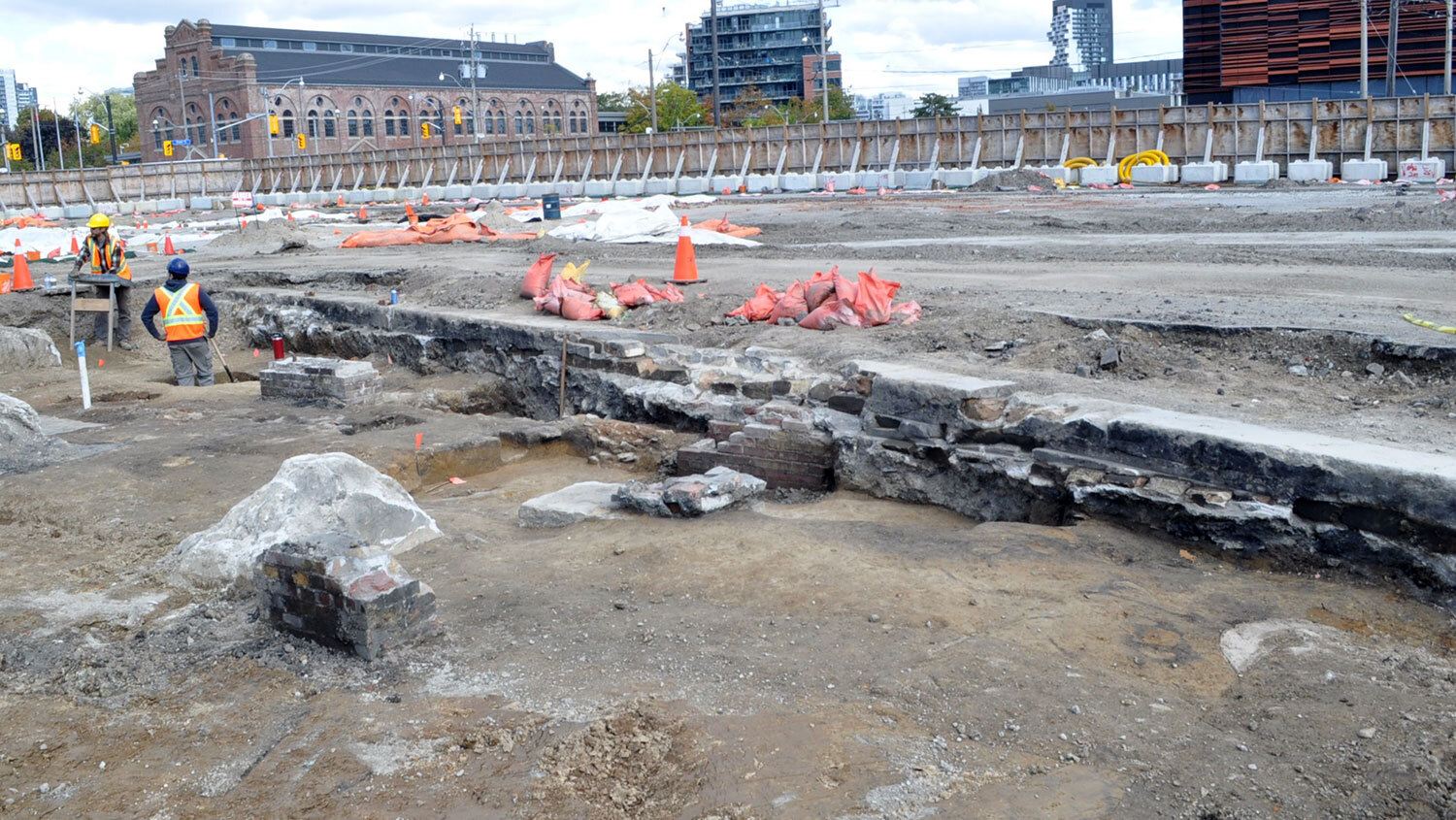
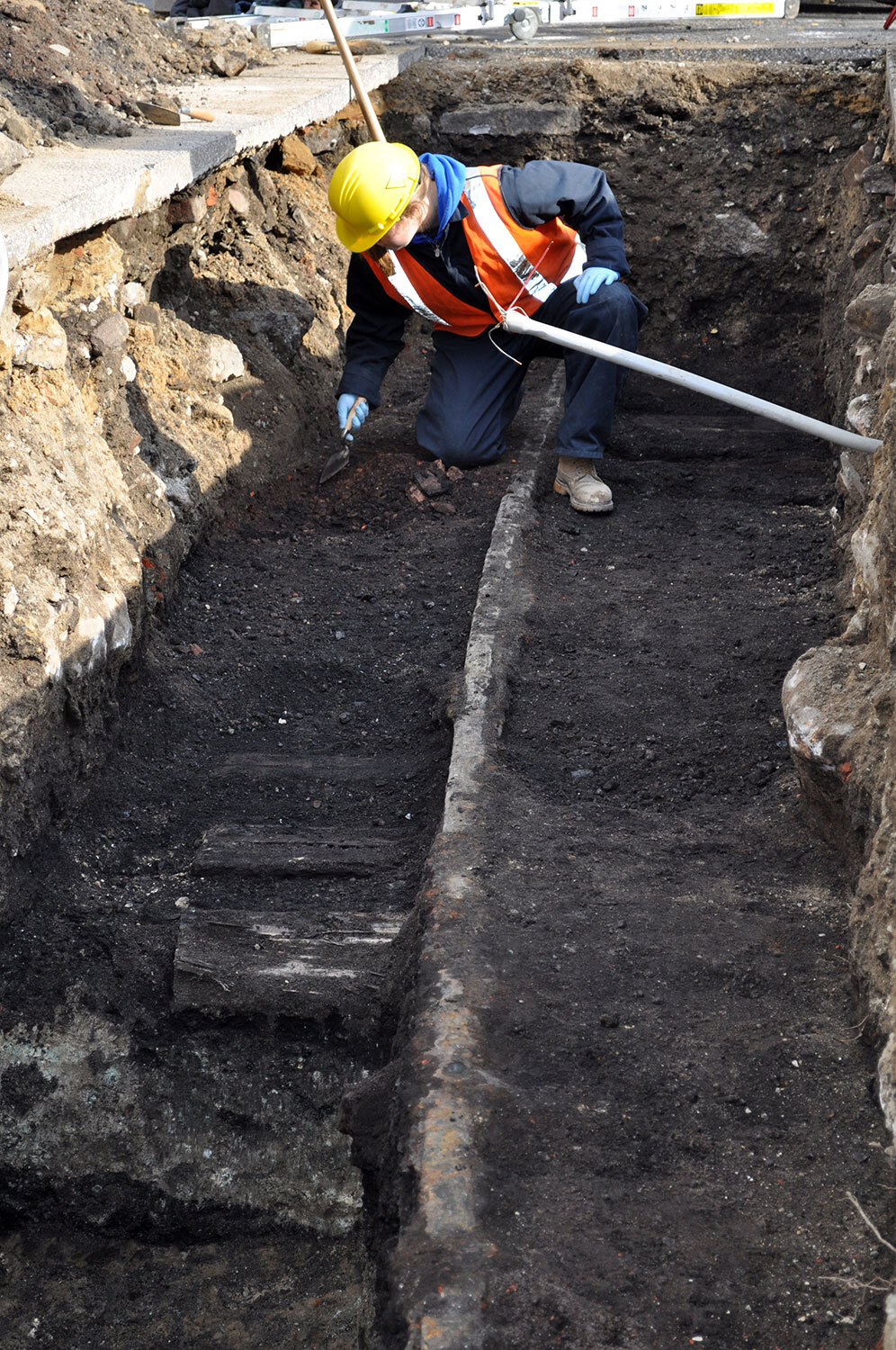
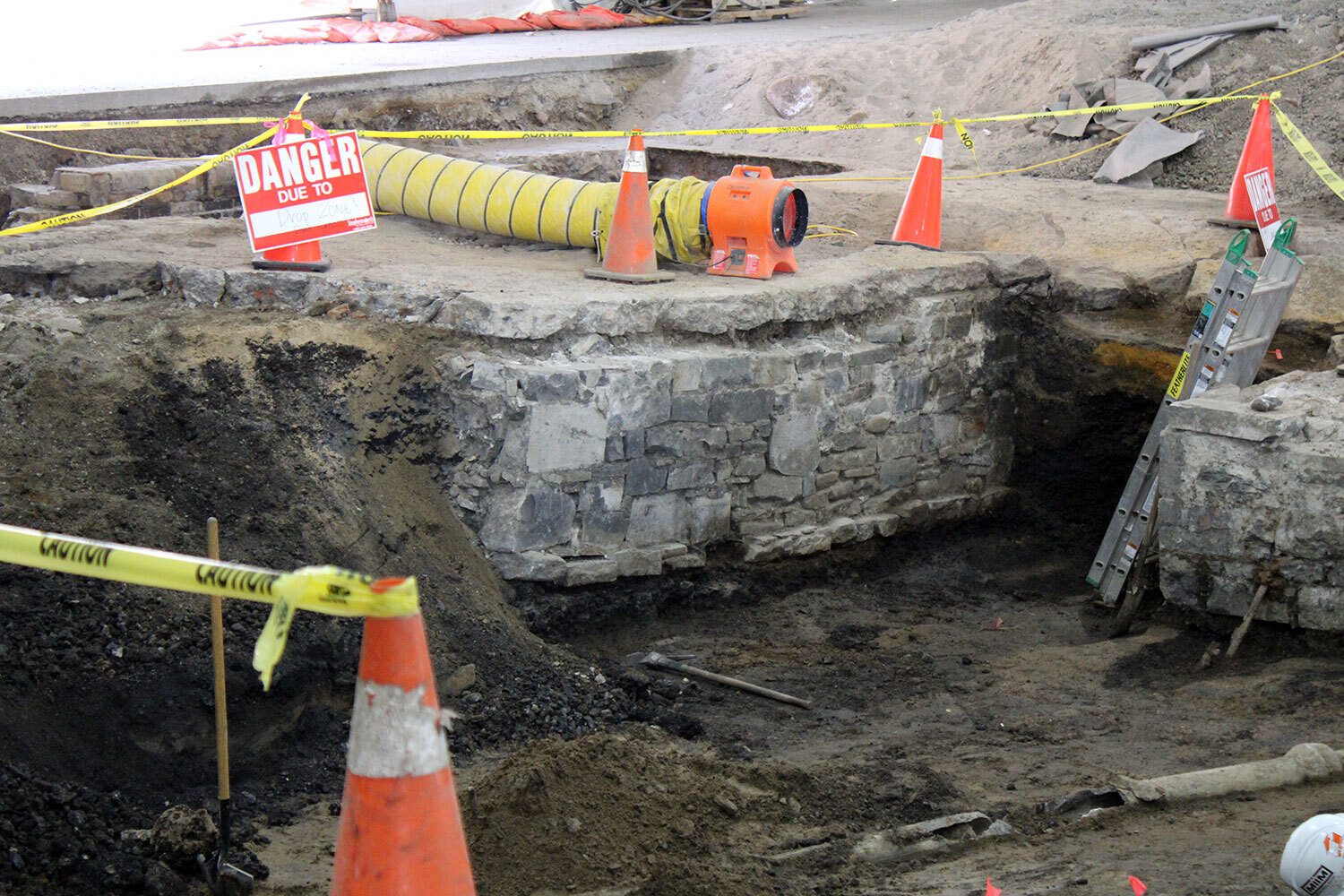
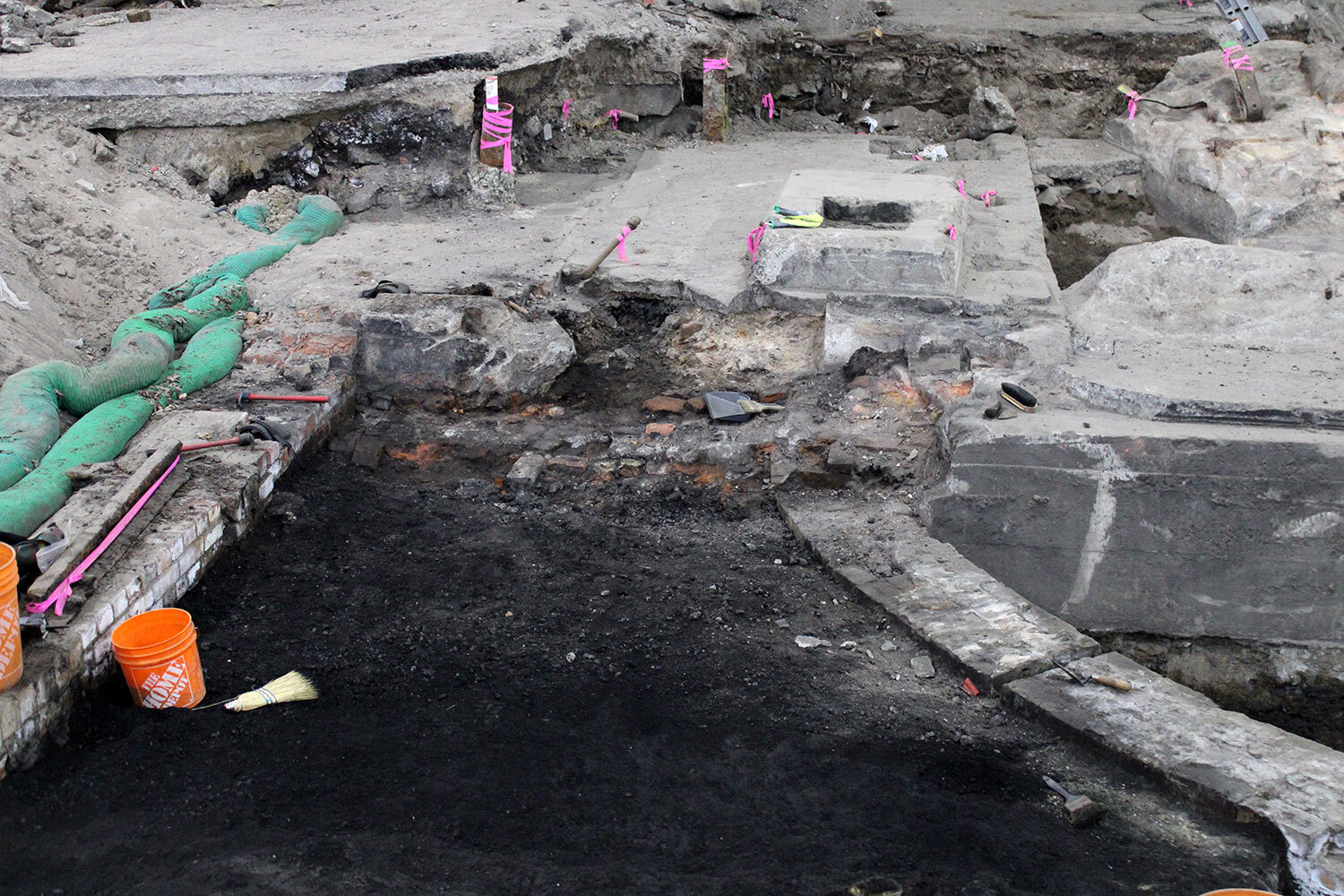
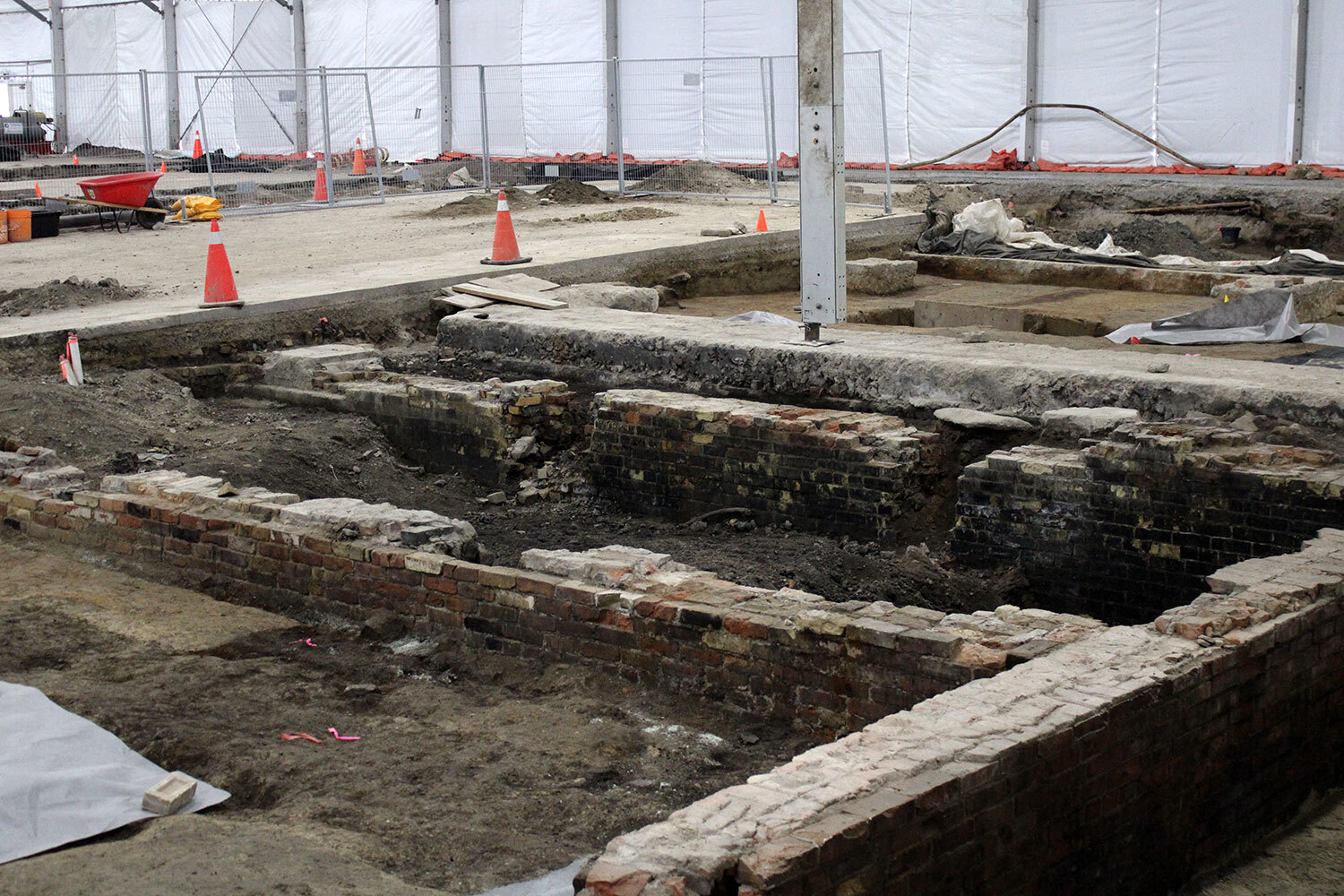
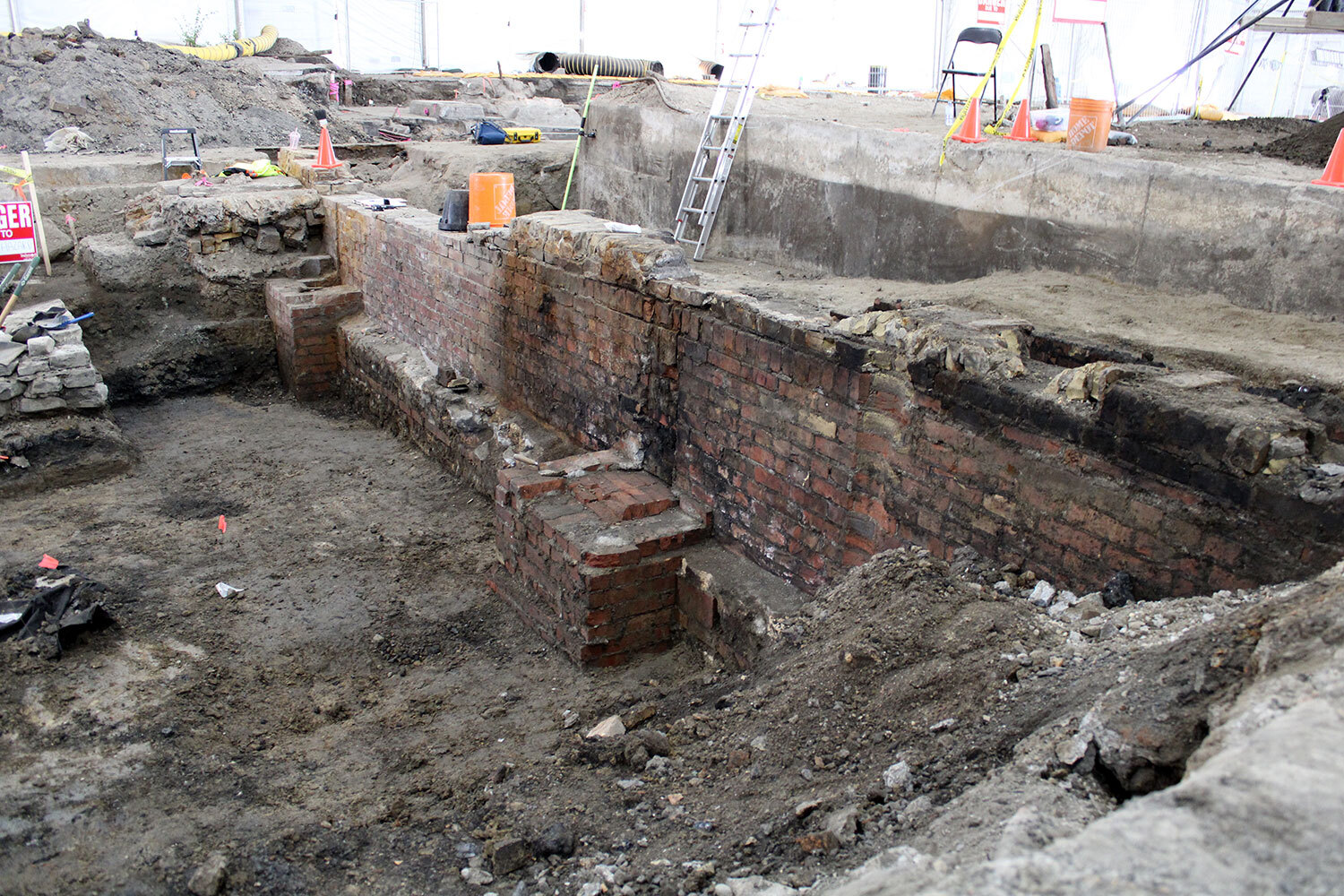
The 2022-24 excavations expanded beyond the courtyard to the two long buildings on either side. A remarkably well-preserved rail turntable was uncovered in 2023. Archaeologists knew there would be a turntable on site. But the one excavated in 2023 was not in the same location as the turntable seen on historical maps. By revisiting the maps, a later turntable was discovered in a different location, which matches the one excavated. Discoveries like this show that even with all their preparation, archaeologists never know exactly what they might find.
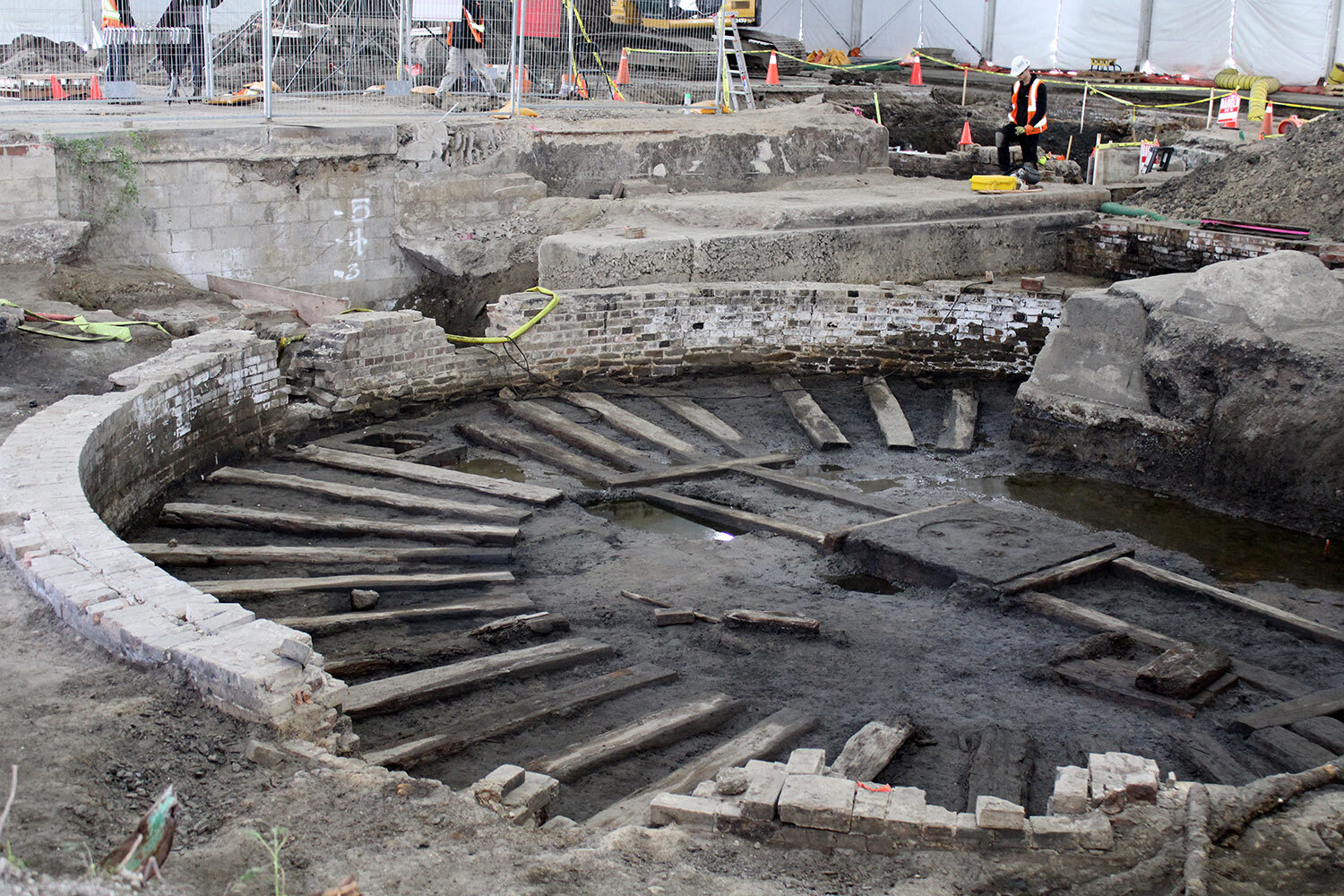
Consumers' Gas period turntable being excavated in 2023 — possibly the same one seen on the 1892 fire insurance plan
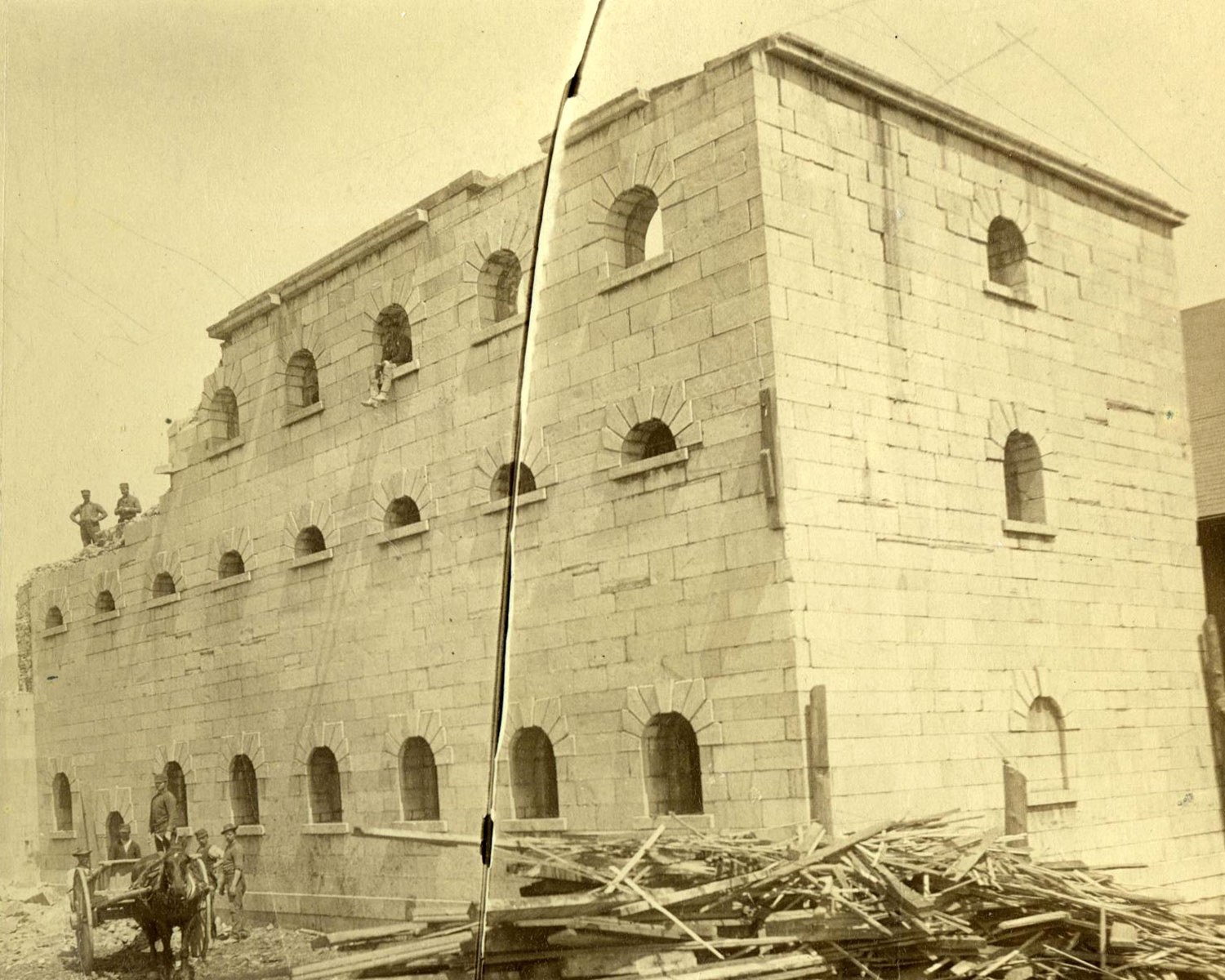
The Third District Gaol being torn down in 1885.
Photo: Courtesy of the Toronto Public Library
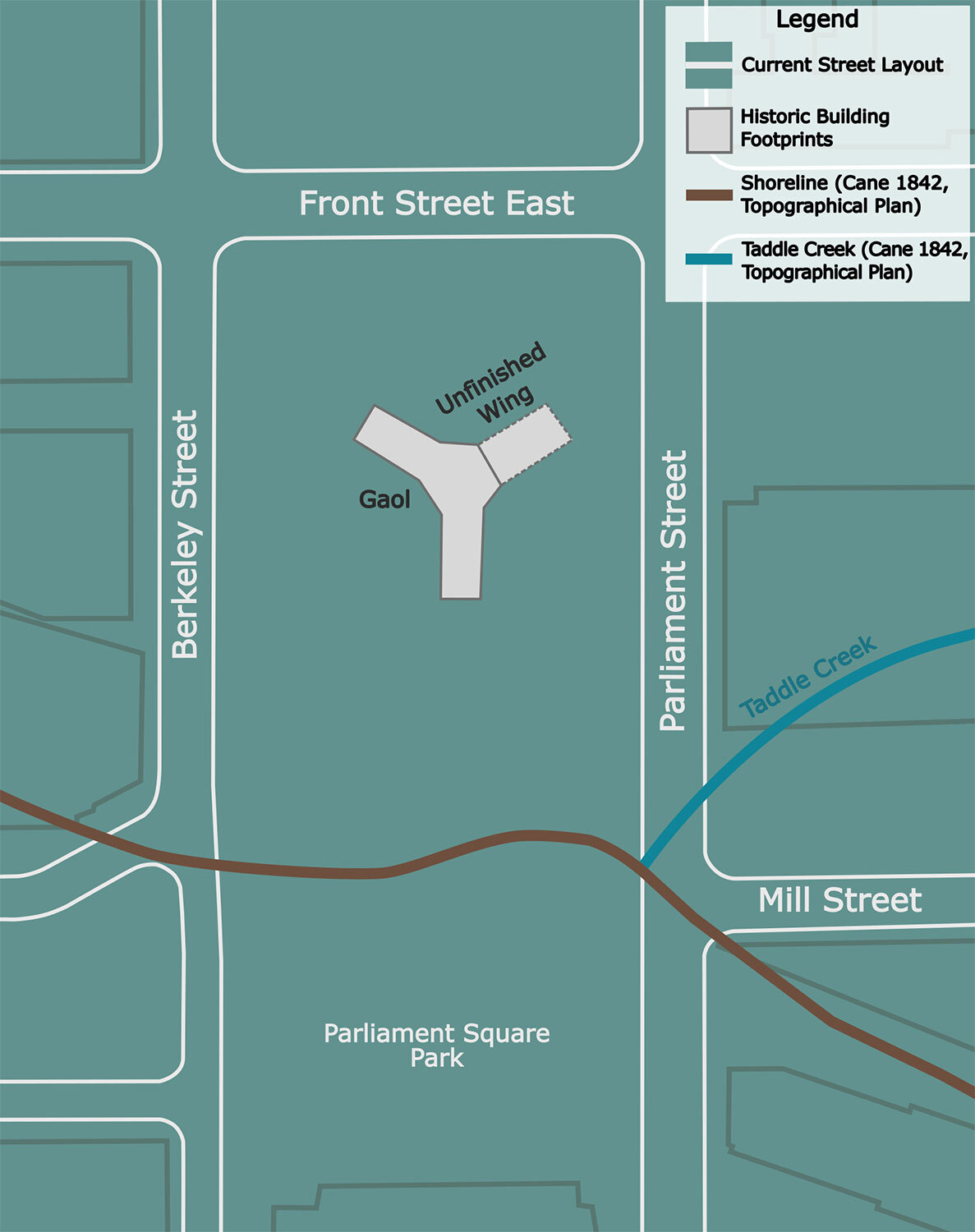
The foundations of the jail
Two of the trenches excavated in 2000 overlapped the floorplan of the jail. Yet, when archaeologists dug past the Consumers’ Gas phase, they did not find much of the structure. Concrete, stone rubble and crushed bricks are all that remain after the demolition of the structure. This suggests that rubble from the demolished building was reused to fill and level the area. Despite this, archaeologists found many artifacts from the period — most of which are animal bones, ceramic fragments and clay tobacco smoking pipes. These artifacts relate to elements of daily life, either for the people living or working here, or for the construction workers who built or demolished the jail.
What remains of the First Parliament
When excavations began in 2000, the archaeologists did not expect to find much, if anything, from the time of Parliament. So much had been built above that it seemed impossible anything could remain. A few bricks found in the rubble layers of the jail period, however, gave the archaeologists some hope. They were smaller than later bricks and matched those used at Fort York. These bricks were also burnt, indicating that they had once endured intense heat. Could these have been the bricks from the Parliament buildings? It seemed possible. Archaeologists then uncovered a thin layer of charcoal, which is also a sign of fire. The soil below contained artifacts that dated to the early 1800s, and in some cases, slightly earlier.
Video: Discover the foundations of First Parliament as unearthed by archaeologists in 2022-24
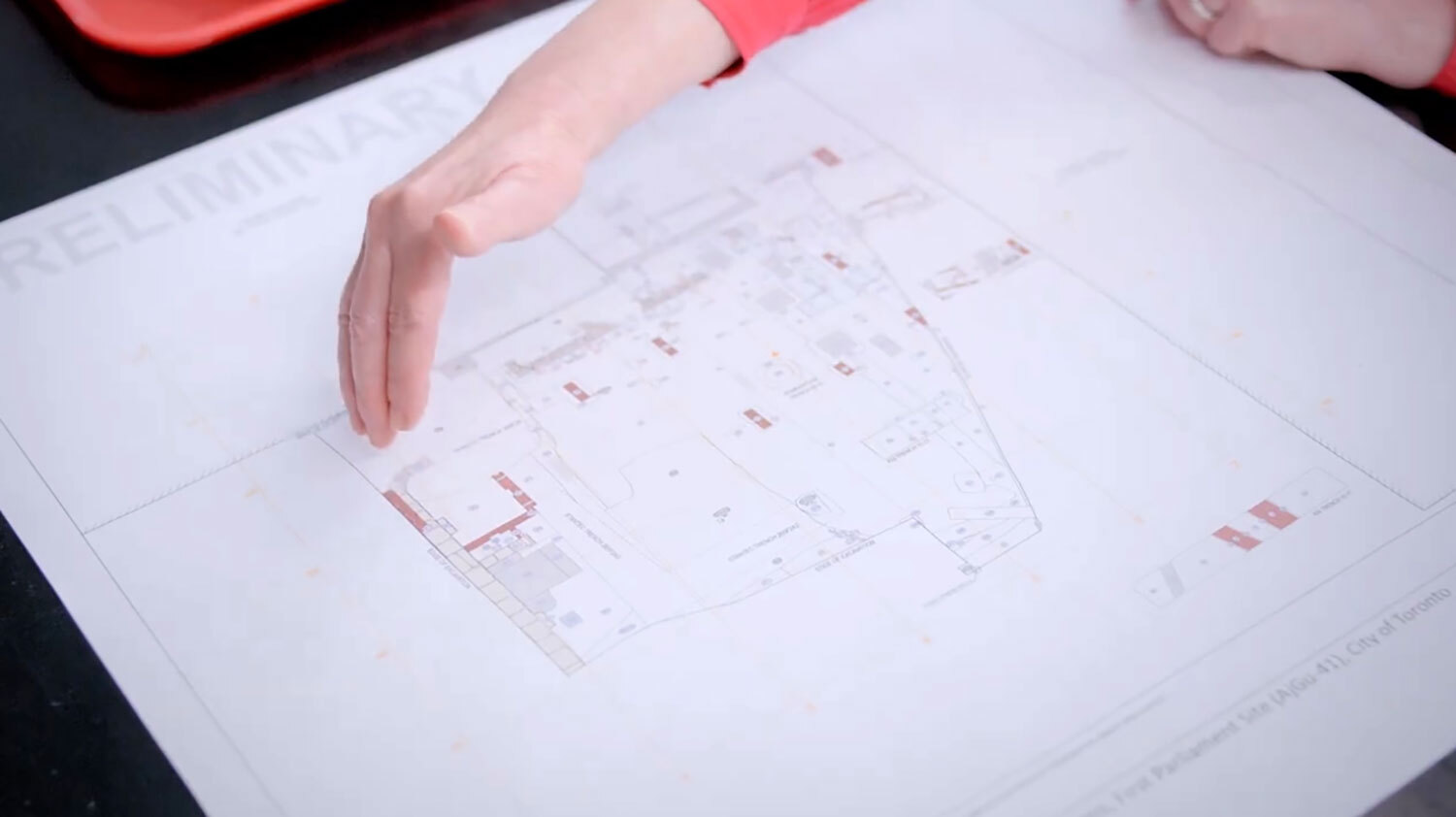
Beyond the bricks, there was no sign of the buildings themselves until a few linear charcoal stains were uncovered. The stains were slightly spaced out and looked like floorboards. While the wood had burned away, the heat was enough to char and stain the soil, imprinting their shape directly below. Against the odds, they had found evidence of First Parliament!
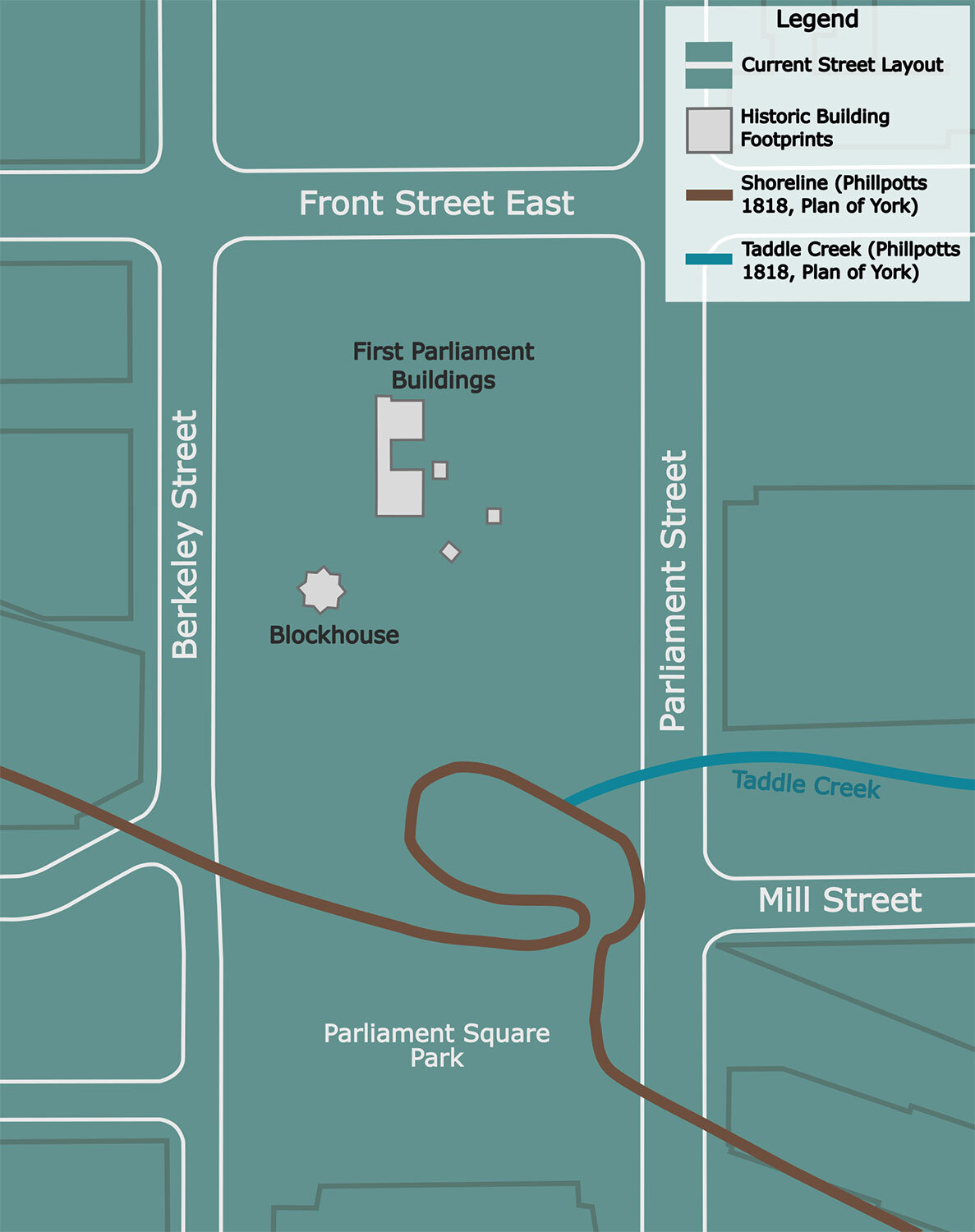
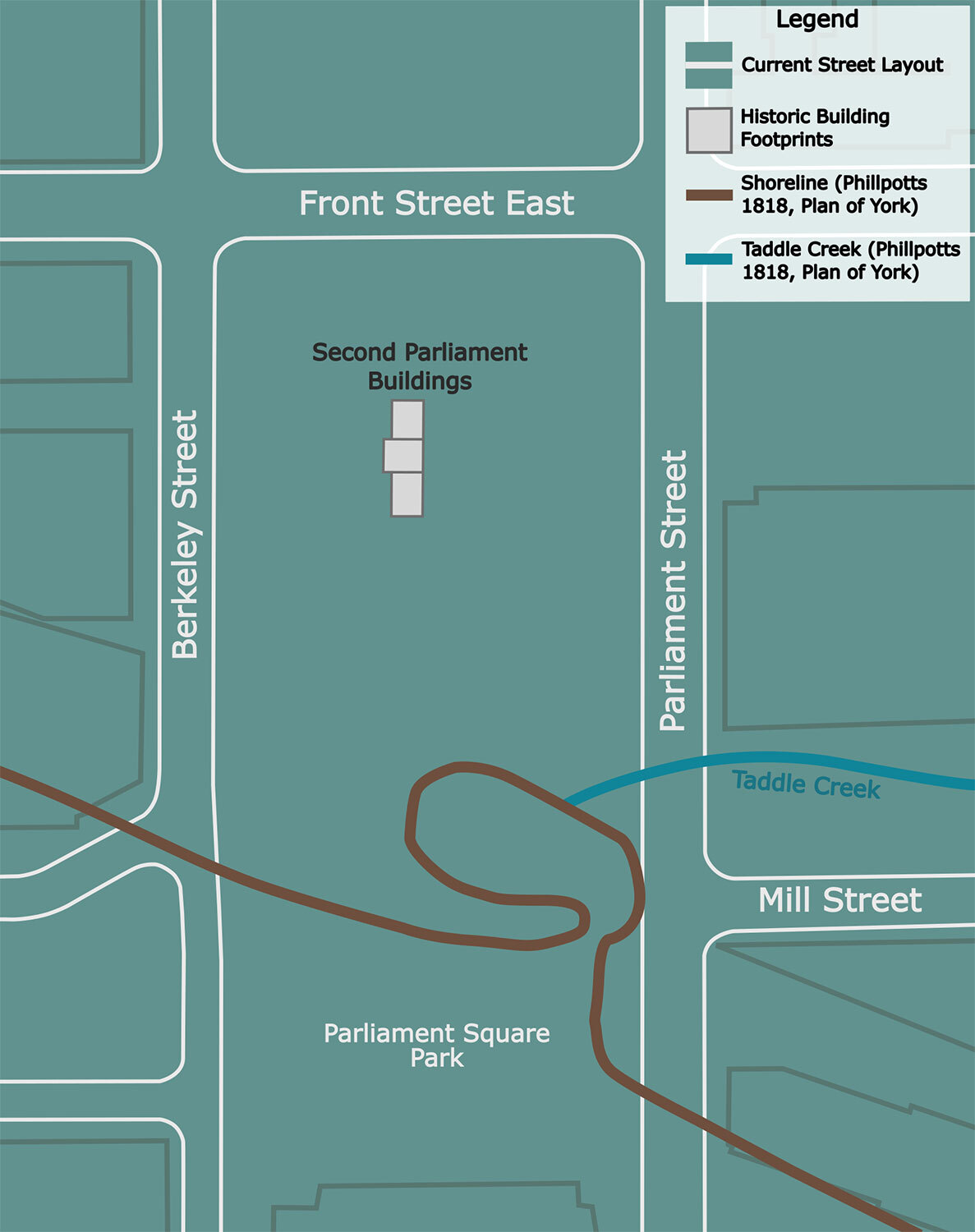
The archaeologists recommended digging more to the northwest. But that was not an option at the time. In 2023, however, more than two decades later, they finally had the chance to continue the search. The possible limestone footing was further excavated, revealing that it was rubble from the jail’s demolition. But a full wall was uncovered just metres to the northwest that was in the right place and matched the dimensions of the First Parliament buildings exactly.
There was no doubt this time. This was the south wall of the south building of First Parliament.
Gallery
Swipe
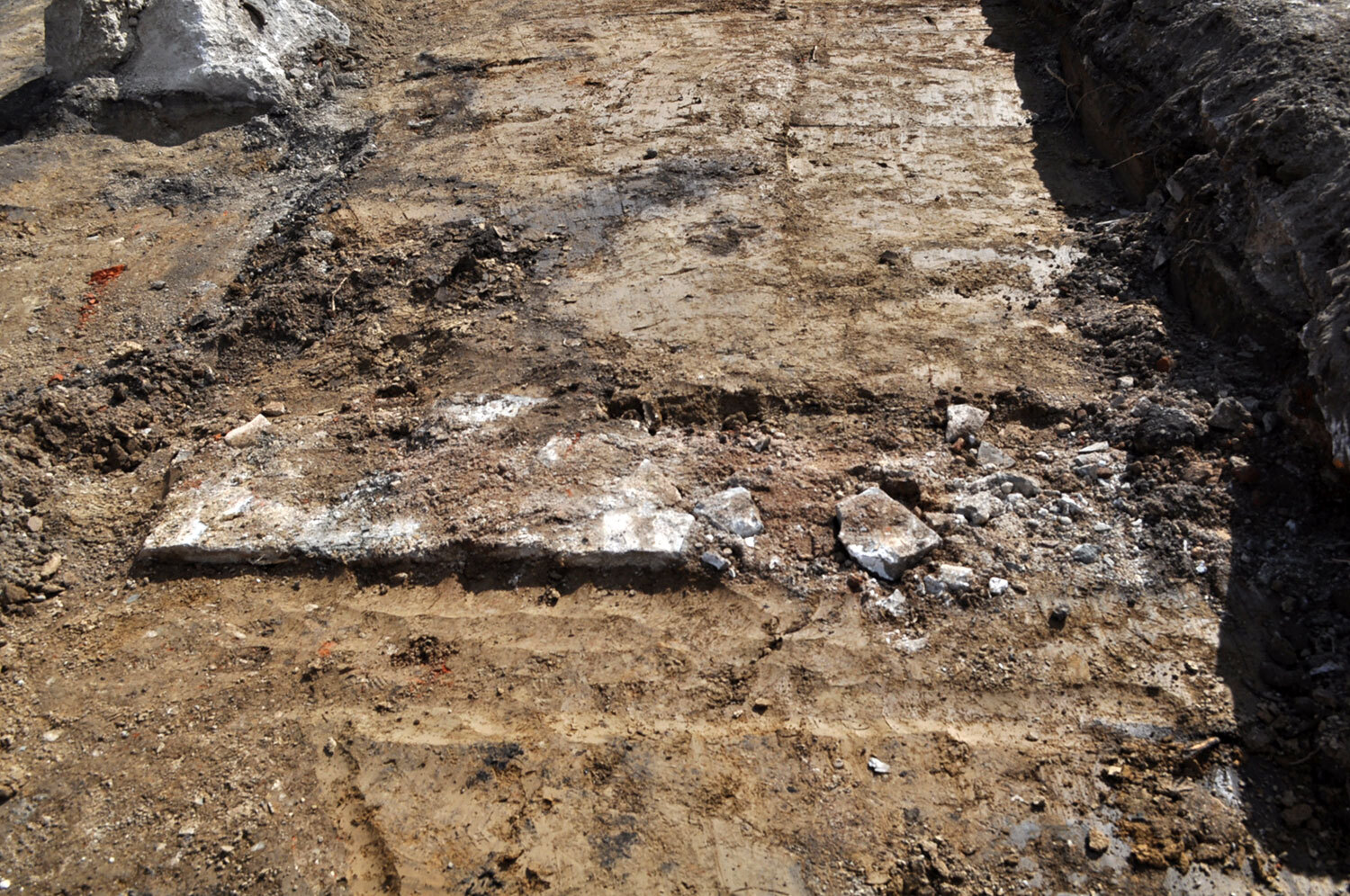
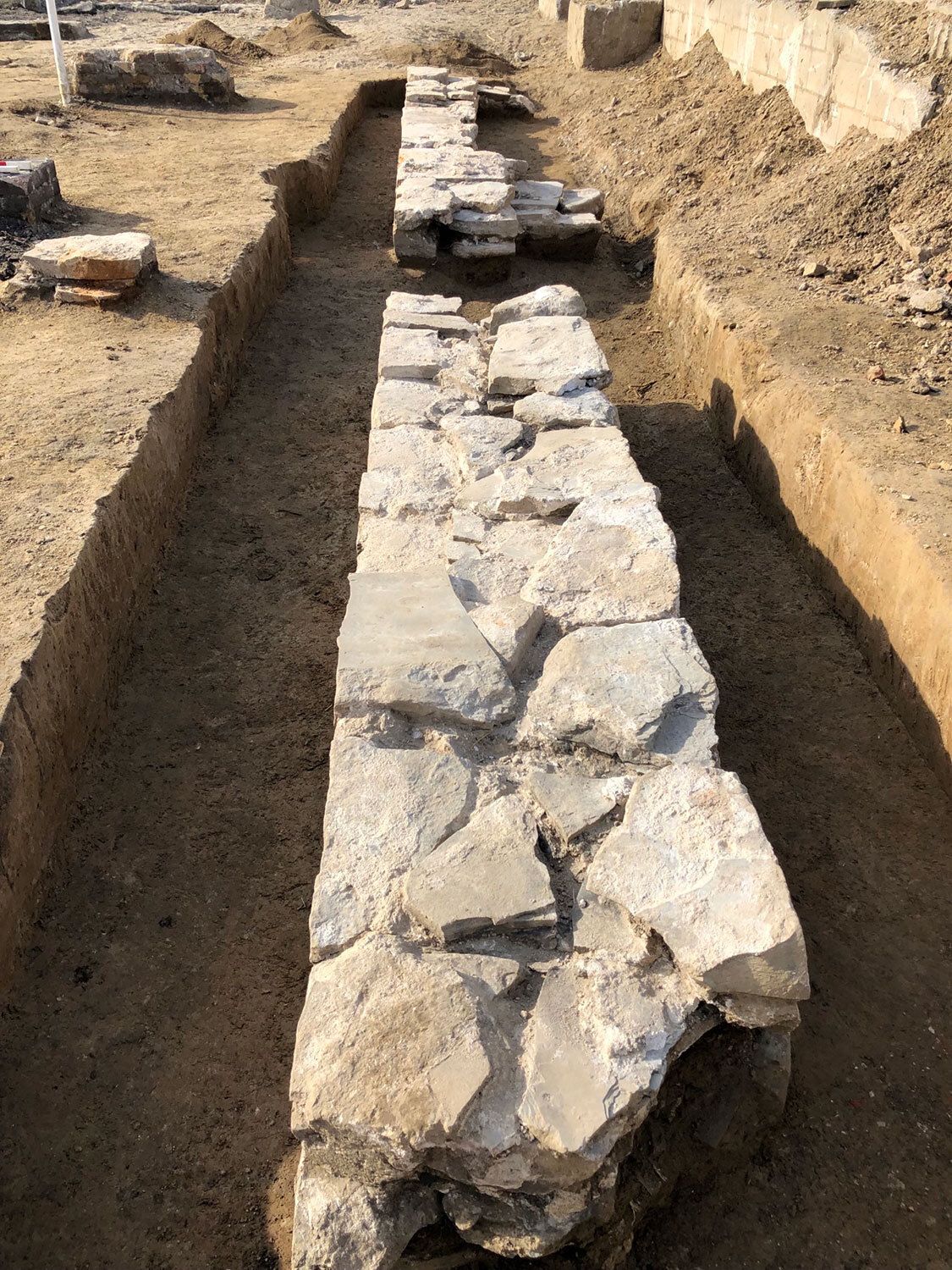
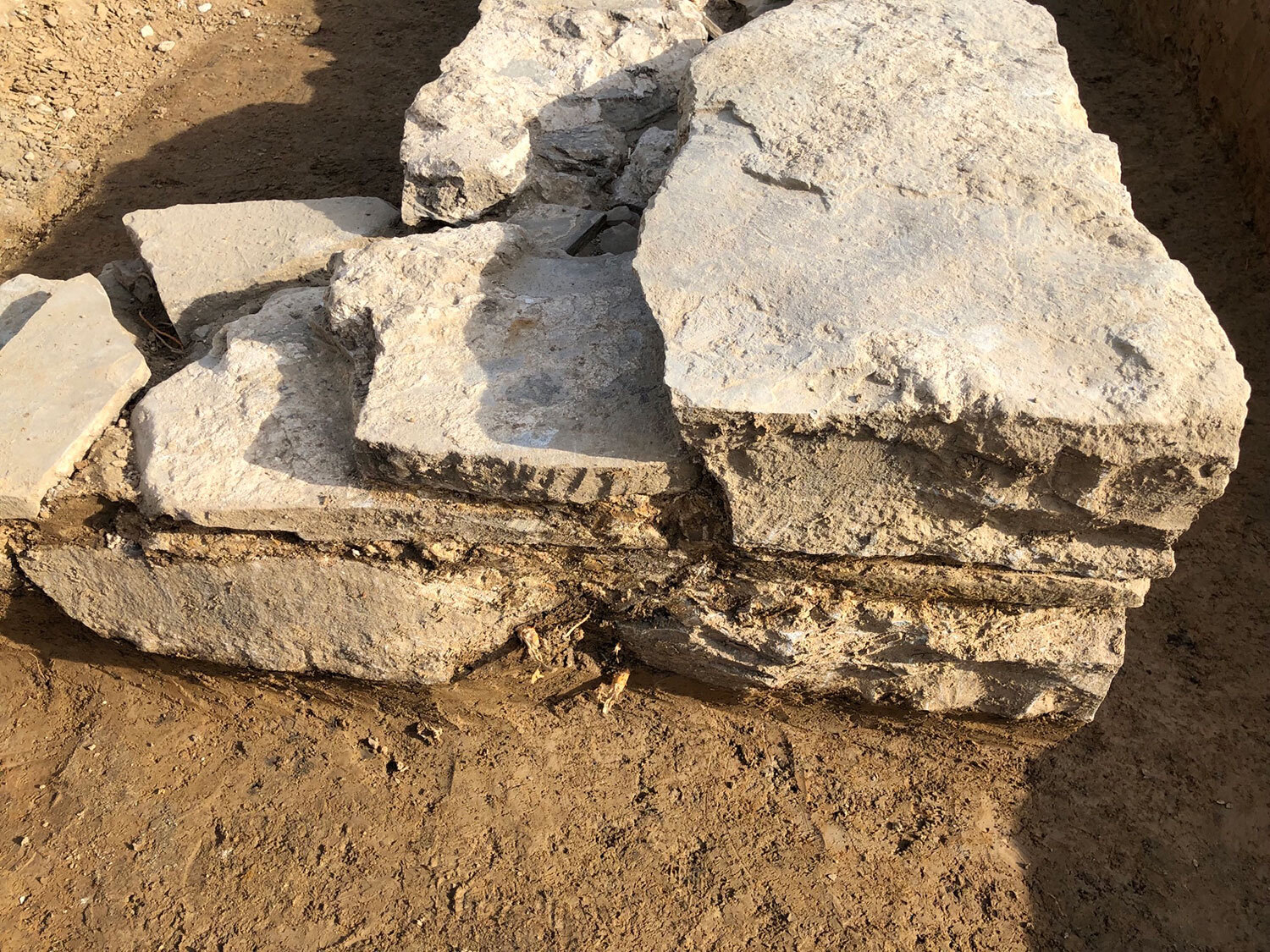
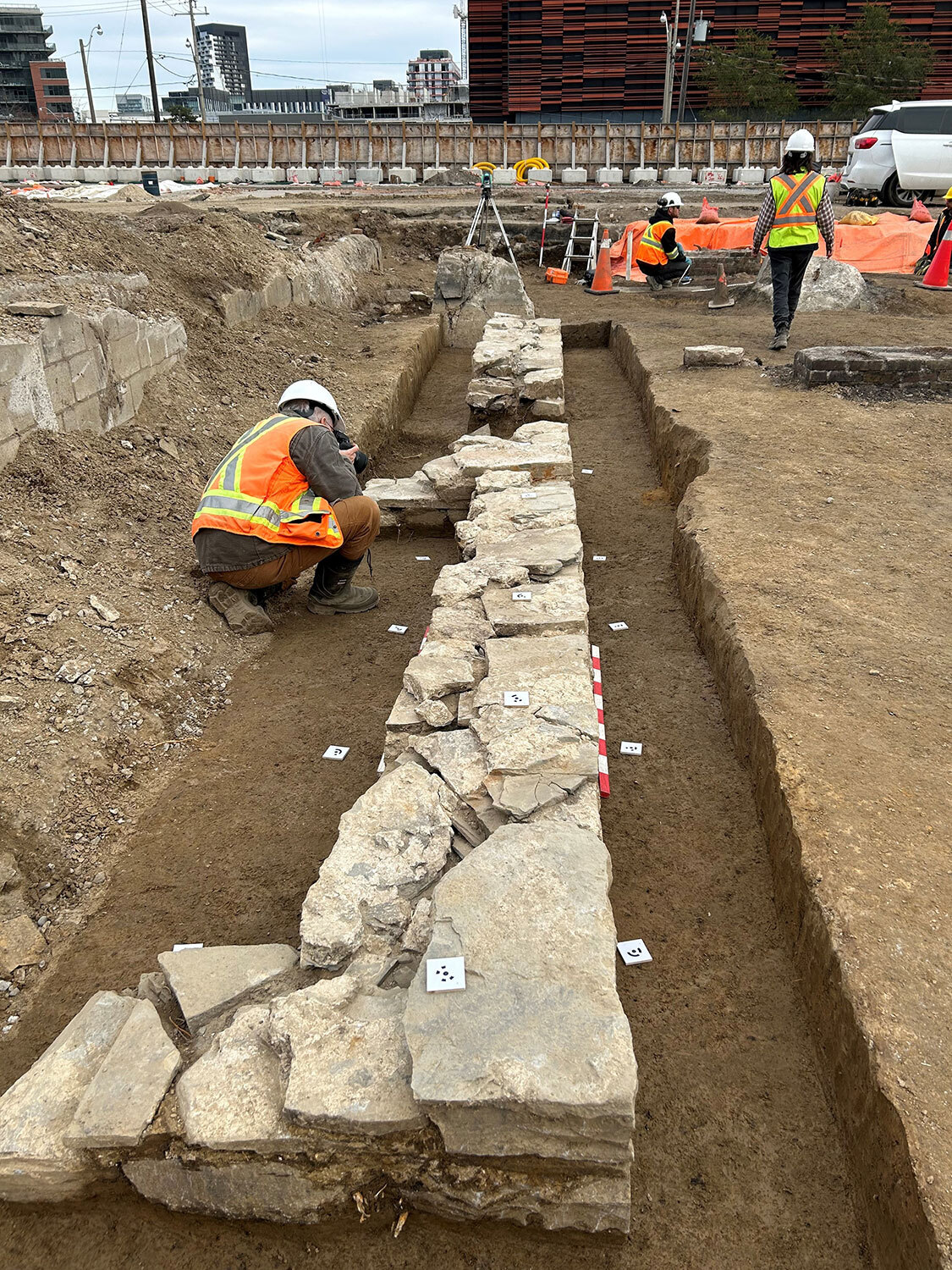
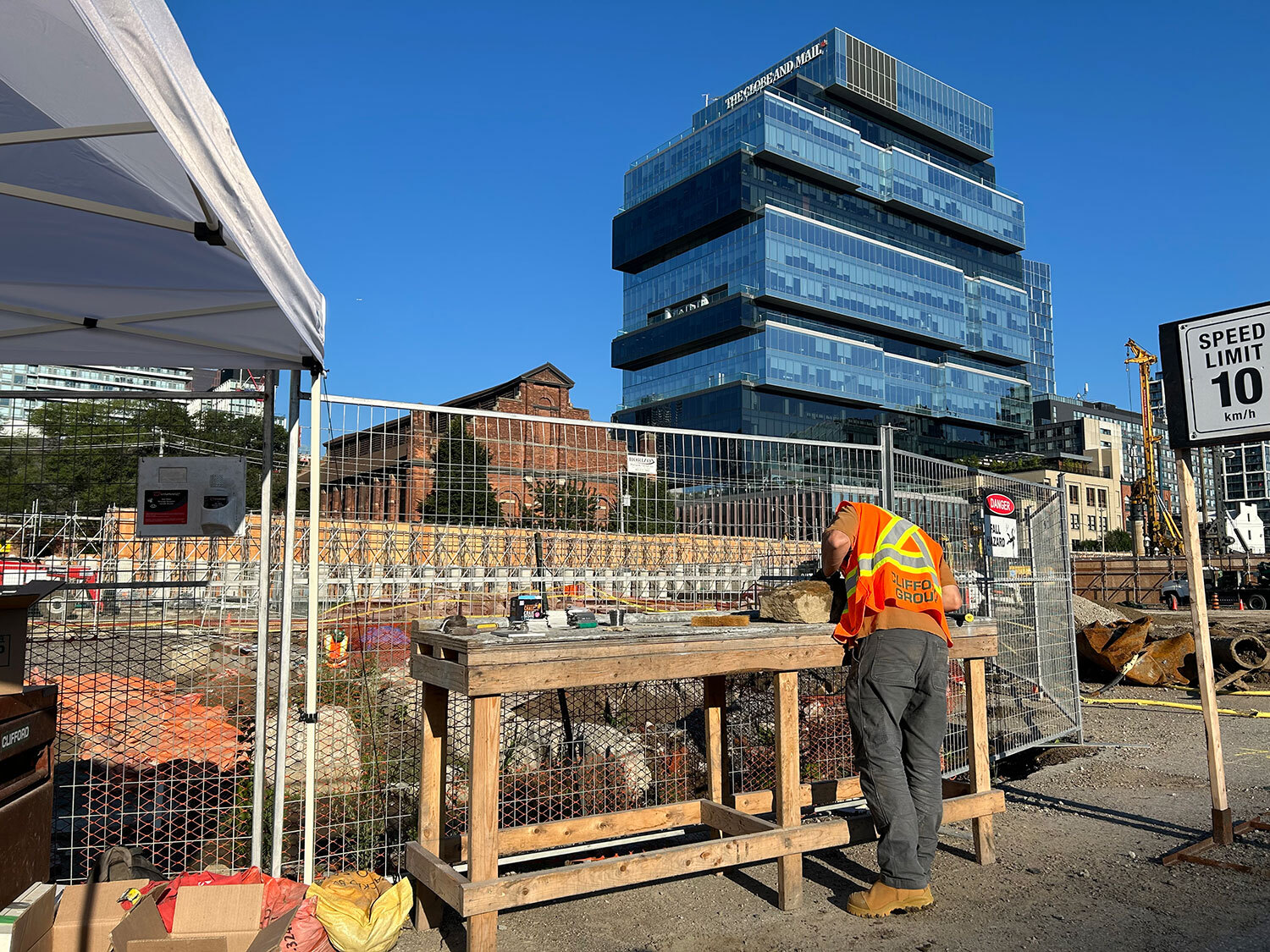
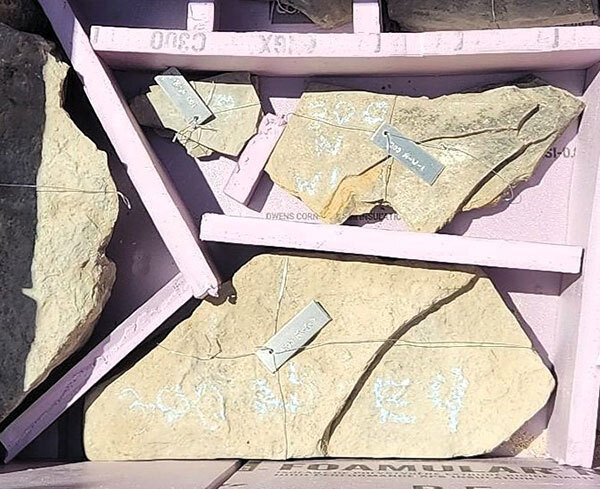
These new discoveries changed some of the interpretations made by archaeologists in 2000. While they found material from the Parliament period, their position for the buildings was farther west than expected. The burnt floorboard stains could not have been from within the Parliament buildings. Instead, they may be the remains of one of the surrounding outbuildings. Even still, the work done in 2000 led directly to the discoveries in 2023.
You might also be interested in
Check out these other exhibits on the First Parliament Site
Layer by layer — 1. Introduction
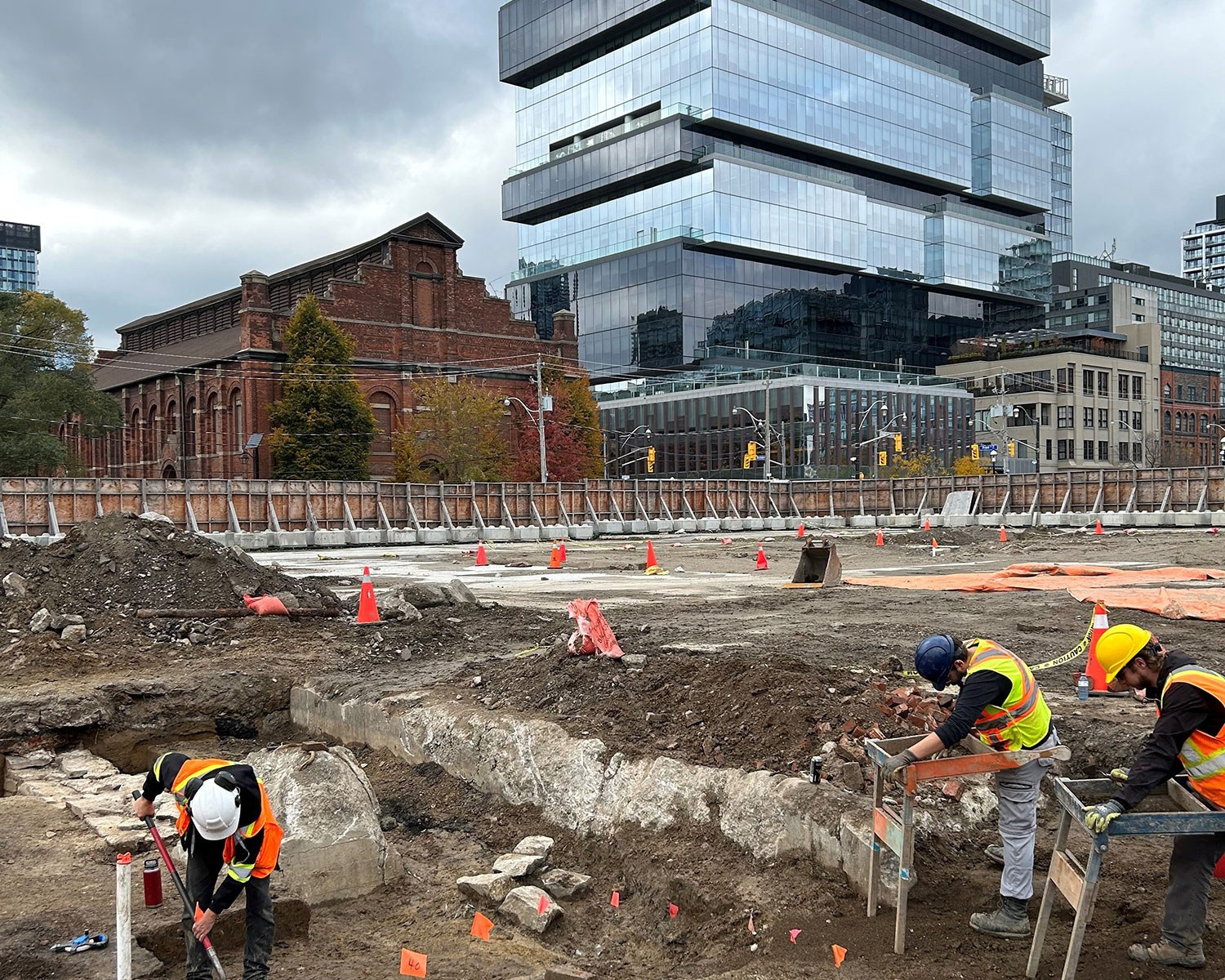
With centuries of buildup above, archaeologists were not hopeful that anything from the First Parliament buildings survived below. In 2000, they dug down, layer by layer, until they passed the remains of the jail. Then, to everyone’s surprise, they found what they were looking for: evidence of Ontario’s cradle of democracy.
Visit Layer by layer — 1. IntroductionLayer by layer — 2. First Parliament throughout the ages
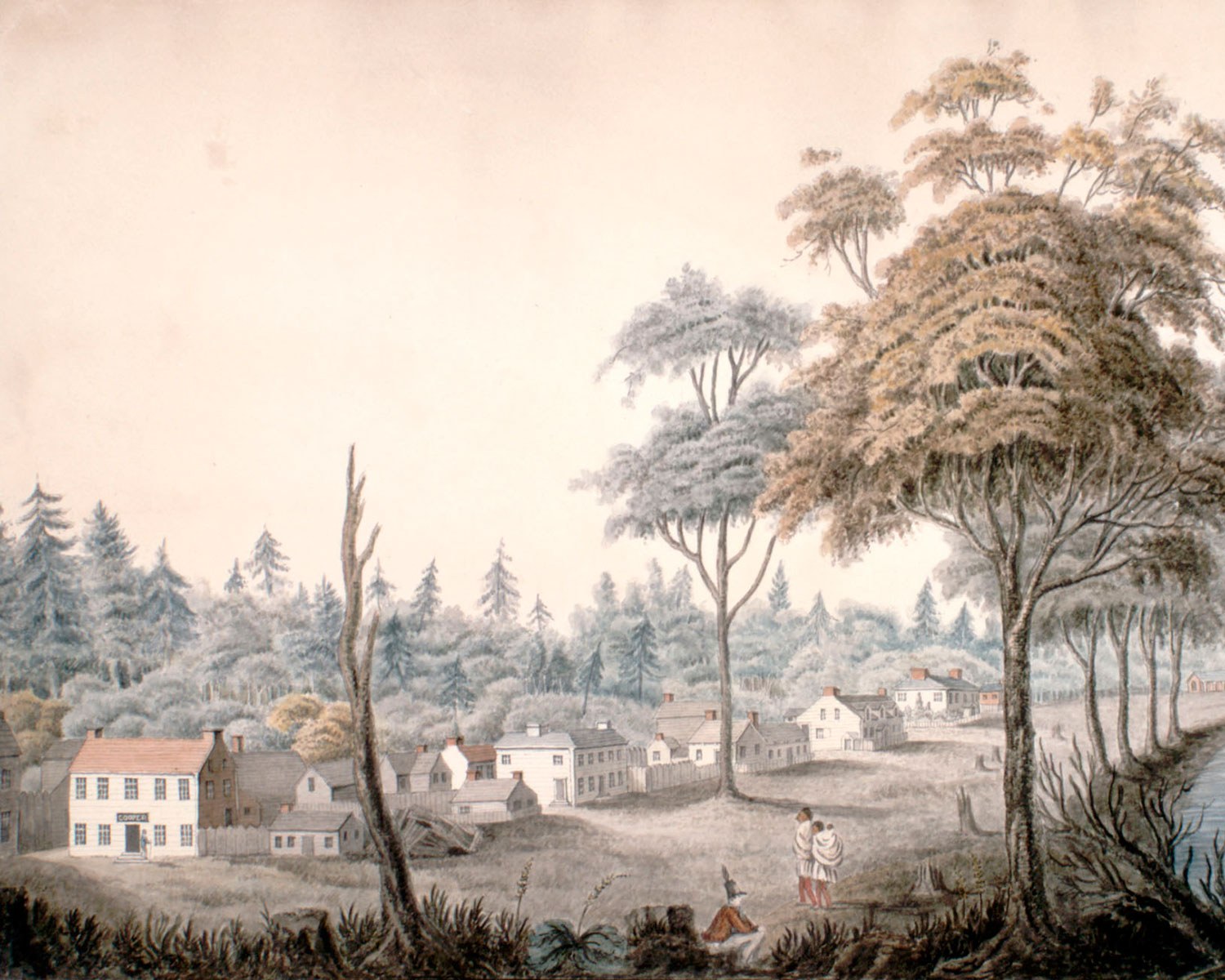
Indigenous people have lived on this land for over 13,000 years. Today, this land continues to be home to these communities and many other diverse Indigenous Peoples.
Visit Layer by layer — 2. First Parliament throughout the agesLayer by layer — 4. What is archaeology?
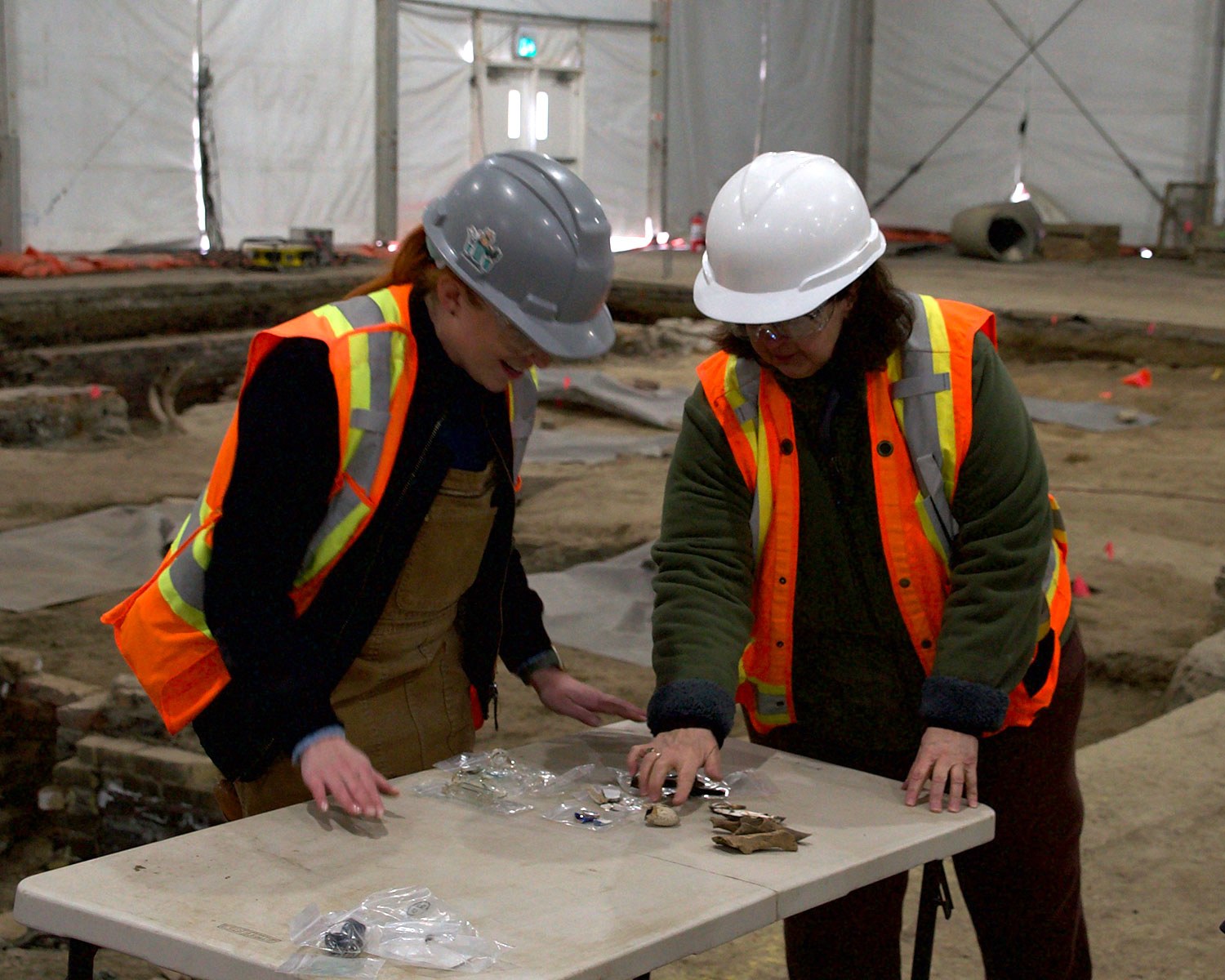
Artifacts and structures together form the physical history of past and present societies. By examining it all, we can better understand where and how people from the past lived. Excavations can tell us many things that books and records simply cannot.
Visit Layer by layer — 4. What is archaeology?Layer by layer — 5. Learning from artifacts
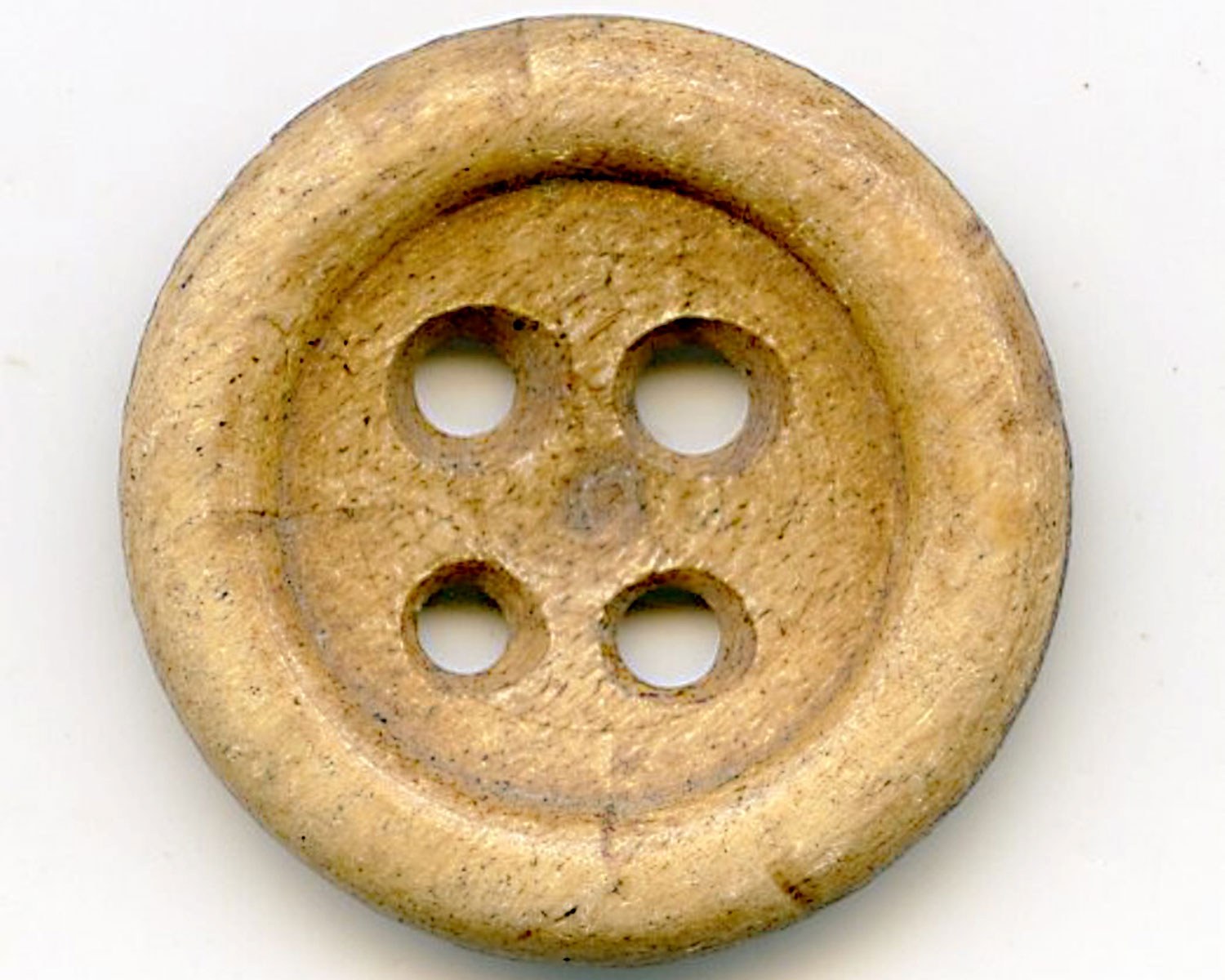
One of the most exciting parts of working on an excavation site is uncovering artifacts. Archaeologists rarely find objects intact. But even fragments of the past can be thrilling discoveries. The smallest sherds can tell us a lot about how people used the site and give us a glimpse into their lives.
Visit Layer by layer — 5. Learning from artifactsLayer by layer — 6. The legacy of First Parliament
The site of First Parliament played an important role in the history of Toronto and the province of Ontario. Fort York and First Parliament bookend the early city. These were the first two centres of colonial activity: military and administrative. It was a key part of the settlement’s foundation, establishing York as a political centre.
Visit Layer by layer — 6. The legacy of First Parliament