


Layer by layer — 4. What is archaeology?
Archaeology plays a major role in how we learn about our history. Archaeologists excavate areas of past human activity, called sites. These sites might be from within the last century, but they could also date to hundreds or even thousands of years ago. Objects left behind at these sites are called artifacts. Archaeologists also sometimes find the ruins and foundations of old buildings at sites. Artifacts and structures together form the physical history of past and present societies. This is called cultural heritage. By examining it all, we can better understand where and how people from the past lived. Excavations can tell us many things that books and records simply cannot — such as the dimensions of buildings and fortifications, and people's daily activities.
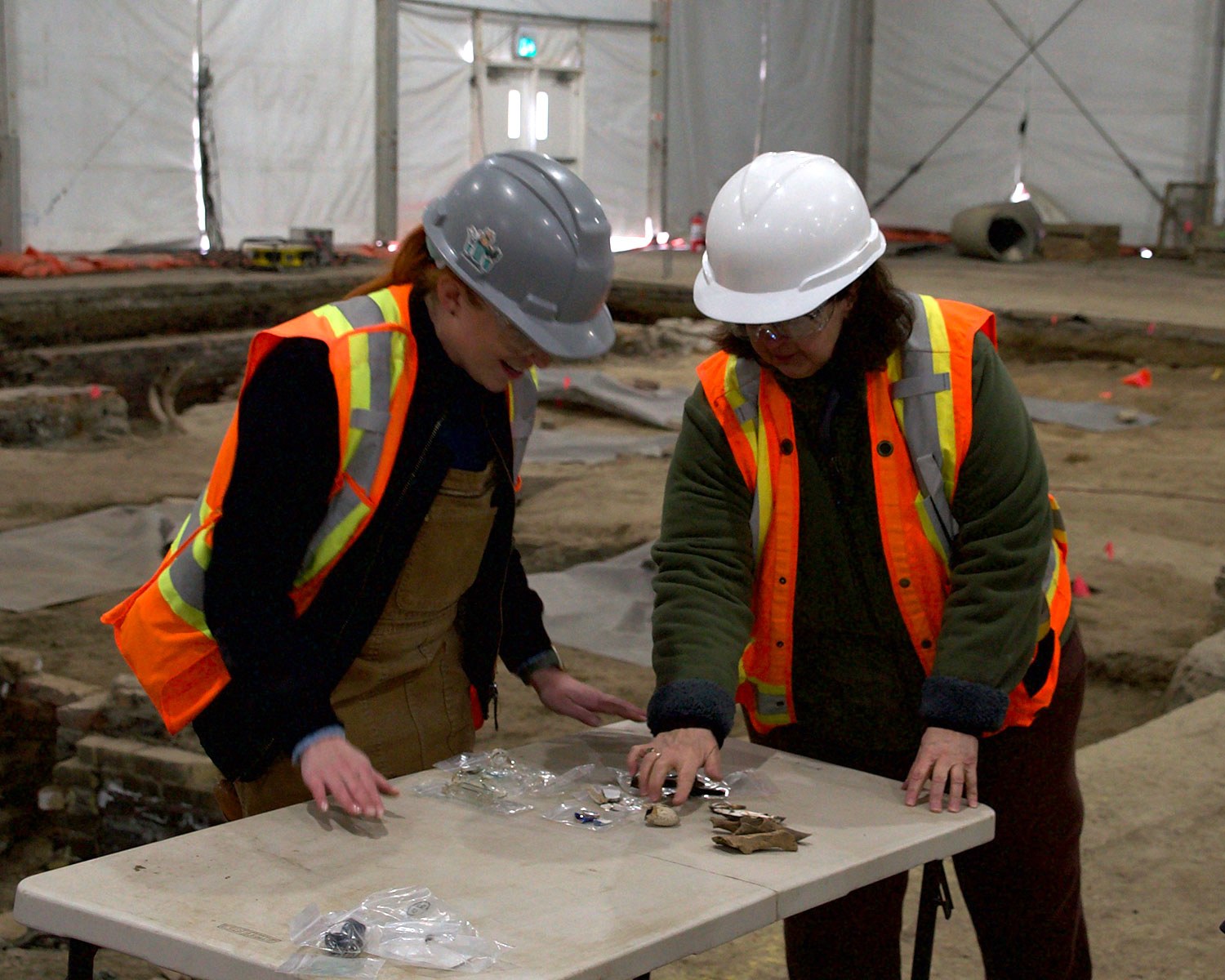
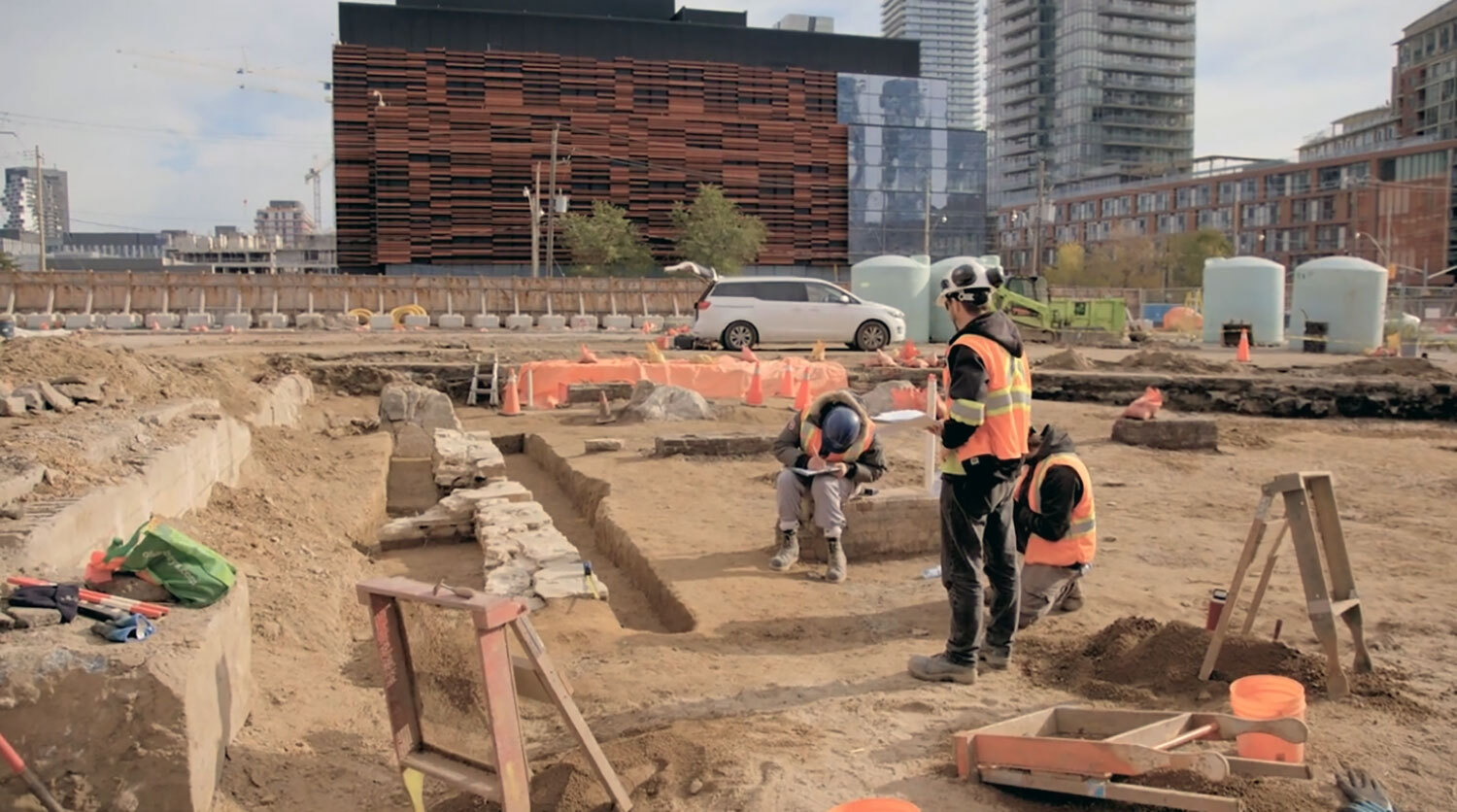
Video: University of Toronto students Kara Annett and Laura Ludlow
discuss what first surprised them about archaeology
The key to archaeology is the process of deposition. Deposition is the way objects go from belonging to people to being in the ground. An object might be thrown away or discarded. A building may be abandoned or demolished. Something could be lost and forgotten or destroyed and never recovered. Slowly, over time, soil builds up above deposited things, burying them underground. This may happen naturally, but often humans cover the past to build above it.
Archaeology is an important tool for learning about history and heritage. In Ontario, archaeology must happen before any land development. This ensures that any buried heritage is found and studied. Because of the importance of cultural heritage, archaeologists have a responsibility to be diligent and respectful with their work.
This section explores how archaeologists do what they do and how we can use what they find to understand the past better.
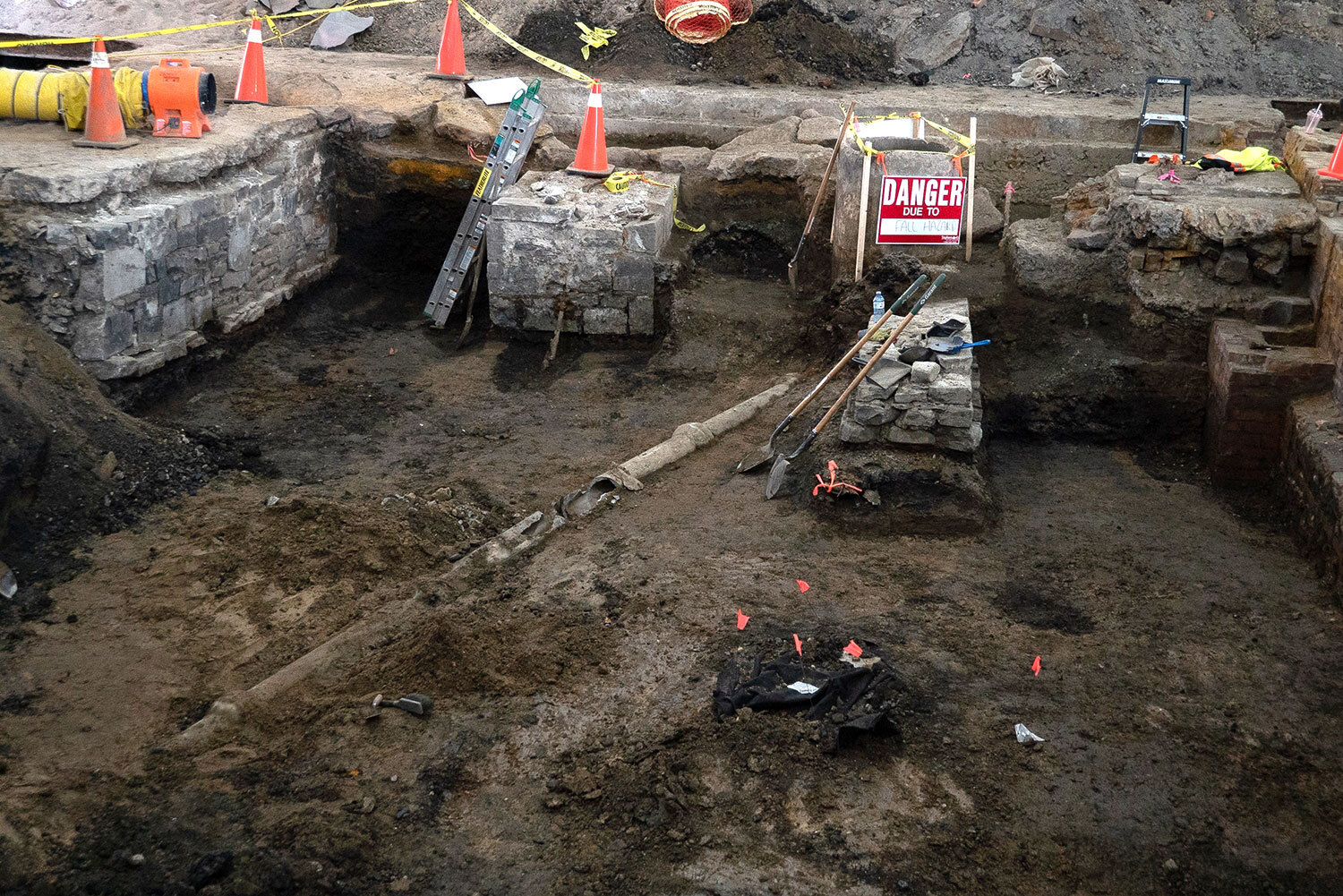
Excavations underway in 2023 with an uncovered pipe from the Consumers’ Gas era
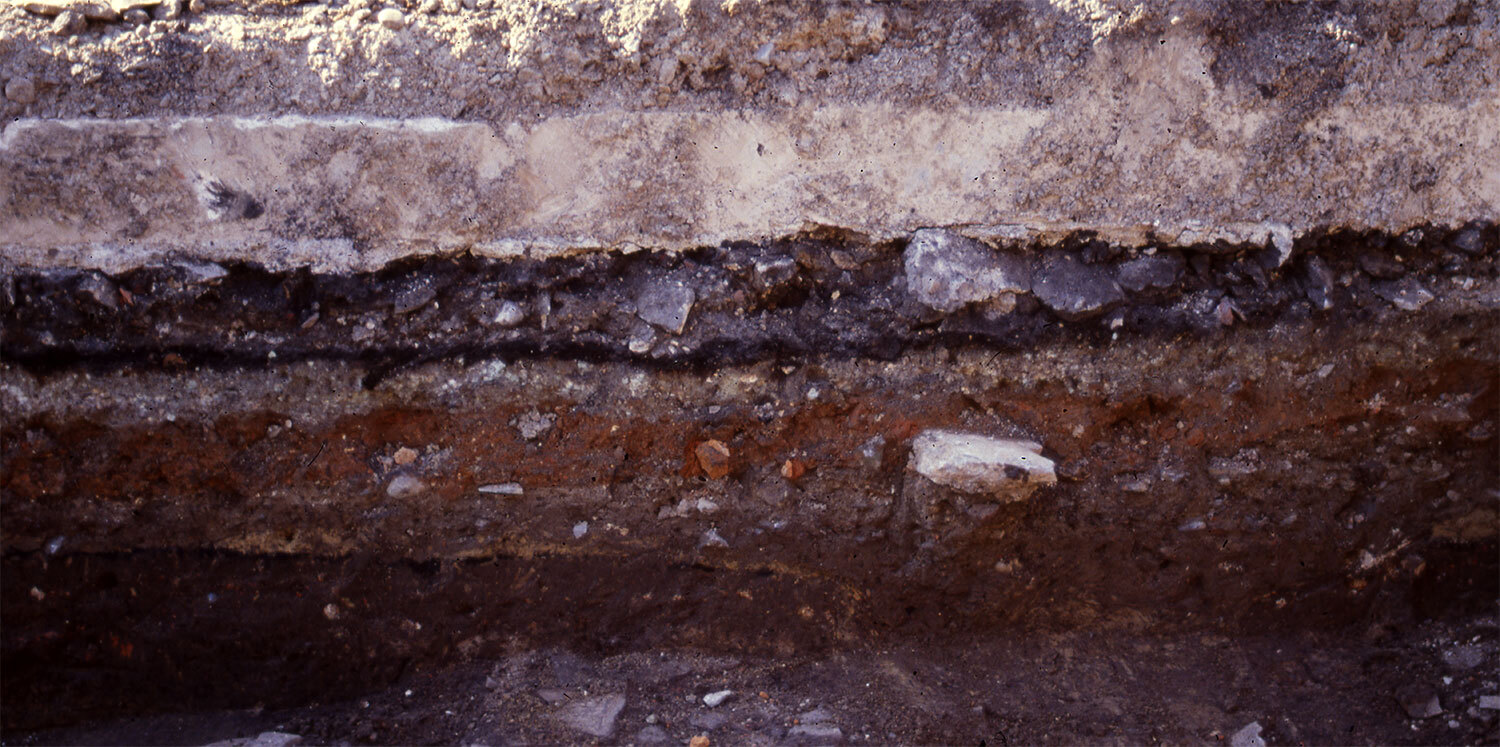
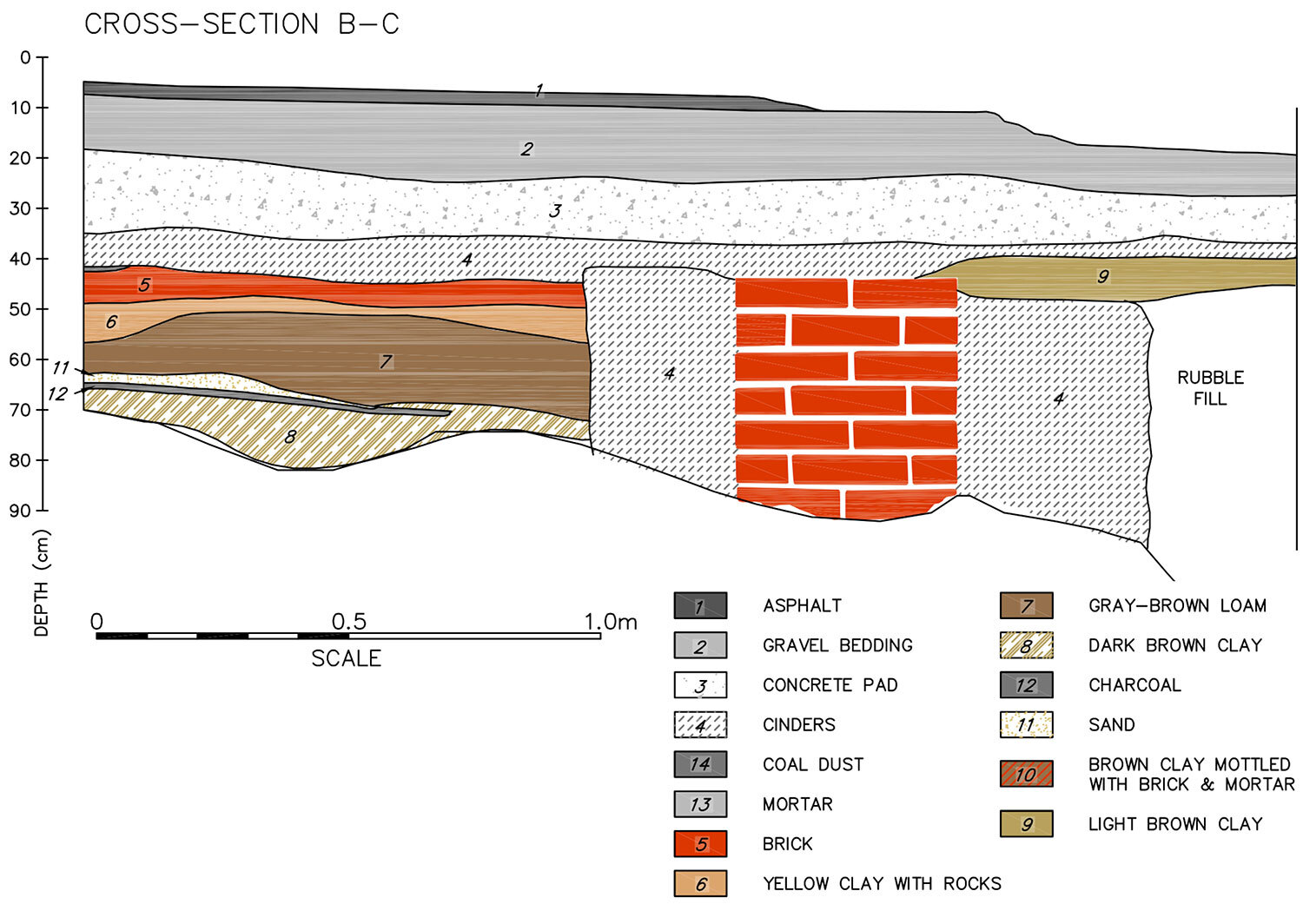
In this wall profile from 2000, notice the different colour and texture of each layer. The layers at the top are the most recent and the layer at the bottom is from before the First Parliament buildings were constructed.
Layers and stratigraphy
Stratigraphy is a scientific technique that allows archaeologists to “read” the soil in layers and understand the formation of deposits that may contain evidence of the past. Humans build, deposit, destroy, modify and rebuild over and over, creating layers in the earth. The deeper underground you go, the older the soil — and the objects that archaeologists may find in it. Each layer, and the artifacts found in it, represents a period of history. You can think of it like baking a layered cake. As you assemble the cake, you add more layers. A layer on top cannot be added before the layer underneath. When the cake is done, and you cut a slice, you can see all the layers stacked up upon one another. When archaeologists dig down, they can clearly see the layers of dirt in the wall of the hole. This is called a soil profile.
The stratigraphy of archaeology sites, however, is rarely as clear as the layers of a cake. Human activity, such as digging the foundation of a building, can disturb the neat stratigraphy underneath. For this reason, it is important for archaeologists to organize the layers they uncover by chronology. This is called sequencing. It helps archaeologists understand the order of activity on the site. When humans have been active at a site for decades or centuries, little might remain from earlier layers, and it can be difficult to understand the complicated sequence of layers.
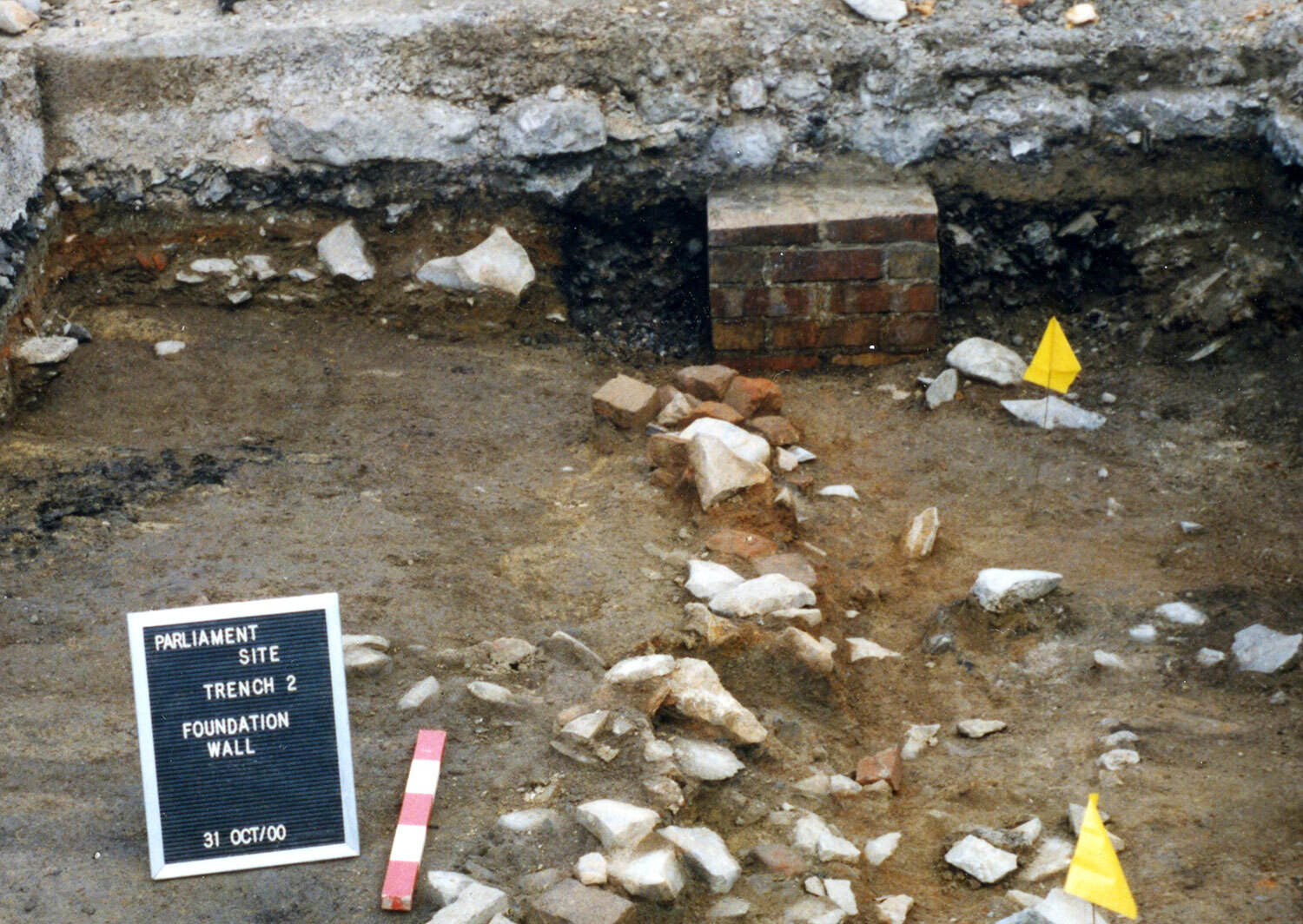
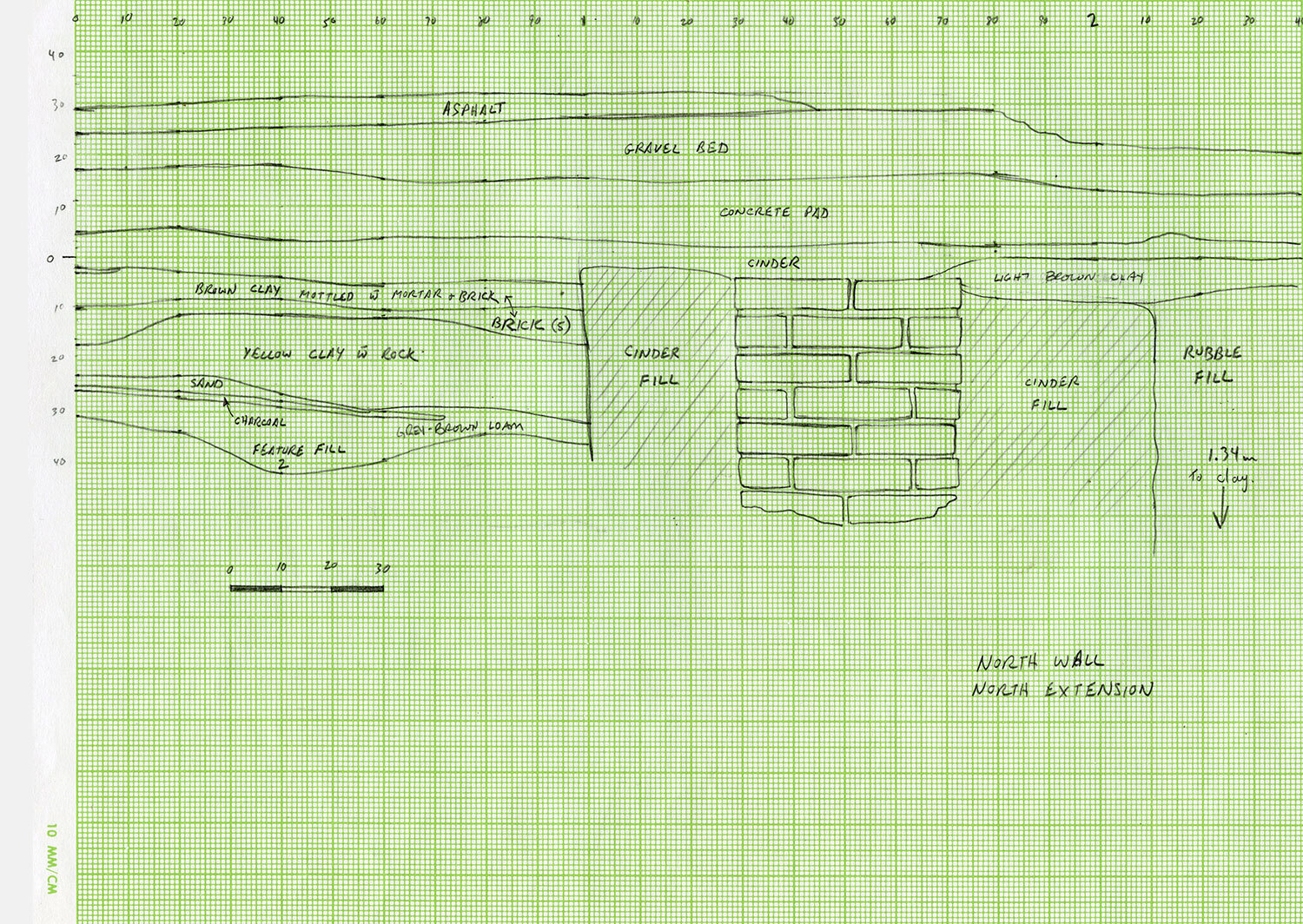
This is the case at the First Parliament site. There have been two centuries of urban construction above the ruins of the old parliament buildings. Archaeologists were worried that there would not be anything left. They chose spots to dig where newer activity was minimal and, to their surprise, found a sequence of layers going all the way back to the First Parliament era.
Gallery
Swipe
How artifacts are dated
A sequence provides archaeologists with an order, but not dates for the layers. Archaeologists use many other techniques to date a layer — including comparison, artifact analysis and scientific testing.
Even before archaeologists begin work on a site, they do research. They look at historical photographs, paintings, written descriptions and maps. If those sources have known dates, the archaeologists can match them to the excavated layers. Comparing the archaeological site with the historical record gives clues about dating. But historical records are not always accurate and can lack details. The historical record also rarely represents all histories. Entire groups of people are often excluded. Archaeologists need more than the historical record to entirely understand a site.
Artifacts are another common way that archaeologists date layers. They do this based on any “diagnostic artifacts” found in it — artifacts that have distinct and datable features. These features might link the artifact to a specific time period or culture. Certain objects, like coins, have their manufacture date on them. Archaeologists found no coins at the First Parliament site. But they did unearth a copper blacksmith’s token. This is a counterfeit coin that imitates a British coin minted between 1770 and 1775.
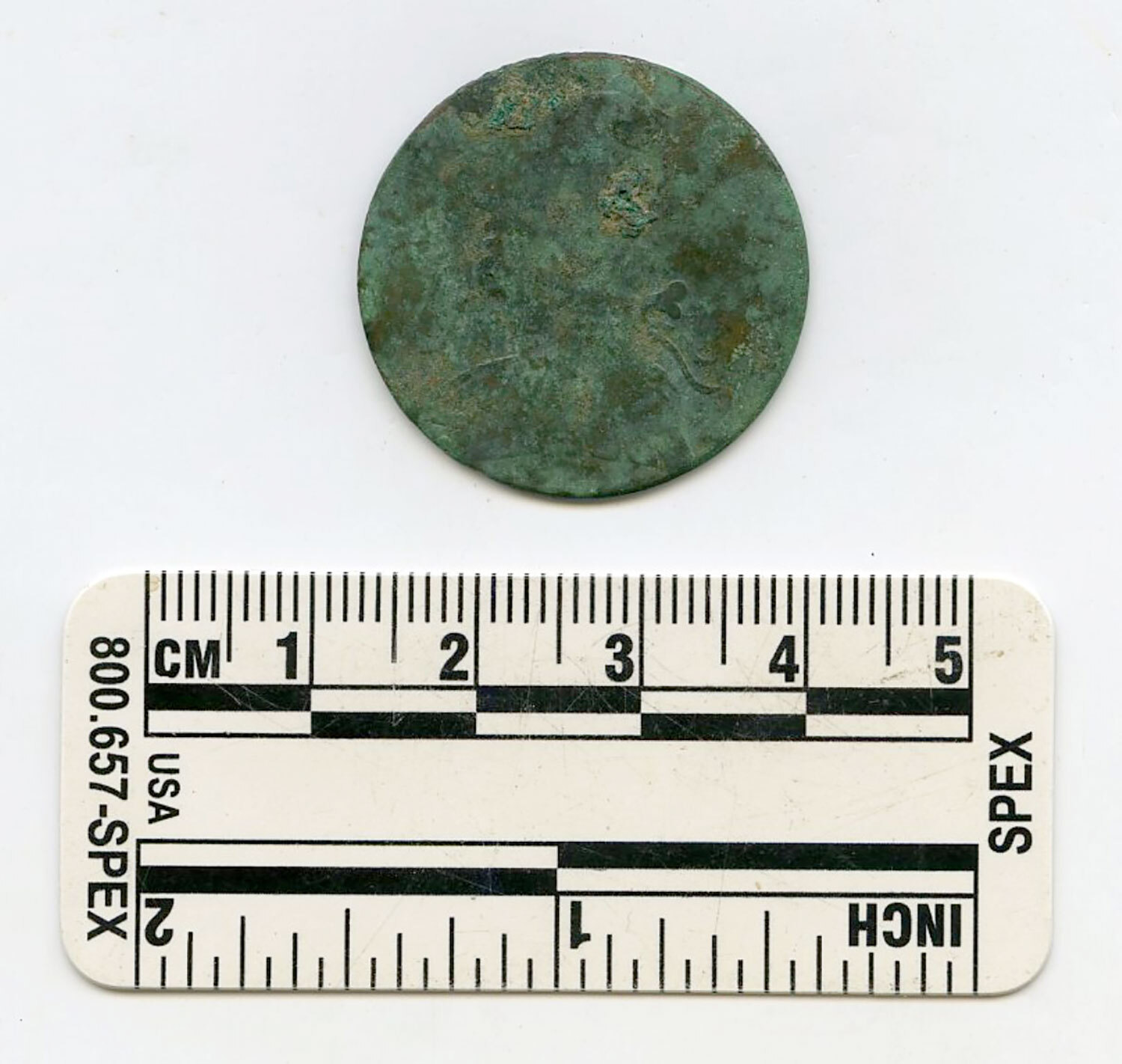
The face side of a blacksmith token, discovered in 2000
Ceramics are common diagnostic artifacts. Frequent changes in manufacture technique and design elements help with identifying and dating them. General ceramic types and specific ceramic patterns have known manufacturing dates. At First Parliament, archaeologists found early British ceramics. One example were Creamware plates of the Royal pattern, which are known to have been common between 1780 and 1815. They also found clay tobacco pipes. These had a specific design made between 1825 and 1840.
But even diagnostic artifacts are not enough to confidently date a layer alone. They are only evidence of the earliest possible dates for a layer. Objects can remain in someone’s possession for a long time before deposition.
Depending on what archaeologists find, more specialized methods can assist with dating. At the First Parliament site, preserved under the charred wooden joist stains was a sterile, natural subsoil. Archaeologists decided to conduct botanical analysis on this soil. It contained seeds and pollen samples from before construction at the site by the British. They compared the amounts of invasive colonizing species versus indigenous species. What they found was plant material matching the local environment in the late 1700s. Any building on top of this subsoil must have come later.
By understanding stratigraphy, archaeologists can figure out which layers came earlier or later. Archaeologists can roughly date a middle layer if they know the dates of layers above and below. This is called relative dating. The more that pieces of evidence line up, the more confident archaeologists are in their dates.
Archaeological tools and processes
Archaeological excavations are methodical. In Ontario, they have four stages. First, they do background research on the site’s history and geography. Then they survey the site to see if there is any archaeological material. They might do a field-walk across the site looking for exposed artifacts or dig a series of small holes called test pits. Sometimes they use more advanced tools like ground-penetrating radar to scan underground without having to dig. If they find important archaeological remains, then they move on to excavation.
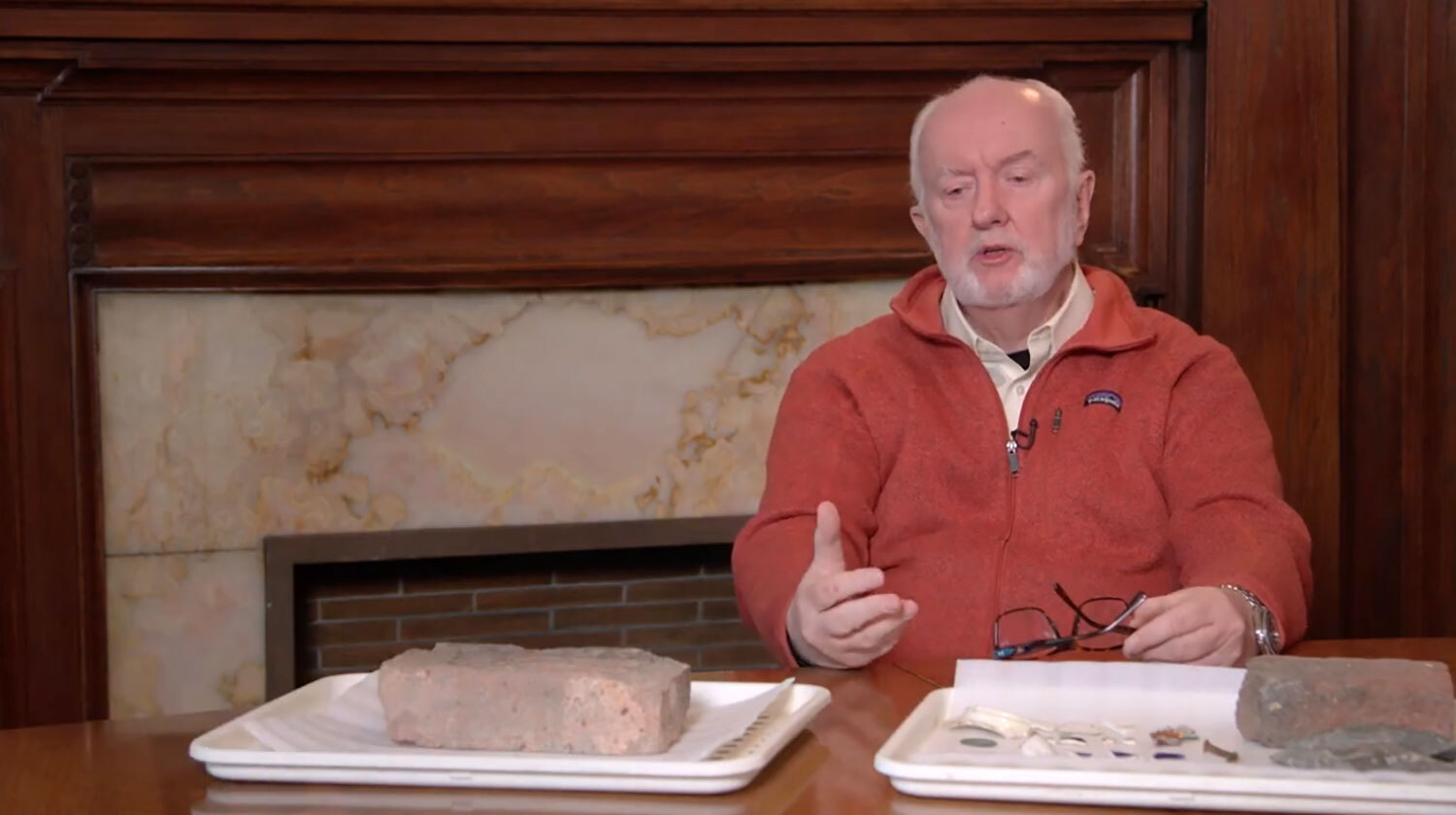
Video: Dr. Ron Williamson discusses how archaeology works in Ontario
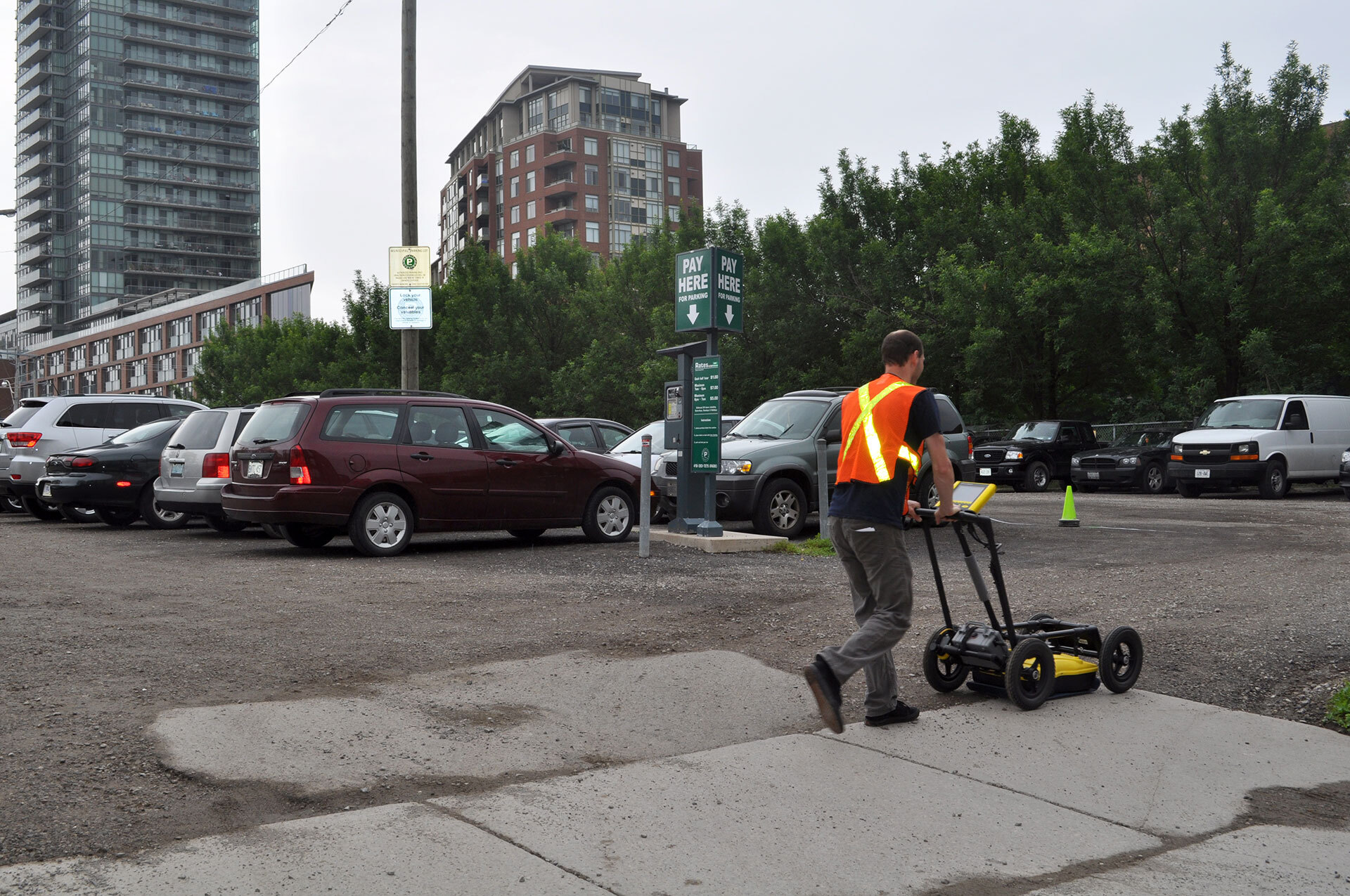
The third stage is limited excavation. This focuses only on areas of interest to get a better picture of the limits of the site in terms of size and time period. If they find not only artifacts but features (for example, building foundations, pits, etc.), they move on to the last stage. In this final stage, archaeologists either fully excavate the site or conserve it. Conservation aims to protect archaeological material within the site in situ. But if this is not possible, archaeologists dig and document the entire site.
At First Parliament, the first three stages were done between 1989 and 2011. The final fourth stage of site work began in 2022 when it became no longer possible to conserve the site, and the entire block required archaeological investigation.
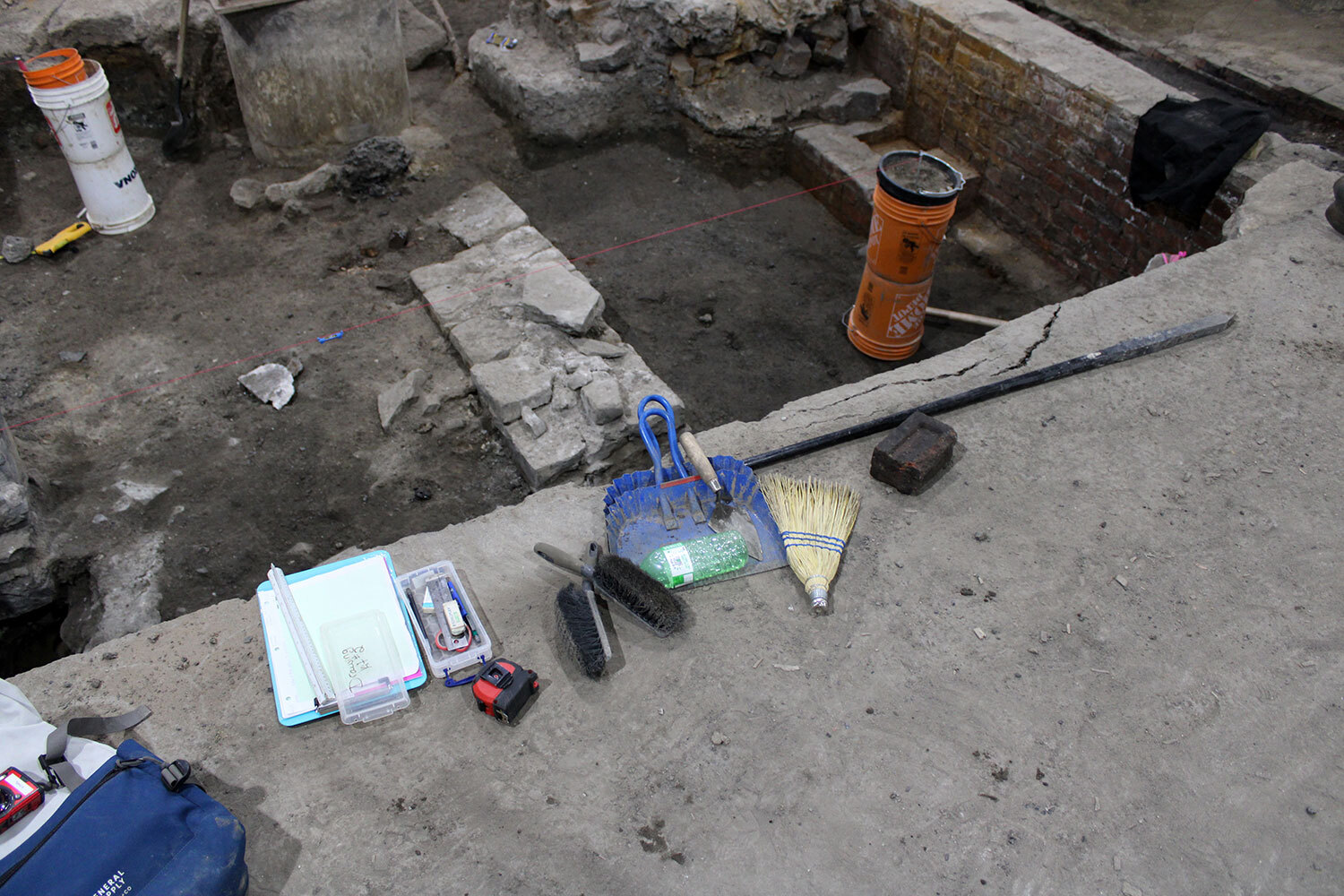
Some of the tools often used by archaeologists: brushes, a trowel, dustpans, measuring tape and a notebook
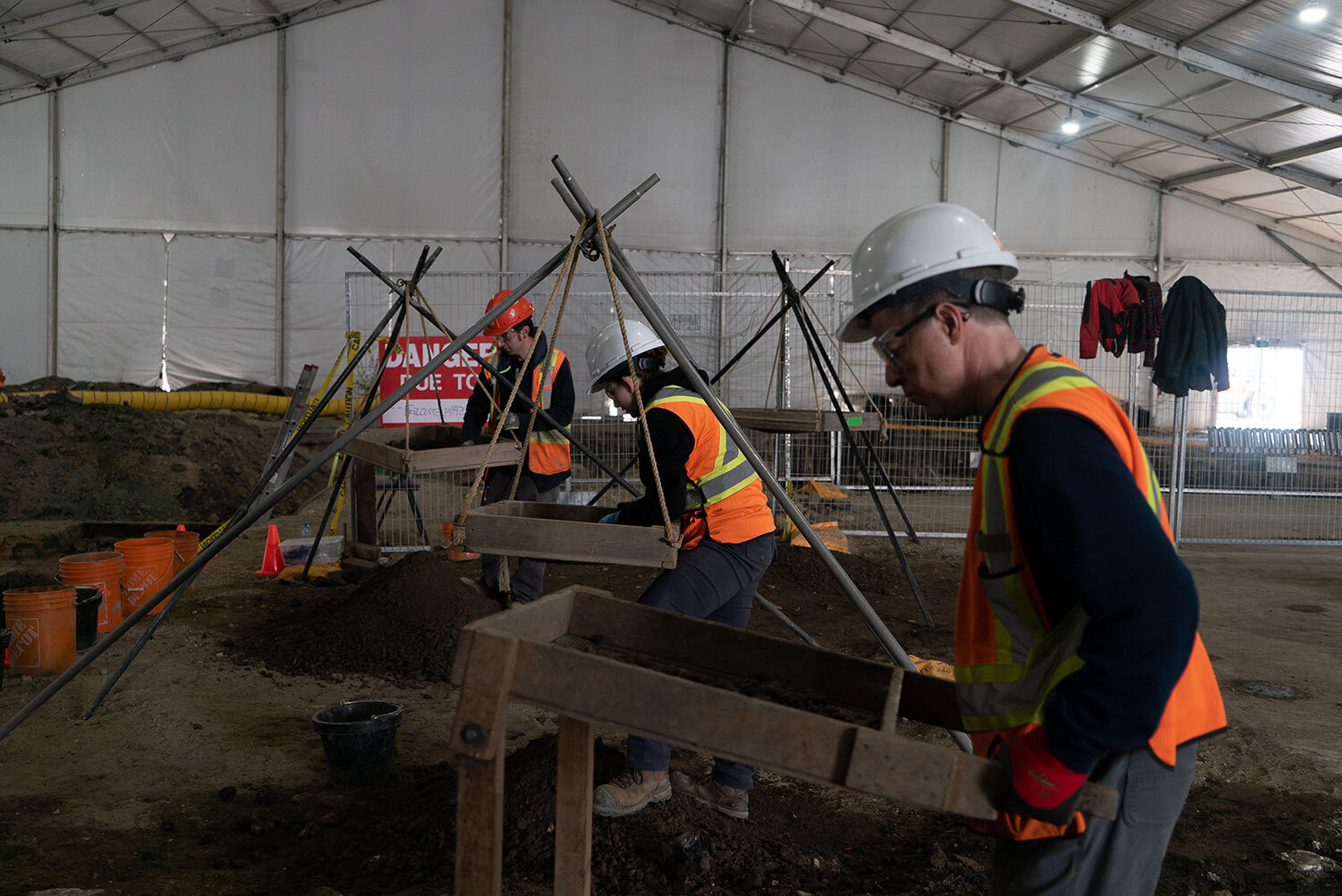
Archaeologists using screens to sift through soil for artifacts
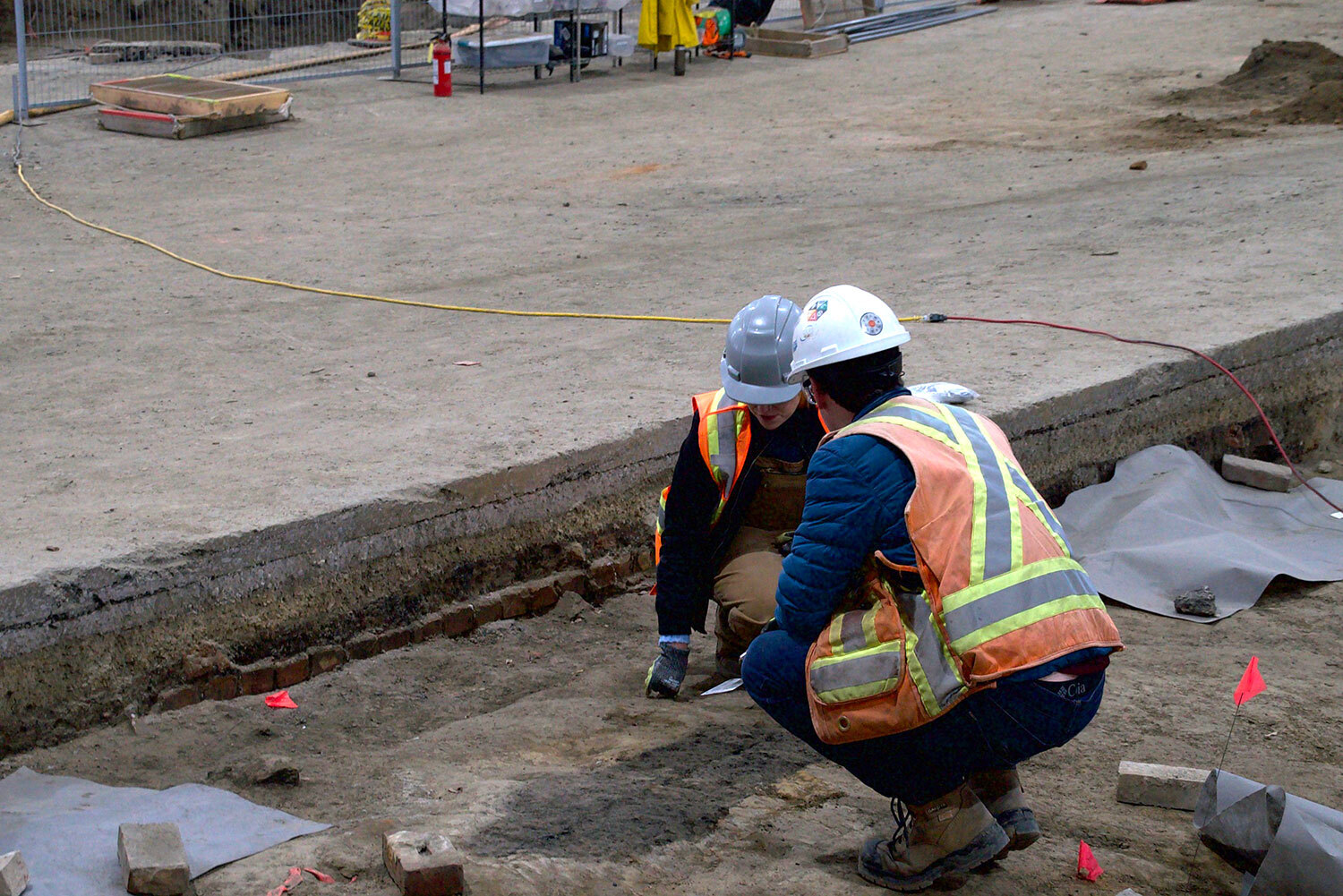
To stay organized, archaeologists work in trenches or square units. As they dig, they number each new layer. It's important for archaeologists to pay attention to changes in the soil’s type, texture and colour. Soil stains might be a sign of something that was once there but has since disappeared. These may be where a hole was once dug, where a post once stood, or floorboards were burnt, as is the case at First Parliament.
Shovels and trowels are the most common tools for careful and precise excavation. When archaeologists need to get through rocks or pavement, they use mechanical excavators. Excavated soil is sifted through a metal mesh screen to find artifacts. Shaking the screen makes the dirt pass through the small holes, leaving the larger objects behind. Artifacts are then taken to the lab for cleaning and analysis. Archaeologists give each a unique number, which indicates the site and layer it came from.
Documentation is extremely important in archaeology. Archaeologists spend around 10 times as much time doing documentation as they do physical digging. An excavation completely changes a site forever. Once soil, artifacts and anything else is dug up, it can never be put back in exactly the same way. Archaeologists are not only responsible for the artifacts they dig up, but they must also document where things were found and the sequence of layers. The documentation is essential for people in the future to understand what was found. To help with this, archaeologists take photos, make field drawings and notes, and are required to write reports about the excavation that are submitted to the relevant ministry in compliance with their archaeological licence.
Indigenous archaeology
Today, collaboration with Indigenous communities is an important part of Ontario archaeology. Indigenous communities are involved in the archaeology of their ancestors and on their traditional territories. Indigenous peoples should have agency over interpreting and managing their own heritage. But it is important to acknowledge that this has not always been the case and Indigenous communities have historically not been consulted by archaeologists. Moving forward, archaeologists must be respectful of Indigenous land and cultural heritage.
Indigenous communities also contribute significantly to archaeology. Traditional knowledge is extremely valuable, especially when working with Indigenous material. There are often representatives from the Nations, called Field Liaison Representatives, on archaeological sites. They help maintain a strong relationship between the archaeologists and their community. At First Parliament, during the excavations in 2022-24, several First Nations were represented on the site.
Excavation challenges
Archaeology can be a challenging process. Using the proper tools and following proper procedure can help. Archaeological sites are unpredictable, and no excavation is without its surprises. The artifacts and features themselves can also be a challenge. Certain objects are so large or delicate that they are difficult to work with. In other cases, excavated materials might be dangerous to archaeologists. This can make excavations at dense urban or industrial sites especially challenging.
The First Parliament site has been no exception to challenges. The activities during the Consumers’ Gas period and the automotive businesses contaminated the soil. Hazardous materials create difficult working conditions for the archaeologists. Extra time and caution must be taken to remove them carefully. While any accompanying delays can be challenging, safety must remain the number-one priority. Another challenge can be the environment. Bad weather can pose a safety concern, both for the archaeologists and for the site. Working in harsh conditions — whether rain, heat or snow — can be dangerous. Archaeologists often have no choice but to wait out extreme weather. Harsh conditions also wear at and erode the site. This can damage the stratigraphy and any objects in the ground. Even still, sometimes excavations continue year-round. This is especially tough in Canada. Snow, freezing temperatures and poor visibility make digging in winter both difficult and dangerous.
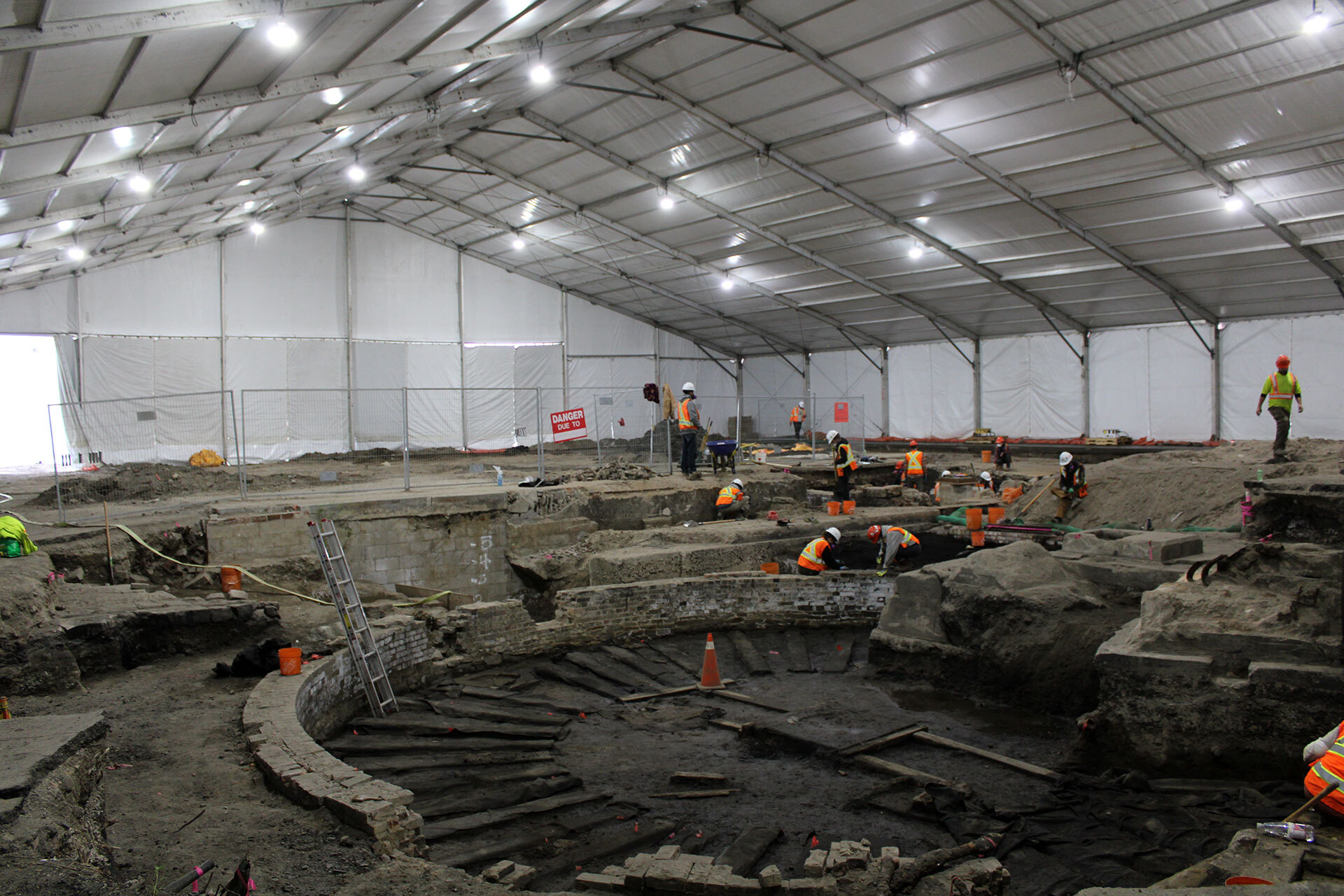
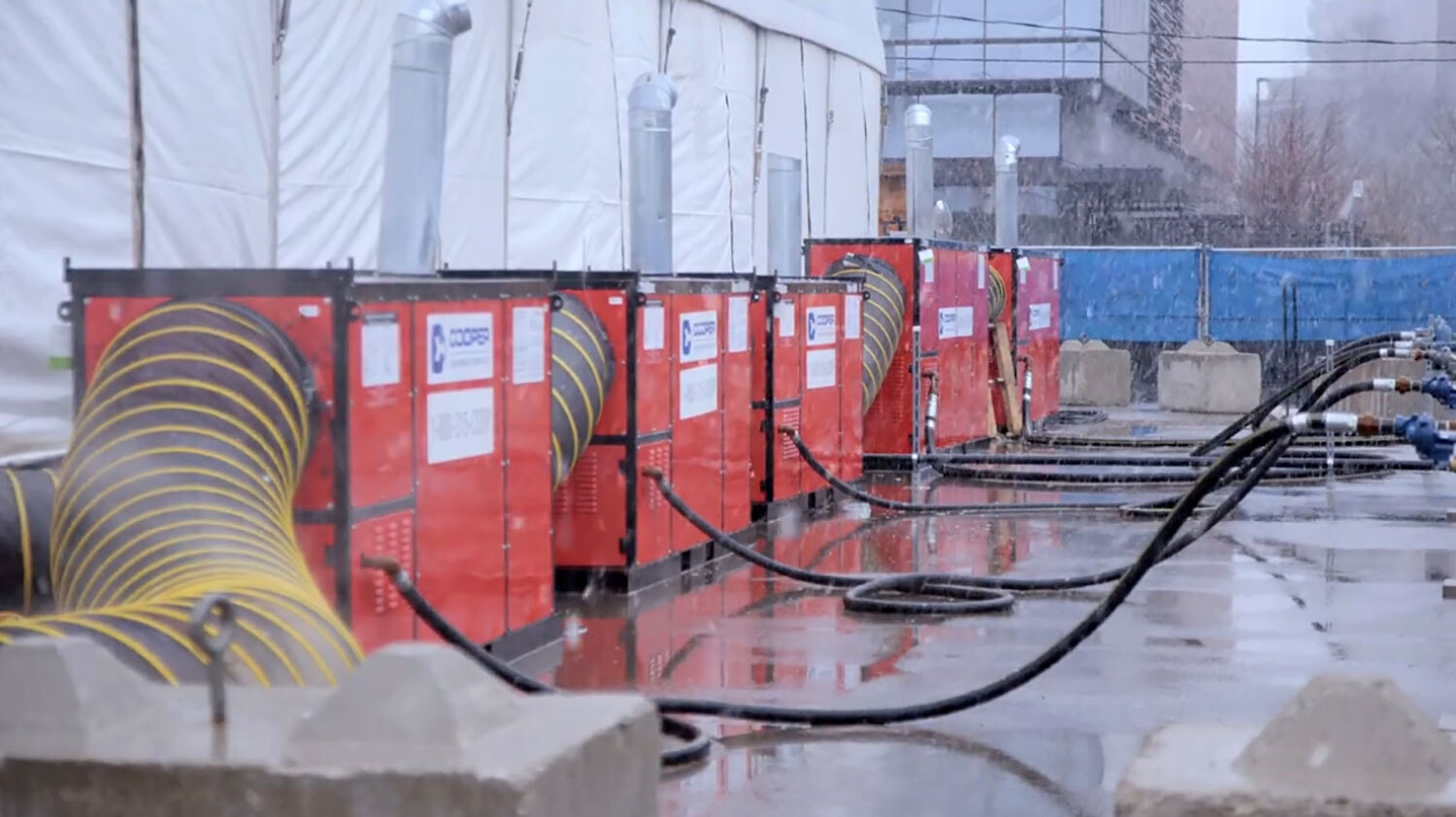
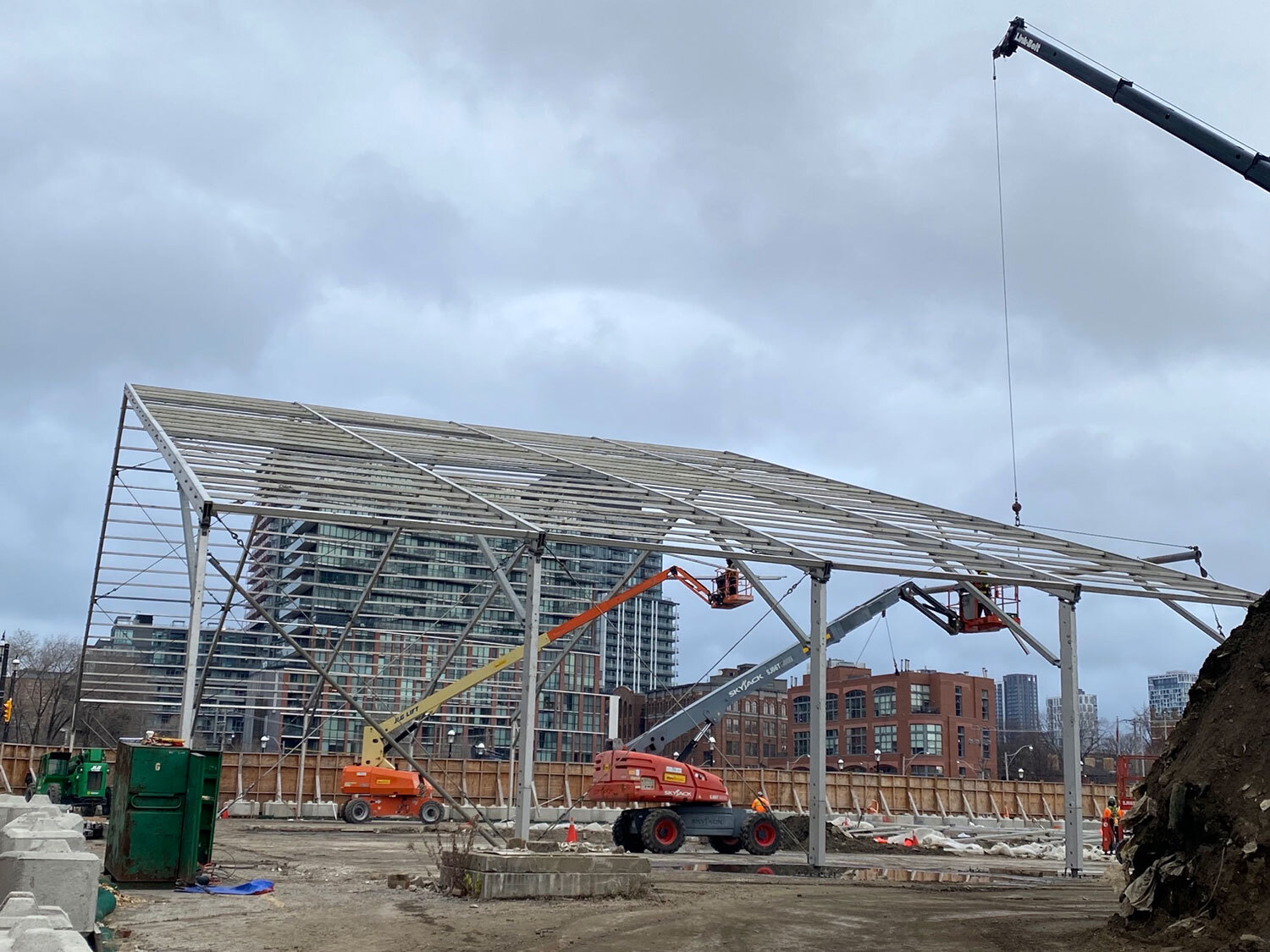
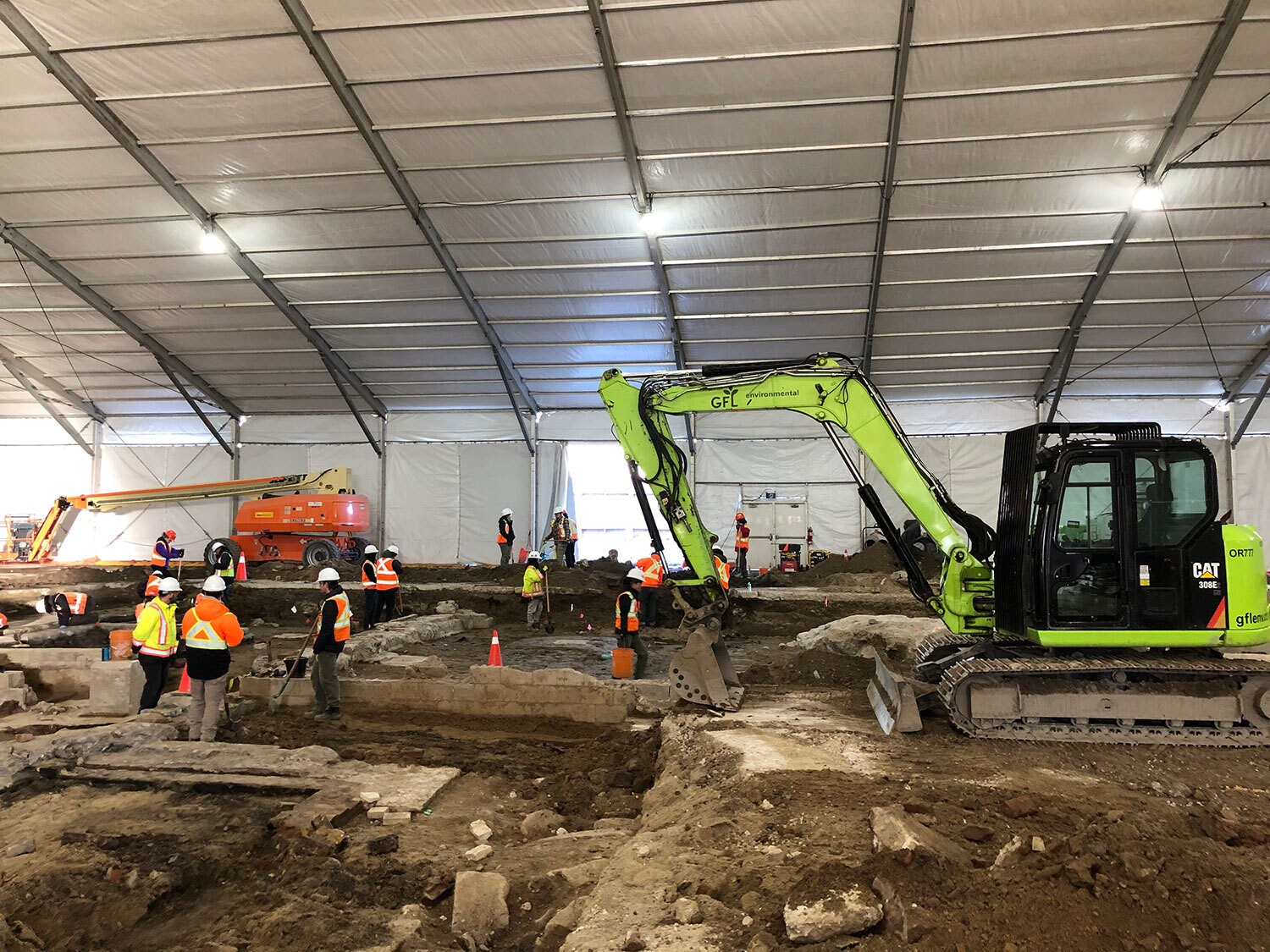
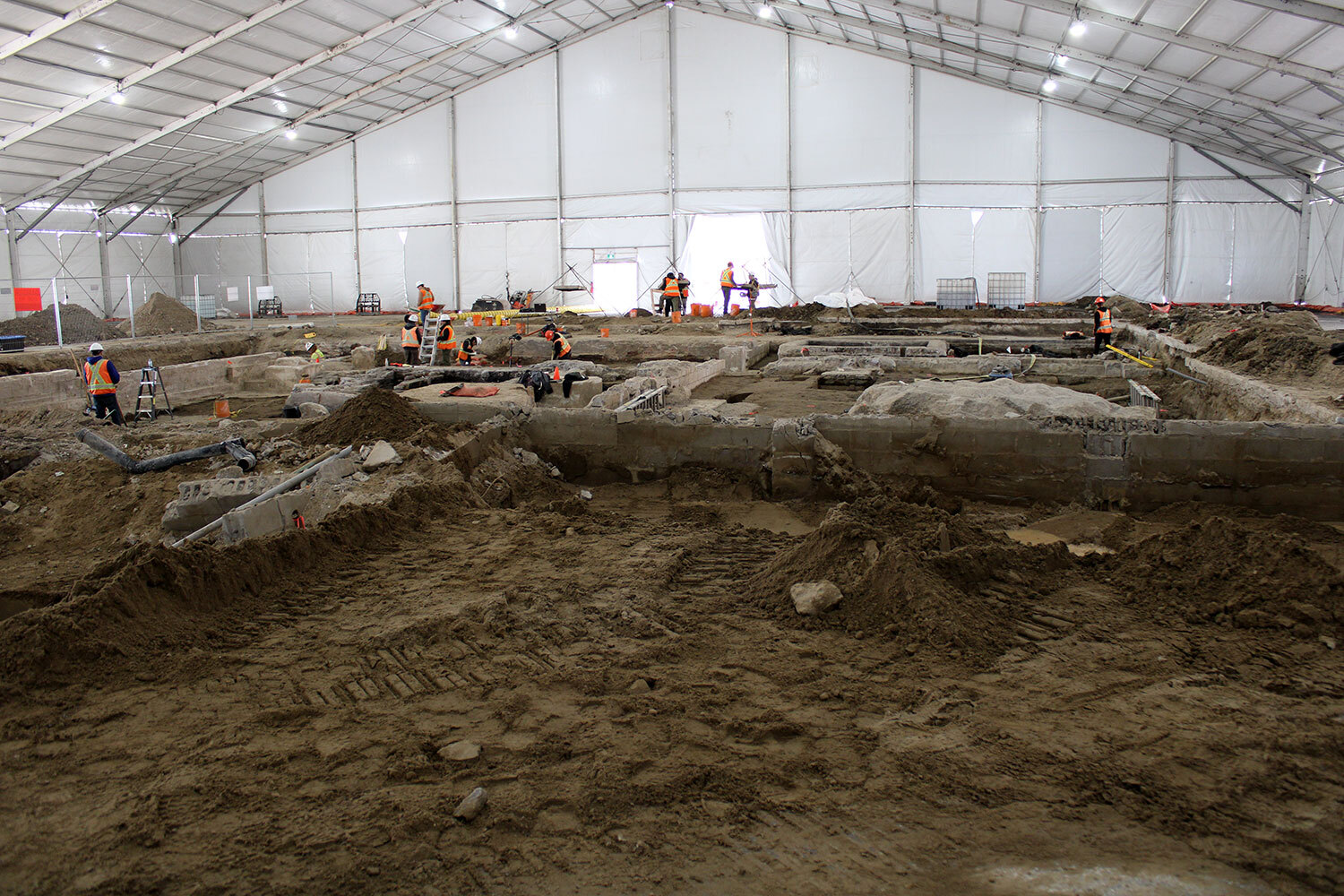
At First Parliament Site, excavations between 2022 and 2024 by Metrolinx continued through winter. The site had large tent structures put up. This allowed the archaeologists to work safely in the colder weather. The tents keep the snow and wind from impacting the archaeologists and the site. Inside, heaters keep the space warm to prevent the soil (and archaeologists) from freezing. Finally, large overhead lights kept the whole site bright.
Video: Watch archaeologist Patrick Hoskins discuss some of the challenges with digging in the winter and summer
Gallery
Swipe


You might also be interested in
Check out these other exhibits on the First Parliament Site
Layer by layer — 1. Introduction
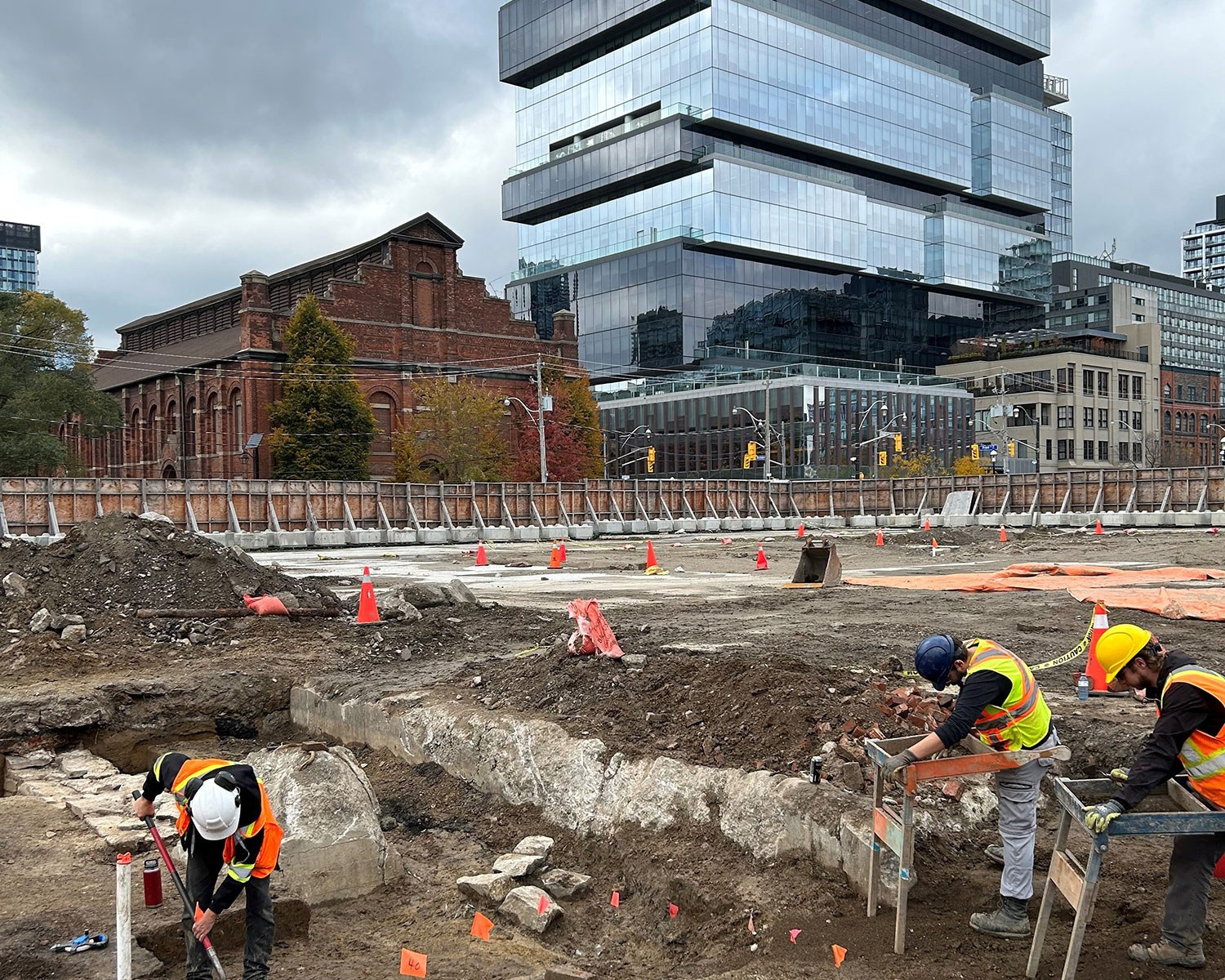
With centuries of buildup above, archaeologists were not hopeful that anything from the First Parliament buildings survived below. In 2000, they dug down, layer by layer, until they passed the remains of the jail. Then, to everyone’s surprise, they found what they were looking for: evidence of Ontario’s cradle of democracy.
Visit Layer by layer — 1. IntroductionLayer by layer — 2. First Parliament throughout the ages
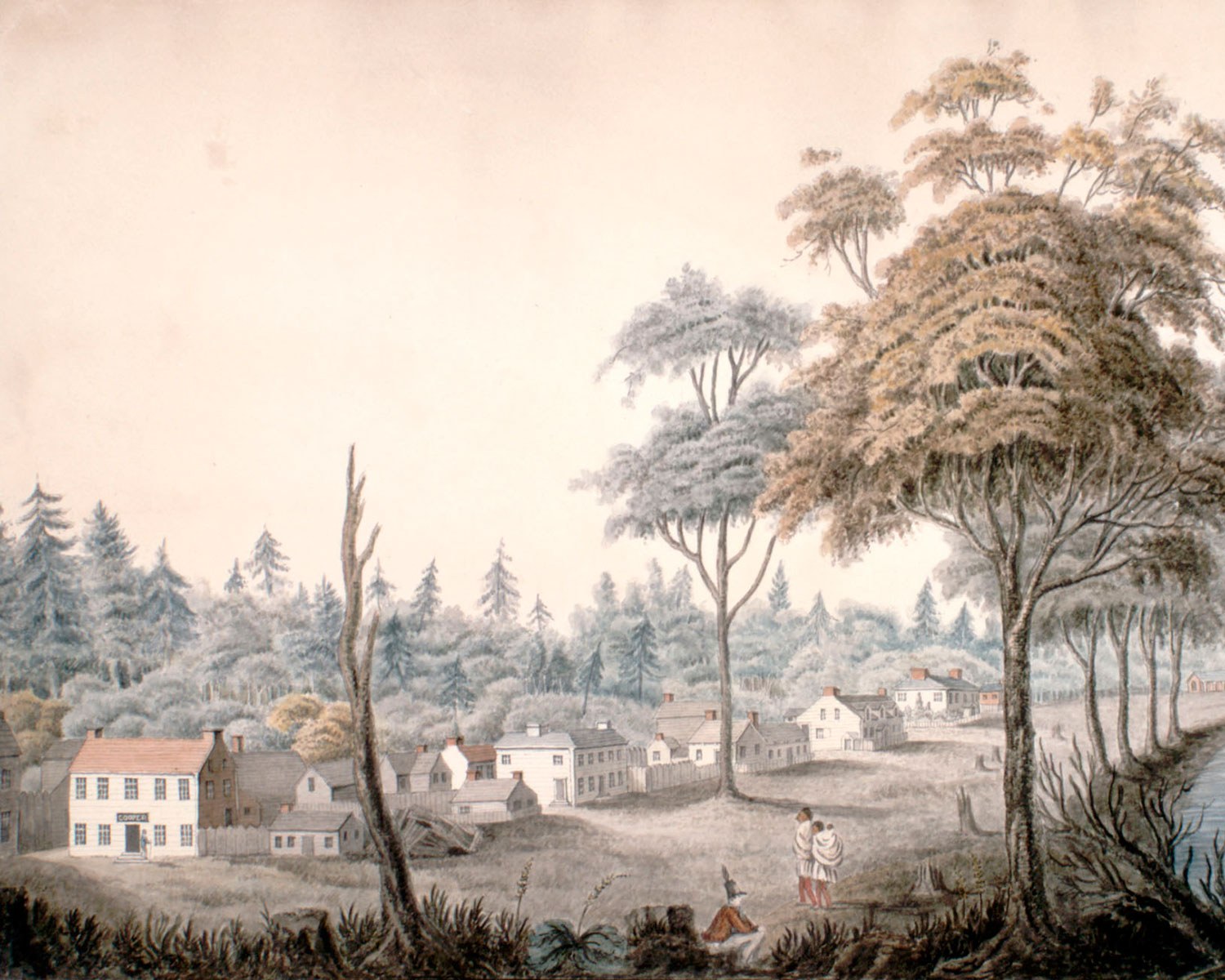
Indigenous people have lived on this land for over 13,000 years. Today, this land continues to be home to these communities and many other diverse Indigenous Peoples.
Visit Layer by layer — 2. First Parliament throughout the agesLayer by layer — 3. Layers of history
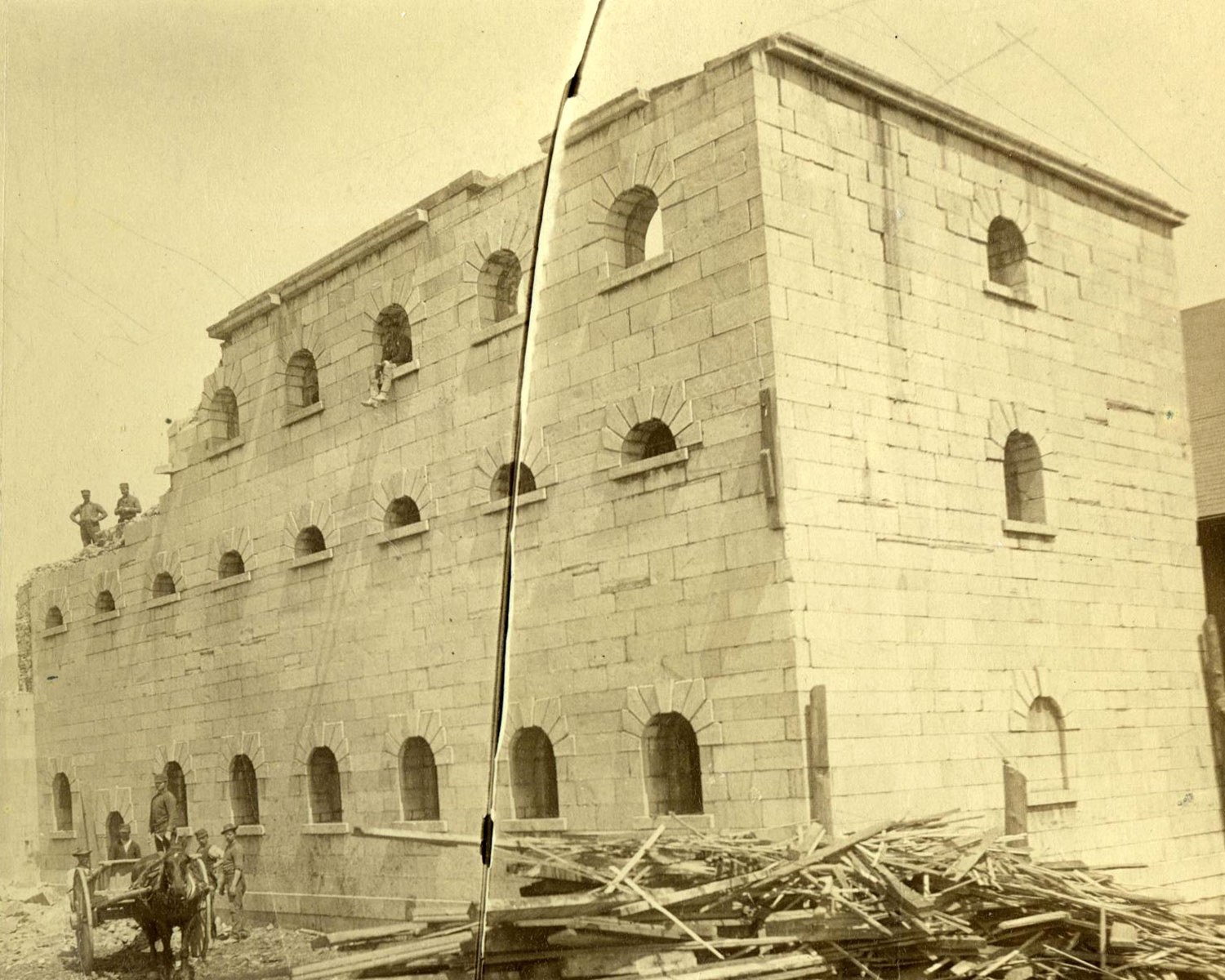
Archaeologists began their excavations at the First Parliament site in the fall of 2000. The project was focused on finding the remains of the First Parliament buildings. In the 200 years since the buildings were constructed, the city has changed dramatically. With centuries of urban buildup, the archaeologists were not sure there would be anything left.
Visit Layer by layer — 3. Layers of historyLayer by layer — 5. Learning from artifacts
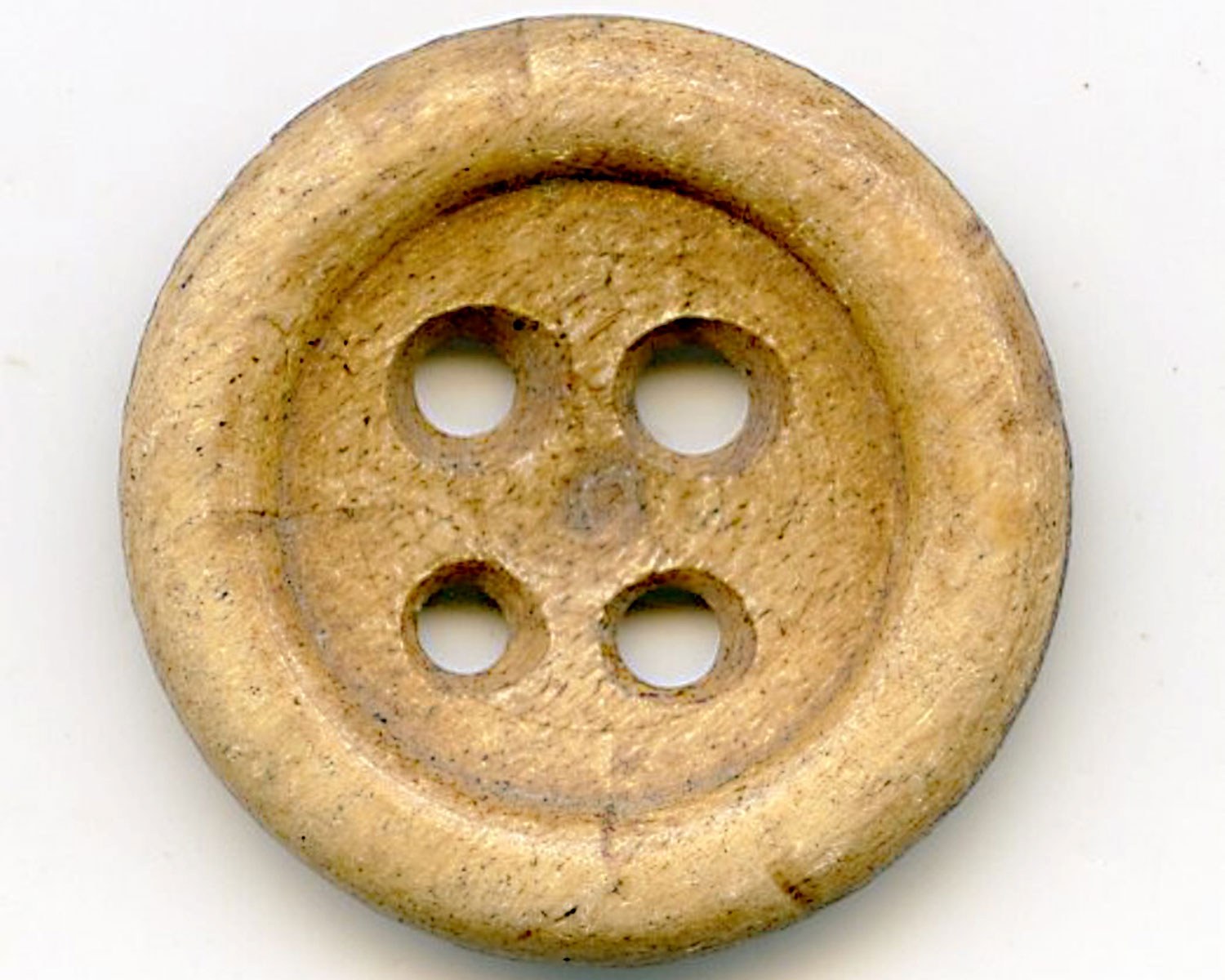
One of the most exciting parts of working on an excavation site is uncovering artifacts. Archaeologists rarely find objects intact. But even fragments of the past can be thrilling discoveries. The smallest sherds can tell us a lot about how people used the site and give us a glimpse into their lives.
Visit Layer by layer — 5. Learning from artifactsLayer by layer — 6. The legacy of First Parliament
The site of First Parliament played an important role in the history of Toronto and the province of Ontario. Fort York and First Parliament bookend the early city. These were the first two centres of colonial activity: military and administrative. It was a key part of the settlement’s foundation, establishing York as a political centre.
Visit Layer by layer — 6. The legacy of First Parliament