


Layer by layer — 5. Learning from artifacts
One of the most exciting parts of working on an excavation site is uncovering artifacts. Archaeologists rarely find objects intact. But even fragments of the past can be thrilling discoveries. The smallest sherds can tell us a lot about how people used the site and give us a glimpse into their lives. Artifacts also help archaeologists date the different layers in order to understand how and why the layers were created.
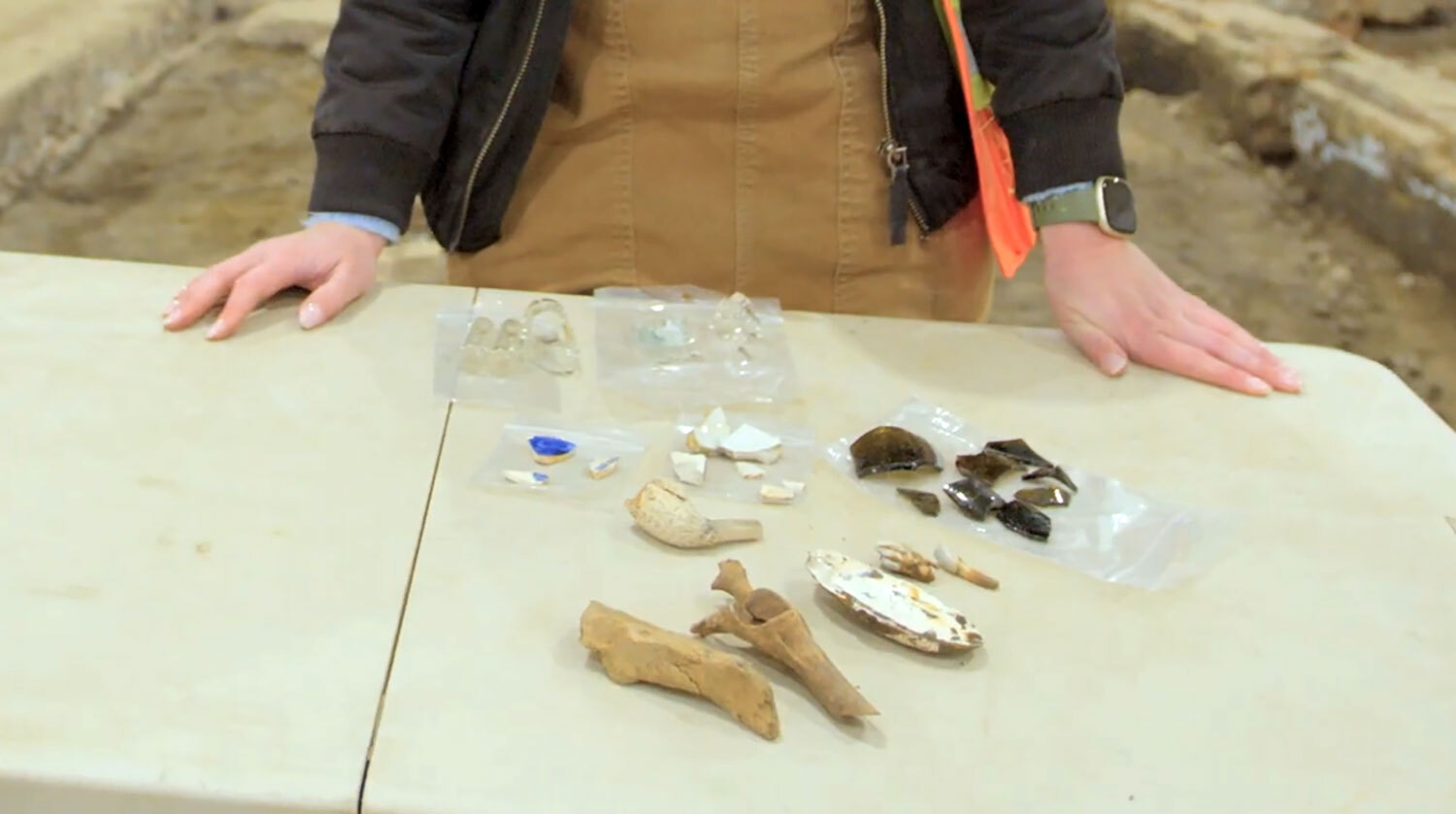
Video: Watch archaeologist Heather Kerr show some of the artifacts found in 2023 at First Parliament
A site with as much history as First Parliament has a wide variety of artifacts. Archaeologists have found everyday objects like plates, buttons and pipes. They have also found musket balls and building materials. These artifacts can tell us about the site. But more than that, they can tell us about the people who lived and worked there. The names of these countless individuals might not appear in historical records. But we can still learn about them from the things they left behind.
The objects found at a site can suggest what people were doing there. Patterned plates might display wealth and be used for entertaining guests. Bone fragments can tell us about people’s diets. Artifacts can also show how general historical trends impact a site. Coins can show how settlers introduce a new currency into the existing economy. Bricks with factory stamps show industry and trade.
In this section, we explore some of the artifacts uncovered at First Parliament. They paint a picture of what life was like during the parliamentary period and beyond.
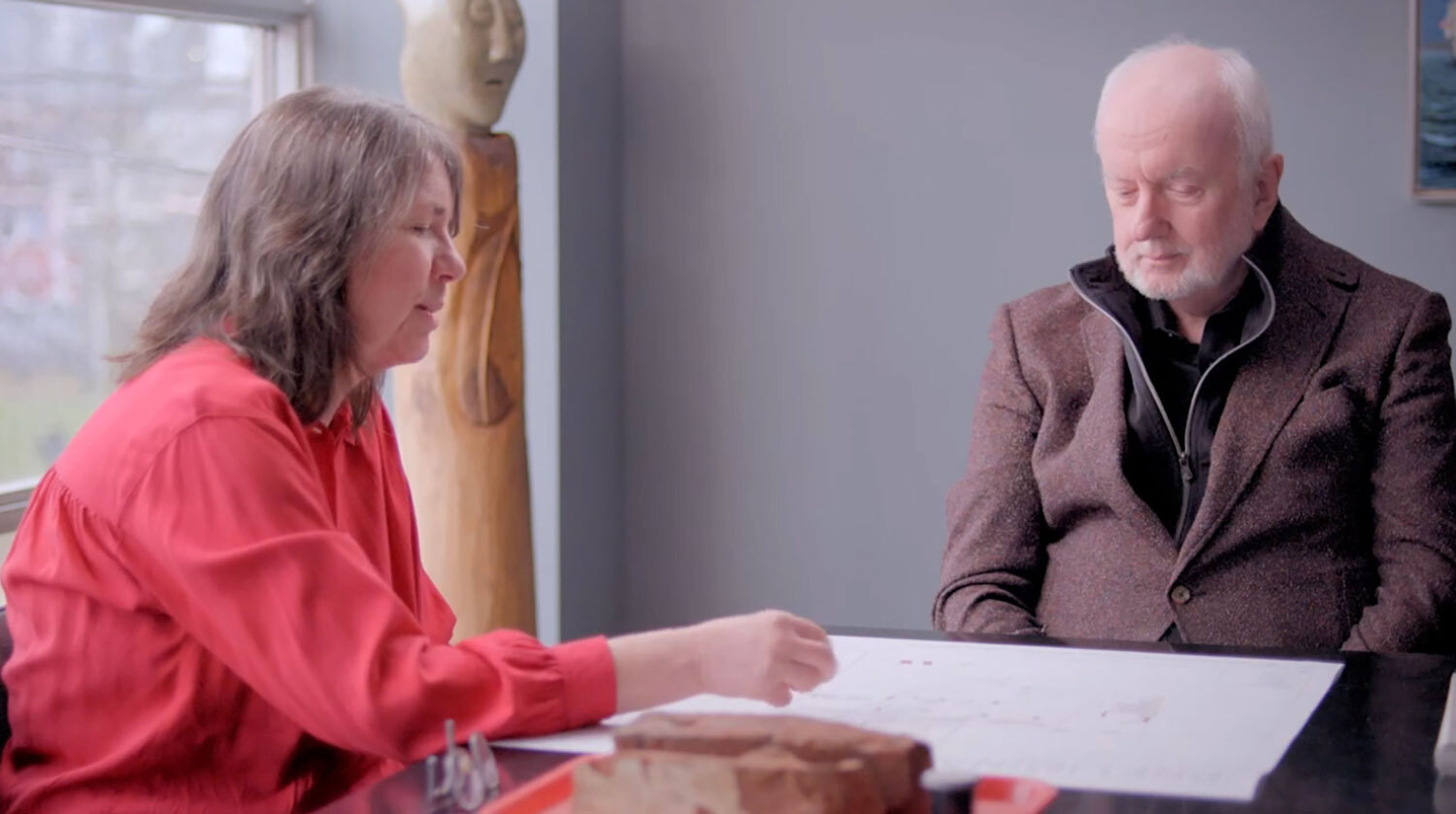
Video: Archaeologist Eva MacDonald shares a special artifact excavated at First Parliament in 2023 with Ron Williamson
Daily life throughout the eras
What we may see now as pieces of trash are windows into the everyday lives of people from the past. Most of what we find at archaeological sites are the discarded remains of life in the past. What people used to think of as trash reveals information about their everyday living. How did people repair their clothes? What did they eat for dinner? We can learn about diet, economic circumstances, trade, behaviour and other elements of daily life not always recorded in written history.
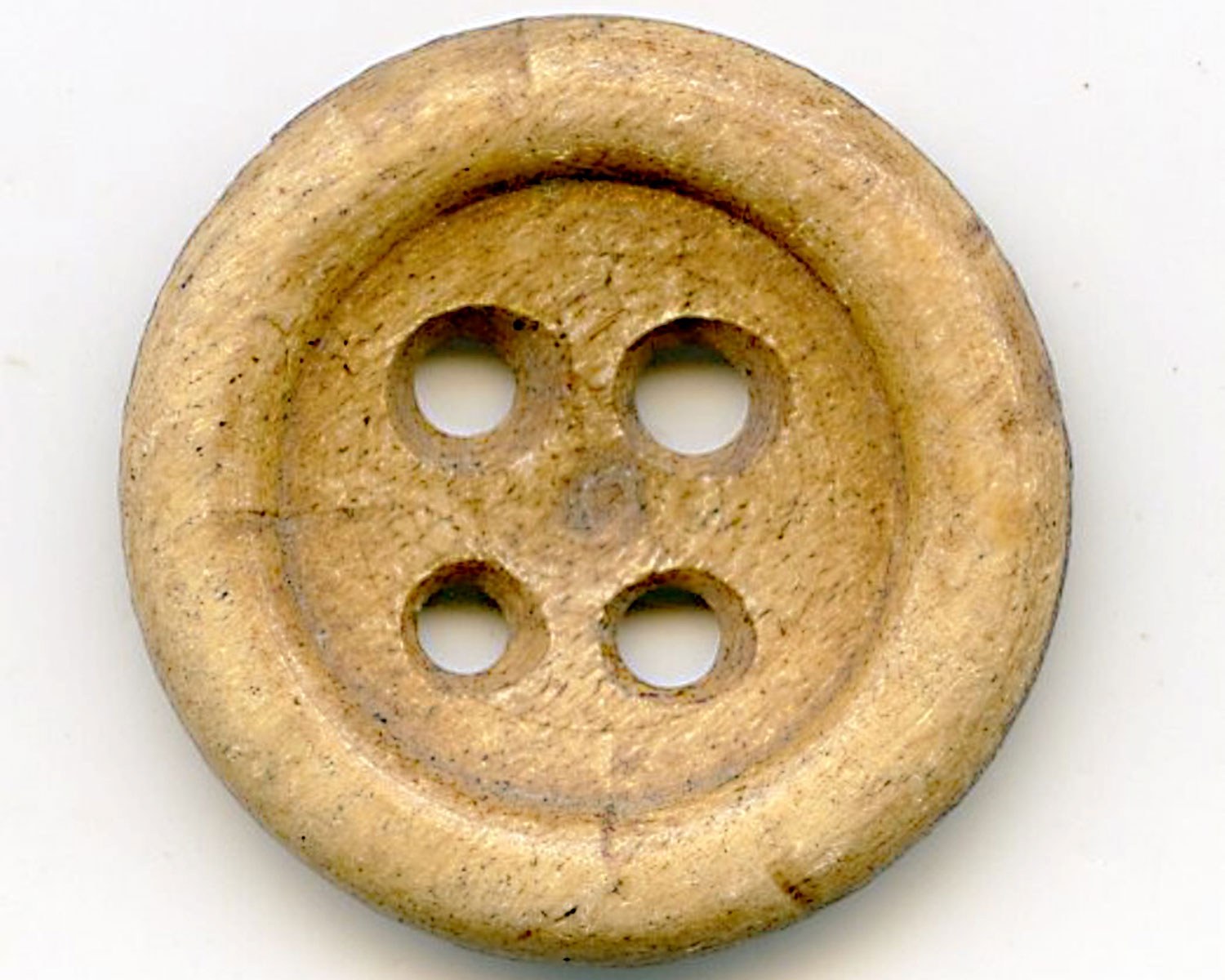
A button blank and some bone buttons were recovered from the jail period on the site. Inmates had limited resources and little access to the outside world. They may have used the bones from their food to carve replacement buttons. Making bone buttons was possibly also paid work that inmates could do from within the jail. This button blank would have been hand carved with a knife and punch tool or awl. Then it was shaped, polished and sewn.
The button blank, and the buttons from it, were from the ribs of an ox or large mammal. These animals fed the people inside the jail walls. Many of the bones have saw marks from the butcher and bite marks from rodents, reminding us of all the creatures who inhabited the jail. The bones suggest the jail reduced its costs by feeding inmates cheaper cuts of meat from aged animals, or soup made from boiling bones.
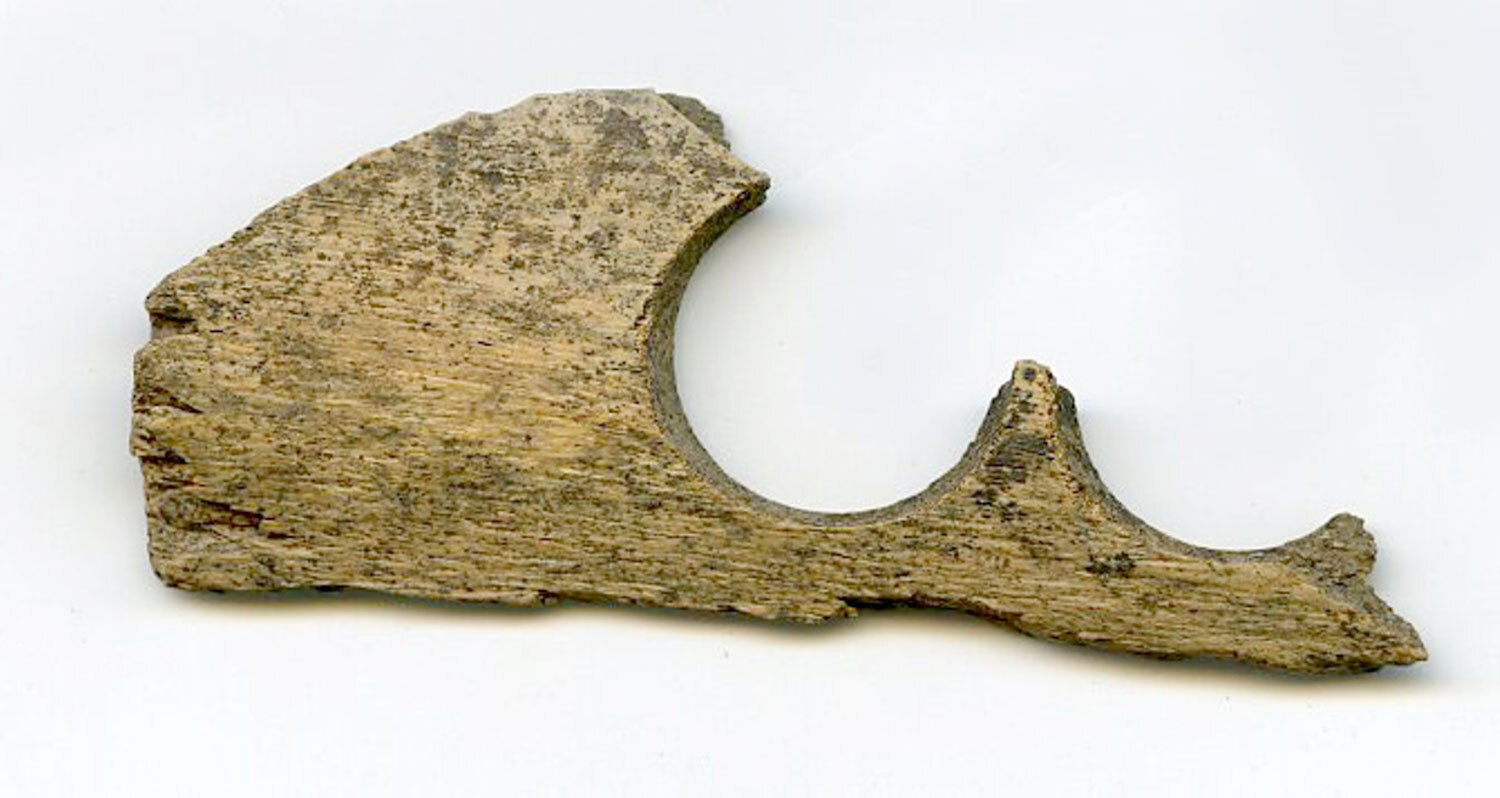
Broken fragment of a bone button blank, from which two circular disks were cut out to create buttons
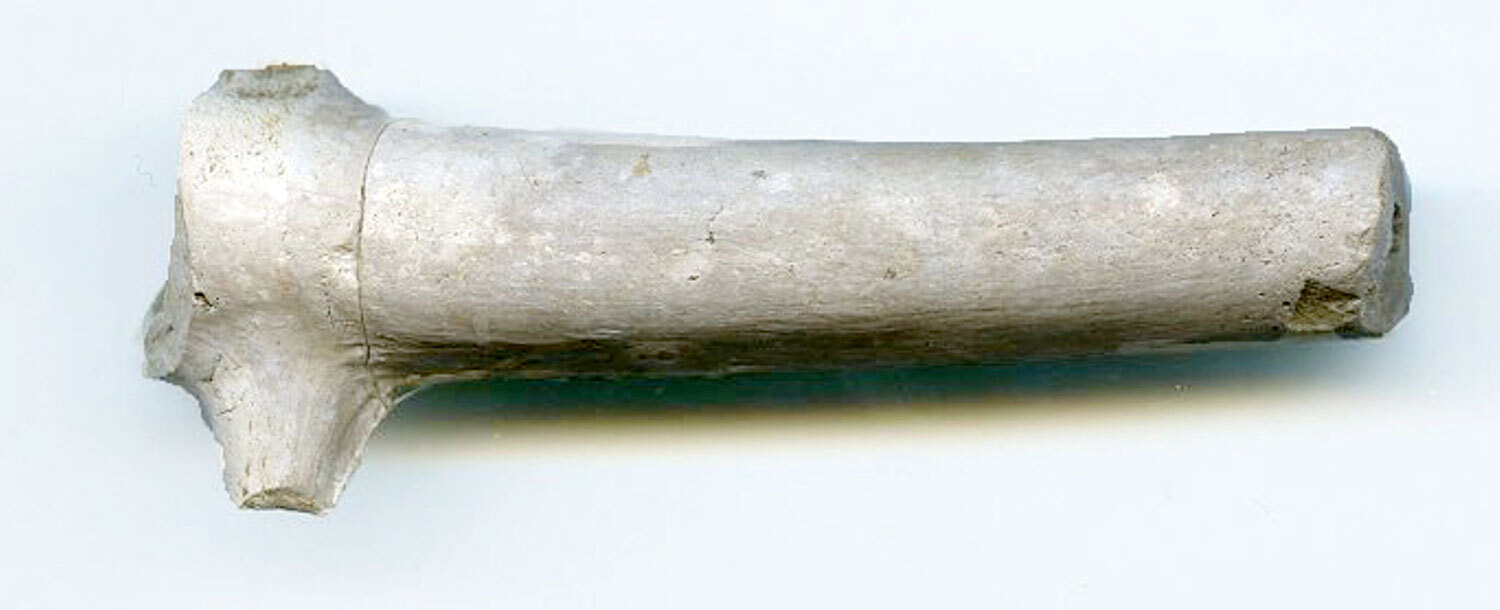
Two mended pipe stem fragments, undecorated
Smoking tobacco was popular through the 19th century. Here we see various pipe fragments dating from around the early to mid-19th century. Clay pipes often broke and were discarded, and today we have the remnants. Smoking cigarettes came into fashion by the late 19th century, and pipes became less and less common. Cigarettes were more convenient and travelled better than pipes did. The fading popularity may explain why these pipes disappear from the archaeological record by the early 20th century.
Currency was an important part of the daily economy for people living in Upper Canada. This blacksmith token closely resembles a genuine coin but is counterfeit. Such tokens were fake currency in the British colonies of North America. A smith crafted it to look like the English regal copper of King George III, minted from 1770-75. This example appears to date from around 1835. Archaeologists found this token in a layer from the jail period. It may have been in circulation for several decades before it was dropped at the site. The production of fake coins was dangerous. Skillful craftsmen walked a delicate line and risked being charged with the crime of forgery.
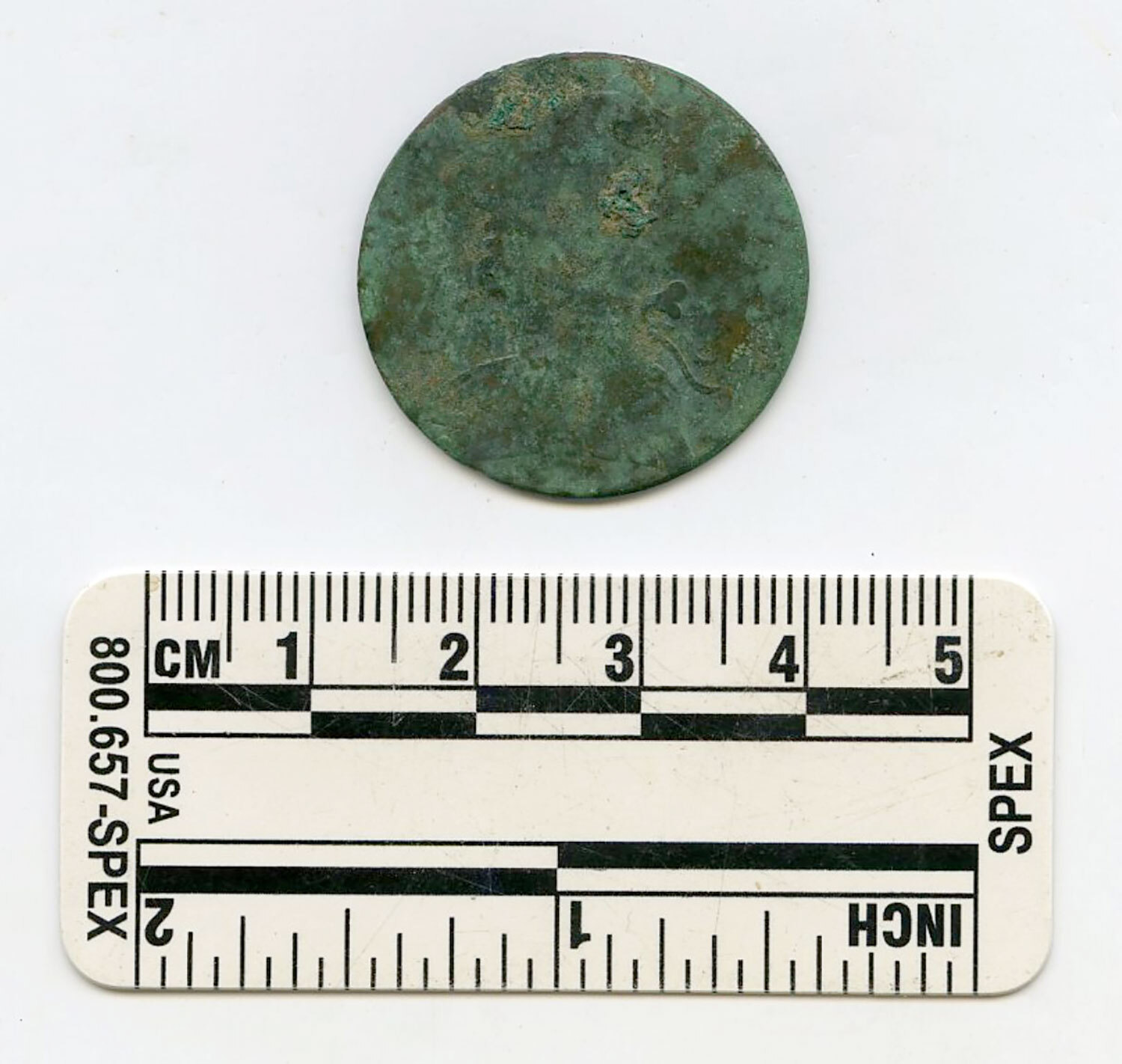
The face side of a blacksmith token, discovered in 2000
More collections
Explore the Trust’s collections database to see more artifacts from First Parliament and other sites across Ontario.
More collections
: ExploreStaying connected: Communication and trade at the First Parliament site
Two centuries ago, the world was not as interconnected as it is today. Communication was slow. It could take weeks for messages to cross the country, and even longer coming from overseas. Still, communication between Upper Canada and England was an important part of everyday life, with regular correspondence and trade. This connection is also clear in more subtle ways, such as fashion and styles.
For example, ceramic vessels of all kinds typically came over from England by settlers who immigrated to Upper Canada and were also available for purchase in York (Toronto).
Transfer printed pottery was a technique of decoration popular in England during the 18th and 19th centuries. There are a lot of transferware fragments from the Parliamentary and jail periods. The presence of this pottery in Upper Canada is evidence of how connected the province was to England. As a form of mass production, this style and technique made its way across the Atlantic Ocean.
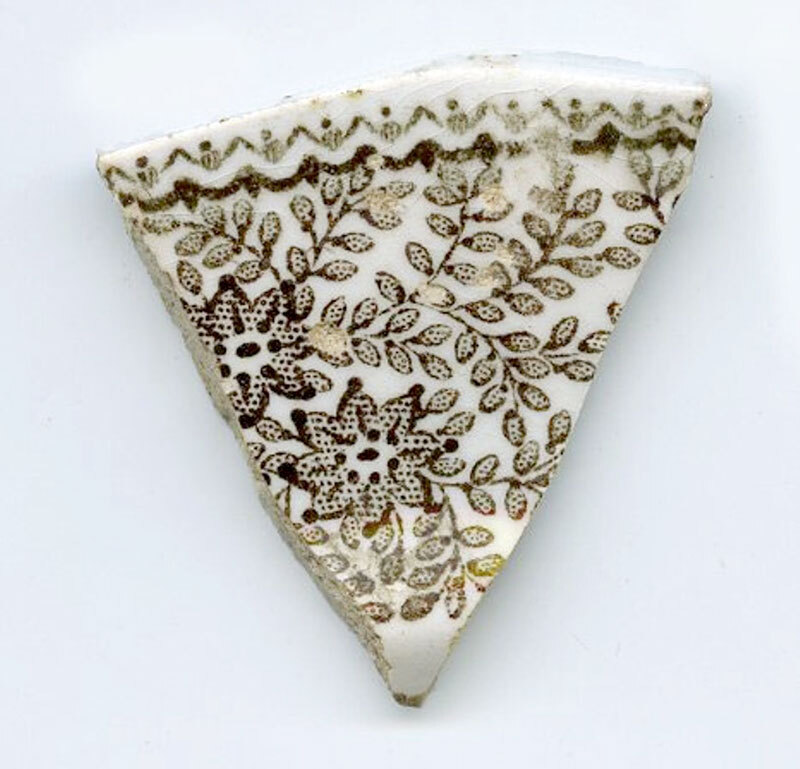
Brown transfer print on rim sherd with floral design, circa 1830s
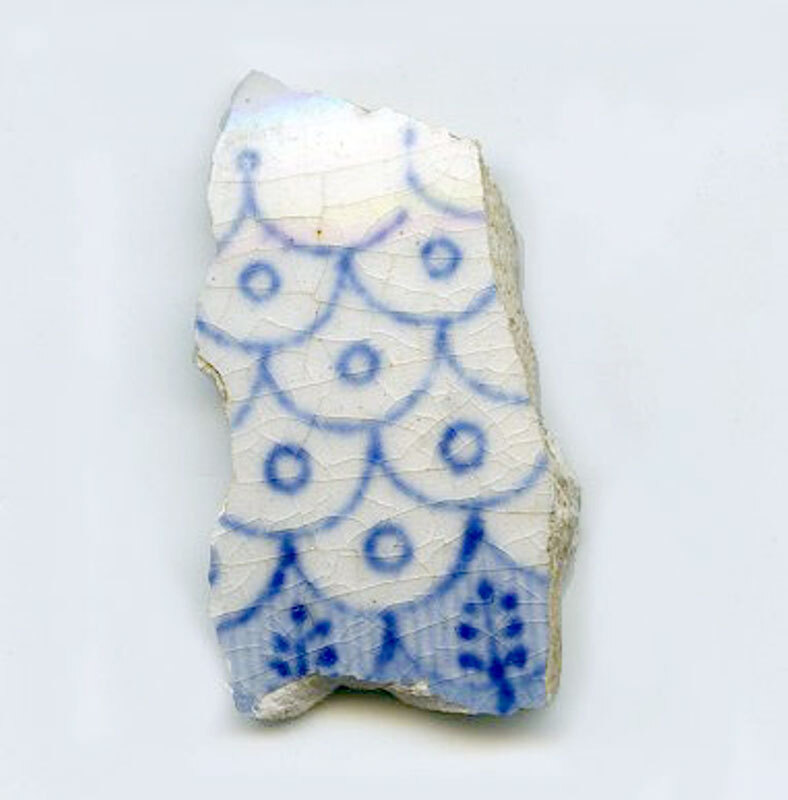
A body sherd with a blue transfer print on the exterior surface
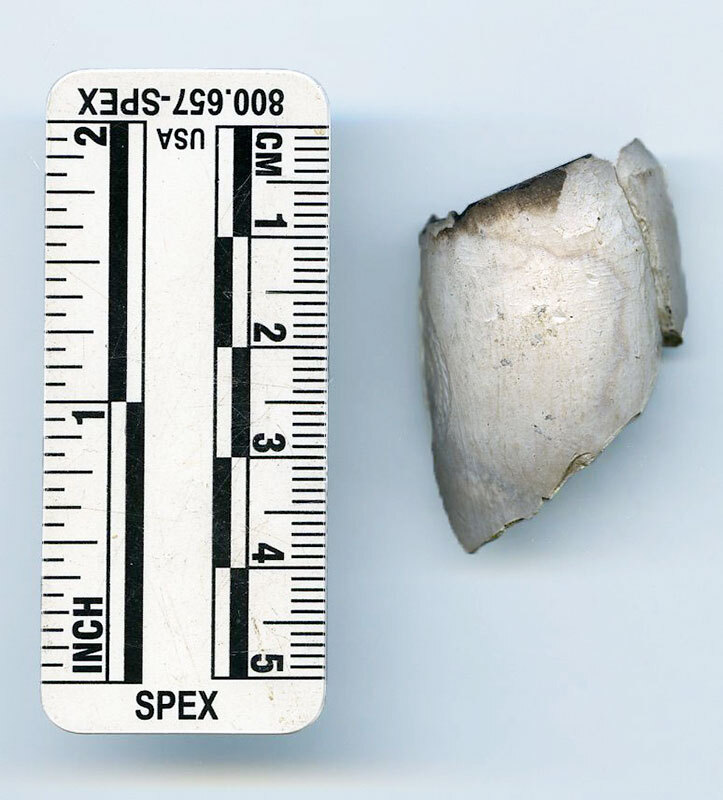
Two pipe bowl fragments with impressed "TD" mark
A similar trend is seen with “TD” pipes. This is a style of tobacco pipe from 18th-century England first made by London pipe maker Thomas Dormer that was copied and manufactured and available in Canada during the 19th century.
Bricks are also sometimes impressed, stamped or branded during manufacture. From this, we can see that some of the bricks from the Consumers’ Gas period came all the way from St. Louis, Missouri.
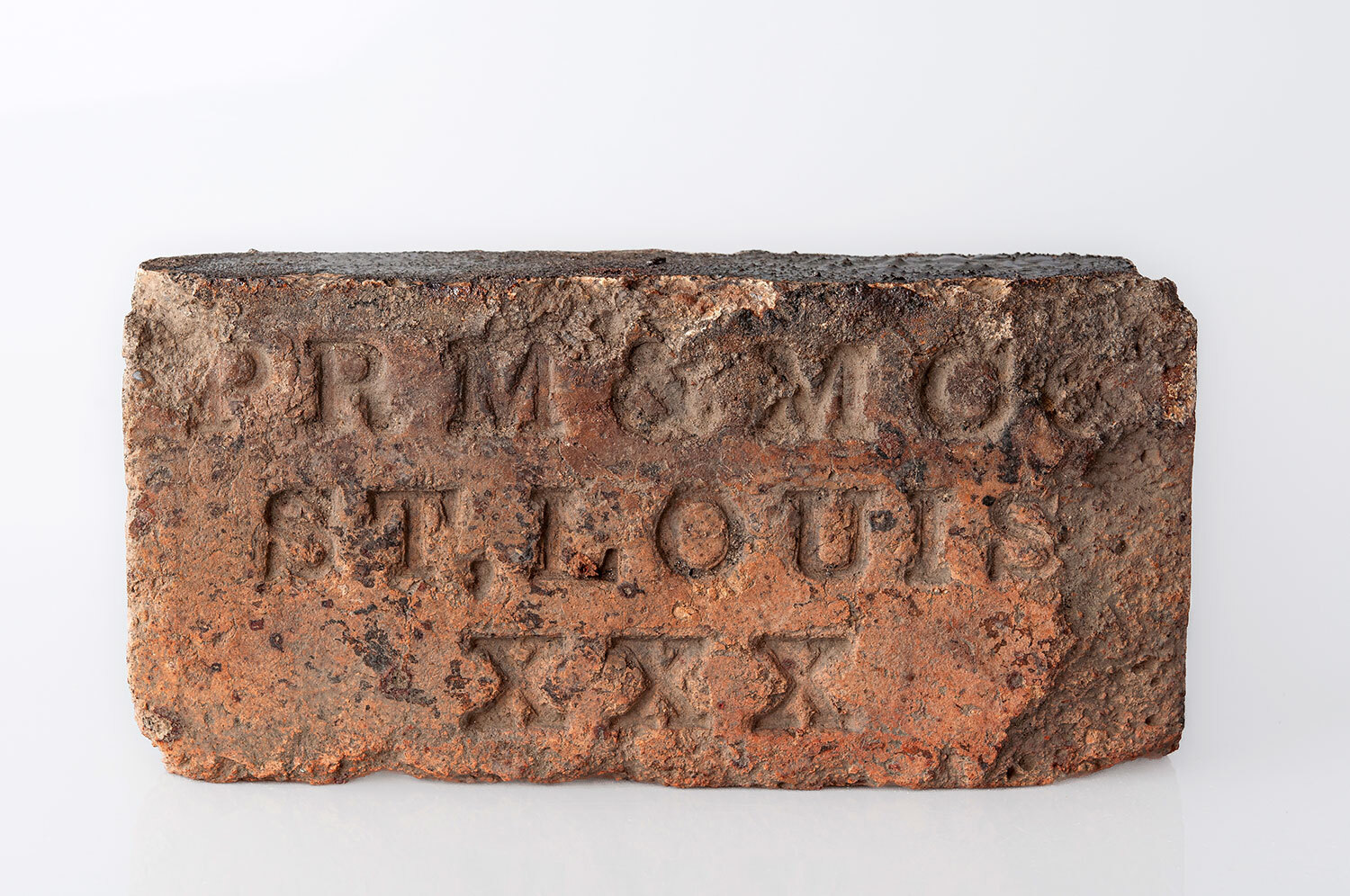
Brick manufactured in St. Louis, Missouri
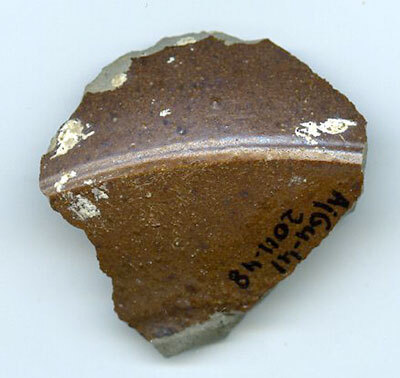
Fragment of a stoneware inkwell
More traditional means of communication are also represented at the First Parliament site. A fragment of a stoneware inkwell was found. Writing as a form of communication was an important element of the day-to-day activities at the site throughout the eras.
Manufacturing and industry from the past
Artifacts ask us not just to think about their owners, but also their makers. Who designed them, how much time did it take to make them, and where did the materials come from?
The Parliament buildings were constructed before widespread industrialization. Nearly all the construction materials, from bricks to nails, were either made by hand on site or obtained from local manufacturers. The wrought iron nail, handmade brick and blown-glass window shown here are testaments to the early manufacturers of the time in York and Toronto.
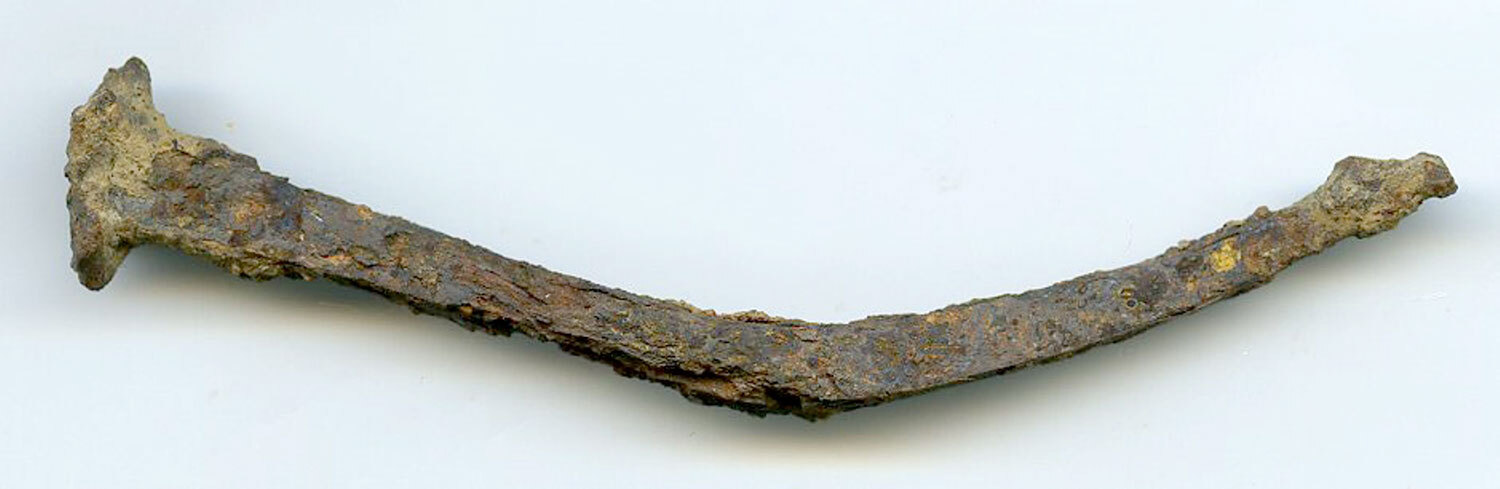
A hand-wrought iron nail from the Parliamentary period
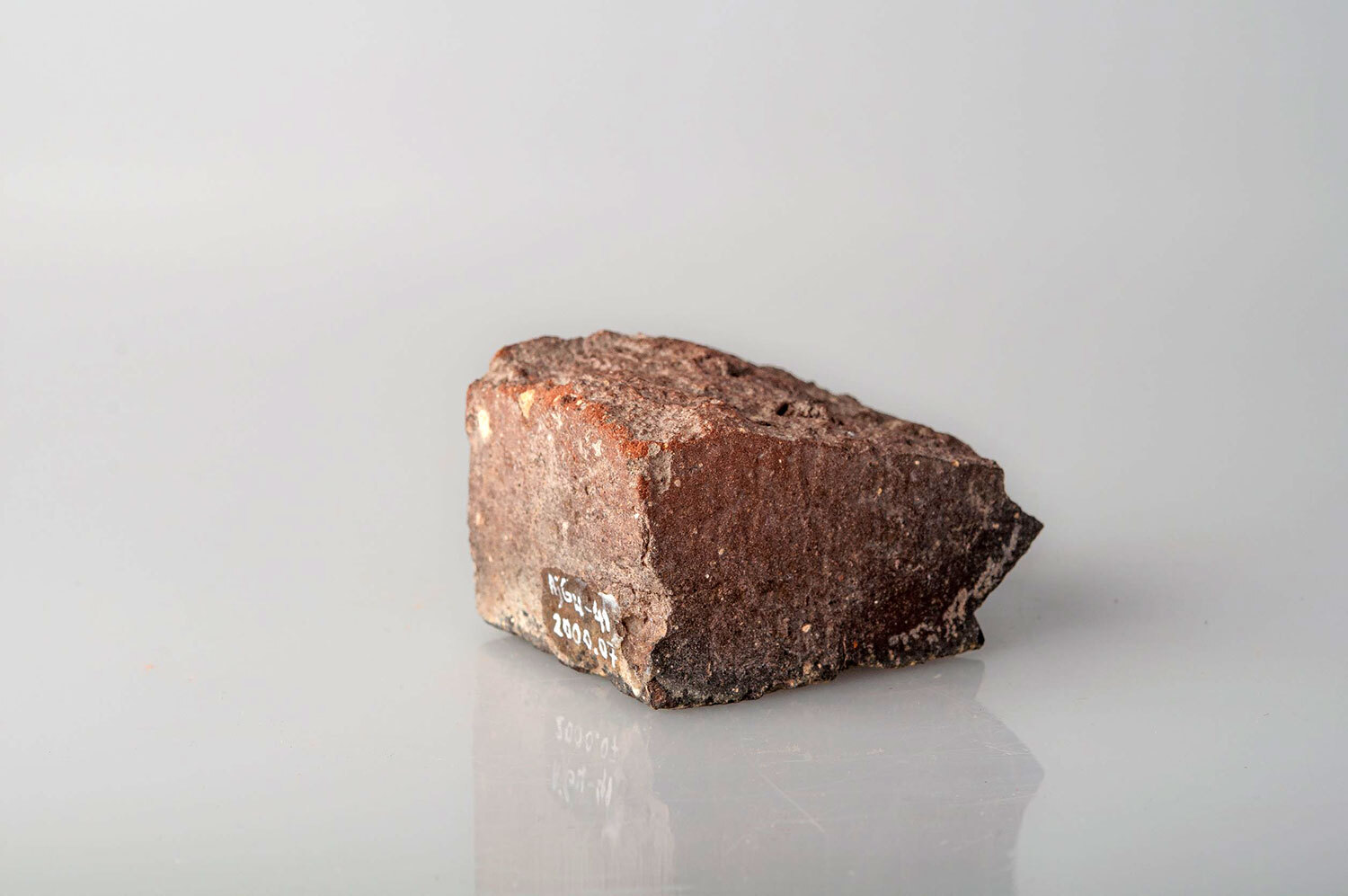
Handmade red brick from First Parliament. The brick is damaged and partly burnt.
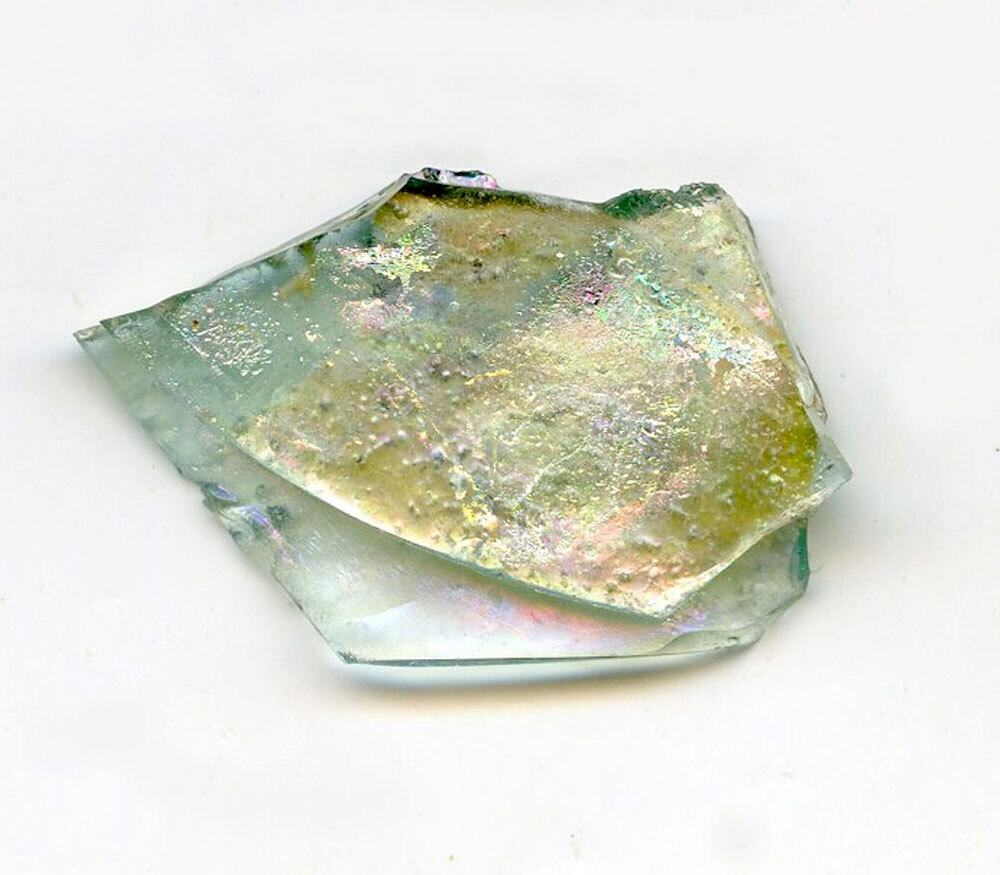
Two fragments of window glass from the early 19th century that have fused together from heat
Recovered during the 2000 excavations, 341 ceramic sherds were recovered in the area of the First Parliament burn deposits.
Creamware is one of the earliest ceramic types found in York in the 1790s up until the 1830s. This ceramic type is characterized by a cream-coloured earthenware with a glaze. The glaze appears yellow or green in crevices on ceramic vessels such as the foot ring. It was one of the most common tableware pieces in the second half of the 18th century. Over 55 per cent of the ceramics in this area were creamware sherds. Rim sherds of the Royal pattern were found, plain and undecorated.
Pearlware ceramic sherds accounted for 18 per cent of all ceramics recovered in 2000. This is a cream-colored body with a glaze that contained some cobalt, giving it a bluish tint. The time period for these ceramic wares was noted to be between 1800 and 1830.
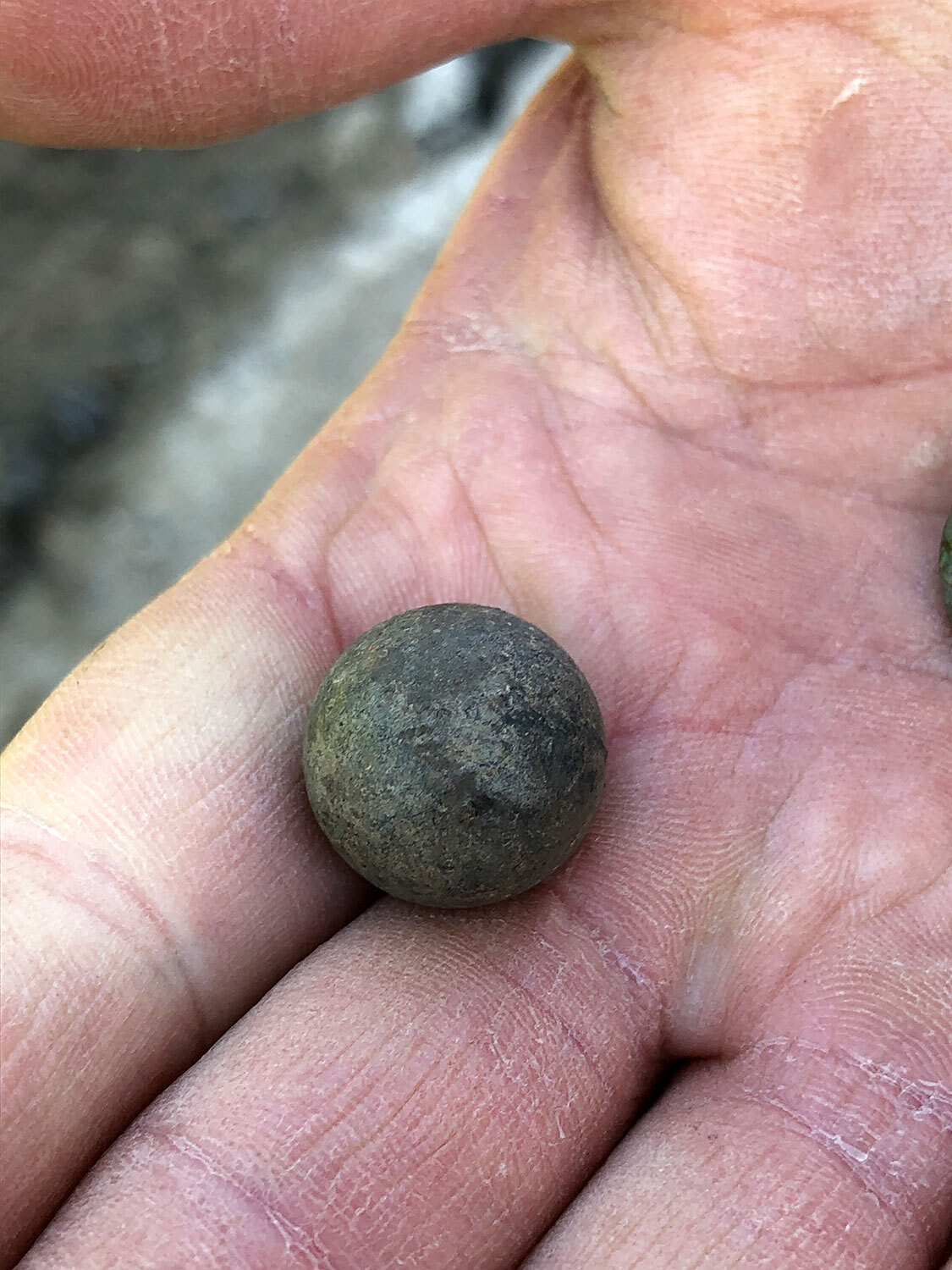
One of the lead musket balls uncovered near the foundations of the First Parliament buildings in 2023
The British military at First Parliament
The British military was a major part of the Town of York in its early years. While the soldiers were mostly based at Fort York, life in town was affected by the military presence. During the War of 1812, many citizens formed local militias or helped the war effort in other ways. Traces of the British military is even present at the First Parliament site.
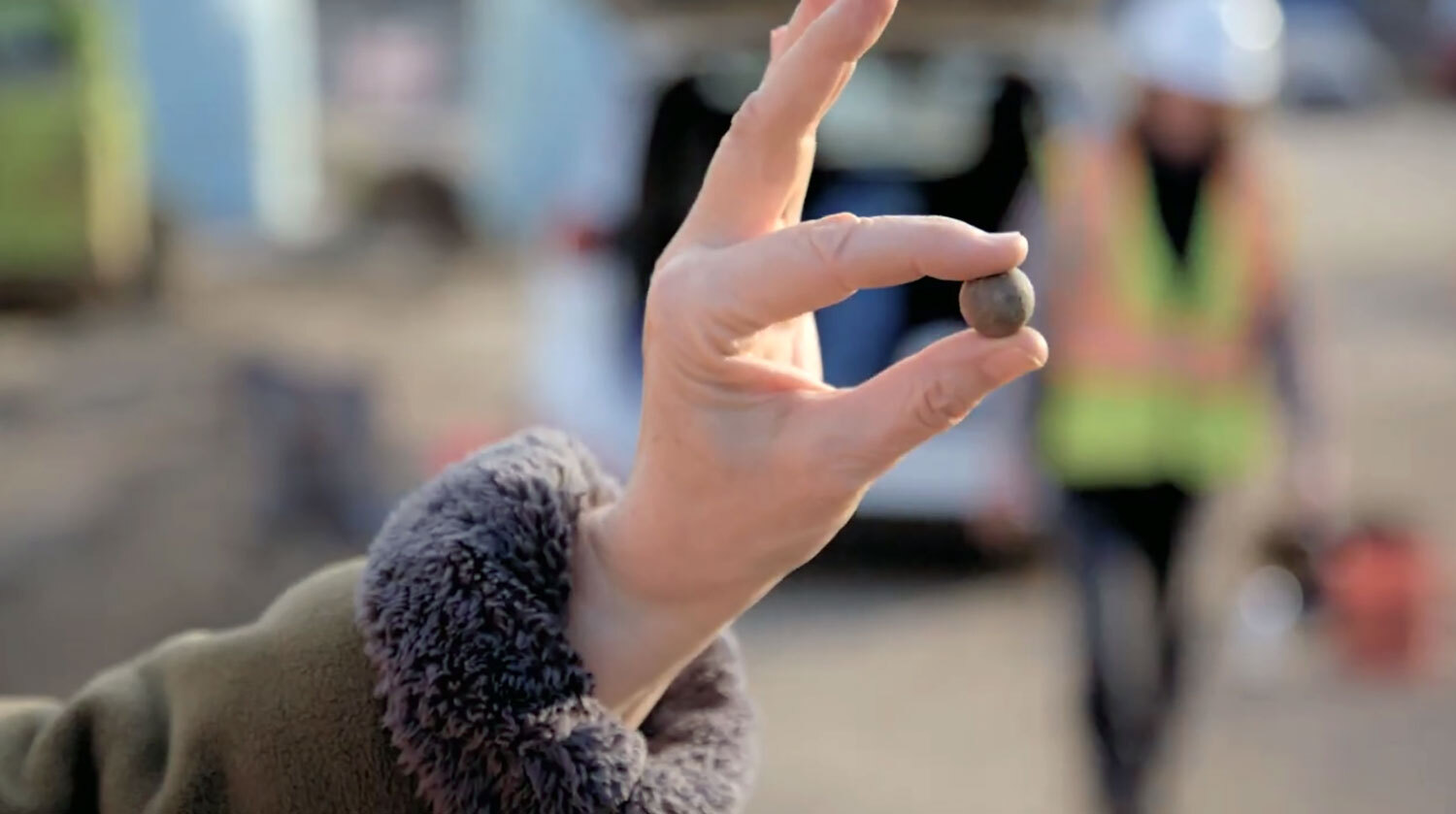
Two musket balls were found only a few metres away from the foundations of the south Parliament building. They are made of lead and would be loaded into the front of a musket’s barrel. Rifles at the time used a technology called flintlock. Igniting gunpowder behind the ball would propel it forward. Archaeologists are not sure how they were deposited here. Neither have the typical gunpowder marks that a musket ball gets when fired.
Video: Archaeologists Eva MacDonald and Ron Williamson discuss musket balls found in 2023
On this brass button you can see three cannons below three cannon balls. The owner was a member of the British military’s Royal Artillery Regiment. This specific design was made between 1790 and 1802, when a new design replaced it. But soldiers continued to wear these older buttons in Canada through the War of 1812. At the start of the war, four companies of the Royal Artillery were spread across the forts and armies in Canada. Only 13 were at York, all probably garrisoned at the Fort. How did the button end up at the First Parliament site?
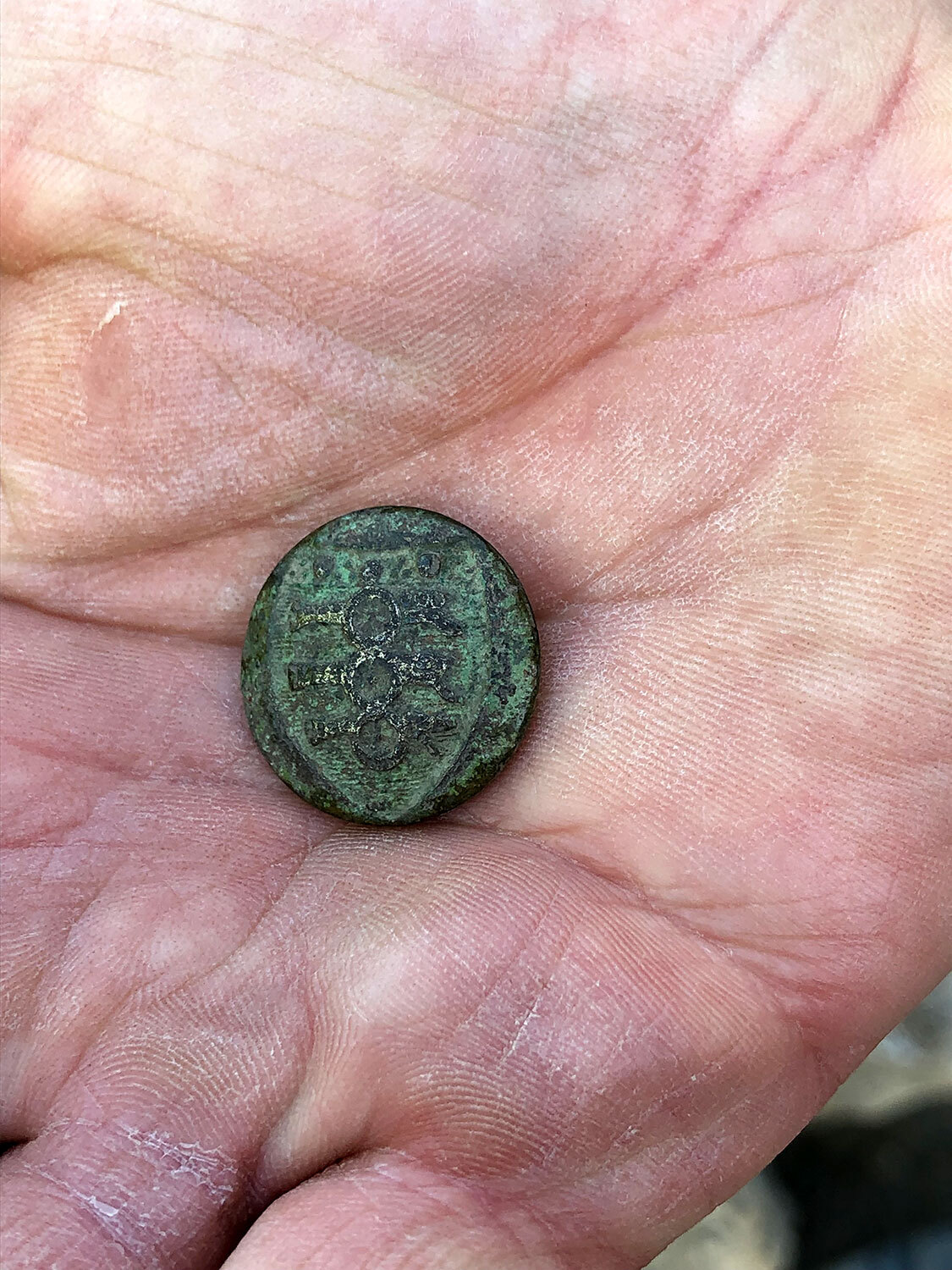
Brass button uncovered in 2023 from a member of the Royal Artillery, dating to 1790-1802 or as late as the War of 1812
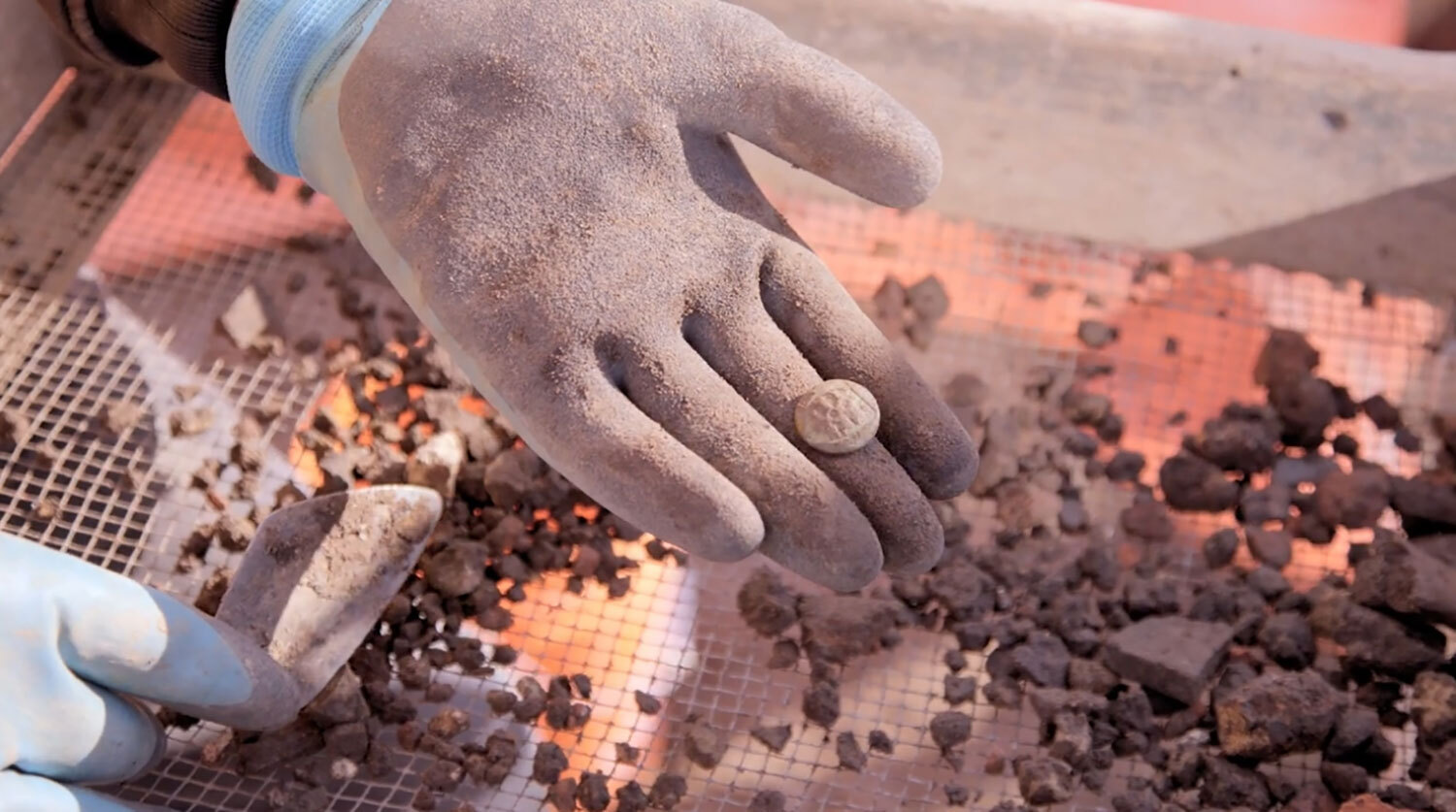
Video: Archaeologists Eva MacDonald and Ron Williamson discuss the military button found in 2023
These artifacts show the presence of soldiers at First Parliament. But they leave us with questions of when and why they were there. The town was small when the First Parliament buildings were built. It is possible that they, like the Fort, were at least partly constructed by soldiers and military engineers. The blockhouse, built a few years later, stood as a sign of the British military. It garrisoned a few professional soldiers or officers. After the American occupation, the British returned to York. They hastily rebuilt the ruined Parliament buildings and briefly used them as barracks. The button and musket balls were likely deposited here over the course of these events. First Parliament, at this time, was also a space for the daily life of soldiers. Beyond that, the artifacts represent British control in North America through its military. They show the ties between imperialism and the foundation of the country.
You might also be interested in
Check out these other exhibits on the First Parliament Site
Layer by layer — 1. Introduction
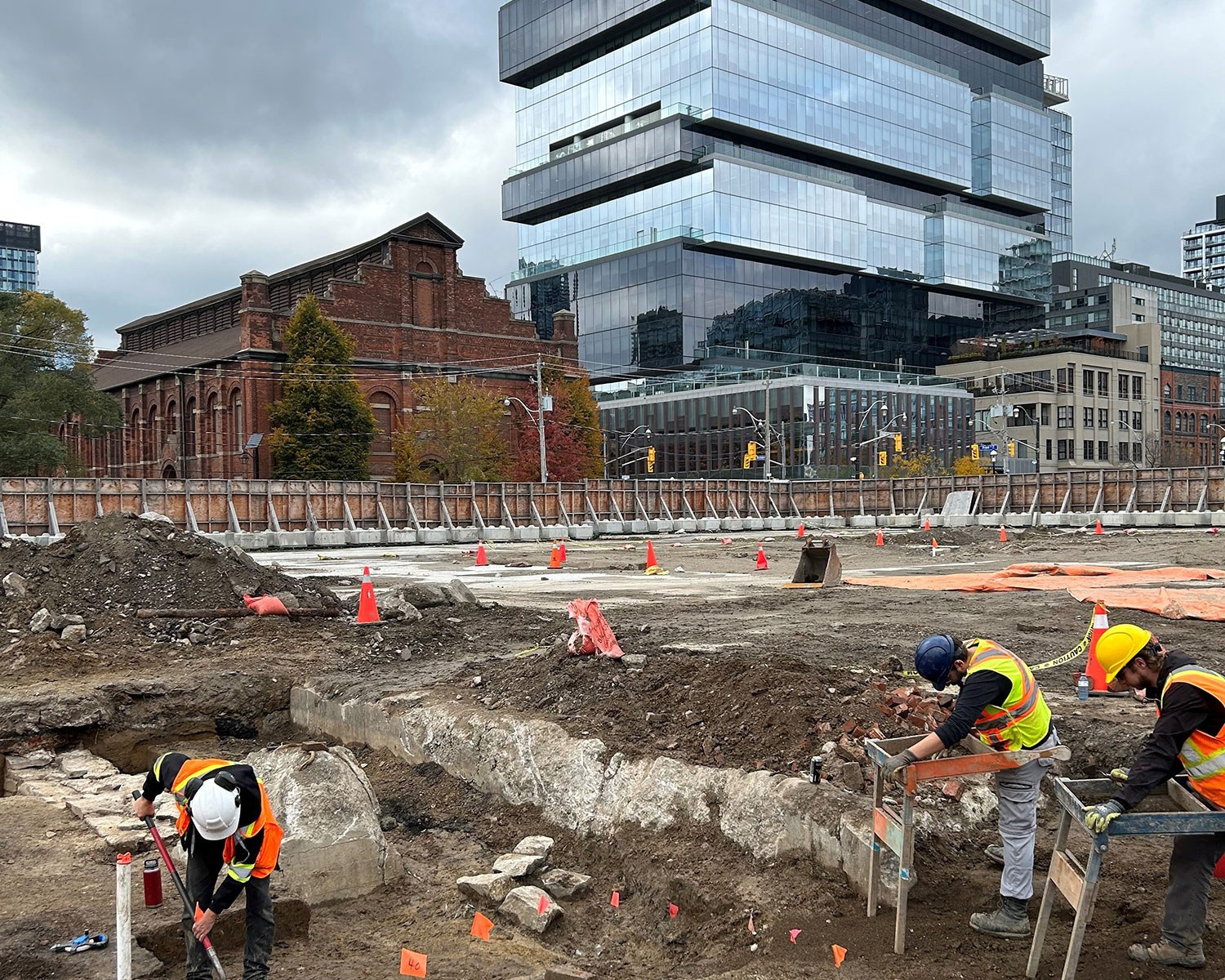
With centuries of buildup above, archaeologists were not hopeful that anything from the First Parliament buildings survived below. In 2000, they dug down, layer by layer, until they passed the remains of the jail. Then, to everyone’s surprise, they found what they were looking for: evidence of Ontario’s cradle of democracy.
Visit Layer by layer — 1. IntroductionLayer by layer — 2. First Parliament throughout the ages
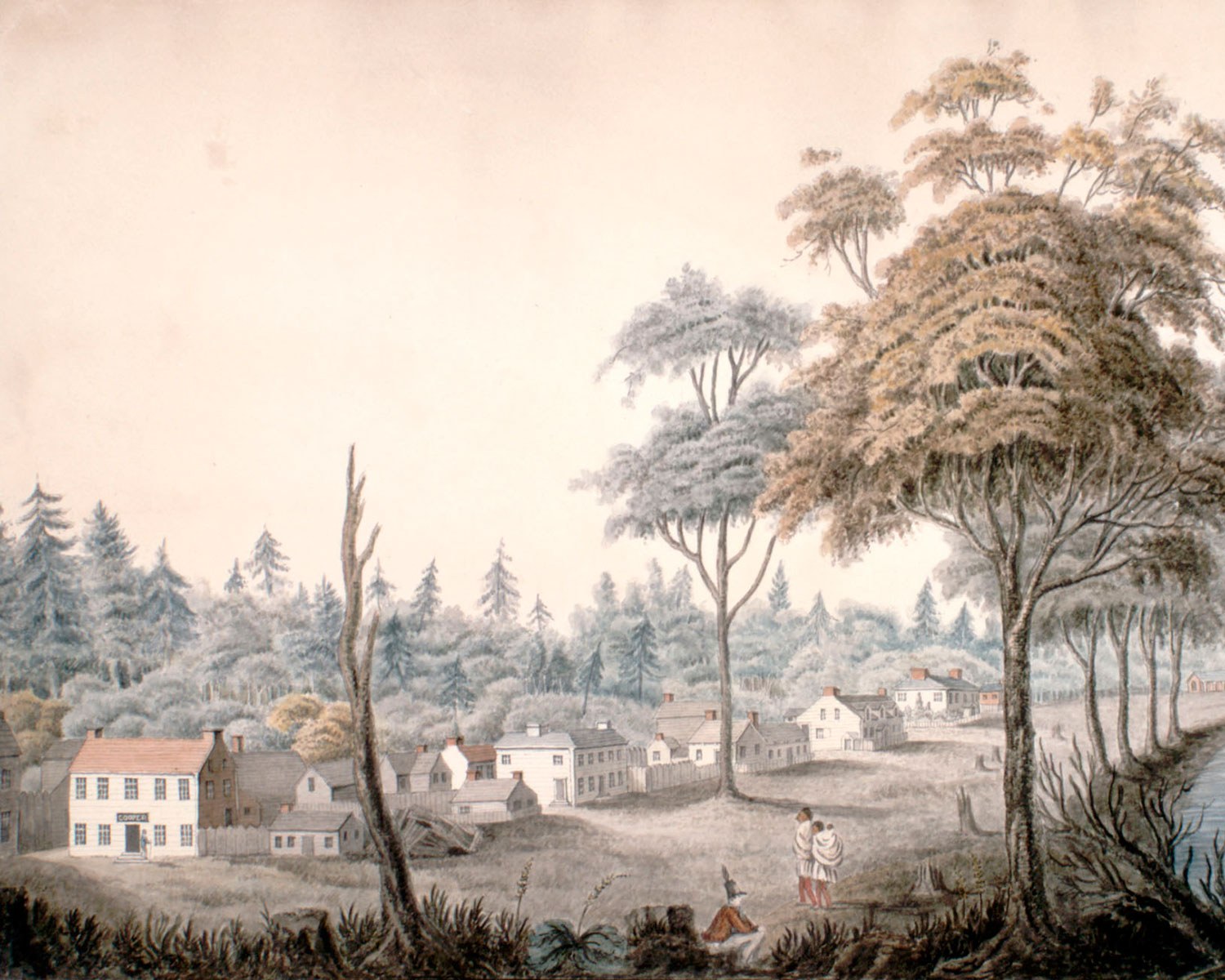
Indigenous people have lived on this land for over 13,000 years. Today, this land continues to be home to these communities and many other diverse Indigenous Peoples.
Visit Layer by layer — 2. First Parliament throughout the agesLayer by layer — 3. Layers of history
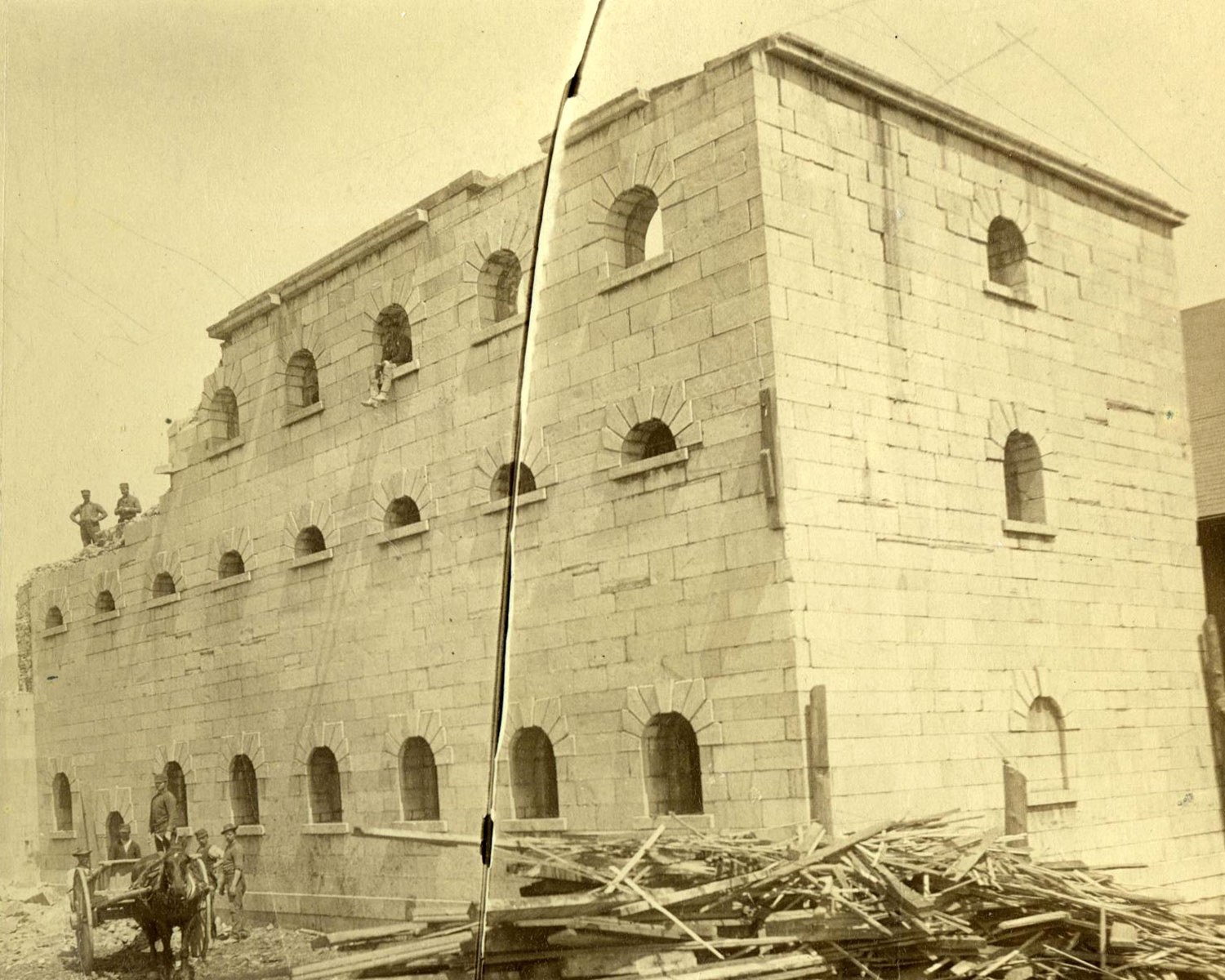
Archaeologists began their excavations at the First Parliament site in the fall of 2000. The project was focused on finding the remains of the First Parliament buildings. In the 200 years since the buildings were constructed, the city has changed dramatically. With centuries of urban buildup, the archaeologists were not sure there would be anything left.
Visit Layer by layer — 3. Layers of historyLayer by layer — 4. What is archaeology?
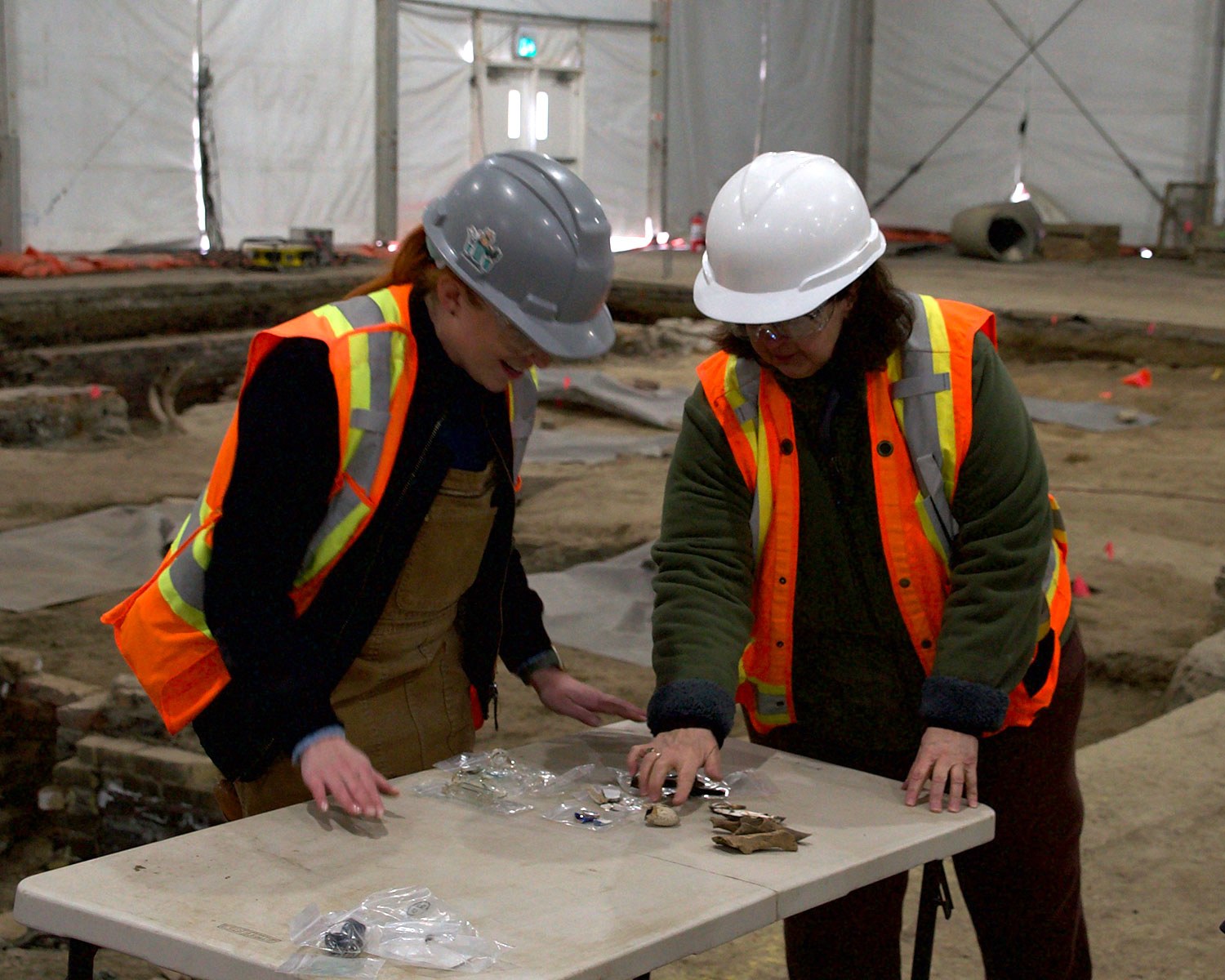
Artifacts and structures together form the physical history of past and present societies. By examining it all, we can better understand where and how people from the past lived. Excavations can tell us many things that books and records simply cannot.
Visit Layer by layer — 4. What is archaeology?Layer by layer — 6. The legacy of First Parliament
The site of First Parliament played an important role in the history of Toronto and the province of Ontario. Fort York and First Parliament bookend the early city. These were the first two centres of colonial activity: military and administrative. It was a key part of the settlement’s foundation, establishing York as a political centre.
Visit Layer by layer — 6. The legacy of First Parliament